
In recent years, the integration of unmanned aerial vehicle (UAV) technology into environmental monitoring has revolutionized traditional approaches, particularly in soil and water conservation. As a practitioner in this field, I have extensively utilized DJI UAV models, including the DJI Phantom 4, DJI drone systems, and even the DJI FPV for specific scenarios, to enhance the accuracy and efficiency of monitoring production and construction projects. This article delves into my firsthand experiences, detailing how these advanced tools overcome the limitations of conventional methods, such as human error and low spatial resolution, by providing high-resolution aerial imagery and precise data analysis. The application of DJI UAV not only streamlines workflows but also enables real-time assessment of soil erosion, land use changes, and conservation measures, making it indispensable for sustainable development.
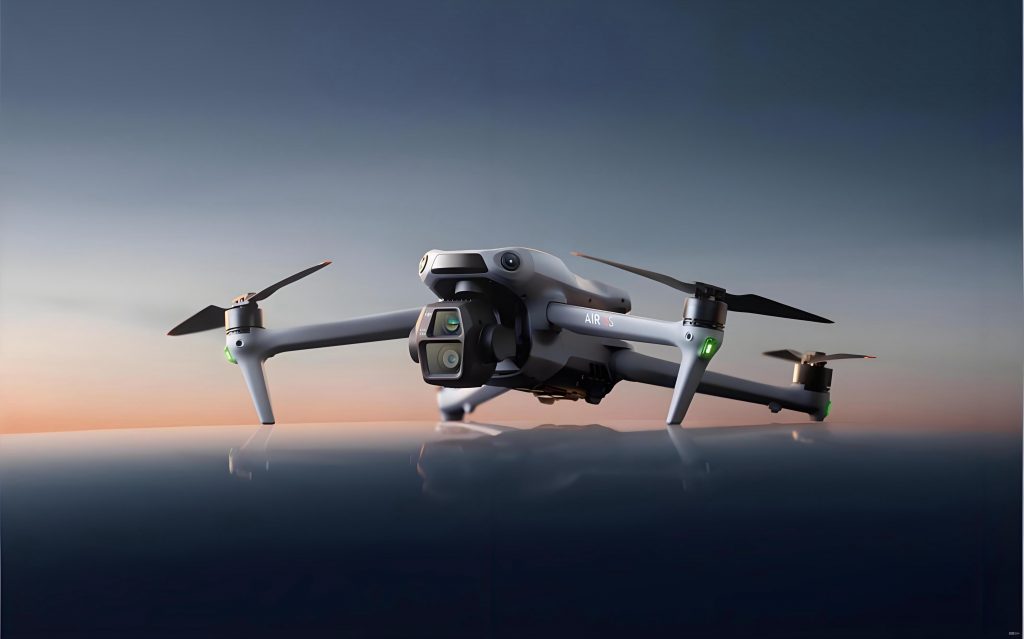
The foundation of any successful monitoring project lies in selecting the appropriate equipment. In my work, I have relied on the DJI Phantom 4, a compact quadcopter that exemplifies the capabilities of modern DJI drone technology. Weighing approximately 1,380 grams, this DJI UAV offers a flight time of up to 28 minutes, with a maximum ascent speed of 6 m/s and descent speed of 4 m/s. In sport mode, it can reach speeds of 20 m/s, equipped with 9,450 RPM quick-release propellers. Its camera boasts an effective pixel count of around 12.4 million, producing images at a resolution of 4,000 × 3,000 pixels, which is sufficient for capturing detailed terrain features. Additionally, I have explored the use of DJI FPV for dynamic, first-person view inspections in complex terrains, though the Phantom 4 remains the primary choice for its stability and user-friendly operation. The following table summarizes the key specifications of the DJI UAV used in typical monitoring scenarios:
| Parameter | Value |
|---|---|
| Flight Weight | 1,380 g |
| Maximum Flight Time | 28 minutes |
| Ascent Speed | 6 m/s |
| Descent Speed | 4 m/s |
| Image Resolution | 4,000 × 3,000 pixels |
| Operational Modes | Automatic and Manual |
Data collection is a critical phase where the DJI drone excels, beginning with thorough preliminary assessments. I always start by gathering relevant资料 on the monitoring area, such as weather patterns, hydrological conditions, and vegetation coverage, to establish a baseline understanding. This is followed by on-site reconnaissance to identify optimal takeoff and landing zones for the DJI UAV. These areas must be flat, obstacle-free, and spacious enough to ensure safe operations, as the compact size of models like the Phantom 4 makes them susceptible to environmental disturbances. For instance, in one project, I selected a clearing with minimal tree cover to avoid potential collisions and signal interference.
Choosing the right time for aerial photography is paramount to obtaining clear, usable images. Since DJI UAV systems, including the DJI FPV, have limited wind resistance, I schedule flights during calm, sunny days to minimize motion blur and ensure consistent lighting. Ideally, the sun’s elevation angle should exceed 45 degrees to reduce shadows that could obscure critical details. In my experience, this approach significantly enhances image quality, allowing for accurate post-processing. To further improve precision, I deploy ground control points (GCPs) across the survey area. These points, often made of materials that contrast with the surroundings (e.g., white markers in green vegetated zones), help calibrate the aerial data. The GCPs are typically arranged in a cross pattern, with dimensions about 10 times the ground resolution, and positioned perpendicular to the flight path near the image center.
Calibration is an essential pre-flight step to maintain the DJI drone’s accuracy. Over time, components like the compass and electronic speed controllers (ESCs) may drift due to transport or wear. I routinely perform calibrations in magnetically neutral areas, avoiding sites with high metal content. If issues persist, such as gimbal vibrations, professional servicing is necessary. For route planning, I design “S”-shaped flight paths that cover the entire target area plus an 80-meter buffer to account for edge distortions in imagery. The overlap rates are critical; I aim for 80%航向重叠 and 60%旁向重叠 to ensure comprehensive coverage. During one mission, the DJI UAV captured nearly 200 images over 17 minutes, demonstrating the efficiency of this approach.
Post-processing the data involves specialized tools and software. I use computers with at least 4 GB GPU memory, 8 GB RAM, and multi-core CPUs to handle the computational load. Agisoft Photoscan is my preferred software due to its ease of use and robust performance, even on moderate hardware. It processes JPG format images, correcting lens distortions that can displace ground features. The output includes tie points, 3D models, and digital elevation models (DEMs), which are vital for analysis. To validate accuracy, I focus on elevation precision, as horizontal accuracy is generally reliable. The formula for calculating the root mean square error (RMSE) of elevation is:
$$ m = \pm \sqrt{\frac{\sum_{i=1}^{n} (z_i – Z_i)^2}{n}} $$
where \( m \) is the elevation error, \( n \) is the number of checkpoints, \( z_i \) is the measured elevation value, and \( Z_i \) is the UAV-derived elevation value. In a recent project, I selected multiple checkpoints and computed the residuals, as shown in the table below, confirming that the DJI UAV data met the required standards for soil and water conservation monitoring.
| Checkpoint ID | UAV Elevation (m) | Measured Elevation (m) | Residual (m) |
|---|---|---|---|
| CP001 | 1,017.49 | 1,017.26 | 0.23 |
| CP002 | 1,019.20 | 1,019.44 | -0.24 |
| CP003 | 1,029.02 | 1,028.73 | 0.29 |
| CP004 | 1,062.96 | 1,063.27 | -0.31 |
The analysis phase leverages the processed data to extract actionable insights. Using spatial analysis software, I identify project locations, measure areas, and assess compliance with conservation plans. For instance, the DJI drone imagery allows me to quantify earthwork volumes, such as soil excavation and deposition, by applying differential analysis to DEMs. The volume \( V \) of a stockpile can be estimated using the formula:
$$ V = \frac{1}{3} \times A \times h $$
where \( A \) is the base area and \( h \) is the height derived from UAV data. However, inaccuracies may arise if the original topography has changed, necessitating corrections before calculation. Soil erosion assessment is another key application; I compute soil loss using empirical models like the Universal Soil Loss Equation (USLE), adapted for UAV data:
$$ A = R \times K \times LS \times C \times P $$
Here, \( A \) represents the annual soil loss, \( R \) is the rainfall erosivity factor, \( K \) is the soil erodibility factor, \( LS \) is the slope length-gradient factor, \( C \) is the cover-management factor, and \( P \) is the support practice factor. Although this yields approximations, the high-resolution data from DJI UAV systems, including the DJI FPV for rapid assessments, provides a reliable basis for identifying erosion hotspots and evaluating the effectiveness of conservation measures like terracing or vegetation cover.
In conclusion, the integration of DJI UAV technology, encompassing models such as the DJI Phantom 4 and DJI FPV, has profoundly transformed soil and water conservation monitoring. From my perspective, these DJI drone systems offer unparalleled advantages in data precision, operational efficiency, and risk mitigation. They enable detailed 3D modeling, accurate volume calculations, and real-time monitoring, which are crucial for sustainable project management. As UAV technology continues to evolve, I anticipate further innovations, such as enhanced AI-driven analytics and longer flight times, will expand their applicability. Ultimately, the widespread adoption of DJI UAV in environmental monitoring not only supports ecological preservation but also fosters economic resilience by ensuring that development projects adhere to conservation standards.