
In modern agriculture, the integration of advanced technologies like DJI UAV systems has revolutionized pest management strategies. As a researcher focused on sustainable farming practices, I conducted a comprehensive study to evaluate the efficacy of DJI drone applications in controlling key citrus pests, including citrus psyllids, rust mites, and scale insects. The primary objective was to compare the performance of DJI UAV platforms with traditional manual spraying methods in terms of cost, efficiency, and environmental impact. Through field experiments, I aimed to demonstrate how DJI FPV and similar models can enhance precision agriculture while addressing challenges such as orchard canopy density and pest resistance.
The study was conducted in citrus orchards with trees aged approximately 11 years, using the DJI Agras T20 plant protection drone, which represents a cutting-edge DJI UAV designed for agricultural applications. This DJI drone features a maximum liquid capacity of 20 liters, operates at flight heights of 2.5 to 3 meters, and covers a spray swath of 5 to 7 meters at speeds of 3–4 m/s. To ensure accurate comparisons, I employed insecticides like 30% pyriproxyfen·dinotefuran suspension at 400 mg/L and 28% abamectin·spirotetramat suspension at 2,500 mg/L, applied via the DJI UAV across three experimental sites, each covering about 6,670 square meters. The experimental design involved pre- and post-application surveys of pest incidence, focusing on parameters such as infested plant rates and mean insect counts per plant. Data collection followed a systematic sampling approach, with five directional points (east, west, south, north, and center) selected per site, and 20 trees marked for observation. For instance, citrus psyllid assessments involved examining new shoots, while rust mites and scale insects were evaluated on fruits using a 30x hand lens. The formulas used to calculate efficacy metrics are central to this analysis. For infested plant rate (IPR), the equation is:
$$ IPR (\%) = \frac{\text{Number of infested plants}}{\text{Total plants surveyed}} \times 100 $$
Similarly, the reduction rate in infested plant rate (RR_IPR) is given by:
$$ RR_IPR (\%) = \frac{\text{IPR}_{\text{before}} – \text{IPR}_{\text{after}}}{\text{IPR}_{\text{before}}} \times 100 $$
For mean insect count per plant (MIC), the calculation is:
$$ MIC = \frac{\text{Total insect count}}{\text{Total plants surveyed}} $$
And the reduction rate in mean insect count (RR_MIC) is:
$$ RR_MIC (\%) = \frac{\text{MIC}_{\text{before}} – \text{MIC}_{\text{after}}}{\text{MIC}_{\text{before}}} \times 100 $$
These formulas were applied uniformly across all sites to ensure consistency in evaluating the DJI drone’s performance. Additionally, I compared the operational efficiency and costs of the DJI UAV with traditional methods, where manual spraying used high-pressure remote spray machines operated by two workers. Cost analyses included factors like labor, chemical usage, and equipment expenses, with data derived from standard field practices. For example, manual spraying required 300 liters per 667 m², whereas the DJI drone used only 12 liters per 667 m², leading to significant savings. The overall cost per unit area was computed to highlight the economic advantages of DJI FPV and similar systems.
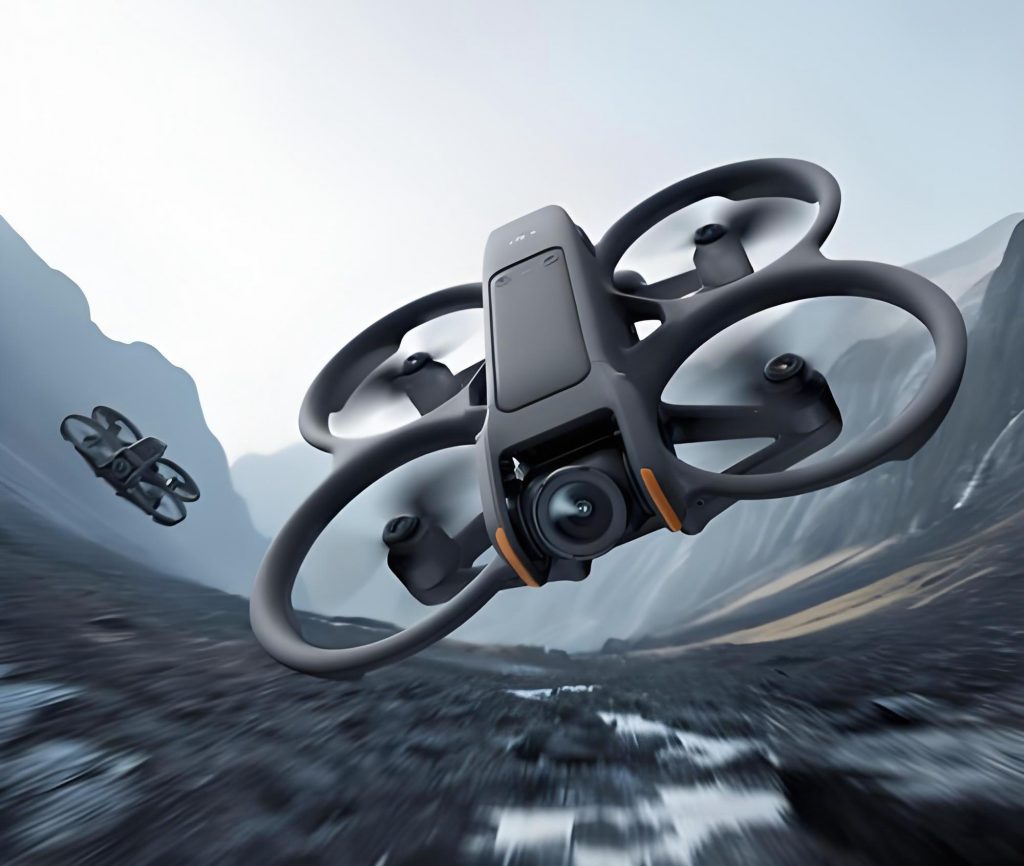
Safety assessments were a critical part of this study, as the adoption of DJI UAV technology must not compromise plant health. After applications with the DJI drone, I continuously monitored tree growth and observed no phytotoxic symptoms, such as leaf damage or abnormal development, across all sites. This confirms that DJI UAV operations are safe for citrus orchards when properly managed. The primary focus, however, was on pest control efficacy. For citrus psyllids, the results were remarkable: pre-application infested plant rates ranged from 20% to 50%, with mean insect counts of 2.2 to 3.1 per plant. Post-application, these values dropped to zero, resulting in 100% reduction rates for both metrics. This demonstrates the superior capability of DJI drone systems in targeting pests like citrus psyllids, which often inhabit peripheral shoots where spray coverage is optimal. The table below summarizes these findings for citrus psyllid control across the three sites (A, B, and C):
| Site | Pre-application IPR (%) | Post-application IPR (%) | RR_IPR (%) | Pre-application MIC | Post-application MIC | RR_MIC (%) |
|---|---|---|---|---|---|---|
| A | 50.0 | 0.0 | 100.0 | 3.1 | 0.0 | 100.0 |
| B | 25.0 | 0.0 | 100.0 | 2.3 | 0.0 | 100.0 |
| C | 20.0 | 0.0 | 100.0 | 2.2 | 0.0 | 100.0 |
In contrast, the performance of the DJI UAV against rust mites and scale insects was less effective due to orchard canopy density. For rust mites, pre-application infested plant rates were 100% across all sites, with mean insect counts ranging from 39.6 to 44.7 per plant. After DJI drone applications, infested plant rates decreased to 60–80%, and mean insect counts dropped to 14.3–18.0, resulting in reduction rates of 20–40% for IPR and approximately 54–64% for MIC. This indicates that the沉降式 spray pattern of DJI UAV systems struggles to penetrate dense canopies, where rust mites thrive on inner surfaces of fruits. Similarly, for scale insects, pre-application infested plant rates were 15–30%, with mean counts of 4.6–7.4 per plant. Post-application, these values reduced to 5–15% for IPR and 2.0–3.3 for MIC, yielding reduction rates of 33.3–66.7% for IPR and around 55% for MIC. The following table details these results for rust mite control:
| Site | Pre-application IPR (%) | Post-application IPR (%) | RR_IPR (%) | Pre-application MIC | Post-application MIC | RR_MIC (%) |
|---|---|---|---|---|---|---|
| A | 100.0 | 80.0 | 20.0 | 44.7 | 17.6 | 60.6 |
| B | 100.0 | 60.0 | 40.0 | 40.0 | 14.3 | 64.3 |
| C | 100.0 | 60.0 | 40.0 | 39.6 | 18.0 | 54.5 |
And for scale insects:
| Site | Pre-application IPR (%) | Post-application IPR (%) | RR_IPR (%) | Pre-application MIC | Post-application MIC | RR_MIC (%) |
|---|---|---|---|---|---|---|
| A | 30.0 | 15.0 | 50.0 | 7.4 | 3.3 | 55.4 |
| B | 15.0 | 5.0 | 66.7 | 5.0 | 2.3 | 54.0 |
| C | 15.0 | 10.0 | 33.3 | 4.6 | 2.0 | 56.5 |
The efficiency and cost analysis further underscores the advantages of DJI UAV technology. In terms of operational speed, the DJI drone covered 20,010 square meters in just 3 hours, achieving a per-person efficiency of 6,670 square meters per hour. In comparison, traditional manual methods required two workers over 3 days to cover the same area, with a per-person efficiency of only 420.21 square meters per hour. This means the DJI drone operated approximately 16 times faster than manual spraying. The cost comparison reveals even more compelling benefits: the DJI UAV used only 12 liters of chemical solution per 667 square meters, compared to 300 liters for manual methods, resulting in a 96% reduction in chemical usage. Overall, the unit cost for DJI drone applications was 38.24 USD per 667 square meters, whereas manual methods cost 126.00 USD per 667 square meters, leading to a 69.65% reduction in costs. The table below illustrates this cost breakdown:
| Application Method | Area (667 m²) | Chemical Volume (L) | Chemical Cost (USD) | Application Cost (USD) | Total Cost (USD) | Unit Cost (USD/667 m²) |
|---|---|---|---|---|---|---|
| DJI UAV | 30 | 360 | 97.2 | 1,050 | 1,147.2 | 38.24 |
| Manual Spraying | 30 | 9,000 | 2,430.0 | 1,350 | 3,780.0 | 126.00 |
Discussion of these findings highlights both the strengths and limitations of DJI drone systems. The exceptional performance against citrus psyllids can be attributed to the aerial spray dynamics of DJI UAV models, which ensure thorough coverage of peripheral plant parts where these pests congregate. However, the suboptimal results for rust mites and scale insects emphasize the challenges of canopy penetration. In orchards with dense foliage, the downward-spraying mechanism of DJI FPV and similar drones fails to reach inner branches and fruits, allowing pests to persist. This issue is exacerbated in older, unpruned orchards where canopy closure is severe. To address this, future iterations of DJI UAV technology could incorporate adjustable spray nozzles or enhanced airflow systems to improve coverage in dense environments. Moreover, the high efficiency and cost savings of DJI drones make them ideal for large-scale, cooperative farming operations, particularly those with well-managed canopies and adequate spacing.
Despite these advantages, there are ongoing challenges with DJI UAV applications in agriculture. Precision spraying remains a key area for improvement, as current DJI drone models may not fully adapt to the complex structures of fruit trees compared to field crops. Battery life and chemical capacity also pose limitations; for extensive operations, frequent recharging and refilling can reduce overall efficiency. Additionally, the high initial investment and need for specialized training may hinder widespread adoption, especially in regions with limited resources. Nonetheless, the potential for DJI FPV and other UAVs to integrate with smart farming systems—such as real-time monitoring and data analytics—could revolutionize pest management. For example, coupling DJI UAV sprayers with sensors could enable targeted applications based on pest density maps, further optimizing resource use.
In conclusion, this study demonstrates that DJI UAV systems, including the DJI Agras T20 and potential DJI FPV adaptations, offer significant benefits for citrus pest control. They provide effective, safe, and economical solutions for pests like citrus psyllids, while also promoting environmental sustainability through reduced chemical usage. For rust mites and scale insects, however, success depends on orchard conditions and complementary practices like pruning. As a researcher, I believe that DJI drone technology holds immense promise for modern agriculture, particularly in integrated pest management programs. Future efforts should focus on refining DJI UAV designs for better canopy penetration and expanding support mechanisms to make these tools accessible to more farmers. Ultimately, the continued evolution of DJI drone applications will play a pivotal role in achieving sustainable and productive agricultural systems worldwide.