
In recent years, the integration of advanced agricultural technologies has revolutionized traditional farming practices, particularly in perennial crop systems like citrus cultivation. As a researcher focused on precision agriculture, I have observed how crop spraying drones, also known as spraying UAVs, are transforming pest control, fertilization, and overall orchard management. This article delves into the comprehensive application of crop spraying drone technology in citrus farming, drawing from empirical studies and field implementations. I will explore the components and advantages of these systems, their specific uses in monitoring and addressing challenges in citrus groves, and the optimization strategies to enhance their efficacy. Through detailed analyses, including tabular data and mathematical models, I aim to provide a holistic perspective on how spraying UAVs contribute to sustainable agriculture. The goal is to underscore the importance of adopting such innovations to boost productivity while minimizing environmental impact.
Citrus cultivation, particularly in regions with favorable climates, faces persistent issues such as pest infestations, nutrient deficiencies, and labor shortages. Traditional methods often involve manual spraying, which is time-consuming, inefficient, and prone to human error. In contrast, crop spraying drones offer a paradigm shift by enabling precise, automated operations. These spraying UAVs are equipped with sophisticated sensors and control systems that allow for targeted applications, reducing chemical usage and operational costs. As I discuss the various facets of this technology, I will emphasize how it addresses key agricultural challenges. For instance, in dense citrus canopies, drones can navigate complex structures to ensure uniform coverage, a feat difficult to achieve with conventional equipment. Moreover, the data collected by these drones facilitate real-time decision-making, paving the way for smarter farming practices.
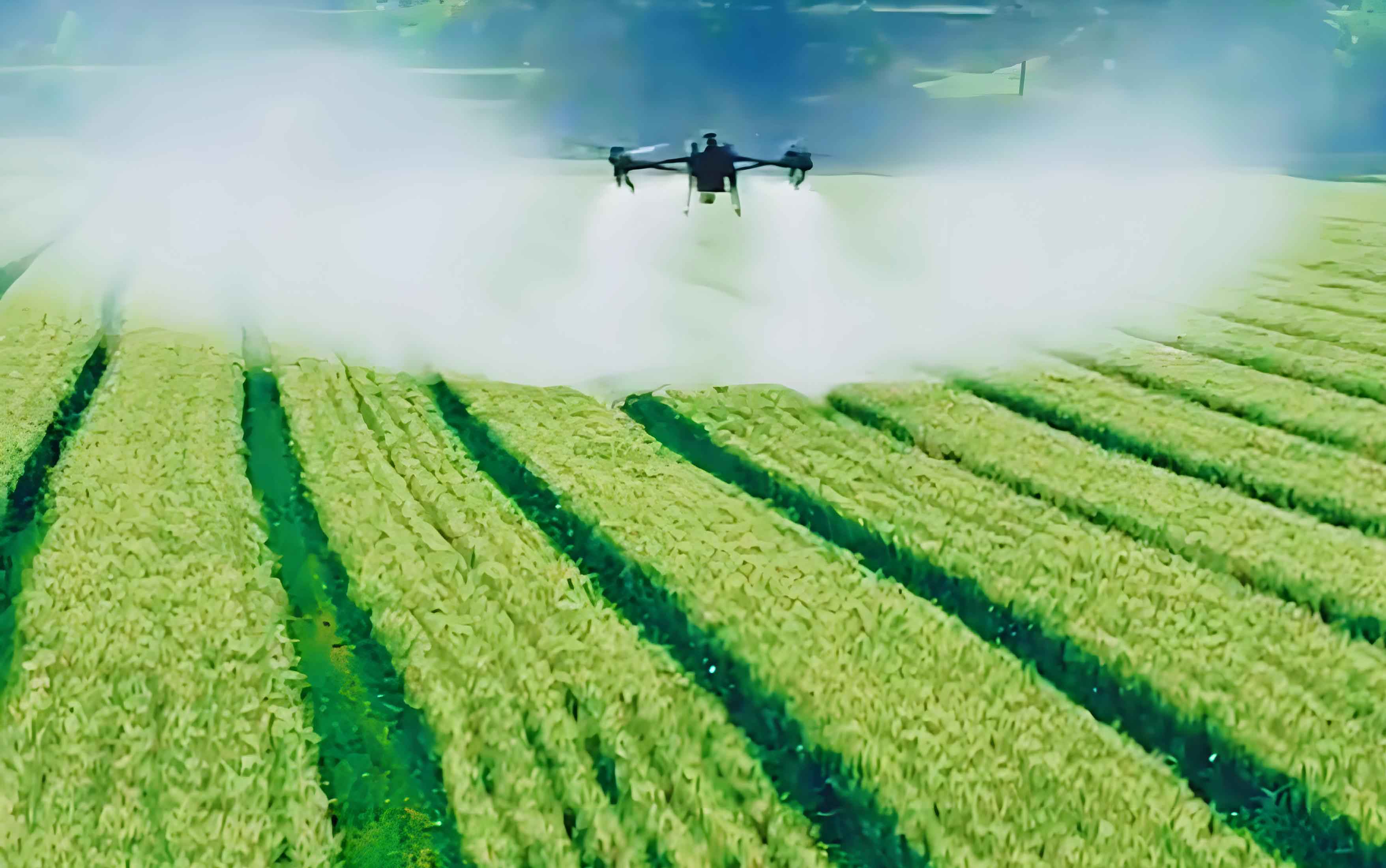
The core components of a crop spraying drone include the flight platform, control system, power system, and spraying mechanism. Each part plays a critical role in ensuring efficient operation. For example, the flight platform provides structural integrity and houses other modules, while the control system acts as the brain, integrating GPS and remote control for precise navigation. The power system, typically comprising batteries and motors, supplies the necessary energy, and the spraying system delivers agrochemicals with high accuracy. To illustrate the efficiency gains, consider the following table comparing traditional methods with drone-based applications in citrus orchards:
| Aspect | Traditional Methods | Crop Spraying Drone |
|---|---|---|
| Operation Time (per hectare) | 2-3 hours | 15-20 minutes |
| Pesticide Usage | High (up to 20% waste) | Low (5-10% savings) |
| Coverage Uniformity | Variable (60-80%) | Consistent (85-95%) |
| Labor Cost | High | Reduced by 50-70% |
Mathematically, the effectiveness of a spraying UAV can be modeled using coverage efficiency formulas. For instance, the spray coverage index (SCI) is defined as: $$ SCI = \frac{A_c}{A_t} \times 100\% $$ where \( A_c \) is the area covered by the spray and \( A_t \) is the total target area. In ideal conditions, a crop spraying drone can achieve an SCI of over 90%, significantly higher than the 70-80% typical of manual methods. Additionally, the droplet distribution density (DDD) can be expressed as: $$ DDD = \frac{N_d}{A_u} $$ where \( N_d \) is the number of droplets per unit area and \( A_u \) is the unit area. Optimizing these parameters ensures that pesticides or fertilizers reach the intended parts of the citrus trees, such as the undersides of leaves, which are often missed in conventional approaches.
In the context of citrus cultivation, crop spraying drones excel in pest and disease monitoring. By leveraging multispectral and visible light sensors, these spraying UAVs can detect early signs of infestations, such as color changes in leaves indicative of huanglongbing (citrus greening) or mite damage. For example, the normalized difference vegetation index (NDVI) derived from drone data helps identify stress zones: $$ NDVI = \frac{(NIR – Red)}{(NIR + Red)} $$ where NIR is near-infrared reflectance and Red is red light reflectance. Values below 0.3 often signal pest attacks, enabling timely interventions. In one case study, the use of drones increased pest detection accuracy by approximately 30%, leading to more targeted and effective control measures. This proactive approach not only safeguards crop health but also reduces the reliance on broad-spectrum chemicals, aligning with integrated pest management (IPM) principles.
Fertilization is another critical application where crop spraying drones demonstrate superiority. Through variable-rate technology (VRT), these spraying UAVs adjust nutrient delivery based on soil and plant health data. The nutrient requirement for citrus trees can be calculated using: $$ N_r = (C_y \times N_u) – S_a $$ where \( N_r \) is the required nutrient input, \( C_y \) is the target yield, \( N_u \) is the nutrient uptake per unit yield, and \( S_a \) is the soil available nutrient. Drones equipped with flow meters and nozzles ensure precise application, minimizing runoff and environmental contamination. The table below summarizes the benefits observed in drone-assisted fertilization compared to traditional methods:
| Parameter | Traditional Fertilization | Drone-Assisted Fertilization |
|---|---|---|
| Nitrogen Use Efficiency | 40-50% | 70-85% |
| Application Uniformity | Moderate | High |
| Cost per Hectare | $150-200 | $80-120 |
| Time Required | 4-6 hours | 1-2 hours |
Despite these advantages, the adoption of crop spraying drones in citrus farming faces several challenges. Rugged terrain, common in citrus-growing regions, complicates flight stability and navigation. The aerodynamic lift required for a spraying UAV in hilly areas can be modeled as: $$ L = \frac{1}{2} \rho v^2 S C_L $$ where \( \rho \) is air density, \( v \) is velocity, \( S \) is wing area, and \( C_L \) is lift coefficient. Variations in topography cause fluctuations in these parameters, leading to inconsistent spray patterns. Additionally, dense citrus canopies obstruct droplet penetration, resulting in uneven coverage. Technical limitations, such as sensor accuracy and battery life, further impede optimal performance. For instance, the operational time of a typical crop spraying drone is limited to 20-30 minutes per charge, necessitating frequent swaps in large orchards.
To address these issues, several optimization strategies can be employed. Selecting the appropriate type of crop spraying drone is crucial; multi-rotor models with enhanced hover capabilities are better suited for complex canopies and uneven landscapes. Advanced flight control algorithms, such as proportional-integral-derivative (PID) controllers, can stabilize altitude and attitude: $$ u(t) = K_p e(t) + K_i \int_0^t e(\tau) d\tau + K_d \frac{de}{dt} $$ where \( u(t) \) is the control output, \( e(t) \) is the error signal, and \( K_p \), \( K_i \), and \( K_d \) are tuning parameters. Implementing these in spraying UAVs improves resistance to environmental disturbances. Moreover, integrating precision mapping technologies like geographic information systems (GIS) allows for pre-flight path planning. By creating digital elevation models (DEMs) of orchards, drones can follow optimized routes that maximize coverage and minimize resource use.
Another key aspect is the calibration of spraying parameters based on canopy characteristics. The droplet size distribution can be optimized using the Rosin-Rammler equation: $$ F(d) = 1 – \exp\left[-\left(\frac{d}{d_c}\right)^n\right] $$ where \( F(d) \) is the cumulative fraction of droplets smaller than diameter \( d \), \( d_c \) is the characteristic diameter, and \( n \) is the spread parameter. Fine-tuning this for citrus trees ensures that droplets penetrate the canopy effectively. Furthermore, regular maintenance and operator training are essential to mitigate technical failures. In field trials, these measures have increased the overall efficiency of crop spraying drones by up to 25%, demonstrating their practical viability.
Looking ahead, the future of crop spraying drones in citrus cultivation appears promising. Innovations in artificial intelligence and machine learning are enabling autonomous decision-making, where spraying UAVs can adapt to real-time conditions without human intervention. For example, neural networks can process sensor data to identify pest hotspots and adjust spray rates accordingly. The economic benefits are substantial; as shown in the table below, the return on investment (ROI) for adopting drone technology improves over time:
| Year | Initial Investment ($) | Annual Savings ($) | ROI (%) |
|---|---|---|---|
| 1 | 10,000 | 3,000 | 30 |
| 3 | 7,000 (maintenance) | 4,500 | 64 |
| 5 | 5,000 | 6,000 | 120 |
The environmental impact is equally important; by reducing chemical usage by 20-30%, crop spraying drones contribute to healthier ecosystems. In conclusion, as I reflect on the transformative potential of spraying UAVs, it is clear that their integration into citrus cultivation not only enhances productivity but also fosters sustainable practices. Continued research and collaboration among stakeholders will be vital to overcoming existing barriers and unlocking the full capabilities of this technology. Through persistent innovation, crop spraying drones are set to become an indispensable tool in modern agriculture, ensuring food security and environmental stewardship for generations to come.