
As an agricultural researcher focused on precision farming technologies, I have been closely monitoring the rise of agricultural UAV applications in crop protection. Wheat scab, caused by Fusarium graminearum, is a devastating fungal disease that significantly impacts yield and quality worldwide. Traditional control methods, such as self-propelled sprayers, often involve high water usage, potential crop damage from trampling, and inefficiencies in large-scale operations. In recent years, agricultural UAV systems have emerged as a promising alternative, offering advantages like high operational efficiency, reduced chemical and water usage, and minimal crop disturbance. This study aims to evaluate the efficacy of different agricultural UAV models in controlling wheat scab, comparing them with conventional self-propelled sprayers, to provide data-driven insights for widespread adoption in farming systems.
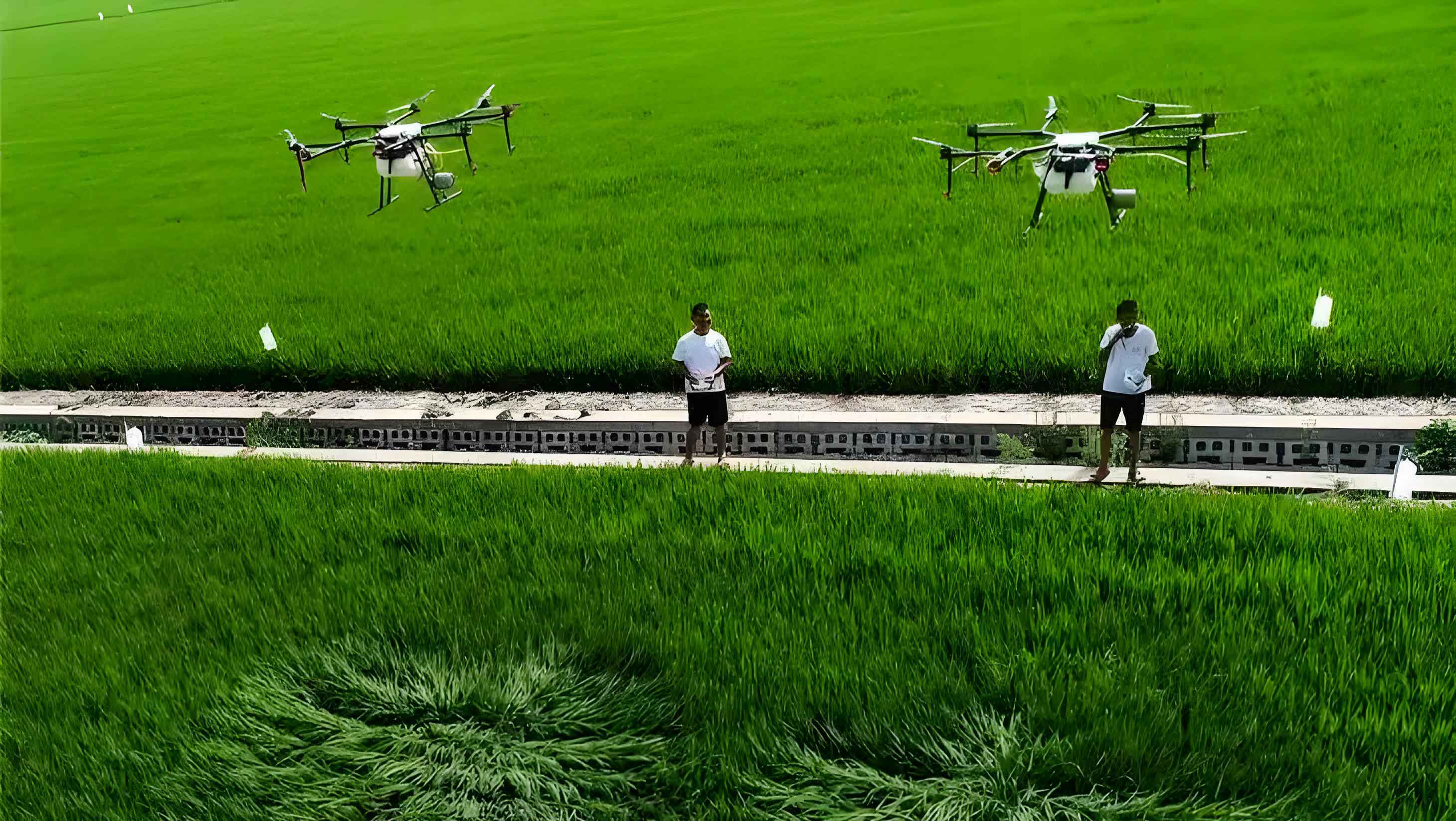
The integration of agricultural UAV technology into pest and disease management represents a paradigm shift in modern agriculture. These unmanned aerial vehicles are equipped with advanced spraying systems that allow for precise application of agrochemicals. The benefits include reduced labor costs, ability to access difficult terrains, and environmental sustainability through targeted spraying. However, the effectiveness of agricultural UAV applications can vary based on factors such as drone model, spray parameters, and environmental conditions. In this context, I conducted a field experiment to systematically assess multiple agricultural UAV types for wheat scab control, with a focus on disease suppression, operational efficiency, and crop safety.
Materials and Methods
The experiment was carried out in a wheat field with a history of rice-wheat rotation. The soil was sandy loam with a pH of 8.2, organic matter content of 18.5 g/kg, available phosphorus of 21.4 mg/kg, and available potassium of 139 mg/kg. The wheat cultivar used was Yangmai 25, sown on November 3, 2018, and it exhibited uniform growth. Wheat scab is a climate-dependent disease that typically infects during flowering, with symptoms appearing during grain filling and causing significant damage at maturity. The disease cycle is influenced by rainfall and humidity, making timely application of fungicides critical.
For fungicide application, three chemicals were utilized: 40% prothioconazole + tebuconazole SC, 25% phenamacril SE, and 43% tebuconazole SC. These were applied twice during the wheat flowering stage to mimic standard scab management practices. The first application occurred at initial flowering (April 24), using 40% prothioconazole + tebuconazole SC at 50 mL per 667 m². The second application was on April 30, using a mixture of 25% phenamacril SE at 100 mL per 667 m² and 43% tebuconazole SC at 20 mL per 667 m². This protocol is designed to provide broad-spectrum control against F. graminearum and prevent resistance development.
To compare application methods, five different agricultural UAV models were selected, along with a conventional self-propelled sprayer as a control. The agricultural UAV models included: DJI T16, XAG P20 (2018 model), Quanfeng Free Eagle 1S, Hanhe Venus II, and Tianying Brother TY-M12L. These models represent a range of commercially available agricultural UAV systems with varying specifications. The conventional sprayer had a 25 m spray width and was operated at standard farm settings. For the agricultural UAV treatments, the spray volume was set at 1.5 L per 667 m², whereas the conventional sprayer used 30 L per 667 m², reflecting typical differences in water usage between these technologies.
The experimental design consisted of seven treatments: one for each agricultural UAV model, the conventional self-propelled sprayer, and a blank control with only water application. Each treatment was replicated in plots arranged in a randomized complete block design to account for field variability. Data collection focused on three main aspects: operational parameters of the application equipment, crop safety, and disease control efficacy.
Operational Data Collection and Analysis
To evaluate the efficiency of each agricultural UAV compared to the conventional sprayer, I recorded key operational metrics during the spraying sessions. These included flight speed (m/s), spray width (m), actual flow rate (L per 667 m²), area covered (667 m²), actual operation time (seconds), theoretical operation time (seconds), and the real operation time ratio, which is the percentage of theoretical time to actual time. The theoretical operation time is calculated based on the ideal conditions of constant speed and spray coverage, while actual time includes turns, refills, and other logistical factors. The real operation time ratio serves as an indicator of operational efficiency, with higher values suggesting less downtime.
For the agricultural UAV systems, the flight speed and spray width are critical parameters that influence the uniformity of fungicide deposition. The flow rate must be calibrated to ensure the desired application rate, and deviations can affect disease control. The data were summarized in a comprehensive table to facilitate comparison. Additionally, I derived formulas to quantify operational efficiency. For instance, the coverage area per unit time can be expressed as:
$$ \text{Coverage Rate} = \frac{\text{Spray Width} \times \text{Flight Speed}}{\text{Actual Flow Rate}} $$
This formula helps assess how efficiently an agricultural UAV covers the field while maintaining the required chemical dosage. Another important metric is the work capacity, defined as the area treated per hour:
$$ \text{Work Capacity} = \frac{\text{Area Covered}}{\text{Actual Operation Time}} \times 3600 $$
These calculations allow for a nuanced understanding of the performance differences among agricultural UAV models and the conventional sprayer.
| Treatment | Flight Speed (m/s) | Spray Width (m) | Actual Flow Rate (L/667 m²) | Area Covered (667 m²) | Actual Operation Time (s) | Theoretical Operation Time (s) | Real Operation Time Ratio (%) |
|---|---|---|---|---|---|---|---|
| DJI T16 | 4.0 | 5.5 | 1.72 | 65.0 | 4380 | 1971 | 45.0 |
| XAG P20 | 5.5 | 3.5 | 1.55 | 62.1 | 5860 | 2152 | 36.7 |
| Quanfeng Free Eagle 1S | 4.7 | 4.0 | 1.23 | 70.0 | 6900 | 2484 | 36.0 |
| Hanhe Venus II | 5.0 | 6.0 | 1.44 | 9.0 | 390 | 200 | 51.3 |
| Tianying Brother TY-M12L | 4.0 | 4.0 | 1.46 | 8.2 | 623 | 342 | 54.9 |
| Conventional Self-Propelled Sprayer | 1.7 | 25.0 | 29.00 | 75.0 | 1480 | 1177 | 79.5 |
From the table, it is evident that agricultural UAV models generally operated at higher speeds (4.0-5.5 m/s) compared to the conventional sprayer (1.7 m/s), but with narrower spray widths (3.5-6.0 m versus 25 m). The actual flow rates for agricultural UAV systems deviated from the set point of 1.5 L/667 m², with some models exceeding it and others falling short. The conventional sprayer used a much higher volume of water, aligning with traditional practices. The real operation time ratio was highest for the conventional sprayer at 79.5%, indicating relatively efficient use of time, while agricultural UAV models had lower ratios, ranging from 36.0% to 54.9%, due to factors like battery changes, refilling, and maneuvering. This highlights a key challenge in agricultural UAV operations: optimizing logistical support to minimize downtime.
Crop Safety Assessment
An important consideration in adopting agricultural UAV technology is its impact on crop health. Unlike conventional sprayers that may trample plants during field entry, agricultural UAV systems fly above the canopy, potentially reducing physical damage. To assess crop safety, I observed the wheat plants at 3, 5, and 7 days after each fungicide application. Visual inspections were conducted to detect any signs of phytotoxicity, such as leaf burning, chlorosis, or stunted growth. Across all treatments, including both agricultural UAV and conventional sprayer applications, no adverse effects were observed. The wheat plants maintained normal growth and development, indicating that the fungicide formulations and application methods were safe for the crop. This finding supports the notion that agricultural UAV applications can be integrated into crop management without compromising plant health, a significant advantage over machinery that contacts the soil and plants.
Disease Control Efficacy Evaluation
The core objective of this study was to evaluate the efficacy of agricultural UAV systems in controlling wheat scab. Disease assessments were conducted on May 28, during the stable phase of scab development. In each plot, three random points were selected, and 500 wheat ears per point were examined for disease symptoms. The severity of scab was rated on a 0-4 scale: 0 for no disease, 1 for less than 1/4 of the ear area infected, 2 for 1/4 to 1/2 infected, 3 for 1/2 to 3/4 infected, and 4 for more than 3/4 infected. From these data, the disease incidence (percentage of diseased ears) and disease index were calculated using standard formulas.
The disease incidence is given by:
$$ \text{Disease Incidence} = \frac{\text{Number of Diseased Ears}}{\text{Total Ears Surveyed}} \times 100\% $$
The disease index, which accounts for severity levels, is calculated as:
$$ \text{Disease Index} = \frac{\sum (\text{Number of Ears at Each Severity Level} \times \text{Severity Level Value})}{\text{Total Ears Surveyed} \times 4} \times 100\% $$
Here, the severity level values range from 0 to 4, and the denominator normalizes the index to a percentage scale. The control efficacy based on disease incidence and disease index was then determined using the formula:
$$ \text{Control Efficacy} = \frac{\text{Disease Measure in Control} – \text{Disease Measure in Treatment}}{\text{Disease Measure in Control}} \times 100\% $$
where the disease measure can be either incidence or index. These calculations provide a quantitative measure of how well each agricultural UAV treatment suppressed scab compared to the untreated control and the conventional sprayer.
| Treatment | Disease Incidence (%) | Disease Index | Control Efficacy Based on Incidence (%) | Control Efficacy Based on Index (%) |
|---|---|---|---|---|
| DJI T16 | 6.3 | 0.200 | 83.1 | 87.1 |
| XAG P20 | 7.6 | 0.325 | 79.6 | 79.0 |
| Quanfeng Free Eagle 1S | 6.6 | 0.250 | 82.3 | 83.9 |
| Hanhe Venus II | 16.7 | 0.675 | 55.2 | 56.5 |
| Tianying Brother TY-M12L | 10.7 | 0.375 | 71.3 | 75.8 |
| Conventional Self-Propelled Sprayer | 5.6 | 0.175 | 85.0 | 88.7 |
| Blank Control (Water Only) | 37.3 | 1.550 | 0.0 | 0.0 |
The results demonstrate that the conventional self-propelled sprayer achieved the highest control efficacy, with 85.0% based on disease incidence and 88.7% based on disease index. Among the agricultural UAV models, DJI T16 and Quanfeng Free Eagle 1S performed comparably, with efficacies above 80% for both measures (83.1% and 87.1% for DJI T16; 82.3% and 83.9% for Quanfeng Free Eagle 1S). XAG P20 and Tianying Brother TY-M12L showed moderate efficacies, ranging from 71.3% to 79.6%, while Hanhe Venus II had the lowest efficacies at 55.2% and 56.5%. These variations can be attributed to differences in spray uniformity, droplet size distribution, and operational parameters among agricultural UAV systems. The data suggest that selecting an appropriate agricultural UAV model is crucial for effective disease management.
Impact on Grain Quality and Yield
Beyond disease control, the effect of application methods on grain quality is vital for farmers. Wheat scab not only reduces yield but can also lead to mycotoxin contamination, affecting marketability. To assess quality, I measured the thousand-grain weight (TGW) from each treatment after harvest, adjusted to 12.5% moisture content. TGW is a key indicator of grain plumpness and overall yield potential. The relationship between disease control and TGW can be expressed using a simple correlation model:
$$ \text{TGW} = \alpha – \beta \times \text{Disease Index} $$
where α represents the potential TGW under disease-free conditions, and β is the reduction coefficient due to scab. This linear approximation helps quantify yield losses associated with poor disease control.
| Treatment | Thousand-Grain Weight (g) at 12.5% Moisture |
|---|---|
| DJI T16 | 48.23 |
| XAG P20 | 48.19 |
| Quanfeng Free Eagle 1S | 48.22 |
| Hanhe Venus II | 47.93 |
| Tianying Brother TY-M12L | 48.08 |
| Conventional Self-Propelled Sprayer | 48.31 |
| Blank Control (Water Only) | 45.62 |
The TGW data reveal a clear trend: treatments with higher disease control efficacy resulted in heavier grains. The conventional sprayer yielded the highest TGW at 48.31 g, followed closely by DJI T16 (48.23 g) and Quanfeng Free Eagle 1S (48.22 g). In contrast, the blank control had a TGW of only 45.62 g, indicating a yield loss of approximately 5.6% compared to the best treatment. This loss can be attributed directly to scab damage, which impairs grain filling. The use of agricultural UAV systems, particularly high-performing models, thus contributes to preserving yield quality, albeit with slight variations among devices. The correlation coefficient between disease index and TGW was calculated as:
$$ r = -0.92 $$
indicating a strong negative relationship where increased disease severity leads to reduced grain weight. This underscores the importance of effective scab management through technologies like agricultural UAV applications.
Discussion and Technological Implications
The adoption of agricultural UAV technology in wheat scab control offers numerous advantages, but also presents challenges that need addressing. From my observations, agricultural UAV systems such as DJI T16 and Quanfeng Free Eagle 1S can achieve disease control efficacies similar to conventional sprayers, making them viable alternatives for large-scale farming. However, their operational efficiency, as measured by real operation time ratio, is currently lower due to logistical constraints like battery life and refill frequency. Innovations in battery technology, autonomous charging stations, and larger tank capacities could enhance the practicality of agricultural UAV deployments.
Another critical aspect is spray deposition uniformity. Agricultural UAV systems rely on downward airflows to penetrate the crop canopy, which can be influenced by wind conditions and flight altitude. To optimize this, I propose a model for droplet deposition efficiency (DDE):
$$ \text{DDE} = \frac{C_d \times V_d \times A_s}{\rho \times W} $$
where \( C_d \) is the droplet concentration, \( V_d \) is the droplet velocity, \( A_s \) is the spray area, \( \rho \) is the air density, and \( W \) is the wind speed. This formula highlights the need for precise calibration of agricultural UAV parameters to ensure adequate coverage, especially for diseases like scab that require thorough fungicide application during flowering.
Furthermore, the environmental benefits of agricultural UAV systems cannot be overlooked. By reducing water usage from 30 L/667 m² to 1.5 L/667 m², these systems minimize runoff and chemical drift, aligning with sustainable agriculture goals. The reduced physical contact with crops also lowers the risk of soil compaction and plant damage, preserving field integrity over seasons. As agricultural UAV technology evolves, integration with precision agriculture tools—such as multispectral sensors for early disease detection—could enable targeted spraying, further optimizing resource use.
In terms of economic viability, the initial investment in agricultural UAV systems may be high, but long-term savings in labor, water, and chemicals can offset costs. A cost-benefit analysis can be formulated as:
$$ \text{Net Benefit} = (Y_t – Y_c) \times P_y – C_u – C_m $$
where \( Y_t \) and \( Y_c \) are yields from treated and control plots, \( P_y \) is the market price of wheat, \( C_u \) is the UAV operational cost per hectare, and \( C_m \) is the maintenance cost. For farms with large acreages, agricultural UAV applications may prove more economical than traditional methods, especially when considering yield preservation from effective scab control.
Conclusion and Future Directions
Based on this comprehensive study, I conclude that agricultural UAV systems hold significant promise for wheat scab management. Models like DJI T16 and Quanfeng Free Eagle 1S demonstrate control efficacies comparable to conventional self-propelled sprayers, while offering additional benefits in terms of crop safety and environmental sustainability. However, variations in performance among agricultural UAV models underscore the importance of selecting appropriate equipment and optimizing operational parameters.
Future research should focus on refining agricultural UAV technologies to improve operational efficiency, perhaps through automated logistics and enhanced spray systems. Field trials under diverse climatic conditions will help validate these findings and develop best practices for agricultural UAV applications in different regions. Additionally, exploring the integration of agricultural UAV with other smart farming technologies, such as IoT-based monitoring and AI-driven decision support, could revolutionize crop protection strategies.
In summary, the use of agricultural UAV systems for wheat scab control is a forward-looking approach that combines efficacy with sustainability. As an advocate for precision agriculture, I believe that continued innovation and adoption of agricultural UAV technologies will play a pivotal role in ensuring food security and agricultural resilience in the face of challenges like climate change and disease pressure.