
In modern agriculture, the integration of technology has revolutionized pest and disease management, particularly in crop production. As an agricultural engineer specializing in precision farming, I have witnessed firsthand the transformative impact of agricultural drones on corn pest and disease control. Corn, being a staple crop globally, faces persistent threats from pests and diseases that can significantly reduce yield and quality. Traditional methods of spraying pesticides are often inefficient, labor-intensive, and environmentally detrimental. However, with the advent of agricultural drones, we now have a tool that offers unparalleled efficiency, precision, and safety. This article delves into the application of agricultural drones in corn pest and disease control, highlighting their advantages, operational methodologies, and future potential, all from my perspective as a practitioner in the field.
The use of agricultural drones, or unmanned aerial vehicles (UAVs), has gained widespread attention due to their versatility and effectiveness. These drones are equipped with advanced navigation systems, high-resolution cameras, and spraying mechanisms that enable targeted interventions. In corn cultivation, where pests like corn borers and diseases such as blight can cause extensive damage, agricultural drones provide a proactive solution. By leveraging technologies like GPS and GIS, agricultural drones can map fields, monitor crop health, and apply treatments with minimal human intervention. This not only enhances productivity but also aligns with sustainable farming practices by reducing chemical usage and environmental footprint.
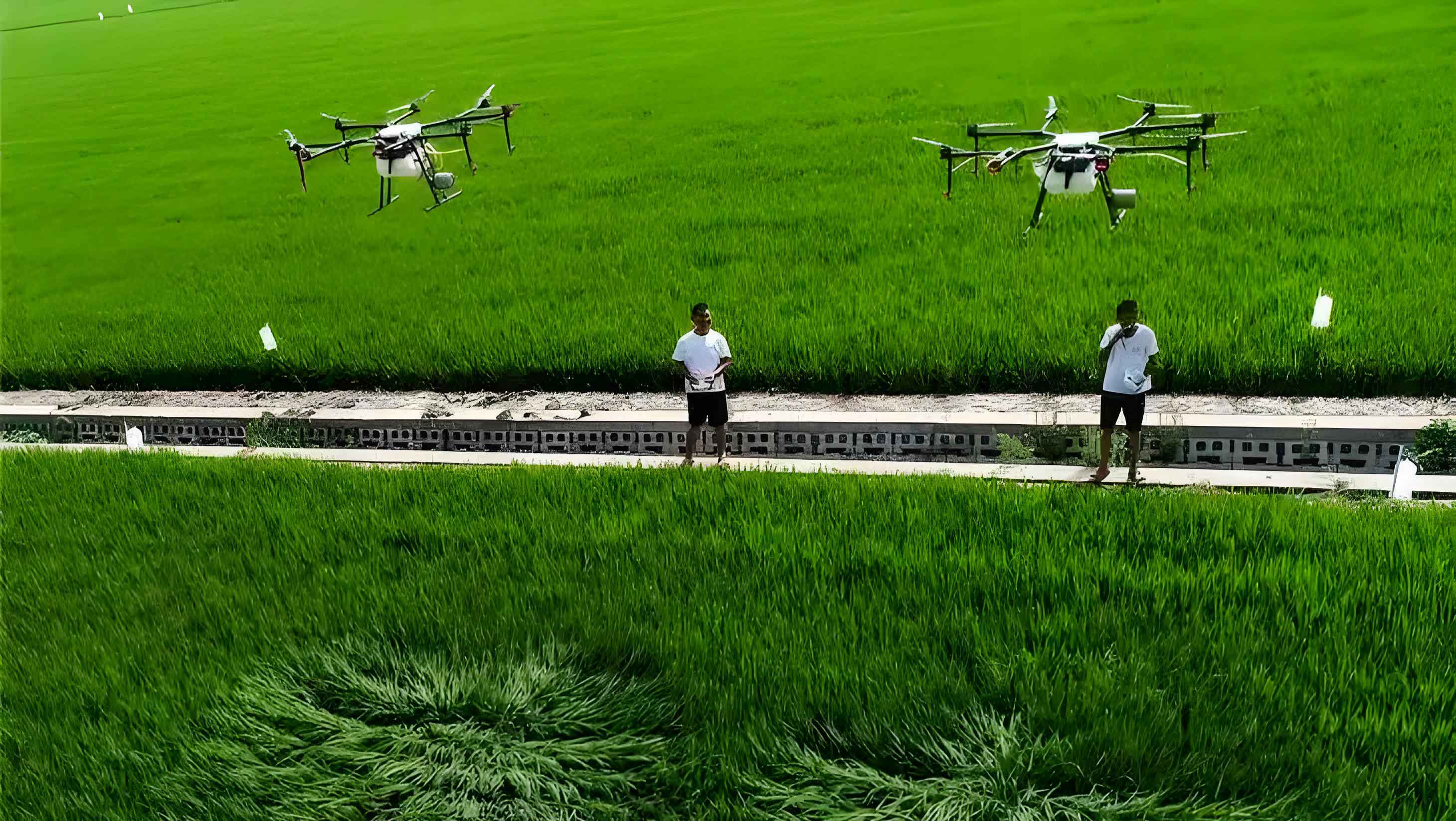
To better understand the impact of agricultural drones, let’s explore their key advantages in detail. The benefits of using agricultural drones in corn pest control are multifaceted, ranging from resource efficiency to enhanced safety. Below is a table summarizing these advantages compared to traditional methods:
| Aspect | Traditional Methods | Agricultural Drone Application | Improvement |
|---|---|---|---|
| Water Usage | High (often excessive) | Low (up to 90% reduction) | 90% savings |
| Pesticide Usage | High (30% adhesion rate) | Low (up to 50% reduction) | 50% savings |
| Operational Efficiency | Slow (manual labor) | Fast (60-120 seconds per acre) | 50x increase |
| Safety | Low (exposure to chemicals) | High (remote operation) | Reduced health risks |
| Precision | Variable (human error) | High (GPS-guided) | Minimized drift and waste |
| Environmental Impact | High (pollution and runoff) | Low (targeted application) | Reduced contamination |
From the table, it’s evident that agricultural drones offer significant improvements. For instance, the reduction in water and pesticide usage can be quantified using efficiency formulas. Let’s consider the pesticide savings: if traditional methods use a baseline amount \( P_t \) and agricultural drones use \( P_d \), the percentage savings \( S \) can be expressed as:
$$ S = \frac{P_t – P_d}{P_t} \times 100\% $$
Given that agricultural drones achieve up to 50% savings, we can set \( P_d = 0.5 P_t \), so:
$$ S = \frac{P_t – 0.5 P_t}{P_t} \times 100\% = 50\% $$
Similarly, for water usage, if traditional methods consume \( W_t \) and drones use \( W_d \), with a 90% reduction, \( W_d = 0.1 W_t \), leading to:
$$ S_w = \frac{W_t – 0.1 W_t}{W_t} \times 100\% = 90\% $$
These savings are crucial in large-scale corn farming, where resource optimization directly impacts profitability and sustainability. Moreover, the operational efficiency of agricultural drones can be modeled using time-based equations. Suppose a traditional manual spray covers an area \( A \) in time \( T_t \), while an agricultural drone covers the same area in \( T_d \). The efficiency gain \( E \) is:
$$ E = \frac{T_t}{T_d} $$
With agricultural drones completing an acre in 60-120 seconds, compared to hours for manual methods, \( E \) can exceed 50, as noted in the table. This rapid response is vital during pest outbreaks, where timing is critical to prevent widespread damage.
Another key advantage of agricultural drones is their uniform spray penetration. The downwash气流 generated by the drone’s rotors creates a vortex that enhances droplet distribution. This can be described using fluid dynamics principles. The airflow velocity \( v \) from the rotors helps in reducing drift and ensuring even coverage. The coverage area \( C \) per unit time can be approximated by:
$$ C = v \times A_s $$
where \( A_s \) is the spray swath width. For agricultural drones, \( A_s \) is optimized through low-altitude飞行, typically 1-2 meters above the crop canopy, which minimizes wind interference. This leads to a more effective application, with pesticide adhesion rates improving from 30% in traditional methods to over 90% with agricultural drones. Such precision is achieved through automated control systems, where operators use handheld devices or apps to adjust flight parameters in real-time.
Safety is a paramount concern in pest control, given the toxicity of pesticides. Agricultural drones mitigate this by enabling remote operation, isolating humans from direct exposure. The risk reduction \( R \) can be expressed as a function of exposure time \( t_e \):
$$ R = 1 – \frac{t_e(\text{drone})}{t_e(\text{manual})} $$
Since agricultural drones require minimal on-field presence, \( t_e(\text{drone}) \approx 0 \), resulting in \( R \approx 1 \), or nearly complete risk elimination. Additionally, agricultural drones can be equipped with cameras for real-time monitoring, allowing for early detection of pest hotspots without physical inspection.
Moving beyond advantages, the application of agricultural drones in corn pest and disease control involves several technical steps. First, route定位 and navigation are critical. Agricultural drones rely on GPS and GIS to plan spraying paths. The process begins with mapping the field using satellite imagery or drone-captured data. Let \( L \) represent the set of coordinates defining the field boundaries. The optimal path \( P \) for the agricultural drone can be computed using algorithms that minimize travel distance while covering the entire area. This can be formulated as a traveling salesman problem variant:
$$ \min \sum_{i=1}^{n-1} d(p_i, p_{i+1}) $$
where \( p_i \) are waypoints and \( d \) is the distance function. Agricultural drones use this to avoid overlaps and gaps, ensuring comprehensive coverage. For pest control, the path is adjusted based on pest incidence maps derived from影像采集. If a region \( R_p \) shows high pest density, the agricultural drone can increase spray concentration or frequency in that area. This targeted approach reduces chemical usage by focusing on affected zones only.
Next,智能规划 of pest control zones is essential. Agricultural drones incorporate no-fly zones to comply with regulations and ensure safety. These zones, such as protected areas or infrastructure, are excluded from the flight path. The planning involves defining a set of constraints \( C_f \) that the agricultural drone must adhere to. For example, if a buffer zone \( B \) around a water source is required, the path \( P \) is modified to avoid \( B \). This is done using geometric algorithms that clip the path against polygon boundaries. The effectiveness of this planning can be measured by the coverage ratio \( CR \):
$$ CR = \frac{A_{\text{treated}}}{A_{\text{total}}} $$
where \( A_{\text{treated}} \) is the area covered by the agricultural drone, and \( A_{\text{total}} \) is the total field area. With precise navigation, \( CR \) approaches 1, indicating complete treatment.
In practice, agricultural drones execute two main tasks: continuous影像采集 and精准喷洒. For影像采集, high-resolution cameras capture multispectral images that highlight stress indicators in corn plants. The normalized difference vegetation index (NDVI) is a common metric used to assess plant health:
$$ \text{NDVI} = \frac{NIR – Red}{NIR + Red} $$
where \( NIR \) is near-infrared reflectance and \( Red \) is red light reflectance. Agricultural drones collect NDVI data over time, allowing for trend analysis. Pest outbreaks often correlate with drops in NDVI, enabling early intervention. The data acquisition rate \( D_r \) of an agricultural drone can be high, with some models capturing images every few seconds, providing a dense dataset for analysis.
For喷洒, agricultural drones are equipped with tanks carrying 10-40 kg of pesticide. The application rate \( AR \) is controlled based on pest severity. If \( S_p \) is the pest severity score from影像采集, the pesticide volume \( V \) can be adjusted:
$$ V = k \times S_p $$
where \( k \) is a calibration constant. This ensures that only necessary amounts are applied, reducing waste. The spray uniformity \( U \) is enhanced by the rotor downwash, which can be modeled using computational fluid dynamics (CFD) simulations. In simple terms, \( U \) is inversely proportional to wind drift \( W_d \):
$$ U \propto \frac{1}{W_d} $$
Agricultural drones operate at low altitudes to minimize \( W_d \), thus maximizing \( U \).
After treatment, agricultural drones conduct post-application巡检 to assess effectiveness. This involves re-imaging the field to measure pest reduction. The efficacy \( E_f \) can be calculated as:
$$ E_f = \frac{P_i – P_f}{P_i} \times 100\% $$
where \( P_i \) and \( P_f \) are initial and final pest densities, respectively. If \( E_f \) is below a threshold, the agricultural drone can be redeployed for additional spraying. This iterative process ensures thorough control.
To illustrate the operational workflow, here’s a table summarizing the steps in agricultural drone-based pest control:
| Step | Description | Technologies Used | Key Metrics |
|---|---|---|---|
| Field Mapping | GPS/GIS to define boundaries and no-fly zones | Satellite imagery, UAV sensors | Area coverage, path length |
| Pest Monitoring | Continuous影像采集 with multispectral cameras | NDVI, thermal imaging | Pest density, health indices |
| Path Planning | Optimizing flight routes for spraying | Algorithms (e.g., TSP), real-time adjustments | Efficiency, overlap rate |
| Pesticide Application | Precise spraying based on pest data | Variable rate technology, nozzles | Application rate, uniformity |
| Post-Treatment Assessment | Re-imaging to evaluate control效果 | Image analysis, data comparison | Efficacy percentage, residual pest levels |
The integration of agricultural drones into corn pest management also involves economic considerations. The cost-effectiveness \( CE \) can be evaluated using a simple formula:
$$ CE = \frac{B}{C} $$
where \( B \) is the benefit (e.g., yield increase, resource savings) and \( C \) is the cost (drone purchase, maintenance, etc.). Studies show that agricultural drones can pay for themselves within a few seasons due to reduced input costs and higher yields. For instance, savings in pesticides and water, coupled with labor reduction, contribute to a positive return on investment.
Looking ahead, the future of agricultural drones in corn pest control is promising. Advances in artificial intelligence (AI) will enable even smarter decision-making. For example, AI algorithms can analyze影像采集 data in real-time to identify specific pest species and recommend tailored treatments. This could involve machine learning models that predict pest outbreaks based on historical data and weather patterns. The predictive accuracy \( PA \) of such models can be expressed as:
$$ PA = \frac{TP}{TP + FP} $$
where \( TP \) is true positives and \( FP \) is false positives. Higher \( PA \) means more reliable interventions, further optimizing the use of agricultural drones.
Moreover, swarm technology, where multiple agricultural drones operate collaboratively, could revolutionize large-scale farming. In a swarm, \( n \) drones work together to cover a field faster. The total coverage time \( T_{\text{swarm}} \) is:
$$ T_{\text{swarm}} = \frac{T_{\text{single}}}{n} $$
assuming perfect coordination. This scalability makes agricultural drones suitable for expansive corn fields, ensuring timely responses to pest threats.
In conclusion, agricultural drones have emerged as a game-changer in corn pest and disease control. From my experience, their ability to save resources, enhance safety, and improve precision is unparalleled. By leveraging technologies like GPS, GIS, and advanced imaging, agricultural drones enable proactive and sustainable management. The formulas and tables presented here underscore the quantitative benefits, from efficiency gains to cost savings. As adoption grows, continued innovation will further integrate agricultural drones into the agricultural ecosystem, paving the way for smarter, greener farming practices. The journey with agricultural drones is just beginning, and I am confident that their role in securing crop health and productivity will only expand in the coming years.
To encapsulate the impact, consider the holistic equation for sustainable pest control using agricultural drones:
$$ \text{Sustainability Index} = \alpha \cdot \text{Efficiency} + \beta \cdot \text{Precision} + \gamma \cdot \text{Safety} $$
where \( \alpha, \beta, \gamma \) are weighting factors reflecting agricultural priorities. With agricultural drones, all three components are maximized, leading to a higher sustainability index and a brighter future for corn cultivation worldwide.