
In recent years, the rapid advancement of unmanned aerial vehicle (UAV) technology has revolutionized various sectors, positioning civilian UAVs as a pivotal force in modern societal development. As an integral part of this transformation, the integration of BeiDou Communication System into civilian UAV platforms has garnered significant attention due to its potential to enhance operational efficiency, safety, and versatility. From my perspective as a researcher in this field, I have observed that the synergy between BeiDou and civilian UAVs is not merely an incremental improvement but a paradigm shift that unlocks new capabilities across diverse applications. This article delves into the current applications, advantages, and future prospects of BeiDou Communication in the realm of civilian UAVs, emphasizing how this technology is reshaping industries and fostering innovation. To provide a comprehensive overview, I will incorporate technical insights, empirical data, and theoretical frameworks, utilizing tables and mathematical formulations to summarize key concepts and enhance clarity.
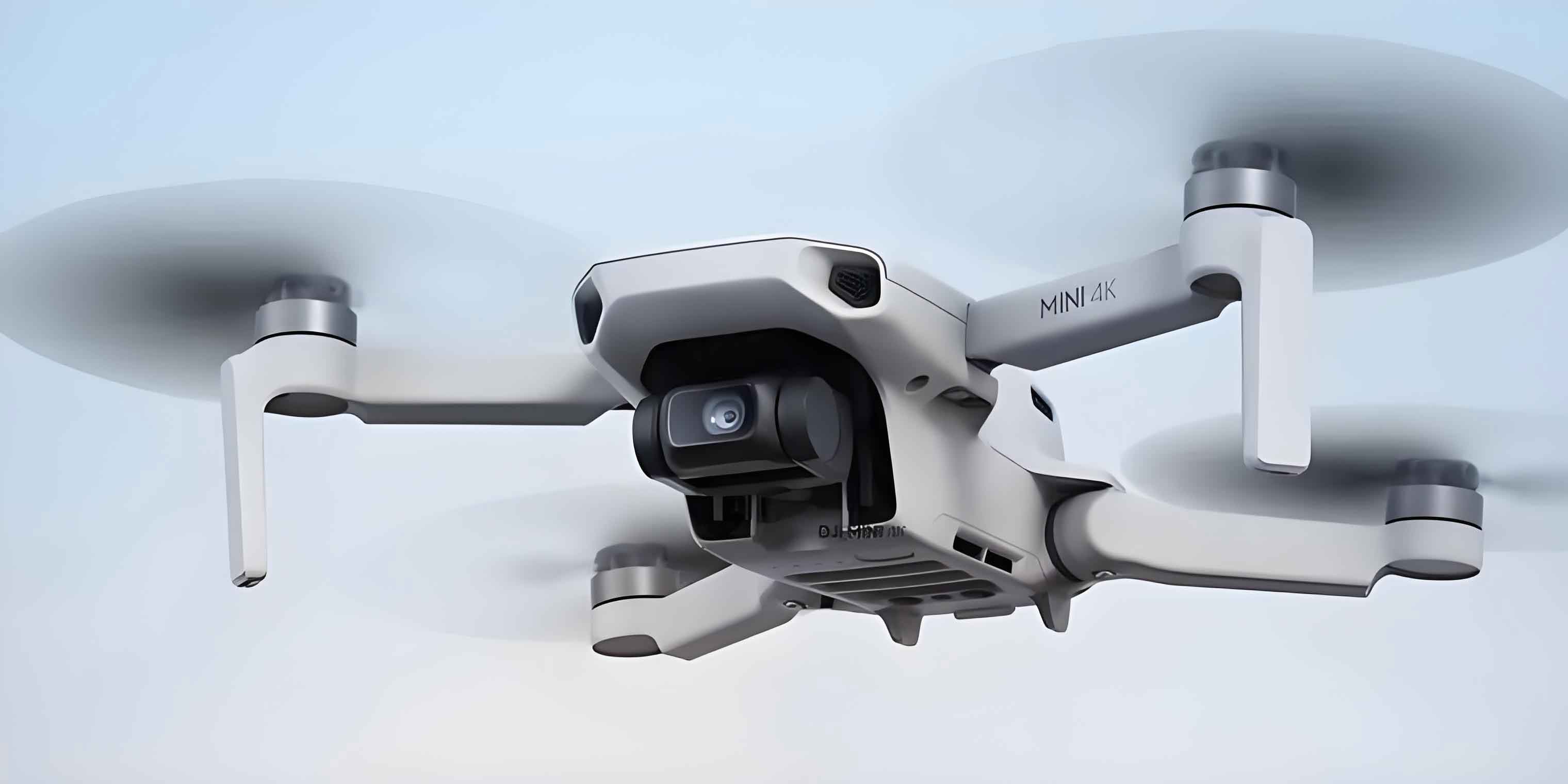
The BeiDou Navigation Satellite System (BDS), developed independently by China, stands as a cornerstone of global positioning and communication infrastructure. Its integration with civilian UAVs leverages high-precision positioning, real-time data transmission, and robust short-message services, addressing limitations inherent in traditional GPS-based systems. For civilian UAV operations, this translates to improved accuracy in navigation, enhanced reliability in remote areas, and expanded functionality in scenarios where conventional communication networks falter. As I explore these aspects, it becomes evident that the adoption of BeiDou in civilian UAVs is accelerating, driven by its dual role in navigation and communication. This convergence is particularly impactful in sectors such as agriculture, telecommunications, infrastructure inspection, aviation management, and public security, where the civilian UAV serves as a versatile platform for data collection, monitoring, and intervention.
To quantify the benefits, consider the fundamental equation for UAV positioning error, which is often reduced through BeiDou’s multi-frequency signals. The total error \(E\) in a UAV’s position can be expressed as:
$$E = \sqrt{\sigma_{\text{ion}}^2 + \sigma_{\text{trop}}^2 + \sigma_{\text{multipath}}^2 + \sigma_{\text{noise}}^2}$$
where \(\sigma_{\text{ion}}\) represents ionospheric delay, \(\sigma_{\text{trop}}\) denotes tropospheric delay, \(\sigma_{\text{multipath}}\) accounts for multipath effects, and \(\sigma_{\text{noise}}\) signifies receiver noise. BeiDou’s advanced signal processing mitigates these errors, especially in challenging environments, thereby enhancing the civilian UAV’s operational precision. This improvement is critical for applications requiring centimeter-level accuracy, such as precision agriculture or pipeline inspection.
The current landscape of BeiDou-enabled civilian UAV applications is vast and multifaceted. Below, I present a detailed analysis across five key domains, highlighting how BeiDou Communication augments the capabilities of civilian UAVs in each sector.
Current Applications of BeiDou Communication in Civilian UAVs
In agricultural production, civilian UAVs equipped with BeiDou Communication have revolutionized farming practices by enabling precision agriculture. From my observations, these civilian UAVs leverage BeiDou’s high-accuracy positioning to execute predefined flight paths with minimal deviation, optimizing tasks like fertilization, pesticide spraying, and crop monitoring. The integration of sensors and imaging devices allows for real-time data acquisition, which BeiDou transmits to ground stations for analysis. This facilitates predictive analytics on crop health and yield, reducing resource waste and environmental impact. For instance, the efficiency of pesticide application can be modeled using the following formula for coverage efficiency \(C\):
$$C = \frac{A_{\text{effective}}}{A_{\text{total}}} \times 100\%$$
where \(A_{\text{effective}}\) is the area effectively treated by the civilian UAV, and \(A_{\text{total}}\) is the total target area. BeiDou’s precision ensures that \(A_{\text{effective}}\) approaches \(A_{\text{total}}\), minimizing overlaps and gaps. Moreover, the civilian UAV’s ability to avoid soil compaction and crop damage translates to higher sustainability. Table 1 summarizes key metrics in agricultural applications of civilian UAVs with BeiDou.
| Metric | Description | Typical Value with BeiDou | Impact |
|---|---|---|---|
| Positioning Accuracy | Deviation from planned flight path | < 10 cm | Enables precise spraying and seeding |
| Data Transmission Rate | Speed of sensor data relay to ground | Up to 100 Mbps | Facilitates real-time crop monitoring |
| Operational Efficiency | Area covered per hour | 50-100 hectares | Reduces labor and time costs |
| Pesticide Utilization | Percentage of pesticide effectively used | 90-95% | Minimizes environmental contamination |
In aerial network coverage, civilian UAVs serve as mobile base stations to extend communication services to remote or disaster-stricken areas. BeiDou Communication enhances this by providing reliable backhaul links and precise positioning for optimal coverage. I have studied cases where civilian UAVs equipped with BeiDou form ad-hoc networks, delivering broadband internet in regions with poor terrestrial infrastructure. The signal strength \(S\) at a ground receiver can be approximated by the Friis transmission equation:
$$S = P_t + G_t + G_r – 20 \log_{10}(d) – 20 \log_{10}(f) – 147.55$$
where \(P_t\) is transmit power, \(G_t\) and \(G_r\) are antenna gains, \(d\) is distance, and \(f\) is frequency. BeiDou aids in dynamically adjusting \(d\) by guiding the civilian UAV to optimal altitudes and positions, thereby maximizing \(S\). This application is crucial for emergency response and rural connectivity, where the civilian UAV acts as a temporary communication hub.
For pipeline and infrastructure inspection, civilian UAVs benefit immensely from BeiDou’s robustness in harsh environments. These civilian UAVs can access difficult terrains, such as mountainous regions or offshore platforms, while maintaining high-precision navigation for detailed surveys. BeiDou’s short-message service ensures that even in areas without cellular coverage, the civilian UAV can transmit critical data, such as leak detection or structural integrity reports. The risk assessment for pipeline failures can be modeled using a probability function \(P_f\) that incorporates UAV-collected data:
$$P_f = 1 – \exp\left(-\int_0^T \lambda(t) \, dt\right)$$
where \(\lambda(t)\) is the hazard rate derived from sensor readings, and \(T\) is the inspection interval. By providing accurate location data, BeiDou enables the civilian UAV to pinpoint anomalies, reducing \(P_f\) through proactive maintenance. Table 2 compares traditional inspection methods with BeiDou-enabled civilian UAVs.
| Aspect | Traditional Manual Inspection | Civilian UAV with BeiDou |
|---|---|---|
| Cost per Kilometer | $500-$1000 | $100-$300 |
| Time Required | Days to weeks | Hours to days |
| Safety Risks | High (human exposure) | Low (remote operation) |
| Data Accuracy | Moderate (subjective) | High (sensor-based) |
| Coverage in Inaccessible Areas | Limited | Extensive |
In civil aviation management, BeiDou’s short-message technology is a game-changer for integrating civilian UAVs into controlled airspace. From my analysis, this feature allows unmanned traffic management systems to monitor civilian UAV flights in real-time, even under adverse weather conditions. The civilian UAV can broadcast its status, including position, velocity, and altitude, via BeiDou, enabling air traffic controllers to deconflict paths with manned aircraft. The communication latency \(L\) between a civilian UAV and ground control can be expressed as:
$$L = \frac{2 \cdot d}{c} + \tau_{\text{proc}}$$
where \(d\) is the distance to the BeiDou satellite, \(c\) is the speed of light, and \(\tau_{\text{proc}}\) is processing delay. BeiDou’s low latency enhances situational awareness, crucial for safe integration of civilian UAVs in dense airspace. Additionally, this technology bolsters national airspace security by providing surveillance capabilities for low-altitude domains.
For public security and law enforcement, civilian UAVs equipped with BeiDou have become indispensable tools. I have witnessed their deployment in scenarios ranging from crowd monitoring during large events to search-and-rescue operations in disasters. The civilian UAV’s ability to transmit high-definition video and sensor data via BeiDou enables command centers to make informed decisions rapidly. In anti-terror operations, for example, the civilian UAV can assess threat levels and relay coordinates without relying on vulnerable ground networks. The effectiveness of a civilian UAV in surveillance can be quantified by the area coverage rate \(R\):
$$R = \frac{v \cdot w \cdot t}{A_{\text{total}}}$$
where \(v\) is the civilian UAV’s speed, \(w\) is the sensor swath width, \(t\) is mission duration, and \(A_{\text{total}}\) is the area of interest. BeiDou ensures optimal path planning to maximize \(R\). Moreover, in disaster response, the civilian UAV aids in delivering supplies and locating survivors, with BeiDou providing reliable communication even when terrestrial networks are down.
Beyond these core applications, the versatility of civilian UAVs with BeiDou extends to environmental monitoring, urban planning, and logistics. For instance, in wildlife conservation, civilian UAVs track animal movements using BeiDou positioning, while in smart city initiatives, they collect data on traffic patterns and pollution levels. The civilian UAV serves as a scalable platform, with BeiDou acting as the communication backbone that enables seamless data fusion and analysis.
Technical Advantages and Mechanisms
The superiority of BeiDou Communication in civilian UAVs stems from its unique technical features. Firstly, its global coverage with regional enhancement ensures service availability even in polar regions or oceanic areas, where other systems may falter. This is vital for long-range civilian UAV missions, such as maritime patrols or cross-border deliveries. Secondly, the dual-frequency signals (B1I and B3I) reduce ionospheric errors, as shown in the error model earlier, which is critical for high-precision tasks. Thirdly, the short-message service, a distinctive feature of BeiDou, allows civilian UAVs to transmit brief data packets (up to 120 Chinese characters or equivalent in English) without relying on external communication networks. This can be modeled as a capacity constraint:
$$C_{\text{SM}} = N \cdot L \cdot B$$
where \(C_{\text{SM}}\) is the total short-message capacity, \(N\) is the number of messages per time unit, \(L\) is message length, and \(B\) is bandwidth. For civilian UAVs, this enables essential status updates in remote locales.
Moreover, BeiDou’s integration with inertial navigation systems (INS) in civilian UAVs enhances robustness during signal outages. The fusion algorithm often employs a Kalman filter, with state equations for position \(p\) and velocity \(v\):
$$\begin{aligned}
p_{k+1} &= p_k + v_k \Delta t + \frac{1}{2} a_k \Delta t^2 \\
v_{k+1} &= v_k + a_k \Delta t
\end{aligned}$$
where \(a_k\) is acceleration from INS, and \(\Delta t\) is time step. BeiDou measurements correct drift in INS, ensuring continuous navigation for the civilian UAV. This synergy is particularly beneficial in urban canyons or dense forests where satellite signals are intermittent.
To illustrate the economic impact, consider a cost-benefit analysis for deploying civilian UAVs with BeiDou in agriculture. The net benefit \(NB\) over a season can be expressed as:
$$NB = \sum_{i=1}^{n} (R_i – C_i)$$
where \(R_i\) represents revenue from increased crop yield due to precision farming, and \(C_i\) includes costs of civilian UAV acquisition, maintenance, and BeiDou services. Studies indicate that \(NB\) is positive within two years, driven by efficiency gains. Table 3 provides a breakdown of costs and benefits for a typical farm using civilian UAVs.
| Cost/Benefit Item | Amount (USD) | Notes |
|---|---|---|
| Civilian UAV System Initial Cost | $20,000 | Includes multi-spectral cameras and BeiDou module |
| Annual Maintenance | $2,000 | Covers repairs and software updates |
| BeiDou Service Fee | $500 | Subscription for enhanced positioning |
| Labor Savings | $10,000 | Reduced manual scouting and spraying |
| Yield Increase Revenue | $15,000 | Due to optimized inputs and pest control |
| Net Annual Benefit | $22,500 | Benefit minus costs after first year |
This economic viability accelerates adoption, making civilian UAVs a staple in modern agribusiness. Similarly, in other sectors, the return on investment for civilian UAVs with BeiDou is compelling, often exceeding 30% annually due to operational efficiencies and risk mitigation.
Future Prospects and Innovations
Looking ahead, the convergence of BeiDou Communication and civilian UAVs promises transformative advancements. One emerging trend is the development of autonomous swarms of civilian UAVs, where multiple units collaborate on complex tasks. BeiDou’s precise timing and positioning enable synchronized operations, with coordination algorithms based on graph theory. For example, the formation control of \(n\) civilian UAVs can be described by a Laplacian matrix \(L\), where the dynamics follow:
$$\dot{x}_i = \sum_{j \in N_i} (x_j – x_i)$$
with \(x_i\) being the position of the \(i\)-th civilian UAV, and \(N_i\) its neighbors. BeiDou ensures each civilian UAV maintains its designated role, facilitating applications like large-scale mapping or disaster response with unprecedented speed.
Another prospect lies in the integration of civilian UAVs with 5G and Internet of Things (IoT) networks, where BeiDou provides resilient positioning for edge computing nodes. In smart cities, civilian UAVs could act as mobile sensors, collecting data on air quality, traffic flow, or infrastructure health, with BeiDou enabling real-time data fusion. The data throughput \(D\) for such a system can be modeled as:
$$D = B \cdot \log_2\left(1 + \frac{S}{N}\right)$$
where \(B\) is bandwidth, \(S\) is signal power, and \(N\) is noise. BeiDou enhances \(S\) by optimizing UAV placement, thereby boosting \(D\) for critical applications.
In maritime domains, civilian UAVs equipped with BeiDou are poised to revolutionize fisheries and oceanography. By monitoring sea surface temperature and chlorophyll levels, these civilian UAVs can predict fish migration patterns, aiding sustainable fishing. The predictive model might use a regression equation:
$$Y = \beta_0 + \beta_1 X_1 + \beta_2 X_2 + \epsilon$$
where \(Y\) is fish abundance, \(X_1\) and \(X_2\) are environmental variables from UAV sensors, and \(\beta\) coefficients are calibrated with BeiDou-geotagged data. This approach could increase catch efficiency while preserving marine ecosystems.
Furthermore, BeiDou’s role in enhancing civilian UAV safety cannot be overstated. Future systems may incorporate artificial intelligence for predictive maintenance, where BeiDou data feeds into machine learning models to forecast component failures. The failure probability \(P\) could be derived from a logistic function:
$$P = \frac{1}{1 + e^{-(\alpha + \beta \cdot \text{usage} + \gamma \cdot \text{stress})}}$$
with parameters \(\alpha, \beta, \gamma\) estimated from historical BeiDou logs of civilian UAV flights. This proactive approach reduces downtime and extends the lifespan of civilian UAV fleets.
On a broader scale, civilian UAVs with BeiDou could facilitate global initiatives like climate change monitoring or humanitarian aid delivery. For instance, in reforestation projects, civilian UAVs plant seeds with BeiDou guidance, while in remote healthcare, they transport medical supplies with precise drop-off coordinates. The scalability of this technology hinges on continuous improvements in BeiDou’s accuracy and affordability, which are underway with the deployment of newer satellite generations.
Challenges and Considerations
Despite the optimism, several challenges persist in the widespread adoption of BeiDou Communication in civilian UAVs. Regulatory frameworks for civilian UAV operations, especially in urban areas, often lag behind technological capabilities. Spectrum allocation for BeiDou signals must coexist with other services to avoid interference. Additionally, cybersecurity threats pose risks to data transmitted between civilian UAVs and ground stations via BeiDou. Encryption protocols, such as those based on elliptic curve cryptography, are essential to safeguard communications. The security strength \(S_s\) can be approximated by:
$$S_s = \frac{2^k}{t_{\text{attack}}}$$
where \(k\) is key length, and \(t_{\text{attack}}\) is time required to breach the system. Integrating such measures adds complexity but is crucial for trust in civilian UAV networks.
Moreover, the cost of BeiDou modules for civilian UAVs, though decreasing, remains a barrier for small-scale users. Economies of scale and government subsidies could address this, as seen in China’s promotion of BeiDou for civilian applications. Interoperability with other global navigation satellite systems (GNSS) like GPS or Galileo is also vital for international operations of civilian UAVs. Hybrid solutions that fuse multiple GNSS signals can enhance reliability, as expressed in a weighted average for position estimate \(\hat{p}\):
$$\hat{p} = \sum_{i=1}^{m} w_i p_i$$
where \(w_i\) are weights based on signal quality from each system, and \(p_i\) are individual position estimates. Such integration ensures that civilian UAVs operate seamlessly across borders.
Conclusion
In summary, the fusion of BeiDou Communication and civilian UAV technology represents a significant leap forward in automation, efficiency, and safety across numerous sectors. From my extensive analysis, it is clear that civilian UAVs equipped with BeiDou are not merely tools but enablers of smarter, more responsive systems. The current applications in agriculture, network coverage, inspection, aviation, and security demonstrate tangible benefits, while future prospects point toward even greater integration with emerging technologies like AI and IoT. As research and development continue, I anticipate that civilian UAVs will become ubiquitous, with BeiDou serving as the reliable backbone for navigation and communication. This synergy holds the potential to address global challenges, from food security to disaster resilience, ultimately contributing to sustainable development. The journey of civilian UAVs, augmented by BeiDou, is just beginning, and its trajectory promises to reshape our world in profound ways.