
In recent years, the rapid advancement in drone intelligence and swarm control technologies has transformed unmanned aerial vehicle (UAV) swarm operations from conceptual frameworks into tangible realities on the battlefield. As UAVs become more affordable and capable, the prospect of facing hundreds or thousands of autonomous drones in coordinated attacks—akin to a buzzing swarm—poses a formidable challenge to modern defense systems. From my perspective as a military analyst, this evolution necessitates a deep dive into effective countermeasures. The term “anti-UAV” has thus emerged as a critical focus in contemporary warfare studies, emphasizing the need to neutralize such swarm threats through integrated tactics and technologies. In this article, I will explore the current capabilities, deployment strategies, and tactical applications for anti-UAV operations against swarms, leveraging insights from recent developments and simulations.
The concept of UAV swarms hinges on decentralized control and collective behavior, enabling them to overwhelm traditional defenses through sheer numbers and adaptability. For instance, in a hypothetical conflict scenario, swarms could be deployed for surveillance, electronic warfare, or direct attacks, creating a multi-dimensional threat. Therefore, developing robust anti-UAV measures is not just an option but a necessity for maintaining battlefield superiority. I will analyze this through a structured approach, incorporating tables and mathematical models to summarize key points, while repeatedly emphasizing the importance of anti-UAV systems throughout the discussion.
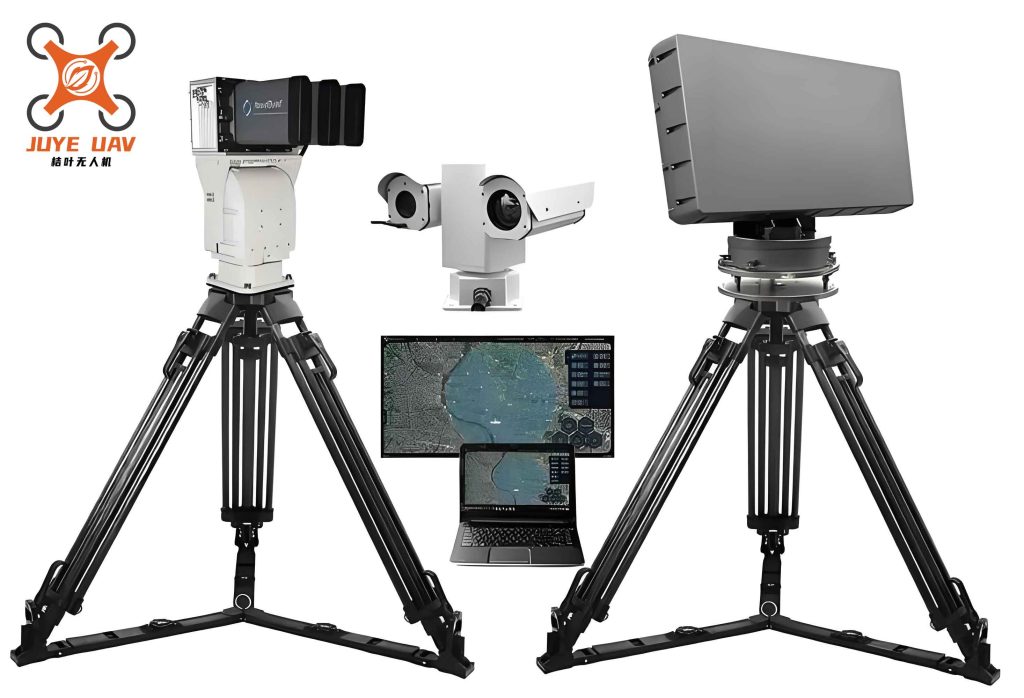
To begin, let’s assess the current state of anti-UAV capabilities against swarms. Anti-UAV operations rely on a triad of functions: detection and tracking, soft-kill measures, and hard-kill methods. Each component faces unique challenges when dealing with swarms due to their low radar cross-section, high mobility, and potential for autonomous operation without continuous communication links. From my analysis, a holistic anti-UAV strategy must integrate these elements to address the swarm’s vulnerabilities effectively.
Current Anti-UAV Capabilities Analysis
In anti-UAV warfare, the ability to detect and track individual drones within a swarm is paramount. I have categorized the primary technologies into radar, electro-optical/infrared (EO/IR), radio frequency (RF) detection, and acoustic sensing. Each has strengths and limitations, as summarized in the table below.
| Detection Method | Effective Range | Advantages | Limitations | Suitability for Swarms |
|---|---|---|---|---|
| Radar Detection | Up to 10 km for medium UAVs | Continuous tracking, establishes target tracks | Poor for low-altitude (below 300 m) small UAVs; cannot identify target type | Moderate; struggles with dense, low-flying swarms |
| EO/IR Tracking | ~5 km | High-resolution identification of multiple targets | Weather-dependent (rain, fog reduce efficacy); difficulty in continuous multi-target tracking | High for close-range identification but limited by environmental factors |
| RF Detection | Up to 40 km | Detects communication links; long range | Cannot locate non-emitting UAVs; imprecise positioning | Low for autonomous swarms without RF emissions |
| Acoustic Sensing | ~1 km | Low-cost; identifies unique drone sounds | Susceptible to environmental noise; short range | Low; ineffective in noisy battlefields |
Mathematically, the detection probability for a radar system against a swarm can be modeled using the radar equation. For a single drone, the signal-to-noise ratio (SNR) is given by:
$$ SNR = \frac{P_t G^2 \lambda^2 \sigma}{(4\pi)^3 R^4 k T_s B F} $$
where \( P_t \) is transmitted power, \( G \) is antenna gain, \( \lambda \) is wavelength, \( \sigma \) is radar cross-section (RCS), \( R \) is range, \( k \) is Boltzmann’s constant, \( T_s \) is system temperature, \( B \) is bandwidth, and \( F \) is noise figure. For a swarm of \( N \) drones, the total RCS may be approximated as \( \sigma_{\text{total}} = N \cdot \sigma \), but interference effects can complicate this. In anti-UAV applications, enhancing SNR through advanced signal processing is crucial, as swarms often have small \( \sigma \) values (e.g., below 0.01 m²).
Soft-kill capabilities in anti-UAV systems involve electronic means to disrupt or deceive drones without physical destruction. These include radio frequency jamming, navigation interference, spoofing, and link hijacking. I have evaluated each technique based on their effectiveness against swarms, which often rely on pre-programmed routines or limited communication.
| Soft-Kill Technique | Mechanism | Effect on UAV | Challenges for Swarms |
|---|---|---|---|
| RF Jamming | Blocks command links via barrage or spot jamming | Causes return-to-home, hover, or crash | May not affect autonomous swarms; requires precise frequency knowledge |
| Navigation Interference | Jams GPS/GNSS signals | Forces alternative navigation or erratic behavior | Effective if swarms use GPS; but can be mitigated by inertial navigation | Navigation Spoofing | Transmits false GPS signals | Leads to incorrect positioning or route deviation | Difficult with multiple spoofers; swarms may default to jammed state |
| Link Hijacking | Exploits protocols to take control | Allows redirection or neutralization | Requires detailed intelligence; high-risk for high-value targets |
The efficacy of jamming can be quantified by the jamming-to-signal ratio (JSR). For a drone at distance \( R_d \) from its controller and \( R_j \) from the jammer, the JSR is:
$$ JSR = \frac{P_j G_j G_{r} \lambda^2}{(4\pi R_j)^2} \cdot \frac{(4\pi R_d)^2}{P_t G_t G_{r} \lambda^2} = \frac{P_j G_j R_d^2}{P_t G_t R_j^2} $$
where \( P_j \) and \( G_j \) are jammer power and gain, and \( P_t \) and \( G_t \) are transmitter power and gain. In anti-UAV scenarios, achieving a JSR > 1 typically disrupts communication, but swarms may use frequency hopping to evade jamming, necessitating broad-spectrum approaches.
Hard-kill methods physically destroy drones using directed energy or conventional weapons. Laser systems, high-power microwaves (HPM), and kinetic interceptors are prominent in anti-UAV defense. I assess their suitability against swarms below.
| Hard-Kill Method | Mechanism | Range | Advantages | Limitations |
|---|---|---|---|---|
| Laser Weapons | Thermal ablation via focused beam | 1-5 km | Precision, low cost per shot, rapid engagement | Weather-sensitive; high power requirements |
| HPM Weapons | Broad-area electromagnetic pulse | Up to 1 km | Can engage multiple drones simultaneously; all-weather capable | Short range; potential collateral damage |
| Conventional Weapons | Missiles, guns, or nets | Varies (e.g., 0.5-10 km) | Proven technology; integrates with existing systems | High cost per engagement; may be overwhelmed by swarms |
The lethal range of a laser anti-UAV system depends on beam intensity. For a drone with a critical irradiance \( I_c \) (e.g., 1 kW/cm² for combustion), the required laser power \( P_l \) at range \( R \) is:
$$ P_l = I_c \cdot \frac{\pi \theta^2 R^2}{4} $$
where \( \theta \) is beam divergence. For swarms, sequential engagement may be too slow, so HPM weapons offer a better solution by affecting a volume \( V \) with energy density \( E \):
$$ E = \frac{P_{\text{HPM}} \tau}{V} $$
where \( P_{\text{HPM}} \) is peak power and \( \tau \) is pulse width. If \( E \) exceeds the drone’s vulnerability threshold, multiple drones can be neutralized at once, making it a potent anti-UAV tool.
Deployment Strategies for Anti-UAV Forces
Based on the operational characteristics of UAV swarms, I propose a multi-layered deployment approach for anti-UAV forces. This involves echeloned, circular, and mobile configurations to create a comprehensive defense-in-depth system. The goal is to achieve early detection and engagement, thereby mitigating the swarm’s numerical advantage.
First, echeloned deployment positions anti-UAV assets in successive lines from the forward edge to the rear. Each line consists of integrated detection, jamming, and firing units capable of independent action. If one line is breached, subsequent lines remain operational. This can be modeled as a series of defensive zones with overlapping coverage. Let \( D_i \) denote the detection probability in zone \( i \), and \( K_i \) the kill probability. The overall probability of neutralizing a swarm before it reaches the protected asset is:
$$ P_{\text{total}} = 1 – \prod_{i=1}^{n} (1 – D_i \cdot K_i) $$
where \( n \) is the number of echelons. For effective anti-UAV defense, \( D_i \) and \( K_i \) should be maximized through sensor fusion and weapon coordination. In practice, forward echelons might emphasize soft-kill measures to degrade the swarm early, while rear echelons focus on hard-kill interception.
Second, circular deployment arranges anti-UAV systems around high-value targets in a ring formation. This ensures 360-degree coverage, countering swarms that attack from multiple directions. The coverage area \( A \) for a system with effective range \( r \) and sector angle \( \phi \) (in radians) is:
$$ A = \frac{1}{2} r^2 \phi $$
By placing \( m \) systems evenly around a circle of radius \( R_t \), the total coverage can be made contiguous if \( m \cdot \phi \geq 2\pi \). For anti-UAV applications, systems with different ranges (e.g., short-range jammers and long-range missiles) can be mixed to create a layered ring. I recommend prioritizing advanced assets on likely threat axes, such as approach corridors, to enhance the kill chain against dense swarms.
Third, mobile deployment adds dynamism to anti-UAV defenses. Static positions are vulnerable to reconnaissance and saturation attacks. By using vehicle-mounted systems or frequently shifting positions, forces can survive and engage more effectively. The mobility can be quantified by the transition time \( T_t \) between positions and the operational readiness \( R_o \) during movement. To maintain continuous coverage, the fraction of time systems are mobile should be minimized, but in anti-UAV operations, unpredictability is key. A simple model for mobile coverage is:
$$ C_{\text{mobile}} = \frac{T_{\text{static}}}{T_{\text{static}} + T_t} \cdot A $$
where \( T_{\text{static}} \) is the time spent in a static position. Integrating mobile units with static networks via data links ensures seamless anti-UAV surveillance and engagement.
Tactical Applications in Anti-UAV Swarm Warfare
Drawing from the capabilities and deployment strategies, I have synthesized a comprehensive set of tactics for anti-UAV swarm warfare. These tactics emphasize a combined approach of detection, defense, disruption, obstruction, and destruction—often abbreviated as “D3OD” in anti-UAV jargon. Each element is detailed below, with formulas and tables to illustrate their implementation.
Early Warning and Extended Tracking
Early detection is the cornerstone of anti-UAV operations. By fusing data from radars, EO/IR sensors, RF detectors, and acoustic arrays, a unified air picture can be generated. I propose using a network-centric architecture where sensors share information in real-time. The track initiation time \( T_{\text{init}} \) for a swarm of size \( N \) can be estimated as:
$$ T_{\text{init}} = \frac{N}{\rho \cdot v_{\text{proc}}} $$
where \( \rho \) is the sensor density (sensors per km²) and \( v_{\text{proc}} \) is the processing speed (tracks per second). To improve tracking, machine learning algorithms can classify drones based on kinematic patterns, enhancing the anti-UAV system’s situational awareness. Additionally, deploying airborne early warning platforms can extend the detection horizon, providing more time for countermeasures.
Camouflage and Deception
Passive defense through camouflage reduces the swarm’s targeting efficacy. By using multispectral camouflage nets, deceptive inflatables, and terrain masking, critical assets can be hidden from visual, infrared, and radar observation. The effectiveness of camouflage is measured by the reduction in detection probability \( \Delta D \). For a given sensor type, if the natural detection probability is \( D_0 \), after camouflage it becomes:
$$ D_{\text{camouflaged}} = D_0 \cdot e^{-\alpha C} $$
where \( \alpha \) is a constant and \( C \) is the camouflage level (ranging from 0 to 1). In anti-UAV contexts, combining camouflage with electronic decoys—such as false RF emissions—can mislead swarms into attacking irrelevant areas, thereby conserving defensive resources.
Electronic Disruption and Control
Electronic warfare plays a pivotal role in anti-UAV tactics. I advocate for a blend of jamming and spoofing to confuse swarm communications and navigation. A coordinated electronic attack can be modeled as an optimization problem: maximize the number of disrupted drones subject to power constraints. Let \( x_j \) be a binary variable indicating whether jammer \( j \) is active, and \( y_d \) indicate if drone \( d \) is disrupted. The objective is:
$$ \text{Maximize} \sum_{d} y_d $$
subject to \( \sum_{j} P_j x_j \leq P_{\text{total}} \) and \( y_d \leq \sum_{j} a_{dj} x_j \), where \( a_{dj} = 1 \) if jammer \( j \) can affect drone \( d \). This linear programming approach ensures efficient use of anti-UAV electronic assets. Moreover, for high-value targets, link hijacking can be attempted, though it requires precise protocol knowledge and should be used sparingly to avoid counter-detection.
Flexible Obstruction and Barrier Deployment
Physical and electromagnetic barriers can obstruct swarm advancement. Deploying tethered balloons, nets, or airborne mines along predicted flight paths creates a hazard zone. The probability of a drone encountering a barrier in an area with barrier density \( \sigma_b \) (barriers per km²) is:
$$ P_{\text{encounter}} = 1 – e^{-\sigma_b A_d} $$
where \( A_d \) is the drone’s frontal area. For swarms, dense barrier fields can cause cascading collisions. Electromagnetically, “electronic fences” that emit jamming or spoofing signals in a defined volume can force drones to abort missions. I recommend integrating these barriers with mobile units to adapt to changing threat directions, enhancing the overall anti-UAV resilience.
Integrated Soft and Hard Kill
The final layer involves coordinated strikes using both soft- and hard-kill means. By synchronizing jamming to degrade swarm coordination followed by directed energy or kinetic interceptors, the defense can achieve high attrition rates. The overall kill probability \( K_{\text{total}} \) for a combined engagement is:
$$ K_{\text{total}} = K_{\text{soft}} + (1 – K_{\text{soft}}) \cdot K_{\text{hard}} $$
where \( K_{\text{soft}} \) and \( K_{\text{hard}} \) are the probabilities of success for soft- and hard-kill methods, respectively. In practice, anti-UAV command centers should use real-time data to allocate resources dynamically. For example, laser weapons might target lead drones to disrupt formation cohesion, while HPM systems engage clusters. This multi-domain approach ensures that swarms are neutralized before reaching their objectives.
To illustrate the interplay of these tactics, consider a notional anti-UAV system deployment table:
| Tactical Phase | Anti-UAV Assets Employed | Key Metrics | Expected Outcome |
|---|---|---|---|
| Early Warning | Radar network, RF sensors | Detection range: 20 km; Track accuracy: 95% | Swarm identified 5 minutes before engagement |
| Electronic Disruption | Jammers, spoofers | JSR > 3 across 80% of swarm | 30% of drones lose navigation, 20% forced to return |
| Barrier Deployment | Mobile nets, electronic fences | Barrier density: 0.1 per m² | Additional 25% of drones obstructed or captured |
| Hard-Kill Engagement | Lasers, HPM, missiles | Kill probability per engagement: 0.7 | Remaining drones reduced by 70% per volley |
| Final Defense | Close-in weapons, decoys | Last-ditch interception rate: 90% | Any residual drones neutralized before impact |
This table underscores how sequential application of anti-UAV measures can cumulatively degrade a swarm. The integration of these tactics into a coherent doctrine is essential for future conflicts.
Conclusion
In conclusion, the rise of UAV swarms represents a paradigm shift in modern warfare, demanding innovative anti-UAV solutions. From my analysis, success hinges on a multi-faceted approach that blends advanced detection, layered deployment, and combined tactical applications. The term anti-UAV must be ingrained in military lexicons, as these systems evolve to counter increasingly autonomous and numerous threats. By leveraging technologies such as directed energy, electronic warfare, and network-centric command, defenses can stay ahead of the curve. Furthermore, continuous research into swarm behaviors and vulnerabilities will inform next-generation anti-UAV strategies. As we move forward, I emphasize that collaboration across domains—air, land, sea, and cyber—will be crucial to developing resilient anti-UAV architectures capable of safeguarding assets against the swarm onslaught.
Ultimately, the battle against UAV swarms is not just about technology but about adaptability and integration. By embracing the principles outlined here—early warning, camouflage, electronic disruption, obstruction, and combined strikes—military forces can turn the tide in this emerging domain. The future of anti-UAV warfare will likely see increased automation and AI-driven responses, but the foundational tactics discussed will remain relevant. I encourage ongoing experimentation and war-gaming to refine these concepts, ensuring that anti-UAV capabilities mature in tandem with the threats they aim to neutralize.