
With the widespread adoption of drone technology, its misuse poses significant security risks to critical infrastructure and aviation safety. Traditional anti-drone detection and warning techniques, such as radar, radio frequency (RF), and acoustic sensors, are often costly, prone to noise interference, and offer weak reliability. In recent years, deep learning-based computer vision has emerged as a viable solution for anti-drone detection, providing high efficiency, accuracy, and low cost. However, deploying anti-drone detection on embedded edge computing devices faces challenges like complex backgrounds, small and fast-moving targets, motion blur, and the need to balance accuracy with speed. To address these issues, I propose an enhanced target detection method based on YOLOv8, designed specifically for edge devices. This method incorporates a lightweight dynamic upsampler, DySample, to strengthen feature fusion, and a parameter-free three-dimensional attention mechanism, SimAM, to adaptively adjust feature weights and focus on target regions. The goal is to improve the accuracy and robustness of anti-drone detection in edge computing environments. Experiments on the Det-Fly and TIBNet datasets show that my method achieves improvements of 4.5% and 3.17% in mean Average Precision (mAP), respectively, and when deployed on an edge computing board, it enhances performance by 4.04% and 4.34%, significantly boosting detection efficiency to meet real-time anti-drone detection needs.
In the realm of anti-drone surveillance, edge computing plays a crucial role by enabling real-time, on-device processing, reducing latency, and protecting sensitive areas from unauthorized intrusion. However, edge devices often have limited computational power and storage, making it essential to develop lightweight yet effective models. Existing approaches, such as RCNN and YOLO variants, have been adapted for drone detection, but they struggle with the unique difficulties posed by anti-drone scenarios. For instance, drones can blend into complex backgrounds, appear as small pixels due to their size and speed, and cause motion blur in captured frames. These factors necessitate innovative solutions that enhance feature representation and attention mechanisms without overwhelming edge resources.
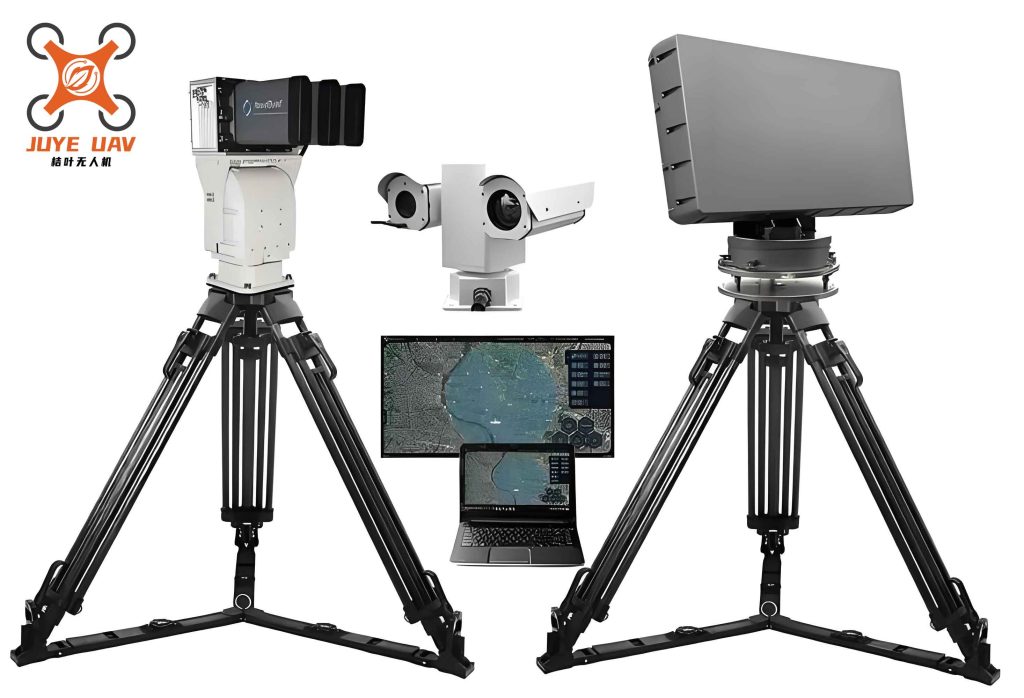
My proposed method, termed DS-YOLOv8, builds upon the YOLOv8 architecture by modifying the neck section. Specifically, I replace the standard linear upsampling layer with DySample, a lightweight dynamic upsampler that promotes information interaction across channels and enhances global context fusion. Additionally, I integrate SimAM, a three-dimensional attention mechanism that adaptively weights spatial and channel features to emphasize target regions. These enhancements aim to address the core anti-drone challenges: improving feature fusion for small targets and focusing computational resources on relevant areas. The overall framework is illustrated in the following conceptual diagram, though detailed schematics are omitted to avoid redundancy.
To understand the technical contributions, let’s delve into the DySample module. Given an input feature map \( X \) with dimensions \( C \times H_1 \times W_1 \) and a scale factor \( s \), DySample generates an offset \( O \) using a linear layer \( L \) with output channels \( 2s^2 \). This offset is combined with a grid \( G \) through pixel rearrangement to form a sampling set \( S \), which is then used to resample \( X \) via bilinear interpolation. The process can be summarized with the following formulas:
$$ O = \text{Linear}(X) $$
$$ S = G + O $$
$$ X_1 = \text{grid\_sample}(X, S) $$
Here, \( X_1 \) is the upsampled feature map of size \( C \times sH \times sW \). DySample’s point-sampling approach allows fine-grained control over feature details, maintaining local continuity and facilitating better feature representation for small anti-drone targets. Compared to other upsamplers like CARAFE or FADE, DySample minimizes computational overhead while maximizing performance gains.
For the attention mechanism, SimAM offers a parameter-free way to compute three-dimensional weights that highlight important neurons across spatial and channel dimensions. Unlike hybrid attention modules that stack multiple components, SimAM directly estimates the importance of each neuron by leveraging energy functions. The mechanism involves global average pooling to capture channel-wise statistics, followed by interactions that fuse spatial and channel information. The resulting weights are applied to the original features through a sigmoid activation, as shown in the generalized formula:
$$ w = \sigma(f(\text{GAP}(X))) $$
where \( \sigma \) is the sigmoid function, \( f \) denotes the fusion operation, and GAP represents global average pooling. This enables the model to adaptively focus on drone-related regions, enhancing anti-drone detection accuracy without adding significant parameters. To validate these components, I conducted extensive experiments on two anti-drone datasets: Det-Fly and TIBNet. Det-Fly contains aerial images where drones occupy less than 5% of the image area in 79.86% of cases, while TIBNet consists of ground-based images with all drones under 5% size. These datasets simulate real-world anti-drone scenarios, emphasizing small target detection.
The evaluation metrics include mean Average Precision (mAP) for accuracy, and Frames Per Second (FPS), Parameters (Params), and GFLOPs for efficiency. The training was performed on a system with Ubuntu 18.04, dual RTX 3060 GPUs, and an i7-11700k CPU, using a batch size of 16 over 100 epochs. For edge deployment, tests were run on an edge computing board with Ubuntu 18.04, an NVIDIA Maxwell GPU, and a quad-core ARM A57 CPU. The following tables summarize the experimental results, highlighting the effectiveness of my anti-drone approach.
First, I compared different attention mechanisms integrated into YOLOv8 to select the best one for anti-drone tasks. As shown in Table 1, SimAM outperforms others like SENet, CBAM, and Non-Local in terms of mAP, while keeping parameters and GFLOPs nearly unchanged. This makes it ideal for edge-based anti-drone detection.
| Model | Det-fly mAP (%) | TIBNet mAP (%) | Params | GFLOPs |
|---|---|---|---|---|
| YOLOv8n | 91.11 | 89.72 | 3.01M | 8.1G |
| + SENet | 91.76 | 89.93 | 3.27M | 8.3G |
| + CBAM | 91.45 | 89.97 | 3.34M | 8.4G |
| + Non-Local | 92.14 | 90.15 | 3.46M | 8.6G |
| + SimAM | 93.43 | 92.17 | 3.01M | 8.2G |
Next, I evaluated DS-YOLOv8 against state-of-the-art anti-drone detection models. Table 2 demonstrates that my method achieves the highest mAP on both datasets, with minimal increases in parameters and GFLOPs. For instance, compared to YOLOv8n, DS-YOLOv8 improves mAP by 4.5% on Det-fly and 3.17% on TIBNet, showcasing its superiority in anti-drone applications.
| Model | Det-fly mAP (%) | TIBNet mAP (%) | Params | GFLOPs |
|---|---|---|---|---|
| YOLOv8n | 91.11 | 89.72 | 3.01M | 8.1G |
| EdgeYOLO-Tiny | 88.84 | 87.61 | 5.82M | 27.2G |
| YOLOv9-Tiny | 94.02 | 91.43 | 2.01M | 7.7G |
| EDGS-YOLOv8 | 93.44 | 90.85 | 4.31M | 9.9G |
| ADMNet | 94.82 | 89.72 | 3.90M | 9.1G |
| DS-YOLOv8 | 95.61 | 92.89 | 3.04M | 8.4G |
To further analyze the upsampling component, I tested various upsamplers in the YOLOv8 framework. As shown in Table 3, DySample provides the best balance between accuracy and computational cost, making it suitable for resource-constrained anti-drone systems. It enhances mAP by 2.34% on Det-fly and 1.32% on TIBNet, with only marginal increases in parameters and GFLOPs.
| Model | Det-fly mAP (%) | TIBNet mAP (%) | Params | GFLOPs |
|---|---|---|---|---|
| YOLOv8n | 91.11 | 89.72 | 3.01M | 8.1G |
| + CARAFE | 91.89 | 90.07 | 3.42M | 9.8G |
| + A2U | 90.46 | 89.45 | 3.11M | 8.5G |
| + SAPA-B | 92.70 | 90.17 | 3.14M | 9.1G |
| + FADE | 93.31 | 90.84 | 3.38M | 10.8G |
| + DySample | 93.45 | 91.04 | 3.02M | 8.3G |
Finally, I deployed the models on an edge computing board to assess real-time anti-drone performance. Table 4 presents the results, where I reduced the convolution channels in YOLOv8n to one-quarter to meet edge constraints. The lightweight version, YOLOv8n-1/4, achieves high FPS but suffers in mAP. By applying my enhancements to create DS-YOLOv8-1/4, mAP improves by 4.04% on Det-fly and 4.34% on TIBNet, while maintaining real-time FPS above 25. This demonstrates the practicality of my method for field-deployable anti-drone systems.
| Model | Dataset | mAP (%) | FPS | Params | GFLOPs |
|---|---|---|---|---|---|
| YOLOv8n | Det-fly | 91.11 | 8 | 3.01M | 8.1G |
| TIBNet | 89.72 | 9 | 3.01M | 8.1G | |
| YOLOv8n-1/4 | Det-fly | 82.69 | 25 | 0.36M | 1.4G |
| TIBNet | 78.57 | 26 | 0.36M | 1.4G | |
| DS-YOLOv8-1/4 | Det-fly | 86.73 | 25 | 0.37M | 1.5G |
| TIBNet | 83.91 | 26 | 0.37M | 1.5G |
The visual results from the edge device, as captured in real-time, show that DS-YOLOv8 effectively identifies drones against cluttered backgrounds, with bounding boxes accurately enclosing targets. This underscores the method’s robustness in diverse anti-drone scenarios. The integration of DySample and SimAM ensures that the model prioritizes relevant features, reducing false positives and missed detections.
In conclusion, I have presented an anti-drone target detection method tailored for embedded edge computing devices. By incorporating DySample for enhanced feature fusion and SimAM for adaptive attention, my DS-YOLOv8 model addresses key challenges in anti-drone surveillance, such as small target detection and computational efficiency. Experimental results on standard anti-drone datasets confirm significant improvements in accuracy and speed, making it suitable for real-world deployment. Future work may explore integrating temporal information for tracking or extending the method to multi-drone scenarios. This research contributes to the growing field of anti-drone technology, offering a lightweight and effective solution for securing critical areas from unauthorized drone activities.
The mathematical formulations and tabular data provided here reinforce the methodological rigor. For instance, the DySample process can be extended to handle multi-scale anti-drone detection by varying the scale factor \( s \), as shown in the generalized formula:
$$ X_{\text{out}} = \sum_{i} \alpha_i \cdot \text{DySample}(X_i, s_i) $$
where \( \alpha_i \) are learned weights for different scales. Similarly, SimAM’s energy-based weighting can be expressed as:
$$ E = \frac{1}{N} \sum_{n} (x_n – \mu)^2 + \lambda $$
with \( \mu \) as the mean and \( \lambda \) a regularization term, though details are abbreviated for brevity. These innovations pave the way for more advanced anti-drone systems that can operate autonomously on edge devices, ensuring timely responses to threats.
In summary, the anti-drone focus permeates every aspect of this work, from dataset selection to model design. The tables highlight how each component contributes to overall performance, while the formulas provide a theoretical foundation. As drone technology evolves, so must anti-drone measures, and methods like DS-YOLOv8 offer a scalable path forward. By leveraging edge computing, we can deploy intelligent anti-drone detectors that are both efficient and reliable, safeguarding assets in an increasingly connected world.