
In recent years, the rapid advancement of unmanned aerial vehicles (UAVs), particularly those characterized as “low, slow, and small” (LSS) targets, has posed significant challenges to national defense and public security. These drones are difficult to detect, track, and counter due to their minimal radar cross-sections, low flight altitudes, and slow speeds. Traditional anti-drone methods, such as kinetic interceptors or electronic warfare, often fall short in terms of accuracy, cost-effectiveness, and adaptability. As a result, the development of directed energy weapons, especially laser-based systems, has emerged as a promising solution for anti-drone operations. In this article, I will explore the current state and future trends of laser weapon anti-drone systems, focusing on key technologies like detection and identification, photoelectric tracking and aiming, and laser damage mechanisms. The integration of these technologies is crucial for creating robust anti-drone defenses that can mitigate the growing threat posed by drone swarms and individual UAVs.
The proliferation of drones in both military and civilian domains has accelerated the need for effective countermeasures. Anti-drone systems must evolve to address not only single drones but also coordinated swarms that can overwhelm conventional defenses. Laser weapons offer distinct advantages in this context, including precision strikes, low cost per shot, and rapid engagement times. However, deploying these systems requires overcoming technical hurdles in detection, tracking, and energy delivery. Through this analysis, I aim to provide insights into how laser-based anti-drone technologies are progressing and what innovations may shape their future. The discussion will incorporate tables and mathematical models to summarize critical aspects, reinforcing the importance of a multidisciplinary approach to anti-drone warfare.
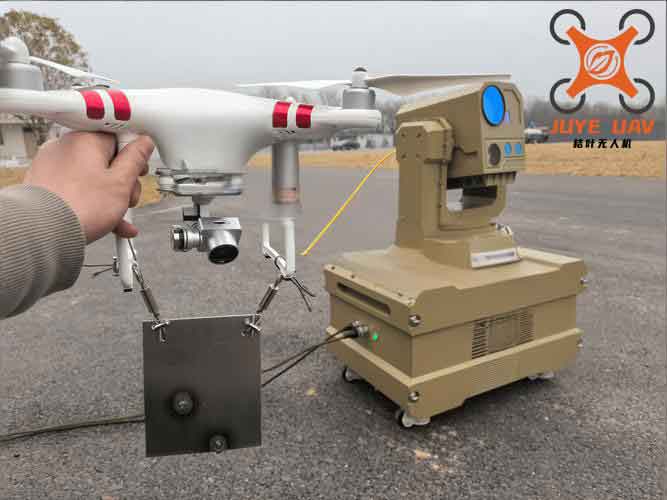
Laser weapon anti-drone systems have gained traction globally, with several nations investing in research and development. The United States, for instance, has pioneered systems like the High Energy Laser Mobile Demonstrator (HELMD) and the Laser Weapon System (LaWS), which have demonstrated capabilities in destroying drones at ranges of several kilometers. These successes highlight the potential of lasers as a viable anti-drone tool. Similarly, countries like Russia and Germany have developed their own systems, such as the ROSC-1 and “Sky Guardian” lasers, respectively, tailored to counter LSS drones. Despite these advancements, challenges remain in scaling these systems for diverse environments, including urban areas and maritime settings where clutter and interference complicate anti-drone operations. In the following sections, I will delve into the key technologies that underpin these systems, emphasizing their role in enhancing anti-drone efficacy.
Current Development Status of Anti-Drone Laser Systems
The evolution of laser weapons for anti-drone applications has been driven by improvements in high-energy laser sources, beam control, and system integration. Initially, laser systems were bulky and required significant power, but recent trends toward miniaturization and increased efficiency have made them more deployable. The core component of any anti-drone laser system is the high-energy laser, which emits a focused beam to thermally damage or destroy drone components. This method offers advantages over kinetic methods, such as reduced collateral damage and the ability to engage multiple targets rapidly. However, the effectiveness of anti-drone lasers depends on complementary technologies for detection and tracking, which I will discuss in detail later.
Internationally, anti-drone laser programs have showcased varying levels of maturity. For example, U.S. systems have achieved notable milestones in field tests, engaging drones at distances exceeding 5 km. These developments underscore the growing reliance on lasers for point defense against drones. In contrast, European and Asian countries are investing in similar technologies, often focusing on modular designs that can be adapted to different platforms, such as ground vehicles, ships, or aircraft. The table below summarizes key anti-drone laser systems and their characteristics:
| Country/Organization | System Name | Laser Power | Effective Range | Key Features |
|---|---|---|---|---|
| United States | HELMD | 10 kW (upgradable) | ~5 km | Mobile, tested against rockets and drones |
| United States | LaWS | 30 kW | ~3 km | Deployed on naval vessels, rapid engagement |
| Russia | ROSC-1 | Classified | Not specified | Focus on suicide drones, integrated detection |
| Germany | Sky Guardian | 50 kW | ~2 km | Beam combining, all-weather capability |
| Other Nations | Various | 5-100 kW | 1-10 km | Research-oriented, emphasizing portability |
This table illustrates the diversity in anti-drone laser approaches, with power and range being critical parameters. As anti-drone threats evolve, these systems must adapt to handle faster and more agile drones, necessitating continuous innovation in laser technology.
Key Technologies in Anti-Drone Laser Systems
To effectively neutralize drones, laser weapon systems rely on a sequence of steps: detection and identification, tracking and aiming, and laser damage delivery. Each step involves sophisticated technologies that must work in harmony to ensure successful anti-drone engagements. In this section, I will break down these technologies, using tables and formulas to elucidate their principles and challenges.
Detection and Identification Technologies
Detecting and identifying drones, especially LSS targets, is a fundamental challenge for anti-drone systems. Traditional methods often fail due to the weak signatures of drones. Therefore, multi-sensor fusion and advanced algorithms are employed to enhance anti-drone detection capabilities. The primary technologies include radar detection, radio frequency (RF) monitoring, and electro-optical/infrared (EO/IR) sensing. Each has strengths and limitations, as summarized in the table below:
| Technology | Principles | Advantages for Anti-Drone | Disadvantages for Anti-Drone |
|---|---|---|---|
| Radar Detection | Emits electromagnetic waves and analyzes echoes using Doppler shift | Long range, all-weather operation | Vulnerable to clutter, difficulty with hovering drones |
| RF Monitoring | Senses communication signals between drone and controller | Passive, can identify drone type | Ineffective against autonomous drones, prone to interference |
| EO/IR Sensing | Uses visible or infrared cameras to capture images | High precision, visual confirmation | Weather-dependent, requires line-of-sight |
For anti-drone applications, a combination of these technologies is often used to compensate for individual weaknesses. For instance, radar can cue EO/IR sensors for finer identification. Mathematical models play a role in enhancing detection. For example, the radar equation can be adapted for drone detection:
$$ P_r = \frac{P_t G_t G_r \lambda^2 \sigma}{(4\pi)^3 R^4 L} $$
Where \( P_r \) is the received power, \( P_t \) is the transmitted power, \( G_t \) and \( G_r \) are antenna gains, \( \lambda \) is the wavelength, \( \sigma \) is the radar cross-section (RCS) of the drone, \( R \) is the range, and \( L \) represents losses. For LSS drones, \( \sigma \) is small, making detection challenging. Anti-drone systems must optimize these parameters to improve sensitivity.
Micro-Doppler (mD) analysis is another key technique for distinguishing drones from birds or other objects. The mD effect arises from periodic movements, such as rotor blades, and can be modeled as:
$$ f_{mD} = \frac{2v}{\lambda} \cos(\theta) $$
Here, \( f_{mD} \) is the micro-Doppler frequency, \( v \) is the velocity of the moving part, and \( \theta \) is the angle relative to the radar. By analyzing these signatures, anti-drone algorithms can classify targets with higher accuracy. However, environmental noise and target variability remain hurdles for robust anti-drone identification.
Photoelectric Tracking and Aiming Technologies
Once a drone is detected, precise tracking and aiming are essential for laser engagement. Anti-drone systems often employ compound-axis servo control systems, which combine coarse and fine tracking mechanisms. The coarse tracking system uses a gimbal-mounted detector to capture targets over wide angles, while the fine tracking system utilizes fast steering mirrors (FSMs) for high-precision adjustments. This dual approach enhances anti-drone tracking performance, especially against agile drones.
The control dynamics can be described using transfer functions. For a coarse tracking axis, a simplified model might be:
$$ G_c(s) = \frac{K_c}{s(T_c s + 1)} $$
Where \( K_c \) is the gain and \( T_c \) is the time constant. For fine tracking with an FSM, the model is often second-order:
$$ G_f(s) = \frac{\omega_n^2}{s^2 + 2\zeta\omega_n s + \omega_n^2} $$
Here, \( \omega_n \) is the natural frequency and \( \zeta \) is the damping ratio. In anti-drone applications, these systems must achieve tracking accuracies on the order of microradians to ensure laser beam placement. The overall compound-axis system can be represented as a feedback loop, where the error between the target and beam position is minimized. Research has shown that such systems can achieve accuracies below 10 μrad, which is critical for effective anti-drone strikes.
The integration of sensors and controllers is vital. For example, charge-coupled device (CCD) cameras or infrared detectors provide real-time position data, processed by digital signal processors (DSPs) to generate control signals. The table below compares tracking technologies used in anti-drone systems:
| Component | Function | Typical Performance | Anti-Drone Relevance |
|---|---|---|---|
| Coarse Gimbal | Wide-area target acquisition | Angular range: ±180° azimuth, ±90° elevation | Essential for initial drone capture |
| Fast Steering Mirror (FSM) | Precise beam steering | Bandwidth: >100 Hz, accuracy: <10 μrad | Enables high-precision anti-drone aiming |
| Control Algorithm | Error correction and stabilization | Uses PID or advanced adaptive methods | Compensates for drone maneuvers |
These technologies ensure that anti-drone laser systems can maintain lock on moving targets, even in turbulent conditions. As drones become faster, the demand for faster response times in tracking systems will grow, pushing innovations in materials and control theory for anti-drone purposes.
Laser Damage Technologies
The final step in anti-drone engagement is delivering sufficient laser energy to disable or destroy the drone. Laser damage mechanisms involve thermal effects, such as melting, vaporization, or structural failure, often termed “hard kill,” and functional disruption of electronics, known as “soft kill.” For anti-drone operations, both mechanisms are relevant, depending on the drone’s materials and design.
The laser intensity required for damage can be estimated using the following formula:
$$ I = \frac{P}{A} = \frac{4P}{\pi d^2} $$
Where \( I \) is the intensity (W/m²), \( P \) is the laser power, and \( d \) is the beam diameter at the target. For a given drone material, the damage threshold intensity \( I_{th} \) must be exceeded. This threshold depends on factors like absorption coefficient and exposure time. A simplified model for thermal damage is:
$$ \Delta T = \frac{\alpha I t}{\rho c_p} $$
Here, \( \Delta T \) is the temperature rise, \( \alpha \) is the absorption coefficient, \( t \) is the exposure time, \( \rho \) is the density, and \( c_p \) is the specific heat. In anti-drone scenarios, lasers with powers of 10-100 kW can achieve damaging intensities at ranges of a few kilometers, provided atmospheric attenuation is managed.
Atmospheric effects, such as scattering and turbulence, reduce laser effectiveness. The Beer-Lambert law describes attenuation:
$$ I = I_0 e^{-\beta R} $$
Where \( I_0 \) is the initial intensity, \( \beta \) is the attenuation coefficient, and \( R \) is the range. For anti-drone systems, adaptive optics may be used to compensate for turbulence, ensuring beam focus. Additionally, target allocation algorithms are crucial when engaging drone swarms. These algorithms optimize which drone to engage first, based on threat level and resource constraints. A common formulation is the weapon-target assignment (WTA) problem, which can be expressed as:
$$ \max \sum_{i=1}^{m} \sum_{j=1}^{n} p_{ij} x_{ij} $$
Subject to:
$$ \sum_{j=1}^{n} x_{ij} \leq 1 \quad \forall i, \quad \sum_{i=1}^{m} x_{ij} \leq w_j \quad \forall j, \quad x_{ij} \in \{0,1\} $$
Here, \( p_{ij} \) is the probability of destroying drone \( j \) with weapon \( i \), \( x_{ij} \) is a binary decision variable, \( m \) is the number of weapons, \( n \) is the number of drones, and \( w_j \) represents weapon availability. For anti-drone lasers, this involves balancing laser dwell time and power across multiple targets. Advanced algorithms, like genetic algorithms or swarm intelligence, are employed to solve these dynamic allocation problems in real-time anti-drone operations.
Damage assessment is another key aspect. After laser engagement, sensors evaluate whether the drone is neutralized. This can involve monitoring changes in drone behavior, such as loss of control signals or visual confirmation of damage. Machine learning techniques are being integrated into anti-drone systems to automate this assessment, enhancing response times.
Future Outlook for Anti-Drone Laser Systems
The future of anti-drone laser technology is poised for significant advancements, driven by trends in artificial intelligence, material science, and system integration. As drone threats evolve toward greater autonomy and swarm capabilities, anti-drone systems must become more intelligent and adaptive. In this section, I will outline potential directions for innovation, emphasizing how they can enhance anti-drone effectiveness.
Intelligent and Comprehensive Detection Warning
Future anti-drone systems will leverage multi-sensor fusion and deep learning to achieve robust detection. By combining radar, RF, EO/IR, and acoustic sensors, these systems can create a comprehensive picture of the airspace, reducing false alarms and improving identification accuracy. Deep learning models, such as convolutional neural networks (CNNs), can be trained on large datasets of drone and non-drone objects to distinguish LSS drones from birds or debris. The integration of these technologies will enable real-time, autonomous anti-drone warnings, crucial for defending critical infrastructure.
Mathematically, sensor fusion can be formulated using Bayesian inference:
$$ P(\text{Drone} | \text{Data}) = \frac{P(\text{Data} | \text{Drone}) P(\text{Drone})}{P(\text{Data})} $$
Where prior probabilities and likelihoods are updated with sensor inputs. For anti-drone applications, this allows for probabilistic tracking and decision-making. Additionally, the use of recurrent neural networks (RNNs) can model temporal patterns in drone movements, enhancing predictive capabilities for anti-drone interception.
Advancements in Laser Weapon Systems
Laser technology itself is evolving toward higher power, better beam quality, and improved efficiency. Solid-state lasers, fiber lasers, and diode-pumped systems are being scaled to megawatt levels while reducing size and weight. This will enable the deployment of anti-drone lasers on diverse platforms, including small vehicles, aircraft, and even satellites. Key research areas include thermal management, power supplies, and adaptive optics for atmospheric correction. The table below summarizes future laser trends for anti-drone use:
| Technology Trend | Expected Impact | Anti-Drone Application |
|---|---|---|
| High-Power Fiber Lasers | Increased power (100+ kW), compact design | Mobile anti-drone units for field deployment |
| Beam Combining | Coherent or spectral combining for higher intensity | Enhanced range and damage against drone swarms |
| Quantum Cascade Lasers | Mid-infrared wavelengths for better atmospheric penetration | All-weather anti-drone engagement |
| Integrated Cooling Systems | Efficient heat dissipation for sustained operation | Prolonged anti-drone defense during swarm attacks |
These advancements will make anti-drone lasers more versatile and cost-effective, allowing for widespread adoption in military and civilian sectors.
Intelligent Anti-Drone Swarm Systems
To counter drone swarms, future systems will incorporate artificial intelligence for autonomous decision-making. This involves not only detection and tracking but also coordinated engagement using multiple laser units or hybrid weapons. AI algorithms can optimize target prioritization, beam scheduling, and damage assessment, creating a networked anti-drone ecosystem. For example, reinforcement learning can be used to train controllers that adapt to swarm tactics in real-time.
A conceptual model for an intelligent anti-drone system might include a central command that processes data from distributed sensors and allocates resources based on threat analysis. The objective function for such a system could be:
$$ J = \sum_{t=0}^{T} \gamma^t R(s_t, a_t) $$
Where \( J \) is the cumulative reward, \( \gamma \) is a discount factor, \( R \) is the reward for state \( s_t \) and action \( a_t \), and \( T \) is the time horizon. In anti-drone contexts, rewards might correlate with drones neutralized or protected assets saved. By leveraging such AI frameworks, anti-drone defenses can become more proactive and resilient.
Moreover, the integration of directed energy with kinetic or electronic measures will provide layered defense. For instance, lasers could be used for soft-kill options to disable drone sensors, followed by hard-kill engagements if needed. This multi-modal approach will be essential for comprehensive anti-drone strategies in complex environments.
Concluding Remarks
In conclusion, laser weapon anti-drone systems represent a transformative technology for addressing the growing threat of LSS drones and swarms. Through advancements in detection, tracking, and damage mechanisms, these systems offer precision, scalability, and cost benefits over traditional methods. However, challenges remain in areas like atmospheric effects, system integration, and adaptive responses to evolving drone tactics. The future of anti-drone warfare will likely see increased reliance on AI-driven, networked systems that can operate autonomously in diverse scenarios. By continuing to innovate in laser technology and complementary fields, we can enhance our anti-drone capabilities and safeguard airspace security. The journey toward fully operational anti-drone laser systems is ongoing, but with concerted effort, they will play a pivotal role in modern defense architectures.
As I reflect on this analysis, it is clear that interdisciplinary collaboration is key. Engineers, scientists, and policymakers must work together to address technical hurdles and ethical considerations. The anti-drone landscape is dynamic, and staying ahead requires continuous research and development. I hope this discussion provides valuable insights for those engaged in crafting the next generation of anti-drone solutions, ultimately contributing to a safer and more secure world.