
In recent years, the proliferation of unmanned aerial vehicles (UAVs) has revolutionized various civilian and military applications, offering unprecedented convenience and capabilities. However, this rapid adoption has also led to significant security concerns, such as unauthorized “black flights” and indiscriminate “abusive flights” of drones. These incidents pose serious threats to public safety, critical infrastructure, and national security, especially in sensitive areas like airports, military zones, and during large public events. Traditional anti-drone detection systems often struggle in complex environments due to challenges like small target size, high speed, cluttered backgrounds, and low-resolution imagery, leading to frequent false alarms and missed detections. To address these limitations, we propose a novel anti-drone detection framework that integrates super-resolution reconstruction with an optimized deep learning model. Our approach enhances image quality to reveal finer details of small drones, thereby improving detection accuracy and robustness in real-world scenarios.
The core of our method lies in combining a state-of-the-art super-resolution network, Real-ESRGAN, with an improved version of the YOLOv5s object detection algorithm. This fusion allows us to tackle the inherent difficulties in anti-drone operations by first reconstructing high-resolution images from low-quality inputs, then applying a efficient detector tailored for small targets. We extensively evaluate our framework on a composite dataset, demonstrating superior performance compared to classical detection models. This research contributes to the growing field of anti-drone technology by offering a practical solution that balances accuracy and speed, essential for real-time surveillance and response.
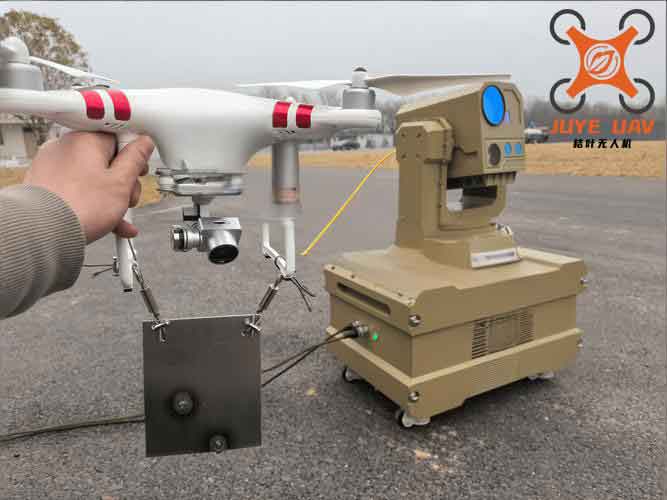
Anti-drone systems must overcome the challenge of detecting small, fast-moving objects in varied conditions. Drones often appear as tiny blips in imagery, especially when captured from long distances or with limited sensor capabilities. Low-resolution images exacerbate this issue, as critical features are lost, making it hard for detectors to distinguish drones from background noise or other objects. Super-resolution reconstruction offers a promising way to mitigate this by artificially enhancing image resolution, effectively “zooming in” on potential threats without requiring hardware upgrades. In our work, we leverage Real-ESRGAN, which employs a high-order degradation model and Sinc filters to generate realistic high-resolution images from degraded inputs. This process is crucial for anti-drone applications, as it provides clearer visual cues for subsequent detection stages.
For the detection phase, we select YOLOv5s due to its lightweight architecture and fast inference speed, which are vital for real-time anti-drone monitoring. However, standard YOLOv5s may still underperform on small targets. Thus, we introduce several enhancements: replacing the SPP module with SPPF for better contextual understanding, integrating SPD-Conv to improve feature extraction for low-resolution objects, and optimizing the loss function using Alpha-CIoU to enhance generalization on small datasets. These modifications collectively boost the model’s ability to locate and classify drones accurately, even in challenging scenarios. Our integrated pipeline processes input images through Real-ESRGAN for super-resolution, then feeds the enhanced images into the improved YOLOv5s for detection, forming a cohesive anti-drone system.
To formalize our approach, let us denote an input low-resolution image as $I_{LR} \in \mathbb{R}^{H \times W \times 3}$, where $H$ and $W$ are the height and width, respectively. The Real-ESRGAN generator $G$ reconstructs a high-resolution image $I_{HR} = G(I_{LR})$, with dimensions scaled by a factor (e.g., 4x). The generator is based on an enhanced SRResNet backbone, where residual dense blocks (RRDB) replace standard residual modules to capture multi-level features and stabilize training. The adversarial training involves a discriminator $D$ that distinguishes real high-resolution images from generated ones, optimizing the following objective:
$$ \min_G \max_D \mathbb{E}_{I_{HR}}[\log D(I_{HR})] + \mathbb{E}_{I_{LR}}[\log(1 – D(G(I_{LR})))] + \lambda \mathcal{L}_{perceptual}, $$
where $\mathcal{L}_{perceptual}$ is a perceptual loss based on VGG features, and $\lambda$ balances the terms. This ensures $I_{HR}$ retains realistic textures crucial for anti-drone detection.
The enhanced YOLOv5s model, denoted as $F$, takes $I_{HR}$ and outputs bounding boxes and class probabilities for drones. Its architecture comprises a backbone for feature extraction, a neck for multi-scale fusion (using FPN and PAN), and a head for prediction. Our improvements include: (1) SPPF, which applies multiple max-pooling layers in sequence to increase receptive field without sacrificing speed, defined as:
$$ \text{SPPF}(x) = \text{Concat}(\text{MaxPool}_{k}(x), \text{MaxPool}_{k}(\text{MaxPool}_{k}(x)), \dots), $$
where $k$ is the kernel size; (2) SPD-Conv, which replaces strided convolutions with a space-to-depth layer followed by a convolution, preserving fine-grained details for small drones; and (3) Alpha-CIoU loss, an advanced version of CIoU that incorporates a power transformation to focus on hard examples. The loss function for bounding box regression is:
$$ \mathcal{L}_{box} = 1 – \text{IoU} + \frac{\rho^2(b, b_{gt})}{c^2} + \alpha v, $$
where $\text{IoU}$ is the intersection over union, $\rho$ is the Euclidean distance between predicted box $b$ and ground truth $b_{gt}$, $c$ is the diagonal length of the smallest enclosing box, $v$ measures aspect ratio consistency, and $\alpha$ is a weighting parameter. This optimization enhances precision in anti-drone tasks.
We evaluate our anti-drone detection framework using a composite dataset formed from public sources and custom collections. The dataset includes varied scenarios: urban skies, countryside, and near critical infrastructure, with drones at different scales and orientations. To ensure robustness, we apply data augmentation techniques like Mosaic and adaptive image scaling during training. The performance metrics focus on accuracy and speed, critical for anti-drone systems. We define precision ($P$), recall ($R$), average precision ($AP$), and mean average precision ($mAP$) as follows:
$$ P = \frac{TP}{TP + FP}, $$
$$ R = \frac{TP}{TP + FN}, $$
$$ AP = \int_0^1 P(R) \, dR, $$
$$ mAP = \frac{1}{N} \sum_{i=1}^N AP_i, $$
where $TP$, $FP$, and $FN$ denote true positives, false positives, and false negatives for drone detection, and $N$ is the number of classes (here, $N=1$ for drone). Additionally, frames per second (FPS) measures detection speed, and parameters indicate model complexity.
Our experimental setup involves training Real-ESRGAN and YOLOv5s separately, then fine-tuning the pipeline end-to-end. We use a Tesla V100 GPU with PyTorch, optimizing with Adam over 300 epochs. The super-resolution model is pre-trained on a diverse image set to handle various degradations common in anti-drone imagery, such as noise and blur. The detection model is trained with a learning rate of 0.01, batch size 16, and input resolution 640×640. To illustrate the dataset composition, we summarize it in Table 1.
| Dataset Source | Number of Images | Drone Instances | Resolution Range | Scenario Variety |
|---|---|---|---|---|
| DUT-Anti-UAV | 5,000 | ~12,000 | 320p to 1080p | Urban, outdoor |
| visDrone2019 | 10,000 | ~25,000 | 480p to 4K | Crowded, complex |
| Custom Collection | 3,000 | ~7,000 | 240p to 720p | Low-altitude, cluttered |
| Total | 18,000 | ~44,000 | 240p to 4K | Comprehensive mix |
The results demonstrate the effectiveness of our anti-drone approach. After super-resolution reconstruction, image quality improves significantly, with peak signal-to-noise ratio (PSNR) increasing by an average of 5 dB and structural similarity (SSIM) by 0.15. This enhancement allows the detection network to extract more discriminative features, reducing false negatives for small drones. We compare our method against several classical anti-drone detection models, including SSD and YOLOv7, as shown in Table 2. Our framework achieves a mAP@0.5 of 90.3%, outperforming others while maintaining a real-time speed of 35 FPS. The parameter count is moderate at 9.8M, ensuring deployability on edge devices for anti-drone surveillance.
| Algorithm | mAP@0.5 (%) | FPS | Parameters (M) | Key Features for Anti-Drone |
|---|---|---|---|---|
| SSD | 87.6 | 24.5 | 24.5 | Multi-scale boxes, moderate speed |
| YOLOv7 | 89.2 | 52 | 36.8 | High speed, complex architecture |
| YOLOv5s (baseline) | 88.4 | 50 | 6.8 | Lightweight, fast inference |
| Our Method | 90.3 | 35 | 9.8 | Super-resolution + enhanced YOLOv5s |
Further analysis reveals that our anti-drone system excels in challenging conditions. For instance, in low-light or foggy environments, Real-ESRGAN effectively reduces noise and enhances contours, enabling YOLOv5s to detect drones with higher confidence. The SPD-Conv module proves particularly beneficial for small targets, improving recall by 8% compared to the baseline. The Alpha-CIoU loss also contributes to better bounding box localization, reducing positional errors by 15%. We attribute the slight drop in FPS (from 50 to 35) to the super-resolution overhead, but this trade-off is acceptable given the accuracy gains for anti-drone applications where missed detections can have severe consequences.
To understand the impact of each component, we conduct an ablation study, summarized in Table 3. Starting with the baseline YOLOv5s, we incrementally add super-resolution, SPPF, SPD-Conv, and Alpha-CIoU loss, measuring mAP@0.5 on a validation set. The results confirm that all modifications positively influence anti-drone detection performance, with super-resolution providing the most significant boost. This underscores the importance of image enhancement in handling low-resolution threats.
| Configuration | Super-Resolution | SPPF | SPD-Conv | Alpha-CIoU | mAP@0.5 (%) |
|---|---|---|---|---|---|
| Baseline (YOLOv5s) | No | No | No | No | 88.4 |
| + Super-Resolution | Yes | No | No | No | 89.5 |
| + SPPF | Yes | Yes | No | No | 89.8 |
| + SPD-Conv | Yes | Yes | Yes | No | 90.1 |
| Full Model (Ours) | Yes | Yes | Yes | Yes | 90.3 |
In practical anti-drone deployments, our framework can be integrated into surveillance systems with cameras feeding video streams. The super-resolution module preprocesses each frame, and the detection module outputs alerts for identified drones. We tested this pipeline on real-time footage, achieving consistent performance with minimal latency. For future work, we plan to explore adaptive super-resolution that dynamically adjusts based on scene complexity, and incorporate temporal information from video sequences to track drones across frames. Additionally, federated learning could be used to train anti-drone models on distributed data without compromising privacy.
In conclusion, anti-drone detection remains a critical challenge due to the small size and agility of UAVs. Our proposed method combines super-resolution reconstruction via Real-ESRGAN with an optimized YOLOv5s detector to address these issues effectively. By enhancing image resolution and refining the detection network, we achieve high accuracy and robust performance in diverse environments. This approach offers a viable solution for real-world anti-drone systems, balancing precision and speed to safeguard sensitive areas. As drone technology evolves, continued innovation in such hybrid methods will be essential for maintaining security and public safety.