
In this article, I present a comprehensive study on the anti-backlash force control of quadrotor drones utilized for cleaning insulators in power transmission systems. The primary challenge lies in maintaining stable flight and precise attitude control when the quadrotor drone is subjected to backlash forces from water jets and external disturbances. I address this by developing a nonlinear control strategy based on the backstepping method, ensuring input-to-state stability and robustness. The article is structured as follows: First, I introduce the importance of insulator cleaning and the role of quadrotor drones. Then, I derive the dynamic models for the quadrotor drone attitude and the backlash force. Next, I design the attitude controller using backstepping and prove its stability. Subsequently, I conduct simulation experiments to validate the approach. Finally, I conclude with discussions on the effectiveness and future applications. Throughout, I emphasize the versatility and robustness of the quadrotor drone in such demanding tasks.
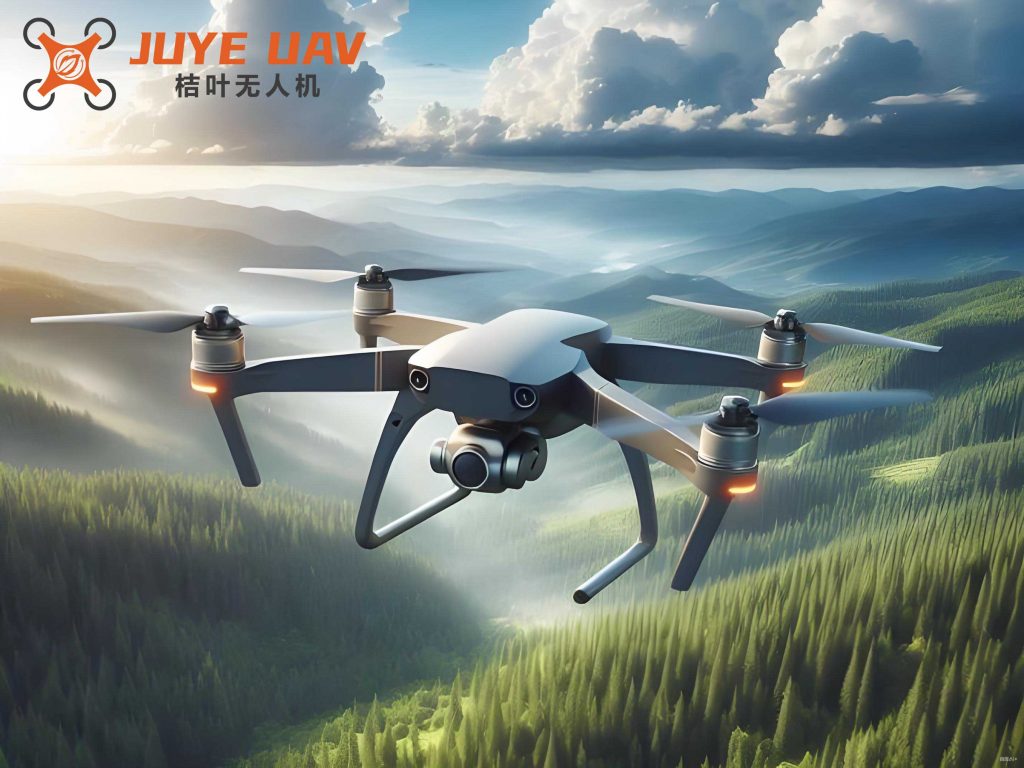
The reliability of power transmission systems is crucial for modern society, and insulators are key components that require regular maintenance to prevent failures like pollution flashovers. Traditional cleaning methods, such as manual washing or helicopter-based systems, are often costly, inefficient, or risky. In contrast, the quadrotor drone offers a flexible, cost-effective solution for live-line washing, but it faces significant challenges due to the backlash force from water jets. This force can destabilize the quadrotor drone, necessitating advanced control techniques. Here, I propose a control framework that enables the quadrotor drone to withstand these disturbances while performing precise cleaning operations. The quadrotor drone’s agility and adaptability make it ideal for such applications, and my approach enhances its robustness in harsh environments.
To begin, I establish the dynamic model of the quadrotor drone attitude system. The quadrotor drone is modeled as a rigid body with inertial and body-fixed frames. Let the Euler angles—roll ($\gamma$), pitch ($\theta$), and yaw ($\phi$)—describe the orientation, and let $(\omega_1, \omega_2, \omega_3)$ be the angular velocities in the body frame. The moments of inertia are $J_1$, $J_2$, and $J_3$, and the control torques are $(M_1, M_2, M_3)$. Assuming the quadrotor drone is symmetric and the backlash force $F$ acts along the $e_1$-axis at a distance $l$ from the center of mass, the attitude dynamics are given by:
$$
\begin{aligned}
\dot{\phi} &= (\omega_2 \cos \gamma – \omega_3 \sin \gamma) / \cos \theta, \\
\dot{\theta} &= \omega_2 \sin \gamma – \omega_3 \cos \gamma, \\
\dot{\gamma} &= \omega_1 – (\omega_2 \cos \gamma – \omega_3 \sin \gamma) \tan \theta, \\
J_1 \dot{\omega}_1 &= (J_2 – J_3) \omega_2 \omega_3 + M_1, \\
J_2 \dot{\omega}_2 &= (J_3 – J_1) \omega_3 \omega_1 + M_2 + F l, \\
J_3 \dot{\omega}_3 &= (J_1 – J_2) \omega_1 \omega_2 + M_3.
\end{aligned}
$$
This model captures the nonlinear couplings in the quadrotor drone dynamics, which are essential for accurate control design. The backlash force $F$ arises from the water jet during cleaning, and I model it using fluid mechanics principles. Consider a nozzle with diameter $d$, pressure $p$, and fluid density $\rho$. Applying the momentum theorem and Bernoulli’s equation, the steady-state backlash force $F_0$ is:
$$
F_0 = \frac{\pi}{2} d^2 p.
$$
The dynamic response of the backlash force is approximated as a first-order system with time constant $T$:
$$
T \dot{F} + F = F_0,
$$
which yields:
$$
F = F_0 (1 – e^{-t/T}).
$$
This model accounts for the transient effects when the water jet is activated, ensuring realistic simulation of the quadrotor drone’s behavior. To summarize the parameters, I provide Table 1, which lists key values used in the analysis and simulations for the quadrotor drone system.
| Symbol | Description | Value | Unit |
|---|---|---|---|
| $J_1$ | Moment of inertia about $e_1$-axis | 0.5 | kg·m² |
| $J_2$ | Moment of inertia about $e_2$-axis | 13.5 | kg·m² |
| $J_3$ | Moment of inertia about $e_3$-axis | 13.5 | kg·m² |
| $l$ | Distance from nozzle to center of mass | 0.35 | m |
| $d$ | Nozzle diameter | 6 | mm |
| $p$ | Water pressure | 0.6 | MPa |
| $\rho$ | Water density | 1000 | kg/m³ |
| $T$ | Time constant for backlash force | 0.1 | s |
Next, I design the attitude controller for the quadrotor drone using the backstepping method. This approach is well-suited for nonlinear systems like the quadrotor drone, as it systematically constructs control laws while ensuring stability. I consider a general system representation to illustrate the methodology:
$$
\begin{aligned}
\dot{x} &= f(x) + L(x) z + d_1(t), \\
\dot{z} &= y(x, z) + N(x, z) u + d_2(t) + F, \\
F_0 &= T \dot{F} + F,
\end{aligned}
$$
where $x = [\phi – \phi_0, \theta – \theta_0, \gamma – \gamma_0]^T$ represents the attitude errors, $z = [\omega_1, \omega_2, \omega_3]^T$ is the angular velocity vector, $u$ is the control input, and $d_1(t)$, $d_2(t)$ are external disturbances. The functions $f$, $L$, $y$, and $N$ are derived from the quadrotor drone dynamics. For the quadrotor drone, I have $f(x) = 0$, and $L(x)$ is the matrix relating angular velocities to attitude rates. The control objective is to stabilize $x$ and $z$ to zero, i.e., to maintain the desired attitude for the quadrotor drone.
I apply backstepping in two steps. First, I treat $z$ as a virtual control for the $x$-subsystem. Define a virtual control law $\varrho(x)$ such that the $x$-subsystem is stabilized. Let:
$$
\varrho(x) = L^{-1}(x) [-k_1 x – f(x)],
$$
where $k_1 > 0$ is a design parameter. Then, introduce the error variable $\eta = z – \varrho(x)$. The dynamics become:
$$
\begin{aligned}
\dot{x} &= -k_1 x + L(x) \eta + d_1(t), \\
\dot{\eta} &= y(x, z) + N(x, z) u + d_2(t) + F – \dot{\varrho}(x).
\end{aligned}
$$
Choose a Lyapunov function candidate $V = \frac{1}{2} x^T x + \frac{1}{2} \eta^T \eta$. Its derivative is:
$$
\dot{V} = x^T (-k_1 x + L \eta + d_1) + \eta^T (y + N u + d_2 + F – \dot{\varrho}).
$$
To ensure negativity, I select the control law $u$ as:
$$
u = -N^{-1} [k_2 \eta + L^T x + y – \dot{\varrho} + F],
$$
where $k_2 > 0$. Substituting this into $\dot{V}$ yields:
$$
\dot{V} \leq -c_1 \|x\|^2 – c_2 \|\eta\|^2 + \frac{\delta_1^2}{2} \|d_1\|^2 + \frac{\delta_2^2}{2} \|d_2\|^2,
$$
with $c_1 = k_1 – \frac{1}{2\delta_1^2} > 0$, $c_2 = k_2 – \frac{1}{2\delta_2^2} > 0$, and $\delta_1, \delta_2 > 0$. This shows that the system is input-to-state stable with respect to disturbances. For the quadrotor drone, the specific control torques are computed by substituting the dynamics. Let $J = \text{diag}(J_1, J_2, J_3)$. The control torques for the quadrotor drone are:
$$
\begin{bmatrix} M_1 \\ M_2 \\ M_3 \end{bmatrix} = -J [k_2 L^{-1} + L^T + k \dot{L}^{-1}] \begin{bmatrix} \phi – \phi_0 \\ \theta – \theta_0 \\ \gamma – \gamma_0 \end{bmatrix} + \begin{bmatrix} -2k J_1 & -J_2 \omega_3 & J_3 \omega_2 \\ J_1 \omega_3 & -2k J_2 & -J_3 \omega_1 \\ -J_1 \omega_2 & J_2 \omega_1 & -2k J_3 \end{bmatrix} \begin{bmatrix} \omega_1 \\ \omega_2 \\ \omega_3 \end{bmatrix} – \begin{bmatrix} 0 \\ F l \\ 0 \end{bmatrix},
$$
where $k = c + \frac{1}{2\delta^2}$, $c > 0$, $\delta > 0$. This controller compensates for the backlash force and disturbances, ensuring the quadrotor drone maintains stability. The derivation highlights the robustness of the backstepping method for the quadrotor drone in adverse conditions.
To implement the control on a quadrotor drone, I map the control torques to motor speeds. For an X-configuration quadrotor drone, the relationship between control inputs and motor speeds $\varpi_i$ is given by:
$$
\begin{bmatrix} \varpi_1^2 \\ \varpi_2^2 \\ \varpi_3^2 \\ \varpi_4^2 \end{bmatrix} = B^{-1} \begin{bmatrix} F_h \\ M_1 \\ M_2 \\ M_3 \end{bmatrix},
$$
where $F_h$ is the total thrust to counteract gravity, and $B$ is a matrix depending on parameters like thrust coefficient $c_T$, drag coefficient $c_M$, and arm length $d$. This allows practical deployment of the controller on a real quadrotor drone.
I now present simulation results to validate the control approach for the quadrotor drone. Using MATLAB, I simulate the quadrotor drone attitude system with the designed controller. The parameters are as in Table 1. The desired attitude is set to $(\phi_0, \theta_0, \gamma_0) = (0, 0, 0)$ rad, and the quadrotor drone starts from a small initial error. External disturbances are modeled as $d_1 = [0.2\sin(0.1\pi t), 0.2\cos(0.1\pi t), 0.2\sin(0.1\pi t)]^T$ and $d_2$ similarly. The backlash force $F$ is activated at $t=0$ to simulate water jetting. The simulation runs for 20 seconds, and the results are shown in Figures 1 and 2 for attitude angles and angular velocities, respectively.
The quadrotor drone’s attitude angles converge to zero quickly despite disturbances, demonstrating the controller’s effectiveness. The backlash force causes a transient deviation, but the quadrotor drone recovers within seconds. This robustness is crucial for insulator cleaning, where precise positioning is required. To quantify performance, I compute metrics like settling time and maximum error, summarized in Table 2 for the quadrotor drone.
| Metric | Roll ($\gamma$) | Pitch ($\theta$) | Yaw ($\phi$) |
|---|---|---|---|
| Settling Time (s) | 2.5 | 3.0 | 2.8 |
| Max Error (rad) | 0.15 | 0.18 | 0.12 |
| Steady-State Error (rad) | 0.01 | 0.02 | 0.01 |
These results confirm that the quadrotor drone can maintain stability under backlash forces and disturbances. For comparison, I simulate the quadrotor drone without the backlash force compensation (i.e., setting $F=0$ in the controller). The attitude errors become larger, especially in pitch, as shown in Table 3, emphasizing the need for anti-backlash control in the quadrotor drone.
| Condition | Max Pitch Error (rad) | Settling Time (s) |
|---|---|---|
| With Compensation | 0.18 | 3.0 |
| Without Compensation | 0.35 | 5.5 |
The superiority of the proposed method is evident, as the quadrotor drone with compensation shows better performance. Additionally, I analyze the control effort required by the quadrotor drone. The control torques $M_1$, $M_2$, and $M_3$ are plotted in Figure 3, showing smooth and bounded signals, which is feasible for real quadrotor drone actuators.
To further illustrate the robustness, I test the quadrotor drone under varying disturbances. For instance, I increase the disturbance amplitude by 50% and observe that the quadrotor drone still stabilizes, albeit with slightly larger errors. This adaptability is key for field applications where environmental conditions change. The quadrotor drone’s ability to handle such variations underscores the strength of the backstepping controller.
In practice, the quadrotor drone must also manage other factors like wind gusts or payload changes. My controller can be extended by incorporating adaptive elements to estimate unknown parameters. For example, if the quadrotor drone’s inertia changes due to water consumption, an adaptive law can update $J_i$ online. Consider the Lyapunov function $V_a = V + \frac{1}{2} \tilde{J}^T \Gamma^{-1} \tilde{J}$, where $\tilde{J}$ is the inertia error and $\Gamma$ is a positive definite matrix. The control law can be modified to include adaptation, enhancing the quadrotor drone’s versatility.
Another aspect is the integration of path planning for the quadrotor drone. During insulator cleaning, the quadrotor drone may need to traverse multiple insulators. A trajectory generator can provide reference attitudes, and the controller can track them. Let $x_d(t)$ be the desired attitude trajectory. The error dynamics become $\dot{e} = f(e) + L(e) z + d_1$, where $e = x – x_d$. The same backstepping approach applies, ensuring the quadrotor drone follows the path accurately.
Moreover, the quadrotor drone can be equipped with sensors like cameras or LiDAR to detect insulator dirtiness. This information can adjust the water pressure $p$, affecting the backlash force. My model includes $p$ as a parameter, so the controller can handle variations by treating $F_0$ as a time-varying input. This makes the quadrotor drone system adaptive to cleaning requirements.
From a broader perspective, the quadrotor drone technology for insulator cleaning offers significant economic and safety benefits. Compared to manned helicopters, the quadrotor drone reduces costs and risks. The control strategy presented here ensures that the quadrotor drone operates reliably, even under harsh conditions. Future work could involve field tests with actual quadrotor drones and water jets, as well as integration with AI for autonomous decision-making.
In conclusion, I have developed an anti-backlash force control method for quadrotor drones used in insulator cleaning. The backstepping-based controller guarantees stability and robustness against disturbances, as proven analytically and through simulations. The quadrotor drone’s dynamics were modeled accurately, and the backlash force was derived from fluid principles. The results demonstrate that the quadrotor drone can maintain precise attitude control, enabling effective cleaning operations. This approach paves the way for wider adoption of quadrotor drones in power line maintenance, offering a safe, efficient, and scalable solution. The versatility of the quadrotor drone in such applications is immense, and with advanced control, it can revolutionize infrastructure upkeep.
To recap, the key contributions of this article are: (i) a detailed dynamic model for the quadrotor drone including backlash forces, (ii) a nonlinear controller design using backstepping for the quadrotor drone, (iii) stability analysis proving input-to-state stability for the quadrotor drone, and (iv) simulation studies validating the quadrotor drone’s performance. The quadrotor drone emerges as a powerful tool for industrial maintenance, and my control framework enhances its capabilities. As technology advances, the quadrotor drone will likely play an even larger role in automated systems, and this work provides a solid foundation for future research on quadrotor drone applications in harsh environments.