
In recent years, the rapid proliferation of civilian drones has transformed numerous industries, from film and television to agriculture, surveying, and security. As a key branch of general aviation, these operations typically occur in low-altitude airspace below 1000 meters, where environmental conditions are highly variable and complex. From our perspective, meteorological services are among the most critical foundational supports for safe and efficient drone flights. However, the current lack of systematic and targeted meteorological indicators and保障 measures poses a significant bottleneck to the growth of the general aviation industry, particularly for civilian drones. This article, based on extensive research and collaboration, aims to outline the development of meteorological standards for civilian drones operations and propose a comprehensive meteorological support system. We will delve into the various application fields, analyze meteorological influencing factors, and introduce a multi-sectoral cooperative approach to standard-setting. Furthermore, we will address existing shortcomings in meteorological data application and保障 platforms, offering展望 on building a robust保障体系. Throughout this discussion, we emphasize the importance of integrating diverse data sources, enhancing communication mechanisms, and tailoring services to the unique needs of civilian drones operators.
The expansion of civilian drones across sectors is undeniable. These versatile aircraft are employed for tasks such as aerial photography, plant protection, infrastructure inspection, and even logistics, with their operational scope continually broadening. However, the low-altitude environment where civilian drones operate is fraught with meteorological hazards. Factors like thunderstorms, wind shear, visibility limitations, temperature extremes, and humidity can severely impact flight stability, battery performance, and equipment integrity. For instance, winds exceeding Force 5 on the Beaufort scale can compromise操控 stability, while precipitation and high humidity may lead to electronic corrosion. Our surveys and analyses indicate that meteorological factors contribute to a substantial portion of operational failures, crashes, and financial losses in civilian drones operations. Therefore, establishing precise meteorological standards is not merely an academic exercise but a practical necessity to enhance safety and efficiency.
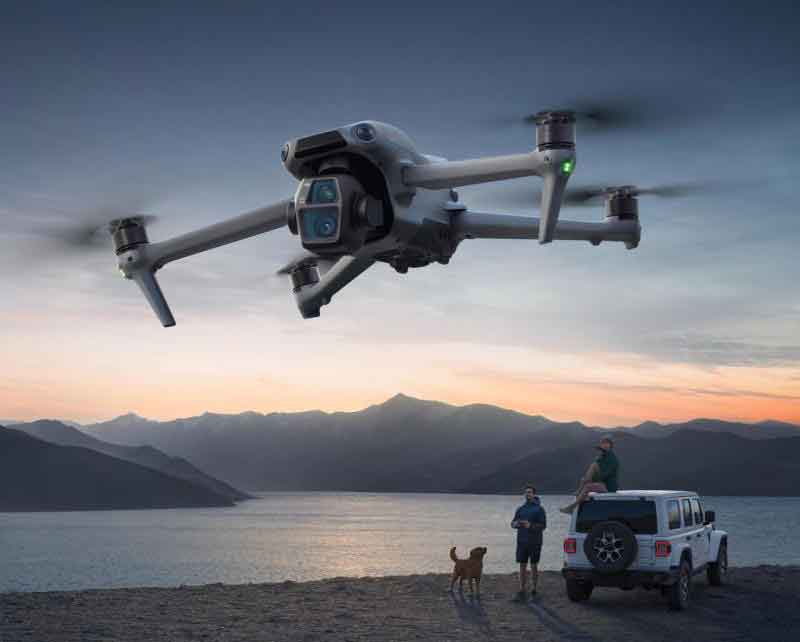
To address these challenges, we advocate for a collaborative framework involving multiple stakeholders. The development of meteorological standards for civilian drones should be a joint effort among meteorological departments, air traffic management authorities, drone training institutions, manufacturers, and application experts. This multi-sectoral cooperation ensures that standards are grounded in real-world experience and technical expertise. Our research began by identifying key application areas for civilian drones, which include but are not limited to aerial filming, agricultural plant protection, surveying and mapping,巡检, security patrols, and logistics delivery. Each of these domains has distinct operational profiles and meteorological sensitivities, necessitating tailored approaches.
We conducted a nationwide survey targeting drone pilots and instructors to quantify the impact of meteorological factors on civilian drones operations. The survey, distributed to 2577 individuals with 2321 valid responses, revealed that environmental unfamiliarity, risky operations, and meteorological conditions were among the top causes of accidents. Specifically, meteorological factors accounted for 18% of reported incidents, highlighting their significance. When asked to select meteorological elements that affect operations, respondents ranked wind as the most influential (29.3%), followed by precipitation (21.7%), temperature (19.2%), visibility (14.3%), relative humidity (10.4%), cloud cover (3.7%), and other factors (1.4%). This data underscores the need for a detailed meteorological index system for civilian drones.
| Meteorological Factor | Percentage of Respondents Indicating Impact (%) | Common Effects on Civilian Drones |
|---|---|---|
| Wind | 29.3 | Reduced stability, trajectory deviation, increased energy consumption |
| Precipitation | 21.7 | Equipment wetting, sensor obstruction, electrical hazards |
| Temperature | 19.2 | Battery performance degradation, material contraction/expansion |
| Visibility | 14.3 | Navigation difficulties, collision risks, impaired camera function |
| Relative Humidity | 10.4 | Corrosion of electronics, condensation on lenses |
| Cloud Cover | 3.7 | Reduced visual reference, potential icing in certain conditions |
| Other (e.g., lightning, turbulence) | 1.4 | Catastrophic failures, sudden control loss |
Based on these insights, we embarked on formulating meteorological standards for civilian drones operations. The process involved reviewing existing literature, technical specifications, and expert consultations to define appropriate thresholds for various meteorological parameters. For example, we developed a standard for plant protection operations using civilian drones, which categorizes meteorological conditions into five等级: suitable, relatively suitable,一般, relatively unsuitable, and unsuitable. This standard includes detailed record-keeping templates for weather forecasts and real-time observations during operations, ensuring that drone pilots have a systematic reference for decision-making. The tables below illustrate examples of such records, adapted for broader civilian drones applications.
| Time Period | Weather Phenomenon | Wind Speed (m/s) | Wind Impact Level | Temperature (°C) | Temp Impact Level | Visibility (m) | Visibility Impact Level | Relative Humidity (%) | Humidity Impact Level | Overall Meteorological Condition Level | Remarks (Key Influencing Factors) |
|---|---|---|---|---|---|---|---|---|---|---|---|
| HH1:HH2 | e.g., Clear, Cloudy | 0-5 | 1 (Suitable) | 15-25 | 1 (Suitable) | >5000 | 1 (Suitable) | 40-60 | 1 (Suitable) | 1 (Suitable) | None |
| HH1:HH2 | e.g., Rain | 10-15 | 4 (Relatively Unsuitable) | 5-10 | 3 (一般) | 1000-2000 | 3 (一般) | >80 | 4 (Relatively Unsuitable) | 4 (Relatively Unsuitable) | Precipitation, High Humidity |
The impact levels are assigned based on predefined thresholds. For instance, wind speed might be categorized as: Level 1 (0-5 m/s), Level 2 (5-8 m/s), Level 3 (8-12 m/s), Level 4 (12-15 m/s), and Level 5 (>15 m/s). Similar scales apply to other factors. To quantify the overall meteorological suitability for civilian drones operations, we propose a composite index derived from weighted contributions of individual factors. This index can be expressed mathematically as:
$$ M_{index} = \sum_{i=1}^{n} w_i \cdot L_i $$
where \( M_{index} \) is the meteorological index for civilian drones operations, \( w_i \) is the weight assigned to factor \( i \), \( L_i \) is the impact level of factor \( i \) (ranging from 1 to 5), and \( n \) is the number of factors considered. The weights can be determined through expert scoring, statistical analysis of accident data, or machine learning models trained on operational outcomes. For example, based on our survey, initial weights might be: wind (0.3), precipitation (0.22), temperature (0.19), visibility (0.14), humidity (0.10), and clouds (0.05). This formula allows for a standardized assessment of conditions, enabling civilian drones operators to make informed go/no-go decisions.
Beyond standard-setting, the meteorological保障 for civilian drones operations faces several challenges. Firstly, meteorological data application capabilities are often insufficient. Many regions lack dense ground-based observation networks, with station spacing too coarse to capture micro-scale variations relevant to civilian drones flights. Remote sensing data from satellites or radar have limitations in spatial resolution or coverage, while gridded reanalysis products like the CLDAS dataset require validation for low-altitude applications. Secondly, civilian drones保障 platforms need advancement. Current systems may suffer from algorithmic and computational constraints, limited battery life, and underdeveloped communication mechanisms between ground, air, and space-based assets. These shortcomings hinder real-time meteorological data integration and预警 dissemination.
To overcome these issues, we envision a comprehensive meteorological support system for civilian drones operations. This system should be built on several pillars:
1. Classification and Meteorological Index System: Civilian drones should be categorized by weight, platform type, and application domain to tailor meteorological indices. For example, the weight classification表 from aviation authorities can guide threshold adjustments. We propose expanding the index formula to include更多 factors and dynamic weights based on operation type:
$$ M_{index, tailored} = \alpha \cdot \sum_{i=1}^{n} w_{i, op} \cdot L_i + \beta \cdot C_{terrain} + \gamma \cdot C_{temporal} $$
Here, \( \alpha, \beta, \gamma \) are scaling coefficients, \( w_{i, op} \) are weights specific to the operation (e.g., logistics vs. filming), \( C_{terrain} \) accounts for terrain complexity (e.g., using a digital elevation model), and \( C_{temporal} \) adjusts for time-of-day effects. This enhances personalization for civilian drones users.
2. Multi-source Data Fusion Products: Integrating high-density ground observations, satellite data,北斗 positioning, and mobile sensor outputs (e.g., from vehicles or other drones) can yield minute-by-minute, high-resolution meteorological forecasts. Techniques like data assimilation and machine learning can improve accuracy. For instance, a fusion model might combine radar reflectivity \( R \), satellite cloud top temperature \( T_c \), and surface wind measurements \( W_s \) to estimate precipitation intensity \( P \) relevant to civilian drones:
$$ P = f(R, T_c, W_s) = a \cdot R^{b} + c \cdot \exp(-d \cdot T_c) + e \cdot W_s $$
where \( a, b, c, d, e \) are parameters calibrated for low-altitude conditions. Such products can provide nowcasts for civilian drones operational zones.
3. Visualized Short-term Warning Functions: Customizable alert systems should be developed, integrating meteorological forecasts with flight path simulation. Using augmented reality电子沙盘, operators can visualize risks along planned routes. Warnings can be triggered when meteorological parameters exceed thresholds, such as wind gusts above 10 m/s or visibility below 1000 m. The risk score \( R_{score} \) for a segment of a civilian drones flight path can be computed as:
$$ R_{score} = \int_{t_1}^{t_2} \left( \sum_{j} \delta_j \cdot I_{j}(t) \right) dt $$
where \( \delta_j \) is the risk权重 for hazard \( j \) (e.g., turbulence, icing), and \( I_{j}(t) \) is an indicator function that is 1 if the hazard is present at time \( t \). This enables proactive re-routing for civilian drones.
4. Ground-Air-Space Communication Mechanisms: Establishing robust communication networks is vital. This includes deploying mobile观测 stations, leveraging 5G for real-time data transmission between civilian drones and ground control, and developing drone swarm coordination protocols. Information on airspace management, route conflicts, and meteorological warnings should be fused into a unified platform, such as the UAV Operation Management System (UOM). The communication framework can be modeled as a network graph where nodes represent civilian drones, ground stations, and satellites, and edges represent communication links with bandwidth \( B \) and latency \( L \). The overall system reliability \( S_{rel} \) might be:
$$ S_{rel} = \prod_{k=1}^{m} (1 – p_{fail, k}) $$
where \( p_{fail, k} \) is the failure probability of link \( k \). Enhancing this reliability ensures timely meteorological data flow for civilian drones.
5. Training and Emergency Response: Standard operating procedures (SOPs) for high-impact weather scenarios should be incorporated into civilian drones pilot training. Simulations and drills can improve应对能力. For example, pilots can be taught to recognize signs of wind shear using on-board sensor data, with response actions quantified: if vertical wind speed change \( \Delta V_z \) exceeds 2 m/s per 100 m, initiate climb or descent maneuver \( M \) with angle \( \theta \):
$$ \theta = \arctan\left( \frac{\Delta V_z}{V_h} \right) $$
where \( V_h \) is horizontal airspeed. This mathematical approach standardizes responses for civilian drones operators.
The integration of these elements forms a holistic meteorological support system for civilian drones operations. As technology evolves, the role of meteorological services will become increasingly intertwined with autonomous flight and large-scale drone deployments. Our collaborative approach to standard-setting and system building aims to foster a safer, more efficient environment for civilian drones. By continuously refining indices, leveraging big data, and enhancing interoperability, we can unlock the full potential of civilian drones across industries while mitigating weather-related risks.
In conclusion, the advancement of civilian drones operations hinges on robust meteorological standards and保障 systems. Through multi-sectoral cooperation, we have laid groundwork for standardized meteorological assessments and proposed a forward-looking framework addressing data, communication, and training gaps. The journey toward seamless integration of meteorology into civilian drones logistics is ongoing, but with sustained innovation and collaboration, we are confident that civilian drones will soar to new heights, underpinned by precise and reliable weather support. The future of civilian drones is not just about飞行 technology but about mastering the atmospheric environment in which they operate.
| Operation Type | Max Wind Speed (m/s) for Level 1 | Min Visibility (m) for Level 1 | Temperature Range (°C) for Level 1 | Max Precipitation Intensity (mm/h) for Level 1 | Relative Humidity Range (%) for Level 1 |
|---|---|---|---|---|---|
| Aerial Filming | ≤5 | ≥3000 | 10-30 | 0 (No precipitation) | 30-70 |
| Plant Protection | ≤8 | ≥1000 | 15-35 | ≤2 | 40-80 |
| Surveying & Mapping | ≤6 | ≥5000 | 0-40 | 0 | 20-90 |
| Security Patrols | ≤10 | ≥2000 | -10-45 | ≤5 | 10-95 |
| Logistics Delivery | ≤7 | ≥1500 | -5-40 | ≤1 | 20-85 |
These thresholds are illustrative and should be refined through ongoing research and feedback from civilian drones operations. As we move forward, the continuous collection of operational data will allow us to calibrate models and improve standards. For instance, machine learning algorithms can analyze historical flight data and weather conditions to optimize thresholds for specific civilian drones models or regions. The potential for innovation in this space is vast, and we are committed to driving progress for the benefit of all stakeholders involved in civilian drones operations.