
In recent years, the rapid advancement of micro-electromechanical systems, communication technologies, microprocessors, and navigation has led to the widespread adoption of Unmanned Aerial Vehicles (UAVs) in military, civilian, and power sectors. Substations, characterized by a large number of devices, extensive fault impact ranges, and high potential hazards, necessitate efficient inspection methods. The construction of intelligent and unmanned substations has become a primary development direction. Traditional manual inspections are slow, labor-intensive, and constrained by terrain, while ground robots lack flexibility and efficiency. In contrast, Unmanned Aerial Vehicles offer high mobility, compact design, and precise hovering capabilities, enabling close-range observation of equipment and overcoming the limitations of manual inspections. According to data from State Grid Corporation of China, UAV-based inspections can be over eight times more efficient than traditional methods. Future substation inspections will predominantly rely on Unmanned Aerial Vehicles, combined with robots and human collaboration, forming a hybrid intelligent inspection system.
Although Unmanned Aerial Vehicles are mature in transmission line inspections, their application in substations faces challenges, particularly due to strong electromagnetic environments. These environments can affect flight stability, data communication, and sensor accuracy, potentially leading to equipment failure or crashes. Researchers are developing methods to enhance the anti-electromagnetic interference capabilities of Unmanned Aerial Vehicles, such as wavelet threshold denoising and adaptive frequency hopping. The dense arrangement of equipment in substations creates complex electromagnetic conditions, posing significant risks to UAV operations. In practical inspections, the safe distance is crucial not only for spatial separation from live equipment and obstacles but also for path planning. A reasonable safe distance is the foundation for safe and efficient inspection routes. Therefore, studying the safe distance for Unmanned Aerial Vehicles approaching equipment in such environments is of great importance.
The tolerance of Unmanned Aerial Vehicles to electric and magnetic fields is a key factor in determining their safe operating distance. Previous studies have proposed methods for calculating safe distances during UAV inspections but often neglected magnetic field effects. Some researchers used 3D finite element simulations to analyze the impact of electric and magnetic fields on UAV operations, indicating that when device currents exceed 315 A, the critical safe distance is governed by the magnetic field. Others conducted field tests but lacked general applicability. This study addresses these gaps by selecting a typical Unmanned Aerial Vehicle, the JUYE UAV, to build a test platform, evaluate its power-frequency magnetic field tolerance, and propose quantitative criteria and methods for determining safe distances. The findings are validated through actual flight tests, providing references for safe distance control and path planning in substation inspections using Unmanned Aerial Vehicles.
In the technical system of UAV power inspection, the safe distance is a comprehensive consideration of power-frequency electromagnetic field effects, equipment structural characteristics, and dynamic flight collision risks. It defines the minimum spatial threshold to avoid operational hazards such as electrical breakdown, electromagnetic interference, and mechanical collisions with live components, power facilities, and environmental obstacles. This study employs a cross-validation approach combining numerical simulation and physical testing to systematically investigate the influencing mechanisms and quantitative criteria of safe distances, providing theoretical basis and data support for establishing high-precision safety operation standards.
The magnetic field tolerance of an Unmanned Aerial Vehicle is primarily related to its critical components, such as the compass. Through simulation, the magnetic flux density tolerance limit of the UAV under test critical conditions is derived. Considering the UAV’s structure and material properties, with a main body made of plastic having high resistivity and no magnetization, the UAV has minimal impact on the surrounding magnetic field. A 3D model of a current loop was established, with a current load set to 500 A. The magnetic flux density distribution on the UAV fuselage (referring to the core component area excluding arms and rotors) was extracted. The simulation results showed an average magnetic flux density of 480 μT, with a maximum of 593 μT and a minimum of 419 μT. Since internal devices may experience varying magnetic field strengths and have different tolerances, the minimum magnetic flux density on the fuselage is selected as the critical value to ensure safety. The magnetic field criterion for safe distance is defined such that at the critical distance, the maximum magnetic flux density at the UAV fuselage position is just below the critical value. Accounting for peak magnetic flux density, the critical value for the JUYE UAV is 1.414 times the minimum fuselage value, i.e., 593 μT.
The influence of the power-frequency magnetic field on the Unmanned Aerial Vehicle is determined through experiments and simulations. In addition to the magnetic field, various safety factors are integrated to set the safe distance. The critical distance is defined as the minimum distance between the UAV and equipment governed by the magnetic field. Based on this critical distance, a safety margin is added to obtain the warning distance. Using the critical and warning distances, the space around substation equipment is divided into safe, danger, and no-fly zones. Factors affecting the distance include electromagnetic field strength (directly determining the critical distance), hovering accuracy, control delay, braking distance, and gust effects. The critical distance \( d_L \) is the maximum of electric and magnetic field-controlled distances \( d_E \) and \( d_B \). For high-voltage and current-carrying equipment, the magnetic field tolerance dominates, so \( d_B \) is used as \( d_L \). The uncertainty distance due to hovering accuracy differences is \( d_1 \), the buffer distance from control delay is \( d_2 \), the uncertainty from braking distance is \( d_3 \), and the deviation from gust effects over a period is \( d_4 \). The warning distance \( d_y \) is obtained by adding the range \( d_1 + d_2 + d_3 + d_4 \) to the critical distance.
Recommended values for uncertainties are analyzed as follows: For the JUYE UAV operating in RTK positioning mode in substations, the hovering accuracy in horizontal and vertical directions is 0.1 m, so \( d_1 = 0.1 \) m. Control delay consists of transmission delay and pilot reaction delay. According to relevant standards, uplink transmission delay is 20 ms, downlink is 300 ms, and pilot reaction delay is 0.2 s, totaling 0.52 s. Assuming an approach speed of 1 m/s, the buffer distance \( d_2 = 0.52 \) m. Based on braking distance tests, \( d_3 = 0.15 \) m for a speed of 1 m/s. For the JUYE UAV with a maximum allowable wind speed of 10 m/s, horizontal gust effect distance \( d_4 = 0.5 \) m. Thus, the total influence on critical distance is \( \Delta d = d_1 + d_2 + d_3 + d_4 = 1.27 \) m.
The steps to determine the safe distance for high-voltage and current-carrying equipment in substations are as follows: First, establish a 3D simulation model of the Unmanned Aerial Vehicle and equipment. Second, perform spatial magnetic field simulation to extract the maximum magnetic flux density distribution at different positions. Third, determine the critical distance \( d_B \) satisfying the magnetic field criterion, i.e., the critical distance \( d_L \). Fourth, set the safety margin considering various influencing factors to determine the warning distance \( d_y \). Fifth, divide the space around equipment into no-fly, danger, and safe zones based on critical and warning distances. To efficiently compute the maximum magnetic flux density at different positions, a combined finite element and analytical method is proposed, leveraging the time-harmonic field characteristics to reduce computational load.
The amplitude and phase angle of the power-frequency electromagnetic field generated by substation equipment can be calculated using:
$$ a(r) = \sqrt{Q_r(r)^2 + Q_i(r)^2} $$
$$ \tan(\phi(r)) = Q_i(r) / Q_r(r) $$
For power-frequency electromagnetic fields, the amplitude, phase angle, real part, and imaginary part can be computed via time-harmonic field calculations. As power-frequency electric and magnetic fields are quasi-static, their real and imaginary parts can also be obtained by calculating two static fields at \( \omega t = 0^\circ \) and \( \omega t = -90^\circ \). The Unmanned Aerial Vehicle is exposed to an alternating magnetic field from substation equipment. Three-phase currents (A, B, C) with a phase difference of 120° produce a magnetic field that continuously changes in magnitude and direction. Using time-harmonic or static magnetic field calculations, the magnetic field vector sum at any point (x, y, z) can be expressed trigonometrically as:
$$ B_x = B_{xm} \cos(\omega t + \phi_x) $$
$$ B_y = B_{ym} \cos(\omega t + \phi_y), \quad 0 < t < T $$
$$ B_z = B_{zm} \cos(\omega t + \phi_z) $$
Here, x, y, z are mutually perpendicular directions; \( B_x \), \( B_y \), \( B_z \) are the components; and \( B_{xm} \), \( B_{ym} \), \( B_{zm} \), \( \phi_x \), \( \phi_y \), \( \phi_z \) are the amplitudes and phase angles dependent on spatial position. The resultant magnetic flux density vector is:
$$ \mathbf{B} = \mathbf{i}B_x + \mathbf{j}B_y + \mathbf{k}B_z $$
The instantaneous resultant magnitude is:
$$ B = \sqrt{ (B_{xm} \cos(\omega t + \phi_x))^2 + (B_{ym} \cos(\omega t + \phi_y))^2 + (B_{zm} \cos(\omega t + \phi_z))^2 } $$
By computing the maximum of this function over one period, the maximum magnetic flux density at that position is obtained. This combined approach minimizes simulation iterations and computation time without theoretical error, enabling the solution for critical distance.
For simulation calculations on typical equipment, a 110 kV substation equipment model is established based on actual layouts. Magnetic field simulations are conducted under rated conditions, such as for an SSZ-180000/220 transformer with a medium-voltage winding rated current of 859 A, to determine the critical safe distance for Unmanned Aerial Vehicle operations. To simplify modeling, adjacent interval metal bases and structures with high resistivity and no magnetization are omitted, as they have negligible impact on magnetic field distribution. The UAV body, made of plastic, is also excluded from magnetic field modeling. Typical horizontal and vertical paths are selected to solve for the maximum critical distance under multiple paths, considering the UAV structure. The results for critical distances under different approaches are summarized in the table below.
| Horizontal Direction | Vertical Direction | ||
|---|---|---|---|
| Between Intervals | Between Phases | Downward | Upward |
| 34 | / | 49 | 81 |
| 33 | 39 | 42 | 41 |
The magnetic field strength, directly related to the operating current of substation equipment, determines the critical distance for the Unmanned Aerial Vehicle. Different substations have varying transformer capacities, leading to different rated currents per interval. Load fluctuations also cause current variations. Based on the State Grid Corporation’s manual, current values corresponding to different voltage levels and single-phase capacities are selected. For high-voltage transformers, the rated current on the medium-voltage side is used as the maximum current for voltage-level equipment. Since equipment across voltage levels has similar appearances and magnetic fields exhibit linear distribution with high similarity, the maximum magnetic flux density is proportional to current. Thus, critical distances under other current conditions can be derived from magnetic field distributions computed for a single operating current. By establishing magnetic field simulation models for 110, 220, 500, and 1000 kV equipment, safe distances under different voltages and operating currents are determined, as shown in the following table.
| Substation Voltage (kV) | Equipment Voltage (kV) | Maximum Current (A) | Critical Distance (cm) | Warning Distance (cm) |
|---|---|---|---|---|
| 110 | 110 | 420 | 12 | 139 |
| 220 | 220 | 602 | 22 | 149 |
| 500 | 500 | 1320 | 60 | 187 |
| 1000 | 1000 | 2474 | 112 | 239 |
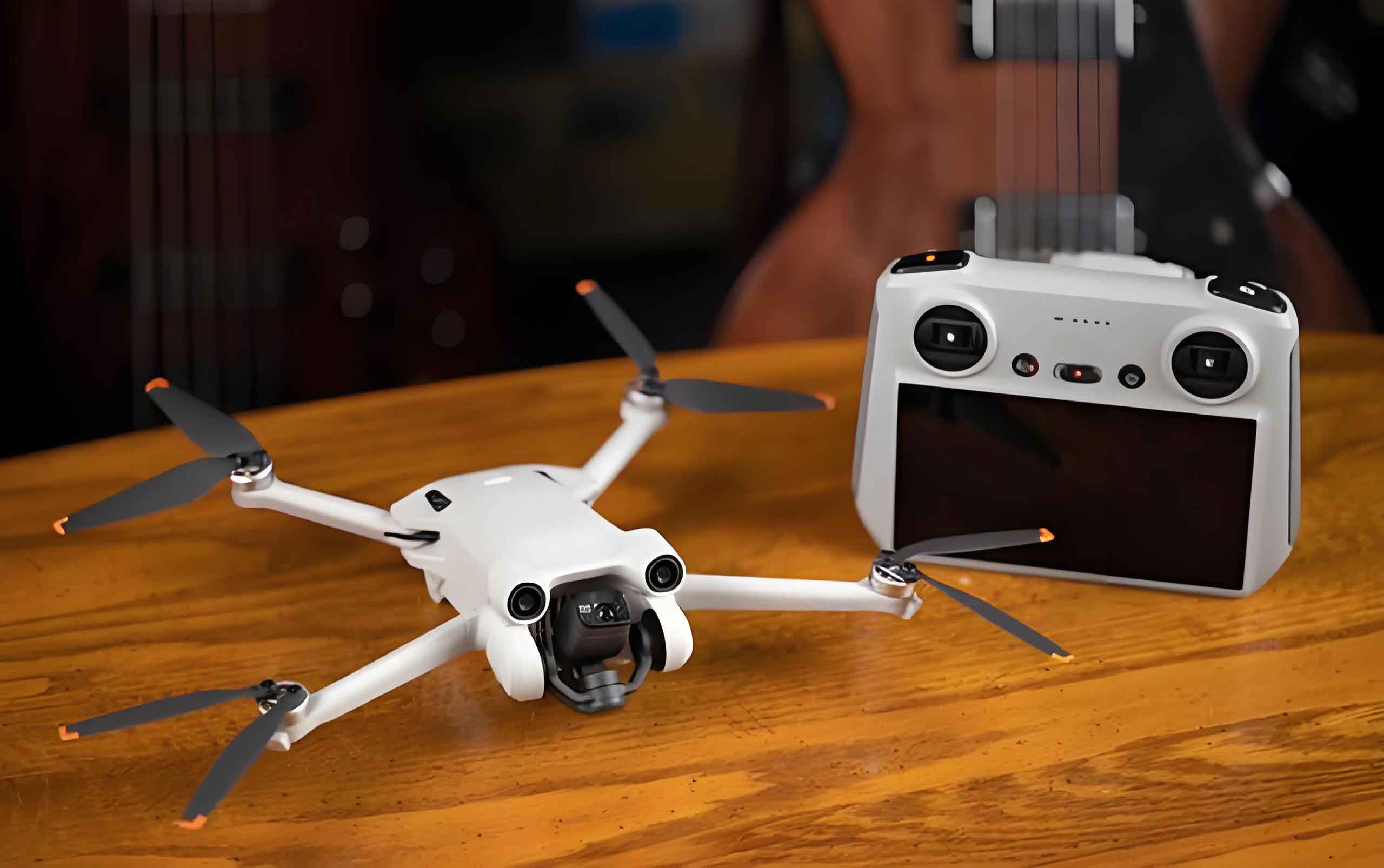
For application validation tests on typical equipment, the JUYE UAV, known for its superior performance and widespread use in power inspections, is selected as the primary test subject. This Unmanned Aerial Vehicle can be equipped with an RTK module, offering strong anti-electromagnetic interference capability and stability. It supports dual-band 2.4 and 5.8 GHz, which do not overlap with corona discharge radiation signals (below 1 GHz), thus minimizing corona interference. Its body is primarily made of plastic. The impact of magnetic fields on the Unmanned Aerial Vehicle mainly manifests as interference with magnetic-sensitive components in the flight control system, including the gyroscope, accelerometer, barometer, GNSS, compass, and control circuits. The compass plays a critical role in flight support and may malfunction under magnetic influence. The UAV system continuously monitors surrounding magnetic interference; when it exceeds limits, a compass interference warning is issued on the remote control.
The test setup involves placing the Unmanned Aerial Vehicle on the ground, powering it normally, and completing self-checks. The compass is calibrated, and the UAV is positioned around a current-carrying tubular busbar via insulating support structures, with spatial positions measured and recorded. After energizing the busbar, data transmission integrity, compass interference within allowable limits, and flight warnings are observed. Magnetic flux density near the UAV is measured using a magnetic field sensor. The UAV’s position is adjusted along planned approach paths until compass interference is normal, and steps are repeated to record phenomena and results. The current loop, powered by a high-current generator, eliminates electric field interference, with current measured by a clamp meter. The maximum test current reaches 500 A RMS. Due to experimental constraints, precise control and measurement of magnetic flux on the UAV are not feasible; measured flux serves as a reference for field strength.
With the tubular busbar current increased to 500 A, the Unmanned Aerial Vehicle gradually approaches the busbar according to the safety distance test scheme for magnetic field environment measurement and control performance. Compass interference is observed on the control end, and magnetic flux density near the busbar side is measured with a probe. Test results near the tubular busbar are summarized in the table below. At a current of 500 A and distance of 13 cm, magnetic field impact on compass interference nears critical levels, with a measured magnetic flux density of 485 μT. Data transmission remains unaffected in the tested strong magnetic field range.
| Distance (cm) | Measured Magnetic Flux Density (μT) | UAV Status |
|---|---|---|
| 22 | 302 | Normal |
| 14 | 452 | Normal |
| 13 | 480 | Abnormal |
| 12 | 516 | Abnormal |
| 11 | 508 | Abnormal |
To validate whether the critical safe distance derived from magnetic field tolerance simulations for the JUYE UAV can safely and effectively guide inspection operations, and to verify the effectiveness of the safe distance determination method and results, application validation tests are conducted in an operational substation. During testing, if any abnormalities are detected on the remote control or discharge phenomena are observed via UV imaging, the test is terminated, and the Unmanned Aerial Vehicle is immediately controlled to move away from live equipment. Test results are shown in the table below, with verification distances set using the safe distance method described. Using the JUYE UAV, high-voltage equipment approach tests and equipment leap verification tests are performed. No significant discharge is observed with UV imaging. Considering substation safety requirements, some tests are not fully validated to critical distances. In approach tests with a current of 2000 A, the Unmanned Aerial Vehicle shows no abnormalities, with a minimum distance of 1 m. The results validate the safe distance determination method, simulation test results, and simulation analysis effectiveness, applicable to substation inspection work.
| Voltage (kV) | Current (A) | Equipment | Simulation Verification Distance (cm) | Experimental Test Distance (cm) |
|---|---|---|---|---|
| 500 | 350 | Circuit Breaker | 8 | 48 |
| 220 | 350 | Tubular Busbar | 11 | 27 |
| 220 | 2000 | Tubular Busbar | 115 | 102 |
In conclusion, this study focuses on the JUYE Unmanned Aerial Vehicle, conducting tests and simulations for safe distances during substation inspections near high-voltage equipment. Based on power-frequency magnetic field environments, safe distance criteria and determination methods are proposed, validated through actual flight operations. The magnetic field tolerance of the Unmanned Aerial Vehicle is tested, with a limit distance of 13 cm and a magnetic flux density of 480 μT measured on the fuselage in magnetic field environments. A method for determining safe distances for high-voltage equipment in substations is presented, yielding a magnetic field safety distance criterion with a critical magnetic flux density of 593 μT for the UAV. Factors such as hovering accuracy, control delay buffer distance, and others affecting safe distance are analyzed, recommending a safety margin of Δd = 127 cm. Leveraging time-harmonic field characteristics, a combined finite element and analytical method for efficient maximum magnetic flux density computation is introduced. Simulations and field validations for typical substation equipment provide critical and warning distances under various conditions, offering safe operation recommendations. Actual flight tests confirm the reliability of the safe distance determination method, serving as a reference for Unmanned Aerial Vehicle inspections in substations. The JUYE UAV demonstrates robust performance in these scenarios, underscoring the importance of integrated safety measures for future autonomous inspection systems.