
In my view, unmanned systems have become indispensable in various military and economic activities, and the importance of developing matching power plants is increasingly prominent. The China drone market, in particular, is experiencing rapid growth, and as an observer of this field, I find that the choice of propulsion systems largely determines the overall performance of these platforms. In military domains, unmanned combat systems like drones have profoundly influenced modern warfare, opening doors to a new revolution in military technology and becoming strategic high grounds for competing powers. In civilian sectors, China drone applications are penetrating numerous scenarios across industries, standing on the verge of large-scale commercialization and poised to be the most vibrant growth area in aviation. Here, I will delve into the status, challenges, and future directions of power plants for UAVs in China, emphasizing technical aspects through tables and formulas to provide a comprehensive analysis.
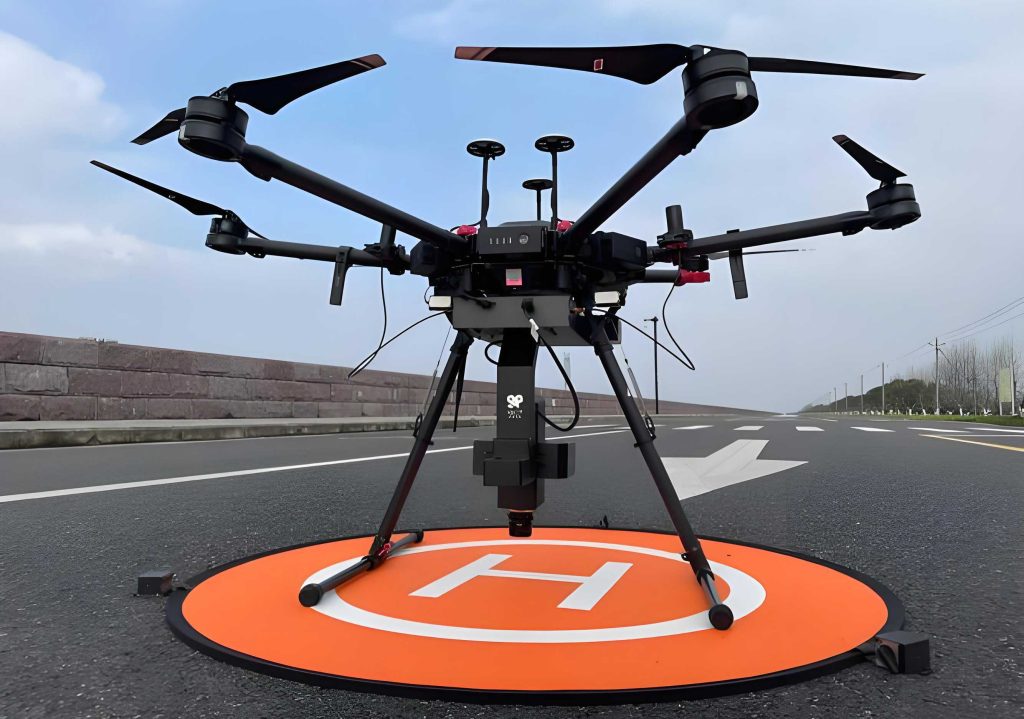
From my perspective, the power plants for UAVs can be categorized based on type and thrust/power range. The classification includes gasoline piston engines, heavy-fuel piston engines, turbofan engines, turbojet engines, turboshaft engines, turboprop engines, rotary engines, electric motors, and other new-concept engines. In terms of thrust/power, we have small thrust/power engines (less than 10 kN or 500 kW), medium thrust/power engines (10–50 kN or 500–1000 kW), and large thrust/power engines (greater than 50 kN or 1000 kW). This diversity reflects the vast China drone market, where demands are extremely varied. I believe understanding these categories is crucial for assessing the current landscape.
To systematically compare these engine types, I have compiled a table below summarizing their key characteristics, typical applications, and relevance to China drone development. This table highlights the gaps and opportunities in the domestic context.
| Engine Type | Thrust/Power Range | Key Advantages | Typical Applications in UAVs | Status in China Drone Market |
|---|---|---|---|---|
| Gasoline Piston | <300 kW | Good economy, reliability | Low-speed, long-endurance UAVs | Dominant but reliant on imports |
| Heavy-Fuel Piston | <300 kW | Higher fuel efficiency, safety | Long-endurance, naval UAVs | Emerging demand, limited domestic options |
| Turboshaft | 50–1000 kW | High power-to-weight ratio, compact | Unmanned helicopters | Gaps in small power ranges |
| Turboprop | 500–1000 kW | Similar to turboshaft, efficient | Medium-large fixed-wing UAVs | Under development, few models |
| Turbojet | 0.4–10 kN | High thrust-to-weight, fast response | High-speed targets, drones | Rapid growth in small segments |
| Turbofan | 2–50 kN | Low fuel consumption, long life | High-altitude long-endurance UAVs | Critical空白, reliance on foreign tech |
| Rotary (Wankel) | <50 kW | Simple structure, low vibration | Small UAVs, helicopters | Limited presence, potential niche |
| Electric Motor | <50 kW | Simple, low cost | Micro/small drones | Widespread but limited endurance |
| New Concepts (e.g., hybrid) | Varies | Future-oriented, high performance | Hypersonic, multi-electric UAVs | Early R&D阶段 |
In my analysis, piston engines are the earliest and most widely used power plants for UAVs, favored for their economic and reliable performance in low-speed, long-endurance applications. For instance, many China drone models adopt imported gasoline piston engines, as domestic alternatives lag in performance. The thrust or power output for these engines can be modeled by the formula for brake power in internal combustion engines: $$ P_b = \frac{2\pi NT}{60} $$ where \( P_b \) is brake power in watts, \( N \) is rotational speed in RPM, and \( T \) is torque in Newton-meters. However, for heavy-fuel variants, which offer better fuel efficiency and safety, the demand in China drone sectors like naval operations is growing, but foreign restrictions hinder access. This reliance underscores a vulnerability in the supply chain for China drone manufacturers.
Moving to turboshaft and turboprop engines, I observe that they offer superior power-to-weight ratios and altitude performance compared to piston engines. The power-to-weight ratio, a key metric, is given by: $$ \text{PWR} = \frac{P}{W} $$ where \( P \) is power in kW and \( W \) is weight in kg. For example, a turboshaft engine with a PWR of 5 kW/kg is ideal for unmanned helicopters above 1.5t. In the China drone ecosystem, gaps exist for engines below 300 kW, limiting development of 1t-class unmanned helicopters. Similarly, turboprop engines, suited for medium-large fixed-wing UAVs, face shortages in domestic production, affecting platforms akin to the Predator B.
Turbojet engines, in my view, are pivotal for high-speed UAVs due to their compact design and high thrust-to-weight ratio. The thrust equation for a turbojet can be simplified as: $$ T = \dot{m}_a (v_e – v_0) + (p_e – p_0)A_e $$ where \( \dot{m}_a \) is air mass flow rate, \( v_e \) and \( v_0 \) are exit and free-stream velocities, \( p_e \) and \( p_0 \) are exit and ambient pressures, and \( A_e \) is exit area. For small thrust ranges (0.4–2 kN), these engines are crucial for target drones and high-speed China drone applications. Recently, I’ve noticed a surge in domestic development for such engines, driven by military training needs and civilian model markets. This trend is bolstering self-reliance in the China drone industry.
Turbofan engines, however, represent the pinnacle for high-altitude long-endurance (HALE) UAVs, thanks to their low specific fuel consumption (SFC). The SFC is defined as: $$ \text{SFC} = \frac{\dot{m}_f}{T} $$ where \( \dot{m}_f \) is fuel flow rate and \( T \) is thrust. For a China drone operating at altitudes above 10,000 m, a turbofan with SFC below 0.6 kg/(N·h) is desirable. Currently, the absence of domestic turbofans in the 2–50 kN range creates a significant blank, forcing China drone projects to depend on foreign options. This gap hampers the advancement of strategic UAVs like HALE platforms, which are essential for national security.
Regarding rotary engines and electric motors, I see them as niche solutions. Rotary engines, with their unique structure, offer high power density for small UAVs, but adoption in China drone markets is minimal. Electric motors, while ubiquitous in consumer drones, face limitations due to battery energy density. The endurance \( E \) in hours for an electric China drone can be estimated as: $$ E = \frac{E_b \eta}{P} $$ where \( E_b \) is battery energy in Wh, \( \eta \) is system efficiency, and \( P \) is power demand. With current lithium batteries, \( E \) rarely exceeds 1 hour, restricting applications. Thus, innovation in hybrid systems is critical for future China drone versatility.
Now, focusing on the current status of power plants for UAVs in China, I identify several key issues. Firstly, small and medium-sized UAVs often lack domestic heart—engines. Piston engines, especially heavy-fuel types, are dominated by foreign brands like Rotax and Lycoming, leaving China drone makers import-dependent. For turboshaft and turboprop engines below 300 kW, domestic options are scarce, stalling projects like 1t-class unmanned helicopters. This reliance not only increases costs but also poses supply risks, which I consider a strategic weakness for the China drone sector.
Secondly, high-altitude long-endurance UAVs face a propulsion空白. Without indigenous turbofans in the 2–50 kN range, China drone developers struggle to match global peers. For instance, projects akin to Global Hawk require engines with thrust around 30 kN and high efficiency. The technical challenges involve achieving high bypass ratios and thermal efficiencies. I estimate the required thermal efficiency \( \eta_{th} \) for such engines as: $$ \eta_{th} = 1 – \frac{1}{r^{\gamma-1}} $$ where \( r \) is compression ratio and \( \gamma \) is specific heat ratio. Achieving \( \eta_{th} > 0.4 \) is essential for competitive SFC, but domestic R&D is still catching up. This空白 delays the deployment of advanced China drone systems for surveillance and reconnaissance.
Thirdly, while Aero Engine Corporation of China (AECC) is the national leader, its focus has traditionally been on manned aircraft engines. In recent years, I’ve observed AECC showcasing engines like AEF50E turbofan and AEP50E turboprop at air shows, aimed at filling China drone gaps. However, these efforts are nascent, and broader engagement is needed. The table below summarizes some key domestic engine projects and their status, reflecting my assessment of the China drone power landscape.
| Engine Model | Type | Thrust/Power | Target Application | Development Stage | Impact on China Drone |
|---|---|---|---|---|---|
| AEF50E | Turbofan | ~5 kN | Medium UAVs | Prototype | Potential to reduce imports |
| AEP50E | ~500 kW | Fixed-wing UAVs | Testing | Could enable new designs | |
| C115 | Piston | 115 kW | CH-3 UAV | Small batch production | Step toward self-reliance |
| AE50R (licensed) | Rotary | 41 kW | Small helicopters | Certified | Niche market entry |
| Various turbojets | Turbojet | 0.4–2 kN | Target drones | Rapid development | Boosts domestic supply |
Fourthly, capital from outside the traditional aerospace sector is flowing in, which I view as a double-edged sword. Companies like Anhui Hangrui Power and Chongqing Zongshen Aviation are pursuing indigenous piston engines, with some success—for example, Zongshen’s C115 engine powers the CH-3 China drone. For turbine engines, entities like Institute of Engineering Thermophysics and Shaanxi Yanshi Nonferrous are developing small turbofans (e.g., 7.5 kN thrust), while others like Beijing UAS Research Institute are working on turboshaft engines. This influx accelerates innovation but may lead to fragmentation. In my opinion, a coordinated approach is vital for the China drone ecosystem to avoid redundant efforts and ensure quality.
Fifthly, small turbojet engines are experiencing迅猛 growth. Driven by demand for target drones and high-end model aircraft, firms like Beijing Xuanyun Turbojet Power and Changzhou Huanneng Turbine Power are launching products. This segment benefits from lower technical barriers and market agility, supporting the China drone industry in niche areas. The thrust dynamics here can be modeled with the ideal turbojet cycle, where net thrust \( T_{net} \) relates to temperature ratios: $$ T_{net} = \dot{m}_a c_p (T_{04} – T_{02}) \left(1 – \frac{1}{\pi_t^{\frac{\gamma-1}{\gamma}}}\right) $$ with \( c_p \) as specific heat, \( T_{04} \) turbine inlet temperature, \( T_{02} \) compressor outlet temperature, and \( \pi_t \) pressure ratio. Advances in materials and manufacturing are enabling higher \( T_{04} \), boosting performance for these China drone engines.
Looking ahead, I propose several directions for developing power plants for UAVs in China. First,补齐短板 by完善ing the engine spectrum. This means not only advancing in high-thrust turbofans and large turboshafts for manned aircraft but also prioritizing engines for中小型 UAVs. For instance, piston engines up to 300 kW, turboshafts up to 600 kW, turbojets from 0.4 to 2 kN, and turbofans from 2 to 50 kN are essential. Each category should have domestic options to secure the China drone supply chain. I recommend setting performance targets using metrics like thrust-to-weight ratio (TWR): $$ \text{TWR} = \frac{T}{W} $$ For small turbofans, aiming for TWR > 5 would enhance China drone agility.
Second,布局未来 through technological储备. Given that China drone applications may expand to extreme domains like hypersonics or multi-electric systems, investing in new-concept engines is crucial. These include scramjets, pulse detonation engines, turbine-based combined cycles, and hybrid-electric systems. The efficiency of a hybrid system can be expressed as: $$ \eta_{hybrid} = \frac{P_{electric} + P_{thermal}}{P_{total}} $$ where \( P_{electric} \) and \( P_{thermal} \) are power from electric and thermal sources. Research in these areas will position China drone platforms for future dominance. I believe national labs and universities should lead in foundational research, with industry collaboration.
Third,军民融合 to leverage strengths. For piston engines, which overlap with general aviation, I suggest encouraging private capital to drive innovation, reducing costs and cycles through market forces. This can foster a “civilian supports military” model for China drone engines. For lower-tech segments like short-life turbojets or small turbofans, sharing resources and guiding private investment can optimize产业结构. However, for high-tech engines like medium thrust turbofans or large turboshafts, the state-led approach of “concentrating efforts on major tasks” is preferable. This synergy can accelerate breakthroughs for critical China drone power plants.
To quantify progress, I’ve formulated a framework for assessing engine development priorities. The following table outlines key parameters and goals for different engine types relevant to China drone needs, based on my analysis of global benchmarks and domestic capabilities.
| Engine Type | Target Thrust/Power | Key Performance Metrics | Desired Values for China Drone | Timeline (Years) |
|---|---|---|---|---|
| Heavy-Fuel Piston | 200 kW | SFC (g/kWh), durability (h) | SFC < 250, durability > 2000 | 3–5 |
| Turboshaft | 300 kW | Power-to-weight ratio (kW/kg), SFC | PWR > 4, SFC < 0.35 kg/(kW·h) | 5–7 |
| Turbojet (small) | 1 kN | Thrust-to-weight ratio, lifespan (h) | TWR > 8, lifespan > 100 | 2–4 |
| Turbofan (medium) | 10 kN | SFC (kg/(N·h)), bypass ratio | SFC < 0.6, bypass ratio > 4 | 7–10 |
| Hybrid-Electric | 500 kW total | Overall efficiency, energy density | η > 0.5, 500 Wh/kg battery | 10+ |
In conclusion, from my perspective, the power plants for UAVs in China face significant shortfalls and gaps, but the momentum for improvement is building. The China drone industry must acknowledge these challenges while fostering confidence and collaboration. By integrating national wisdom, focusing on practical optimization, and adhering to a long-term vision, the mission of achieving leadership in drone propulsion, though arduous, is attainable. I am optimistic that with sustained effort, China drone systems will soon boast homegrown hearts that rival global standards, unlocking new potentials in both military and civilian spheres. The journey ahead requires persistence, but as I see it, collective determination will pave the way for a vibrant future in unmanned aviation.
Throughout this analysis, I have emphasized the importance of technical metrics and strategic planning. For instance, the performance of a turbofan engine for a China drone can be evaluated using the overall efficiency \( \eta_o \): $$ \eta_o = \frac{T v_0}{\dot{m}_f \text{LHV}} $$ where LHV is fuel lower heating value. Achieving high \( \eta_o \) is key for long-endurance missions. Similarly, for electric China drones, advancements in battery technology are paramount, with energy density \( \rho_E \) defined as: $$ \rho_E = \frac{E}{m} $$ where \( E \) is energy and \( m \) is mass. Pushing \( \rho_E \) beyond 400 Wh/kg will revolutionize small China drone operations. As I reflect on these aspects, it’s clear that a multi-faceted approach—combining engineering excellence, policy support, and market dynamics—will drive the evolution of power plants for the burgeoning China drone ecosystem.