
The low altitude economy represents a strategic emerging industry that leverages low-altitude airspace resources, typically below 1,000 meters and extending up to 3,000 meters, as its core operational domain. It encompasses the manufacturing of aerial vehicles, supporting infrastructure, and diverse application scenarios, driving economic growth through technological innovation and integration across sectors. As a key component of new quality productive forces, the low altitude economy is rapidly evolving, with unmanned aerial vehicles (UAVs), electric vertical take-off and landing (eVTOL) aircraft, and general aviation at its forefront. In China, the low altitude economy has gained momentum since the issuance of the “Opinions on Deepening the Reform of Low-Altitude Airspace Management” in 2010, progressing from initial exploration to accelerated development. By 2023, China’s low altitude economy scale reached approximately 505.95 billion yuan, with a growth rate of 33.8%, and is projected to exceed 1 trillion yuan by 2026. However, the industry faces challenges such as inadequate regulatory mechanisms, technological bottlenecks, infrastructure gaps, and talent shortages, which hinder its transition from quantitative expansion to qualitative improvement. This analysis examines the current state, problems, and solutions for the low altitude economy in China, drawing on literature review, international comparisons, and empirical data.
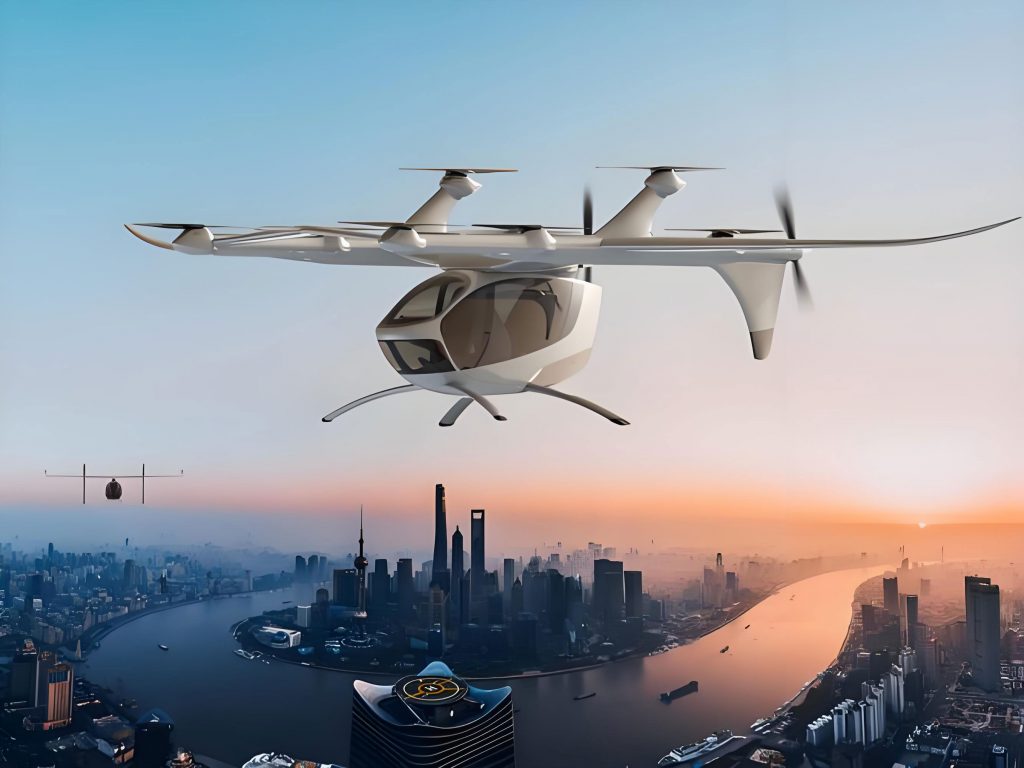
The concept of the low altitude economy integrates airspace resources, technological advancements, and economic activities to create a comprehensive industrial chain. It is defined as an economic form that utilizes low-altitude airspace for transportation, operations, and services, fostering cross-sector integration and innovation. The industrial chain of the low altitude economy can be segmented into upstream manufacturing, midstream support, and downstream applications. Upstream focuses on the research, development, and production of aerial vehicles and core components, such as batteries, navigation systems, and new materials. Midstream involves infrastructure and operational保障, including general airports, communication networks, and air traffic management systems. Downstream encompasses application scenarios like logistics, agriculture, tourism, and emergency response, which demonstrate the practical value of the low altitude economy. Management mechanisms for the low altitude economy require coordinated efforts among military, civil aviation, and local government authorities to optimize airspace utilization and ensure safety. Indicator analyses often highlight market size, growth rates, and economic contributions, with projections indicating substantial future expansion for the low altitude economy.
Globally, the development of the low altitude economy varies by region, influenced by policy support, technological capabilities, and market demand. Key countries have implemented strategies to promote their low altitude economy sectors, as summarized in Table 1.
| Country/Region | Policy Support | Technological Advantages | Main Application Areas |
|---|---|---|---|
| United States | FAA promotes low-altitude airspace opening, UAV integration plans, and UAM roadmaps | Leadership in UAV and eVTOL technologies, with companies like Amazon and Boeing | Logistics, agriculture, infrastructure inspection, urban transport |
| Europe | EU’s “Single European Sky” initiative, UAV operation rules, and UAM frameworks | Strong R&D in UAVs and eVTOLs, led by Airbus and Rolls-Royce | Urban mobility, emergency medical services, environmental monitoring |
| Japan | Government plans for UAV and UAM development, airspace opening, and tech R&D | Advanced UAV and eVTOL technologies, with involvement from Toyota and Honda | Logistics, disaster relief, urban transport |
| Australia | Pilot programs for UAV logistics, low-altitude airspace management policies | Wing (Alphabet) excels in UAV logistics technology | Logistics, agriculture, disaster response |
International case studies illustrate the practical applications of the low altitude economy. For instance, Amazon’s Prime Air in the U.S. aims for 30-minute drone deliveries, enhancing logistics efficiency. In Europe, Airbus’s City Airbus project develops eVTOLs to address urban congestion. Japan’s NTT DOCOMO utilizes UAVs for disaster monitoring and relief, while Australia’s Wing conducts drone delivery trials in Canberra. These examples underscore the potential of the low altitude economy to transform various sectors through innovation.
In China, the low altitude economy has been propelled by a series of policies at both national and provincial levels. Table 2 outlines key national policies that have shaped the development of the low altitude economy.
| Release/Implementation Date | Issuing Authority | Policy Name | Policy Content |
|---|---|---|---|
| Aug 2010 | State Council, Central Military Commission | Opinions on Deepening Low-Altitude Airspace Management Reform | Proposes gradual opening of low-altitude airspace, optimized classification, and promotion of general aviation |
| May 2016 | State Council General Office | Guidelines on Promoting the Development of the General Aviation Industry | Clarifies the positioning of general aviation, supports infrastructure, and cultivates consumer markets |
| Sep 2018 | Civil Aviation Administration, National Air Traffic Control Committee | Overall Plan for Low-Altitude Flight Service Guarantee System Construction | Establishes a unified national low-altitude flight service system and improves communication and navigation facilities |
| Feb 2021 | CPC Central Committee, State Council | National Comprehensive立体 Transportation Network Plan | Integrates low altitude economy into transportation strategy, planning for logistics, emergency response, etc. |
| Nov 2022 | Civil Aviation Administration | Technical Specifications for Low-Altitude Flight Service Systems | Standardizes technical requirements for low-altitude flight services to ensure safety and efficiency |
| Dec 2022 | CPC Central Committee, State Council | Outline of the Strategy for Expanding Domestic Demand (2022-2035) | Identifies low altitude economy as a new growth point, encouraging innovation in UAVs and general aviation |
| Jan 2024 | State Council, Central Military Commission | Interim Regulations on the Management of Unmanned Aerial Vehicle Flights | Specifies UAV classification, airspace use rules, and safety监管 requirements |
| Mar 2024 | Ministry of Industry and Information Technology, Civil Aviation Administration | Implementation Plan for Innovation and Application of General Aviation Equipment (2024-2030) | Promotes R&D of high-end general aviation equipment and expands application scenarios like urban air mobility |
At the provincial level, regions like Guangdong, Sichuan, and Henan have introduced localized policies to foster their low altitude economy sectors. For example, Guangdong’s action plan targets a low altitude economy scale exceeding 300 billion yuan by 2026, emphasizing technological innovation and industrial clusters. Sichuan focuses on infrastructure, aiming to build 20 general airports by 2027, while Henan promotes integration with tourism and logistics.
The enterprise landscape in China’s low altitude economy has expanded rapidly. As of January 2025, there were 21,561 enterprises in the low altitude economy sector, a year-on-year increase of 41.93%. The distribution of these enterprises follows a pyramid structure, as shown in Table 3.
| Enterprise Category | Number of Enterprises | Percentage (%) |
|---|---|---|
| Listed Enterprises | 232 | 1.08 |
| Specialized, Refined, Distinctive, and New Enterprises | 659 | 3.06 |
| National High-Tech Enterprises | 1,435 | 6.66 |
| Total Enterprises | 21,561 | 100 |
Regionally, enterprises are concentrated in eastern provinces like Guangdong, Jiangsu, and Beijing, which account for over 40% of the total, reflecting disparities in economic development and policy support. For instance, Guangdong hosts 3,495 enterprises, leveraging its manufacturing base, while Jiangsu excels in R&D with 208 high-tech enterprises. In contrast, western regions have fewer enterprises, indicating an imbalance in the development of the low altitude economy.
The scale and growth of China’s low altitude economy are projected to continue rising. The market size can be modeled using a growth formula: $$ S_t = S_0 \times (1 + r)^t $$ where \( S_t \) is the market size at time \( t \), \( S_0 \) is the initial size, and \( r \) is the annual growth rate. Based on historical data, the low altitude economy scale grew from 291.18 billion yuan in 2021 to 505.95 billion yuan in 2023, with a compound annual growth rate (CAGR) of approximately 31.6%. Projections suggest that by 2026, the scale will reach 1,064.46 billion yuan, driven by policy incentives and technological advancements. Similarly, the eVTOL sector, a key component of the low altitude economy, is expected to grow from 980 million yuan in 2023 to 9.5 billion yuan by 2026, with a CAGR of over 75%. This growth underscores the dynamic nature of the low altitude economy.
Despite progress, the low altitude economy in China faces several challenges. First, institutional mechanisms are underdeveloped, leading to fragmented governance. Airspace management involves multiple authorities, including military, civil aviation, and local governments, resulting in lengthy approval processes—often taking 15 working days—that impede commercial applications. Policy coordination is insufficient, with local pilots lacking alignment with national standards, increasing compliance costs for enterprises in the low altitude economy. Second, infrastructure is inadequate to support scalable operations. The number of general airports in China is only about 16% of that in the U.S., and communication networks like 5G-A and Beidou navigation have limited coverage, especially in remote areas. This “hard gap” restricts the efficiency of low-altitude flights and raises operational costs, such as in drone logistics where expenses can be multiples of ground transport. Third, core technologies face constraints, particularly in aviation engines, high-end chips, and energy systems, with import dependency hindering autonomy in the low altitude economy. R&D intensity averages 2.3%, below the 5% benchmark in developed countries, and innovation resources are concentrated in eastern regions, exacerbating regional disparities. Fourth, talent supply-demand imbalances exist, with an estimated shortage of 186,000 professionals by 2025. Educational programs lack interdisciplinary integration, and enterprise training is limited, affecting the cultivation of skills in areas like digital technology and airspace management for the low altitude economy.
To address these issues, multi-dimensional strategies are proposed at national and enterprise levels. At the national level, improving institutional frameworks is crucial. This includes enacting specialized regulations, such as a “Low-Altitude Airspace Management Ordinance,” to clarify airspace classification and usage rights. Establishing a joint military-civilian coordination mechanism can streamline approvals, and piloting negative list management in regions like the Guangdong-Hong Kong-Macao Greater Bay Area can enhance flexibility. Additionally, strengthening infrastructure through public-private partnerships (PPPs) and real estate investment trusts (REITs) can boost investment in general airports and digital systems. Integrating 5G-A and Beidou technologies into air traffic management platforms will enable real-time monitoring, supporting the low altitude economy’s expansion. For application scenarios, policies should incentivize diversification, such as drone delivery pilots in logistics and UAV-based agricultural services, to stimulate market demand in the low altitude economy.
At the enterprise level, technological breakthroughs are essential. Companies should increase R&D investment, targeting key areas like solid-state batteries and autonomous navigation algorithms. Collaboration in innovation consortia, involving leaders like COMAC and EHang, can accelerate progress. The industrial chain resilience can be enhanced through vertical integration, with tax incentives encouraging upstream involvement in components like aviation batteries. Talent development requires校企 partnerships to design curricula that blend aviation, management, and digital skills. Enterprises should implement mentorship and rotation programs, and use virtual reality for training, while offering competitive compensation and equity incentives to attract and retain talent for the low altitude economy.
In conclusion, the low altitude economy in China holds significant potential for driving economic growth and technological innovation. However, overcoming institutional, infrastructural, technological, and talent-related barriers is imperative for sustainable development. By adopting coordinated policies and fostering enterprise-led initiatives, China can transform its low altitude economy into a globally competitive industry, contributing to the advancement of new quality productive forces.