
The rapid evolution of agricultural drone technology represents a cornerstone of modern precision agriculture. These unmanned aerial vehicles (UAVs) have transitioned from niche concepts to indispensable tools, revolutionizing key farming operations. Their application spans a wide spectrum, including but not limited to, crop health monitoring, precise pesticide and fertilizer application, seeding, and even pollination. This transformative impact is fundamentally driven by continuous innovation, the trajectory of which is meticulously recorded in global patent filings. A patent-based analysis offers an unparalleled, objective lens through which to examine the technological evolution, competitive landscape, and future direction of the agricultural drone sector. This article, from my analytical perspective, delves into the global patent data to map the development journey, identify key players and technological hotspots, and forecast emerging trends, providing strategic insights for stakeholders in this dynamic field.
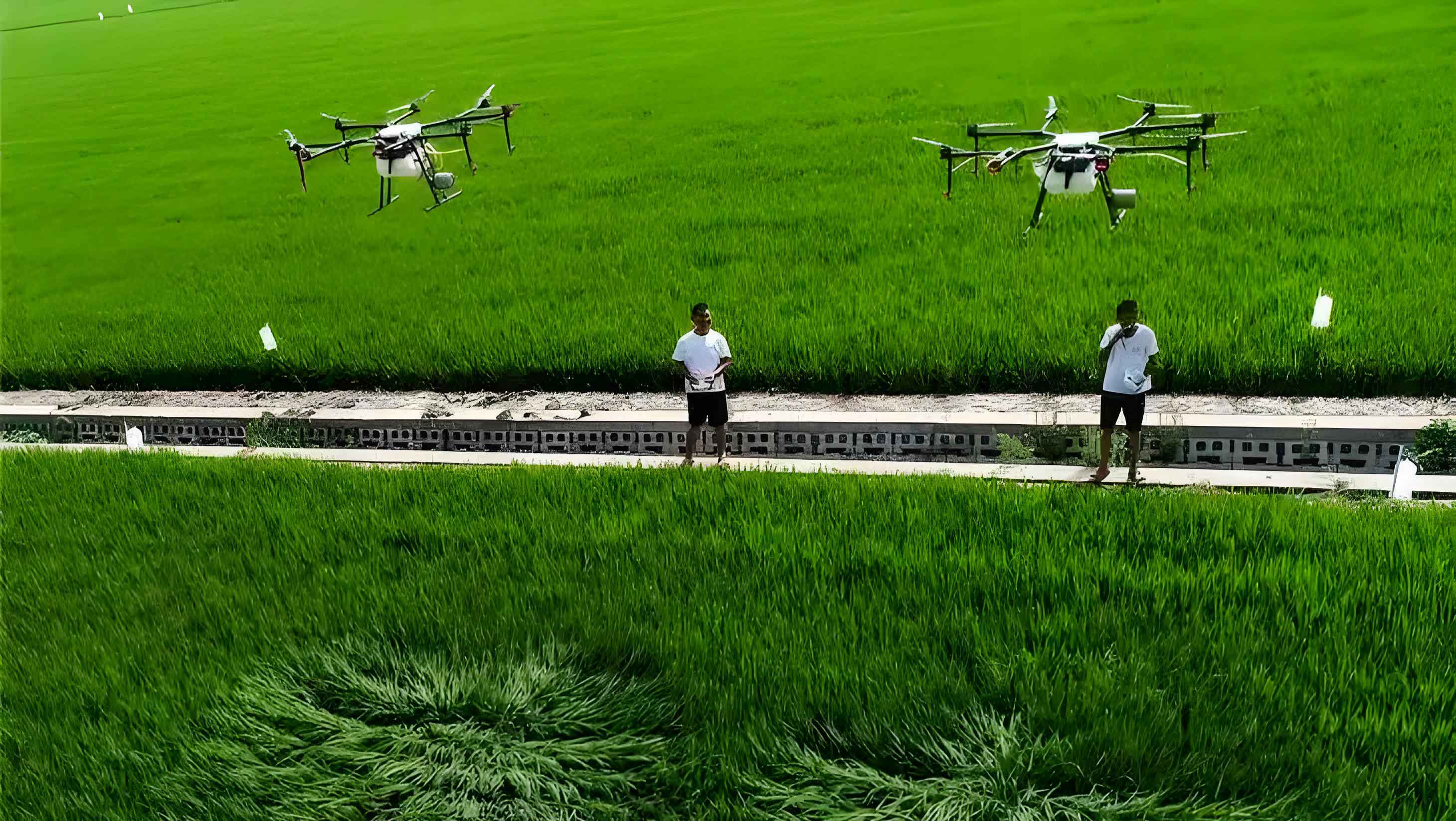
The global patenting activity for agricultural drone technologies reveals a distinct three-phase growth pattern, indicative of the industry’s maturation. The data can be segmented into foundational, expansion, and high-growth eras, each marked by specific characteristics in application volume and geographical contribution.
| Development Phase | Time Period | Annual Application Volume | Key Characteristics |
|---|---|---|---|
| Foundational Phase | Pre-2012 | < 50 applications | Conceptual and early prototypes; limited commercial activity. |
| Rapid Expansion Phase | 2012 – 2017 | Hundreds of applications | Surge driven primarily by Chinese innovation; technology commercialization begins. |
| High-Growth Phase | 2018 – Present | > 2000 applications (annual average) | Market and technological maturation; sustained high-volume innovation. |
The exponential growth post-2012 can be modeled using a simplified compound growth formula, highlighting the sector’s explosive innovation rate:
$$ N(t) = N_0 \cdot e^{rt} $$
Where \( N(t) \) is the cumulative number of patent applications at time \( t \), \( N_0 \) is the initial application count at the start of the expansion phase, and \( r \) is the average annual growth rate of patent filings. The value of \( r \) observed during the 2012-2017 period was exceptionally high, signifying a period of intense R&D focus on agricultural drone solutions.
The legal status of this large patent portfolio provides insight into the market’s competitiveness and the value placed on these intellectual assets. An analysis of a substantial dataset reveals the following distribution:
| Legal Status | Proportion of Portfolio | Implication |
|---|---|---|
| Granted & In-Force | ~37% | Indicates active commercial use and defense of core technologies. |
| Pending Examination | ~20% | Represents the pipeline of recent innovation and future potential grants. |
| Lapsed/Invalid (Including expired, abandoned, rejected) | ~42% | Suggests a competitive environment with significant iteration and portfolio pruning. |
The geographical origin of patent applications for agricultural drone technologies underscores a striking dominance by one nation, reshaping the global innovation landscape for this domain.
| Technology Source Country/Region | Share of Global Patent Applications | Relative Ranking |
|---|---|---|
| China | 86% | 1 |
| India | < 3% | 2 |
| United States | < 2% | 3 |
| South Korea | < 2% | 4 |
| Japan | < 2% | 5 |
This concentration can be expressed as a technology source concentration index (\( C \)) for the top country:
$$ C_{top} = \frac{P_{top}}{\sum_{i=1}^{n} P_i} $$
Where \( P_{top} \) is the patent count from the leading source (China) and the denominator is the total global patent count. With \( C_{China} \approx 0.86 \), the index reveals an exceptionally high degree of geographical concentration in the innovation of agricultural drone technologies. Within China, innovation activity is further concentrated in specific economic and technological hubs, with Guangdong and Jiangsu provinces leading by a significant margin.
To understand the technical focus within the agricultural drone ecosystem, patent classifications are indispensable. The distribution across International Patent Classification (IPC) codes reveals that innovation is not monolithic but spread across interconnected subsystems that make the technology viable.
| Primary IPC Subclass | Technology Focus | Approximate Share of Applications |
|---|---|---|
| B64D 1/18 | Releasing, delivering, or receiving substances (e.g., liquid, powder) from aircraft. | ~22% |
| A01M 7 | Special arrangements or configuration of liquid spray apparatus for pest/disease control. | ~12% |
| G05D 1 | Control systems for autonomous navigation, positioning, and attitude of vehicles. | ~11% |
| B64C 39 | Aircraft adapted for special purposes (e.g., UAV configurations). | ~10% |
| B64C 27 | Rotorcraft; helicopters; multi-rotor configurations. | ~9% |
The dispersion of patents across these codes highlights that advancing the agricultural drone requires parallel progress in multiple engineering disciplines: fluid dynamics and delivery systems (B64D1, A01M7), autonomous guidance and control (G05D1), and aerial platform design and mechanics (B64C39, B64C27). The innovation trajectory can be seen as optimizing the functional integration of these subsystems, which can be conceptualized by a system performance function \( F \):
$$ F_{performance} = \alpha \cdot f_{delivery}(B64D1, A01M7) + \beta \cdot f_{navigation}(G05D1) + \gamma \cdot f_{platform}(B64C39, 27) $$
Where \( \alpha, \beta, \gamma \) are weighting coefficients representing the relative focus of R&D at a given time, and the \( f \) functions represent the state-of-the-art in each technological domain derived from patent disclosures.
The competitive landscape is vividly illustrated by the entities leading in patent filings. A distinct feature of the agricultural drone sector is the prominence of Chinese entities, both corporate and academic, at the very top of the global rankings.
| Rank | Applicant Name (Global Top 10) | Entity Type | Primary Focus |
|---|---|---|---|
| 1 | Guangzhou XAG Co., Ltd. | Corporate | Dedicated precision agriculture & plant protection UAVs. |
| 2 | SZ DJI Technology Co., Ltd. | Corporate | Broad UAV portfolio with dedicated agricultural lines. |
| 3 | South China Agricultural University | Academic | UAV platform design, agricultural application systems. |
| 4 | Nanjing Forestry University | Academic | UAV applications in forestry and agriculture. |
| 5 | Nanjing University of Aeronautics and Astronautics | Academic | Aerospace engineering, UAV platform innovation. |
The strategies of the leading corporate players, such as XAG and DJI, demonstrate a comprehensive approach to IP. Their portfolios cover core methods for smart spraying and mission management, alongside continuous improvements to airframes, propulsion, payload systems, and swarm coordination. This creates a dense web of protection around the integrated agricultural drone system. The strength and influence of a key patent within such a portfolio can be assessed by its citation count \( Cit_{patent} \), which serves as a proxy for its technological significance:
$$ I_{patent} \propto \frac{Cit_{patent}}{t_{age}} $$
Where \( I_{patent} \) is an indicator of the patent’s influence, and \( t_{age} \) is the time since its publication, normalizing for the accumulation of citations over time. Core patents held by top applicants often exhibit high \( I_{patent} \) values.
When Chinese applicants are excluded, the international landscape features a mix of specialized startups and established agribusiness giants seeking to integrate agricultural drone technology into their offerings.
| Rank | Applicant Name (Non-Chinese Top 5) | Country | Core Business / Focus |
|---|---|---|---|
| 1 | Nileworks Inc. | Japan | Specialized agricultural UAV startup. |
| 2 | Kubota Corporation | Japan | Global agricultural machinery manufacturer. |
| 3 | Bayer AG | Germany | Pharmaceuticals and agricultural chemicals (Crop Science). |
| 4 | Yamaha Motor Co., Ltd. | Japan | Motorized equipment, including early industrial UAVs. |
| 5 | IBM (International Business Machines Corporation) | USA | AI, data analytics, and IoT solutions for agriculture. |
The entry of companies like Bayer and Kubota signals the strategic importance of the agricultural drone as a new channel for delivering traditional products (e.g., pesticides, seeds) and services. Their patents often focus on the integration of their core chemistries or machinery with UAV application systems. Meanwhile, firms like Nileworks and AirForestry AB represent a new wave of focused innovators tackling specific challenges, such as spraying in complex terrain or automated forestry operations, demonstrating the diversifying application scope of the technology.
Synthesizing the patent data trends, several clear trajectories for the agricultural drone sector emerge. The technology is firmly in a phase of high-volume, incremental innovation aimed at improving reliability, efficiency, and autonomy. Key future directions evident from recent patent filings include:
1. Advanced Autonomy and AI Integration: Moving beyond pre-programmed flight paths, new patents focus on real-time, adaptive decision-making. This involves machine vision for targeted spraying (addressing individual weeds or disease patches), obstacle avoidance in dynamic environments, and multi-drone swarm coordination for covering large fields efficiently. The algorithmic core of such systems is becoming a major patent battleground.
2. Payload and Application Specificity: Innovation is shifting towards specialized payloads beyond liquid sprayers. This includes granular spreaders for fertilizers or seeds, pneumatic pollination systems, and hyperspectral imaging sensors for detailed crop phenotyping. The design of these payloads, often characterized by their precise discharge rate \( \dot{m} \) and uniformity \( U \), is key:
$$ U = 1 – \frac{\sigma_{\dot{m}}}{\bar{\dot{m}}} $$
where \( \sigma_{\dot{m}} \) is the standard deviation of the discharge rate across the swath, and \( \bar{\dot{m}} \) is the mean rate. Patents aim to maximize \( U \) for various material types.
3. System Integration and Data Ecosystems: The agricultural drone is increasingly patented not as an isolated tool but as a node in a larger Farm Management Information System (FMIS). Patents cover data flow from drone-based sensors to cloud analytics platforms and back to the drone or other farm machinery as actionable instructions, creating closed-loop agronomic systems.
4. Durability and Service Model Innovation: Patents related to ruggedized designs, quick-swap battery and payload modules, and automated ground-based docking stations for charging and refilling reflect an industry maturing towards higher utilization rates and “UAV-as-a-Service” business models.
In conclusion, the patent landscape for agricultural drone technologies paints a picture of a sector dominated by Chinese innovation but with active and strategic participation from global players. The sheer volume of patents, particularly the high proportion currently in force or under examination, indicates a vibrant and competitive field where intellectual property is a critical asset. For companies operating in this space, a robust and forward-looking IP strategy is non-negotiable. This involves not only protecting core innovations in key markets but also conducting vigilant freedom-to-operate analyses to navigate the dense patent thickets being formed. The future of the agricultural drone will be written by those who can best integrate advancements in autonomy, precise actuation, and data analytics—a convergence clearly visible in the evolving patterns of global patent filings. Continuous monitoring of this patent intelligence will remain essential for anticipating technological shifts, informing R&D investments, and securing a competitive advantage in the future of farming.