
In the modern era, the rapid advancement and widespread adoption of civilian drones have revolutionized numerous industries, from aerial photography and precision agriculture to emergency response and logistics. However, this proliferation has also introduced significant security challenges, as malicious or negligent operators exploit these devices for illegal activities, such as unauthorized surveillance, smuggling, or even attacks on critical infrastructure. The term “civilian drones” encompasses a broad range of unmanned aerial vehicles (UAVs) used for non-military purposes, and their accessibility has made them a double-edged sword. As a researcher in security technologies, I have observed that the need for robust detection and countermeasures systems has become paramount to protect public safety, privacy, and national security. This article delves into a comprehensive analysis of the application scenarios for civilian drones detection and countermeasures, emphasizing the importance of selecting tailored technologies based on environmental factors. By integrating mathematical models, comparative tables, and practical insights, I aim to provide a detailed framework for optimizing anti-drone strategies in diverse settings.
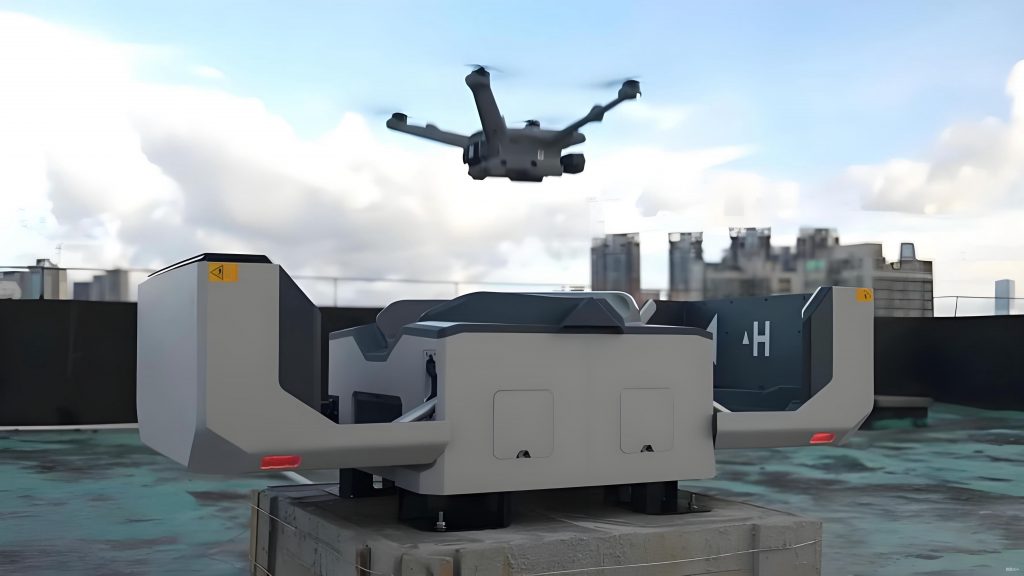
The misuse of civilian drones, often referred to as “black flights,” has escalated in recent years, leading to incidents like airport disruptions, collisions with buildings, and illicit data collection. These events underscore the urgency of developing effective countermeasures. From my perspective, the first step in addressing this issue is understanding the multifaceted threats posed by civilian drones. These threats can be categorized into three primary classes: those originating from the drone body itself, those from the payload equipment, and those from communication links. For instance, the lightweight plastic materials commonly used in civilian drones to enhance agility and battery life can pose fire hazards upon crash, especially in populated or sensitive areas. Similarly, payloads such as cameras, speakers, or even hazardous substances can be leveraged for espionage, public disturbance, or terrorism. While link-based threats, like radio frequency interference, may seem less dire, they can disrupt critical communications in environments like airports. To quantify these risks, I often employ probabilistic models. For example, the likelihood of a drone crash causing secondary damage can be expressed as:
$$ P_{damage} = P_{crash} \times \sum_{i=1}^{n} (S_i \times C_i) $$
Here, $P_{crash}$ represents the probability of a crash due to factors like mechanical failure or operator error, $S_i$ denotes the susceptibility of the environment to damage type $i$ (e.g., fire or impact), and $C_i$ is the consequence severity. This formula helps in assessing threats from civilian drones in quantitative terms, guiding the prioritization of countermeasures. Furthermore, regulatory frameworks, such as no-fly zones over airports or government facilities, highlight the need for scenario-specific solutions. In my analysis, I consider these regulations as foundational to shaping anti-drone strategies.
To lay the groundwork, I present a detailed classification of threats from civilian drones in Table 1, which summarizes key aspects and examples. This table aids in visualizing the diverse risks and informs the selection of detection and countermeasures technologies.
| Threat Category | Description | Common Examples | Potential Impact |
|---|---|---|---|
| Drone Body Threats | Risks arising from the physical structure of civilian drones, including materials and design flaws. | Crash due to battery failure, lightweight plastic igniting, mid-air collisions. | Fire, property damage, injuries from falling debris. |
| Payload Threats | Dangers associated with devices carried by civilian drones, such as sensors or dispensers. | Illegal cameras for surveillance, speakers for noise pollution, explosives or chemical agents. | Privacy breaches, public panic, direct harm to life and infrastructure. |
| Link Threats | Issues related to communication systems of civilian drones, including control and data transmission. | Radio frequency interference with other devices, hacking of control signals, jamming of navigation. | Disruption of critical services, loss of drone control, data theft. |
Detection technologies for civilian drones serve as the critical first line of defense, enabling the identification and tracking of unauthorized UAVs before countermeasures are deployed. In my experience, no single detection method is universally optimal; rather, a multi-layered approach often yields the best results. The primary detection modalities include radar-based systems, radio frequency (RF) spectrum analysis, electro-optical (EO) sensors, and acoustic detection. Each of these has distinct principles, advantages, and limitations, which I will explore in depth, supported by mathematical formulations to illustrate their efficacy.
Radar detection operates on the principle of emitting electromagnetic waves and analyzing their reflections from objects, such as civilian drones. The maximum detection range for a radar system can be modeled using the radar range equation, a fundamental tool in my assessments:
$$ R_{max} = \left( \frac{P_t G^2 \lambda^2 \sigma}{(4\pi)^3 P_{min}} \right)^{1/4} $$
In this equation, $P_t$ denotes the transmitted power, $G$ is the antenna gain, $\lambda$ is the wavelength of the signal, $\sigma$ represents the radar cross-section (RCS) of the civilian drone, and $P_{min}$ is the minimum detectable power at the receiver. For small civilian drones with low RCS values (often below 0.01 m²), this range can be limited, necessitating high-sensitivity radars. However, radar systems excel in long-range detection and rapid response, making them suitable for open areas. A key challenge is clutter from birds or other small objects, which I address using Doppler processing to distinguish moving targets like civilian drones. The Doppler shift $f_d$ is given by:
$$ f_d = \frac{2v_r}{\lambda} $$
where $v_r$ is the radial velocity of the civilian drone relative to the radar. By filtering out stationary or slow-moving clutter, radar can enhance detection accuracy. Despite its strengths, radar may struggle in urban environments with multipath interference, and it can be susceptible to electronic countermeasures, such as jamming from malicious actors.
Radio frequency spectrum detection, on the other hand, is a passive technique that monitors the RF environment for signals emitted by civilian drones, such as control commands or video transmissions. This method relies on a pre-existing database of RF signatures for various civilian drones models. The probability of detecting a signal in noisy conditions can be expressed using the signal detection theory:
$$ P_d = 1 – \exp\left(-\frac{SNR}{2}\right) $$
Here, $P_d$ is the detection probability, and $SNR$ is the signal-to-noise ratio, calculated as $SNR = \frac{P_s}{P_n}$, where $P_s$ is the signal power from the civilian drone and $P_n$ is the noise power. RF detection is highly effective for identifying specific models of civilian drones and can even intercept video feeds, but it requires continuous updates to the signature database to keep pace with new technologies. Additionally, encrypted signals or frequency-hopping schemes used by advanced civilian drones pose significant challenges, often necessitating multiple sensors for triangulation. In my work, I use spectrum analyzers to capture RF footprints, with a typical detection range influenced by the free-space path loss formula:
$$ L_{fs} = 20 \log_{10}(d) + 20 \log_{10}(f) + 92.45 $$
where $d$ is the distance in kilometers, $f$ is the frequency in GHz, and $L_{fs}$ is the loss in dB. This helps in planning sensor placements for optimal coverage.
Electro-optical detection utilizes cameras operating in visible or infrared bands to capture images of civilian drones. Visible-light cameras are cost-effective for daytime use, but their performance degrades in low-visibility conditions like fog or darkness. Infrared cameras detect heat signatures from civilian drones, making them suitable for night operations, but they can be confused by other heat sources, such as vehicles or sunlight. The angular resolution $\theta$ of an EO system is given by:
$$ \theta = \frac{1.22 \lambda}{D} $$
where $\lambda$ is the wavelength and $D$ is the aperture diameter. Higher resolution allows for better identification of civilian drones at longer distances. I often integrate EO systems with machine learning algorithms for automatic target recognition, though this requires substantial computational resources. Acoustic detection, the fourth modality, relies on capturing sound waves from civilian drones’ rotors and comparing them to a database of acoustic profiles. The sound pressure level $SPL$ at a distance $r$ from a civilian drone can be modeled as:
$$ SPL = SPL_0 – 20 \log_{10}\left(\frac{r}{r_0}\right) $$
with $SPL_0$ being the reference level at distance $r_0$. While acoustic sensors are inexpensive and easy to deploy, they have limited range and are vulnerable to ambient noise pollution, necessitating robust signal processing techniques like Fourier transforms for frequency analysis.
To summarize these detection technologies for civilian drones, I have compiled Table 2, which contrasts their key attributes. This table serves as a quick reference for selecting appropriate methods based on scenario requirements.
| Technology | Principle | Advantages | Disadvantages | Typical Range |
|---|---|---|---|---|
| Radar Detection | Electromagnetic wave reflection | Long-range, accurate positioning, fast response | Affected by small size and materials of civilian drones, prone to clutter and jamming | Up to 5 km for small civilian drones |
| RF Spectrum Detection | Passive monitoring of radio signals | Unaffected by weather, precise model identification, can intercept video | Requires updated signature database, struggles with encrypted or hopping signals | 1-3 km depending on signal strength |
| Electro-Optical Detection | Imaging in visible or infrared bands | Good for visual confirmation, low cost for visible light | Limited by visibility and light conditions, infrared confused by heat sources | 0.5-2 km for visible light, 1-3 km for infrared |
| Acoustic Detection | Sound wave analysis | Low-cost, easy deployment, passive operation | Short-range, sensitive to noise, requires acoustic database updates | Up to 0.5 km in quiet environments |
Once a civilian drone is detected, effective countermeasures must be deployed to neutralize the threat. Countermeasures technologies for civilian drones can be broadly categorized into four groups: interference and disruption, physical capture, kinetic destruction, and signal deception. Each category encompasses various methods with unique mechanisms, and I will elaborate on them with mathematical insights to evaluate their performance.
Interference and disruption techniques aim to disrupt the operation of civilian drones by jamming their communication or navigation signals. For instance, Global Navigation Satellite System (GNSS) jamming involves transmitting noise-like signals in the same frequency bands used by civilian drones for positioning, such as GPS. The effectiveness of jamming can be assessed using the jammer-to-signal ratio (JSR) at the civilian drone’s receiver:
$$ JSR = \frac{P_j G_j L_j}{P_s G_s L_s} $$
where $P_j$ and $P_s$ are the jammer and signal powers, $G_j$ and $G_s$ are the antenna gains, and $L_j$ and $L_s$ are the path losses for the jammer and signal, respectively. A high JSR (typically above 10 dB) can overpower the legitimate signals, causing the civilian drone to lose its way or enter a failsafe mode. Similarly, control signal jamming targets the RF links between the operator and the civilian drone, forcing it to hover, land, or return to its point of origin. However, these methods can cause collateral interference with other electronic devices, so I carefully consider the operational environment. Another approach within this category is the use of directed energy weapons, such as high-power microwaves (HPM), which induce currents in the electronic components of civilian drones, leading to malfunction or burnout. The power density $S$ at a distance $r$ from an HPM emitter is given by:
$$ S = \frac{P_{HPM} G_{HPM}}{4\pi r^2} $$
where $P_{HPM}$ is the emitted power and $G_{HPM}$ is the antenna gain. If $S$ exceeds a threshold specific to the civilian drone’s circuitry, damage occurs. These systems offer a non-kinetic means of disabling civilian drones but require precise targeting and can be costly.
Physical capture methods involve direct contact with civilian drones to immobilize them without destroying their payloads, which is valuable for forensic analysis. Net-based systems, for example, use projectiles or other drones to ensnare the rotors of civilian drones, disrupting their aerodynamics. The kinetic energy $E_k$ of a net projectile can be calculated as:
$$ E_k = \frac{1}{2} m v^2 $$
where $m$ is the mass and $v$ is the velocity. Sufficient energy is needed to overcome the drag and weight of the civilian drone. Bird-of-prey techniques, where trained eagles or falcons capture civilian drones, are also considered physical capture, though they rely on animal behavior and are less predictable. In my evaluations, I note that physical capture is typically effective only at short ranges (under 100 meters) and requires line-of-sight, making it suitable for confined areas.
Kinetic destruction techniques employ force to damage or destroy civilian drones, often using lasers, projectiles, or specialized anti-drone drones. Laser weapons focus high-energy beams on critical parts of civilian drones, such as batteries or sensors, causing thermal ablation. The time $t$ required to burn through a material with thickness $d$ can be estimated using the heat conduction equation:
$$ t = \frac{\rho c_p d^2}{2k} \ln\left(\frac{T_m – T_0}{T_m – T}\right) $$
where $\rho$ is density, $c_p$ is specific heat, $k$ is thermal conductivity, $T_m$ is the melting temperature, $T_0$ is the initial temperature, and $T$ is the target temperature. Lasers offer precision but may pose fire risks if the civilian drone crashes into flammable materials. Alternatively, kinetic projectiles like bullets or missiles can be used, though they raise safety concerns in populated areas. I often model the probability of hit $P_h$ for such systems as:
$$ P_h = 1 – \exp\left(-\frac{A_t}{A_s}\right) $$
where $A_t$ is the target area (e.g., cross-section of the civilian drone) and $A_s$ is the spread area of the projectile. This highlights the need for accurate targeting systems.
Signal deception techniques involve sending false signals to civilian drones to manipulate their behavior, such as spoofing GNSS signals to make them land at a safe location. This requires knowledge of the civilian drone’s communication protocols. The success rate of spoofing can be modeled as a function of the signal strength ratio between the spoofed and legitimate signals:
$$ R_{spoof} = \frac{P_{spoof} G_{spoof} L_{spoof}}{P_{legit} G_{legit} L_{legit}} $$
If $R_{spoof} > 1$, the civilian drone is likely to follow the spoofed commands. Another method is control signal hijacking, where the countermeasure system cracks the encryption of the civilian drone’s link and takes over control. This is computationally intensive but allows for safe retrieval of the civilian drone. However, signal deception can inadvertently affect other nearby civilian drones, so it must be used judiciously.
Table 3 provides a comprehensive comparison of these countermeasures technologies for civilian drones, detailing their mechanisms, pros, and cons. This table aids in matching countermeasures to specific threat scenarios.
| Category | Specific Method | Principle | Advantages | Disadvantages |
|---|---|---|---|---|
| Interference and Disruption | GNSS Jamming | Blocks satellite navigation signals | Easy to implement, non-destructive to civilian drones | Can interfere with other GNSS devices, limited to range |
| Control Signal Jamming | Disrupts RF communication links | Forces civilian drones to land or return | May affect legitimate communications, safety risks if civilian drones crash | |
| Physical Capture | Net-based Systems | Entangles rotors with nets | Preserves civilian drones for analysis, minimal collateral damage | Short-range, requires line-of-sight, may not work on fast civilian drones |
| Bird-of-Prey | Uses trained animals to capture | Rapid and organic response | Unpredictable, requires extensive training, ethical concerns | |
| Kinetic Destruction | Laser Weapons | Focuses heat to burn components | Precise, fast engagement | High energy consumption, fire hazards, atmospheric attenuation |
| Kinetic Projectiles | Direct impact with bullets or missiles | Immediate destruction of civilian drones | Risk of collateral damage, falling debris, legal restrictions | |
| Anti-Drone Drones | Specialized UAVs to collide with targets | Mobile and adaptable | High cost, requires skilled operation, may be defeated by counter-countermeasures | |
| Signal Deception | GNSS Spoofing | Transmits false navigation signals | Stealthy, can lead civilian drones to safe zones | Technically complex, may pollute RF spectrum |
| Control Hijacking | Takes over communication links | Gains control of civilian drones for safe recovery | Difficult against encrypted signals, may affect other civilian drones |
With a solid understanding of detection and countermeasures technologies for civilian drones, I now turn to the analysis of application scenarios. The effectiveness of these systems heavily depends on environmental factors such as population density, radio sensitivity, and safety requirements. By examining specific scenarios, I can recommend optimal combinations of technologies to maximize protection while minimizing unintended consequences. In each scenario, I consider both detection and countermeasures, often proposing integrated systems that leverage multiple technologies.
Large-scale public events, such as sports games, concerts, or political rallies, present unique challenges due to high crowd densities and complex electromagnetic environments. The primary goal here is to ensure public safety, so detection must be rapid and reliable, while countermeasures should avoid causing panic or injury from falling debris. For detection, I recommend a hybrid approach: during daytime, visible-light electro-optical cameras can provide cost-effective monitoring, supplemented by RF spectrum detectors to identify control signals from civilian drones. At night, infrared cameras become crucial, and acoustic sensors can be deployed near stages or entrances to catch low-flying civilian drones. Mathematically, the probability of timely detection $P_{td}$ in such crowded settings can be expressed as:
$$ P_{td} = 1 – \prod_{i=1}^{n} (1 – P_{d_i}) $$
where $P_{d_i}$ is the detection probability of sensor $i$, and $n$ is the number of deployed sensors. Using multiple sensor types increases $P_{td}$. For countermeasures, I advocate for non-destructive methods like GNSS jamming or signal deception, which can force civilian drones to land or return without crashing into the crowd. The effectiveness of jamming can be optimized by placing jammers at elevated points to maximize coverage, calculated using the line-of-sight distance $d_{LOS}$:
$$ d_{LOS} = \sqrt{2k h} $$
where $k$ is the Earth’s radius factor (approximately 4/3 for standard radio conditions) and $h$ is the height of the jammer. In my experience, combining these strategies reduces risks while maintaining event continuity.
Airports and surrounding radio-sensitive areas demand stringent measures due to the critical nature of aviation communications. Here, detection must be highly accurate to avoid false alarms that could disrupt flight operations. I prioritize electro-optical and acoustic detection, as they do not emit radio waves that might interfere with airport systems. Radar can be used cautiously, but its emissions must be coordinated with air traffic control. A formula for assessing interference risk is the interference-to-noise ratio (INR):
$$ INR = \frac{P_{int} G_{int} L_{int}}{P_n} $$
where $P_{int}$ is the interference power from detection systems. Keeping INR below a threshold (e.g., -10 dB) ensures safety. For countermeasures, physical capture methods, such as net guns deployed from security vehicles, are ideal because they neutralize civilian drones without damaging them, allowing for post-incident analysis. Kinetic destruction should be avoided due to the risk of debris on runways. I often design layered defenses, with outer zones using signal deception to lure civilian drones away and inner zones employing capture nets. Table 4 summarizes my recommendations for airport scenarios.
| Scenario Aspect | Detection Technology | Countermeasures Technology | Rationale |
|---|---|---|---|
| Runways and Terminals | Electro-optical cameras (day/night variants) | Net-based capture systems | Avoids RF interference, preserves evidence, minimizes debris |
| Approach Paths | Acoustic sensors and radar with filtering | GNSS spoofing to divert civilian drones | Early warning, non-destructive diversion |
| Perimeter Areas | RF spectrum detectors | Control signal jamming as last resort | Monitors for unauthorized signals, but jamming used sparingly to avoid affecting aviation |
Border regions often feature vast, open terrains where civilian drones might be used for smuggling or surveillance. Detection here benefits from long-range technologies like radar and RF spectrum analysis, which can cover large areas. I model the coverage area $A_c$ of a radar system as:
$$ A_c = \pi R_{max}^2 $$
where $R_{max}$ is the maximum detection range from the radar equation. To fill gaps, mobile units with electro-optical sensors can patrol remote sections. For countermeasures, I recommend a tiered response: first, use bird-of-prey techniques or signal deception to covertly neutralize civilian drones without escalating tensions, as borders are often politically sensitive. If necessary, kinetic destruction with lasers or projectiles can be employed, but only after ensuring no cross-border incidents occur. The cost-effectiveness of these measures can be evaluated using a benefit-cost ratio $BCR$:
$$ BCR = \frac{\sum B_i}{\sum C_i} $$
where $B_i$ are the benefits (e.g., prevented intrusions) and $C_i$ are the costs (e.g., equipment and operational expenses). In my analysis, combining low-cost acoustic sensors with trained animals often yields a high BCR for border scenarios.
Flammable, explosive, or polluted areas, such as oil refineries, chemical plants, or water treatment facilities, require extreme caution due to the risk of catastrophic secondary events. Detection must be early and reliable to prevent civilian drones from entering restricted airspace. I advocate for a network of radar and RF detectors, with redundant systems to ensure continuity. The probability of system failure $P_f$ can be reduced through redundancy:
$$ P_f = \prod_{j=1}^{m} p_j $$
where $p_j$ is the failure probability of component $j$, and $m$ is the number of critical components. For countermeasures, signal deception is the preferred option, as it can take control of civilian drones and guide them to safe landing zones without causing crashes that might ignite materials. If deception fails, high-power microwave systems can disable civilian drones at a distance, minimizing the chance of impact. I calculate the safe standoff distance $d_{safe}$ for HPM systems as:
$$ d_{safe} = \sqrt{\frac{P_{HPM} G_{HPM}}{4\pi S_{thresh}}} $$
where $S_{thresh}$ is the threshold power density for igniting materials. By maintaining $d_{safe}$, collateral risks are mitigated.
Confidential units and their surroundings, including military bases, government buildings, or prisons, demand robust security to prevent espionage or attacks. Detection here should be multi-faceted, with radar, RF, and electro-optical sensors creating a comprehensive surveillance bubble. I often use data fusion algorithms to combine sensor inputs, improving accuracy. A simple fusion model is the weighted sum:
$$ F = \sum_{k=1}^{l} w_k D_k $$
where $F$ is the fused detection score, $w_k$ are weights based on sensor reliability, and $D_k$ are individual detection outputs. For countermeasures, a rapid response is crucial, so I recommend kinetic destruction with lasers or anti-drone drones to immediately eliminate threats. Signal hijacking can also be used if intelligence gathering is a priority. However, these measures must comply with legal frameworks to avoid overreach. In my planning, I balance effectiveness with ethical considerations, ensuring that civilian drones are neutralized without violating privacy or safety norms.
To encapsulate these scenario-based recommendations, Table 5 offers a holistic view, linking each environment to optimal detection and countermeasures technologies for civilian drones. This table serves as a practical guide for security planners.
| Scenario | Key Characteristics | Recommended Detection Technologies | Recommended Countermeasures Technologies | Notes |
|---|---|---|---|---|
| Large Public Events | High population, complex RF environment | Electro-optical (day/night), RF spectrum, acoustic | GNSS jamming, signal deception | Prioritize non-destructive methods to avoid crowd injuries |
| Airports and Sensitive Areas | Critical communications, low tolerance for interference | Electro-optical, acoustic, radar with care | Physical capture (nets), GNSS spoofing | Avoid kinetic destruction to prevent runway debris |
| Border Regions | Vast open spaces, political sensitivity | Radar, RF spectrum, mobile EO units | Bird-of-prey, signal deception, kinetic destruction as last resort | Covert methods preferred to avoid diplomatic issues |
| Flammable/Explosive Areas | High risk of secondary disasters | Radar, RF spectrum with redundancy | Signal deception, high-power microwaves | Ensure standoff distances to prevent ignition |
| Confidential Units | Need for rapid response, high security | Radar, RF, electro-optical with data fusion | Kinetic destruction (lasers), control hijacking | Balance effectiveness with legal and ethical constraints |
In conclusion, the evolving threat landscape posed by civilian drones necessitates a dynamic and informed approach to detection and countermeasures. Through this analysis, I have highlighted how technologies must be tailored to specific application scenarios, considering factors like safety, cost, and environmental impact. The integration of mathematical models, such as those for detection probability and jamming effectiveness, provides a scientific basis for decision-making. As civilian drones become more advanced, with features like artificial intelligence and stealth capabilities, countermeasures systems must also evolve, potentially incorporating machine learning for adaptive responses. From my perspective, future research should focus on multi-sensor fusion networks and international cooperation to standardize anti-drone protocols. By leveraging the insights and tables presented here, stakeholders can enhance their defenses against unauthorized civilian drones, ensuring security in an increasingly connected world.