
As an expert in aviation law and regulation, I have observed the rapid proliferation of civil drones and the subsequent need for effective management systems. The real-name registration system for civil drones has emerged as a key policy tool globally, aiming to address safety and accountability concerns. However, its legal nature and practical implementation remain ambiguous, often overlapping with existing aircraft registration frameworks. In this analysis, I explore the utility, challenges, and theoretical underpinnings of civil drone real-name registration, emphasizing its relationship with nationality and rights registration systems. I will incorporate tables and formulas to summarize key aspects, ensuring a comprehensive examination of how this system can be optimized for civil drone management.
The real-name registration system for civil drones is designed to identify operators and owners, facilitating accountability in incidents such as airspace violations or accidents. For instance, when a civil drone causes damage or breaches regulations, registration data enables authorities to trace the responsible party quickly. This is crucial given the exponential growth in civil drone usage, which has led to increased aerial incidents. Countries like the United States, the European Union, and Japan have adopted similar registration requirements for civil drones, highlighting a global trend. Nonetheless, the system’s effectiveness hinges on its integration with traditional aviation laws, which were not originally designed for the unique characteristics of civil drones, such as their small size, accessibility, and diverse applications.
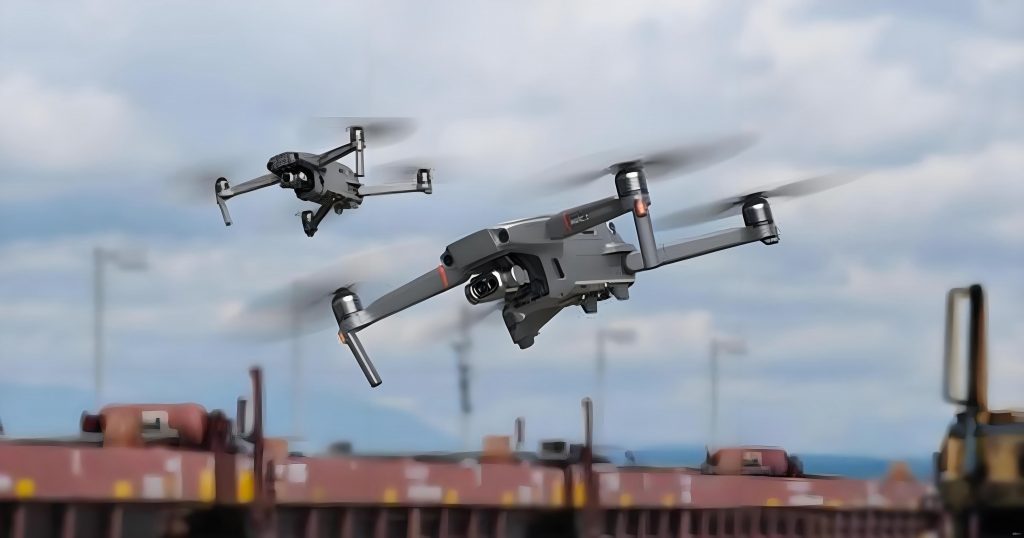
One of the primary utilities of civil drone real-name registration is its role in determining liability in tort cases. Unlike traditional aircraft, which are often operated by organizations, many civil drones are owned by individuals, making it challenging to assign responsibility without a centralized registry. For example, if a civil drone injures a person or damages property, the registration system provides a direct link to the owner, streamlining legal processes. This can be modeled using a probability formula: let \( P(I) \) represent the probability of identifying the liable party, and \( P(R) \) denote the probability of registration compliance. Then, the overall effectiveness \( E \) of liability attribution can be expressed as \( E = P(I) \times P(R) \). As \( P(R) \) increases through real-name registration, \( E \) improves, reducing the incidence of unresolved civil drone incidents. Additionally, registration acts as a deterrent, encouraging civil drone users to adhere to regulations due to the heightened risk of being identified.
Another significant benefit is enhanced regulatory oversight and safety. Civil drones pose unique risks, including interference with manned aircraft, privacy invasions, and security threats. By requiring real-name registration, authorities can monitor civil drone activities more effectively, implement geofencing, and respond proactively to potential hazards. For instance, in the event of a civil drone flying near an airport, registration data allows for rapid intervention. To quantify this, consider a risk reduction model: let \( R_b \) be the baseline risk of an incident without registration, and \( R_r \) the risk with registration. The reduction factor \( \Delta R \) can be approximated as \( \Delta R = R_b – R_r = k \cdot N \), where \( N \) is the number of registered civil drones and \( k \) is a constant representing the efficiency of regulatory measures. This underscores how real-name registration contributes to public safety by integrating civil drones into the broader air traffic management system.
However, the practical implementation of civil drone real-name registration reveals several shortcomings. In many jurisdictions, the registration process is inefficient, with online systems failing to verify serial numbers accurately due to the lack of standardized numbering across manufacturers. This undermines the system’s reliability, as it becomes difficult to match civil drones with their owners post-incident. Moreover, the scope of registration often excludes key stakeholders, such as distributors, creating gaps in the supply chain. For example, if a civil drone is sold by an unlicensed dealer, it may enter the market without proper registration, complicating accountability. The table below summarizes common practical issues in civil drone real-name registration systems globally:
| Issue | Description | Impact on Civil Drone Management |
|---|---|---|
| Inadequate Verification | Lack of uniform serial number standards for civil drones | Reduced accuracy in owner identification |
| Exclusion of Distributors | Distributors not required to register civil drones they sell | Increased risk of unregistered civil drones in circulation |
| Functional Ambiguity | Unclear whether registration confers ownership rights | Legal disputes over civil drone ownership and liability |
Furthermore, the functional nature of civil drone real-name registration is often confused with other registration types, such as nationality and rights registration. Under international aviation law, aircraft must undergo nationality registration to establish state jurisdiction and compliance with international standards. For civil drones, this is reiterated in regulations like the Interim Measures for Unmanned Aircraft Flight Management, but the overlap with real-name registration creates redundancy. Both systems require similar information—owner details and product specifications—yet civil drone operators must complete multiple registrations, adding unnecessary complexity. This duplication can be analyzed using an efficiency formula: let \( T_t \) represent the total time spent on registration, and \( T_n \) and \( T_r \) denote the time for nationality and real-name registration, respectively. Then, \( T_t = T_n + T_r \). If the systems were integrated, \( T_t \) could be reduced, improving compliance rates for civil drones.
In terms of legal character, civil drone real-name registration does not fit neatly into traditional administrative categories. It is not a form of administrative licensing, as it does not grant permission for specific activities but rather records existing ownership. Similarly, it is not an administrative confirmation, as it does not resolve legal disputes or affirm rights. Instead, it functions as a quasi-administrative registration, focused on information disclosure and post-event accountability for civil drones. This ambiguity leads to practical challenges; for instance, when a civil drone is sold without updating the registration, questions arise about ownership validity. If the system is treated as a definitive record, it could imply that registration confers rights against third parties, but this is not explicitly legislated. Thus, clarifying the legal status of civil drone real-name registration is essential to prevent conflicts with property laws.
To maximize the utility of civil drone real-name registration, several legal and operational improvements are necessary. First, legislation must explicitly define the system’s nature and its relationship with other registrations. For example, distinguishing between different categories of civil drones—such as micro, small, and large—can streamline requirements. Larger civil drones, which resemble traditional aircraft in value and operation, might be subject to full nationality and rights registration, while smaller civil drones could rely solely on real-name registration for oversight. The following table proposes a categorization based on weight and usage, aligning with international best practices for civil drone management:
| Civil Drone Category | Weight Range | Recommended Registration Type | Rationale |
|---|---|---|---|
| Micro | Below 250g | Exempt or simplified registration | Minimal risk; high user base |
| Small | 250g to 25kg | Real-name registration only | Balance of oversight and practicality for civil drones |
| Large | Above 25kg | Nationality and rights registration | Similar to manned aircraft; high value and risk |
Second, expanding the scope of registration义务人 to include all relevant parties, such as distributors and users, can close regulatory gaps. For civil drones, if distributors are mandated to verify and register sales, it would ensure traceability from production to end-use. Additionally, requiring user registration for operational control, not just ownership, would address scenarios where the operator differs from the owner. This can be modeled using a coverage index \( C \), defined as \( C = \frac{N_r}{N_t} \), where \( N_r \) is the number of registered entities (owners, users, distributors) and \( N_t \) is the total number involved in civil drone activities. By increasing \( C \), the system’s comprehensiveness improves, reducing the likelihood of unaccounted civil drones.
Finally, harmonizing international standards for civil drone registration could facilitate cross-border operations and enforcement. As civil drones become more ubiquitous, a unified approach—such as the EU’s common rules—can prevent fragmentation and enhance global safety. In conclusion, while civil drone real-name registration offers significant benefits in accountability and safety, its current implementation suffers from theoretical and practical flaws. By refining its legal basis, categorizing civil drones appropriately, and broadening registration requirements, we can achieve a more robust framework that supports the sustainable integration of civil drones into airspace systems. This analysis underscores the need for ongoing evaluation and adaptation to keep pace with technological advancements in the civil drone sector.