
In recent years, the proliferation of civil drone technology has introduced significant security challenges due to unauthorized flights, collisions, and malicious activities. As a researcher in this field, I aim to explore targeted detection and countermeasures technologies for civil drone threats, analyzing their applicability across diverse environments. Civil drone incidents can originate from the drone body itself, payload equipment, or communication links, each posing unique risks such as physical damage, privacy breaches, or radio frequency interference. Regulations, like those designating controlled airspaces around airports and sensitive facilities, underscore the need for effective solutions. This analysis delves into the principles, advantages, and limitations of various technologies, employing mathematical models and comparative tables to summarize key aspects. By examining scenarios like large public events, airports, border areas, hazardous zones, and confidential sites, I provide insights into optimizing civil drone management strategies.
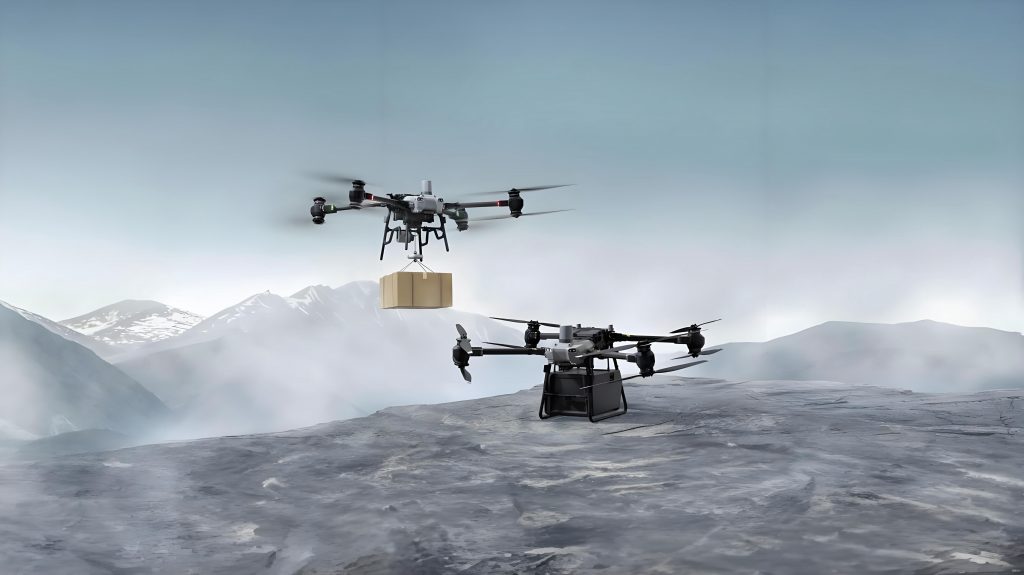
Civil drone detection serves as the foundation for effective countermeasures, focusing on identifying unauthorized drones through technologies such as radar, radio spectrum analysis, photoelectric systems, and acoustic methods. Each method operates on distinct physical principles, which I will elaborate on using mathematical formulations. For instance, radar detection relies on electromagnetic wave reflection, where the received power \( P_r \) can be modeled by the radar range equation: $$ P_r = \frac{P_t G^2 \lambda^2 \sigma}{(4\pi)^3 R^4} $$ Here, \( P_t \) is the transmitted power, \( G \) is the antenna gain, \( \lambda \) is the wavelength, \( \sigma \) is the radar cross-section of the civil drone, and \( R \) is the distance. This equation highlights how smaller civil drone sizes and materials reduce \( \sigma \), leading to detection challenges. Similarly, radio spectrum detection involves analyzing signal characteristics, where the signal-to-noise ratio (SNR) plays a critical role: $$ \text{SNR} = \frac{P_s}{P_n} $$ with \( P_s \) as the signal power and \( P_n \) as the noise power. Lower SNR values can hinder the identification of civil drone communications, especially with encrypted or frequency-hopping systems.
| Technology | Principle | Advantages | Disadvantages |
|---|---|---|---|
| Radar Detection | Electromagnetic wave reflection | Long range, accurate positioning, fast response | Affected by small size, material, and speed; prone to false alarms |
| Radio Spectrum Detection | Radio signal analysis and matching | Environment-independent, precise model identification, fast reaction, video interception | Passive nature, difficulty with encrypted signals, requires updated databases, needs multiple devices for frequency hopping |
| Photoelectric Detection | Image capture in visible or infrared bands | Low cost for visible light, effective in daytime; infrared useful at night | Visible light limited by visibility; infrared interfered by heat sources and sunlight |
| Acoustic Detection | Sound wave analysis and comparison | Inexpensive equipment, easy operation | Susceptible to noise, requires updated acoustic signature databases |
Moving to countermeasures, civil drone neutralization involves techniques like jamming, physical capture, destruction, and deception. Interference-based methods, such as GPS signal jamming, can disrupt a civil drone’s navigation by emitting noise in the satellite band. The jamming effectiveness can be quantified by the jamming-to-signal ratio (JSR): $$ \text{JSR} = \frac{P_j G_j}{P_s G_s} $$ where \( P_j \) is the jamming power, \( G_j \) is the jamming antenna gain, \( P_s \) is the signal power, and \( G_s \) is the signal antenna gain. A high JSR can overwhelm the civil drone’s receivers, but it may also affect nearby devices. For physical capture, net-based systems involve kinetic energy calculations, such as the force required to entangle rotors: $$ F = m a $$ where \( m \) is the mass of the net projectile and \( a \) is the acceleration. This method avoids damaging the civil drone, facilitating forensic analysis.
| Category | Technology | Principle | Advantages | Disadvantages |
|---|---|---|---|---|
| Interference Disruption | GPS Signal Jamming | Emit interference in navigation bands | Simple implementation, non-destructive | Interferes with other navigation systems |
| Interference Disruption | Control Signal Jamming | Emit interference in control frequency bands | Non-destructive to the drone | Disrupts legitimate communications, safety risks |
| Physical Capture | Net-Based Capture | Entangle rotors to disable propulsion | Preserves drone and payload for analysis | Effective only within visual range |
| Physical Capture | Avian Predation | Use trained birds to capture drones | Rapid and straightforward | Requires extensive training, unpredictable outcomes |
| Destructive Strike | Laser Weapons | Focus energy to burn critical components | Direct and fault-tolerant | Large equipment, risk of secondary damage |
| Destructive Strike | Microwave Weapons | Overload electronics with high-power microwaves | No need for precise aiming | Limited effective range |
| Destructive Strike | Acoustic Weapons | Induce gyroscope resonance via sound waves | Non-line-of-sight capability | Short range, high operational costs |
| Signal Deception | GPS Spoofing | Transmit false navigation signals | Can redirect drone to safe location | Pollutes electromagnetic environment |
| Signal Deception | Control Signal Spoofing | Hijack communication protocols | Gains control over the drone | Non-selective, may affect legitimate drones |
In large-scale public events, such as sports games or concerts, the dense population and complex electromagnetic environment necessitate careful selection of civil drone technologies. For detection, I recommend combining visible light photoelectric systems during daytime with radio spectrum analysis at night, as these methods minimize risks to attendees. The probability of detection \( P_d \) in such scenarios can be modeled using statistical methods: $$ P_d = 1 – e^{-\lambda t} $$ where \( \lambda \) is the detection rate and \( t \) is time. For countermeasures, non-destructive approaches like GPS signal jamming or spoofing are preferred to avoid collateral damage. These methods can be optimized using cost-benefit analysis, where the utility \( U \) is defined as: $$ U = B – C $$ with \( B \) representing the benefit of neutralizing the civil drone threat and \( C \) the cost of potential secondary effects. By prioritizing public safety, these strategies ensure that civil drone incidents are managed without endangering crowds.
Airports and surrounding areas present unique challenges due to stringent radio sensitivity requirements. Here, I advocate for detection methods that do not rely heavily on radio frequencies, such as acoustic and photoelectric systems, supplemented by patrols and video surveillance. The effectiveness of acoustic detection can be expressed through the sound pressure level (SPL) decay: $$ \text{SPL} = \text{SPL}_0 – 20 \log_{10}(R) $$ where \( \text{SPL}_0 \) is the reference level and \( R \) is the distance from the civil drone. For countermeasures, physical capture techniques, like net-based systems, are ideal in these sparse environments to preserve evidence for investigation. However, in emergencies, destructive methods may be employed, with risk assessments based on probability models: $$ R = P \times I $$ where \( R \) is the risk, \( P \) is the probability of an incident, and \( I \) is the impact. This approach balances safety with operational needs in critical aviation zones.
Border regions, often characterized by open spaces, allow for flexible deployment of multiple detection technologies. I suggest integrating radar, radio spectrum, and acoustic methods to enhance coverage. The fusion of sensor data can be represented by Bayesian inference: $$ P(H|E) = \frac{P(E|H) P(H)}{P(E)} $$ where \( P(H|E) \) is the posterior probability of a civil drone presence given evidence \( E \). For countermeasures, non-escalatory options like avian predation or signal deception are preferable to avoid international tensions. The efficiency of such methods can be evaluated using decision theory, maximizing expected value while minimizing conflict risks. In high-threat situations, destructive measures may be necessary, with capabilities scaled to the specific border context.
Hazardous areas, including power plants, fuel storage facilities, and water sources, require rapid and safe civil drone neutralization to prevent fires or contamination. Detection should prioritize radio spectrum and radar technologies for early warning, with systems designed for low false alarm rates. The false alarm probability \( P_{fa} \) can be controlled using threshold settings: $$ P_{fa} = \int_{\tau}^{\infty} p(x|H_0) \, dx $$ where \( \tau \) is the detection threshold and \( p(x|H_0) \) is the probability density under the null hypothesis (no civil drone). Countermeasures must avoid ignition risks, making signal deception techniques ideal. For instance, control signal spoofing can seize command of a civil drone, modeled as a control system transfer function: $$ G(s) = \frac{Y(s)}{U(s)} $$ where \( Y(s) \) is the output (drone response) and \( U(s) \) is the input (spoofed signal). This ensures that civil drone threats are mitigated without exacerbating hazards.
| Scenario | Detection Technologies | Countermeasures Technologies | Rationale |
|---|---|---|---|
| Large Public Events | Photoelectric (day), Radio Spectrum (night) | GPS Jamming, GPS Spoofing | Minimize public risk and collateral damage |
| Airports and Sensitive Zones | Acoustic, Photoelectric, Patrols | Net-Based Capture, Selective Destruction | Preserve evidence, avoid radio interference |
| Border Areas | Radar, Radio Spectrum, Acoustic Fusion | Avian Predation, Signal Deception | Flexible response, reduce escalation risks |
| Hazardous Locations | Radio Spectrum, Radar | Control Signal Spoofing, GPS Spoofing | Prevent fires and contamination |
| Confidential Facilities | Multi-Modal Detection | Destructive Measures, Signal Hijacking | Ensure information security, rapid neutralization |
For confidential facilities, such as military bases or prisons, the stakes involve national security and data protection. I recommend a layered detection approach combining all available technologies to maximize reliability. The overall system performance can be assessed using the receiver operating characteristic (ROC) curve, which plots the true positive rate against the false positive rate. Countermeasures should include decisive actions like signal hijacking or destructive strikes to prevent information leaks. The cost of inaction \( C_i \) can be modeled as: $$ C_i = L \times T $$ where \( L \) is the loss per time unit and \( T \) is the exposure time. By integrating these strategies, facilities can safeguard against civil drone intrusions effectively.
In conclusion, the dynamic nature of civil drone threats demands scenario-specific adaptations of detection and countermeasures technologies. Through mathematical modeling and comparative analysis, I have illustrated how to optimize responses in various environments, emphasizing the repeated importance of civil drone considerations. As regulatory frameworks evolve and technology advances, a holistic approach that combines multiple methods will be crucial for mitigating risks. Future research should focus on improving sensor fusion algorithms and developing more precise non-destructive countermeasures to address the growing challenges posed by civil drone activities.