
The center of mass position in foldable quadrotor drones plays a critical role in determining flight stability and performance. As a researcher focused on unmanned aerial vehicle dynamics, I have investigated how variations in the center of mass along the vertical axis influence the quadrotor’s response to external disturbances. This analysis is essential for optimizing the structural design of foldable quadrotor systems, particularly in enhancing their resistance to rolling and pitching moments during flight. By employing fluid dynamics and rigid body dynamics simulations, I evaluated the equivalent pressure distribution on the quadrotor body and calculated the resulting angular displacements and accelerations. The findings provide insights into how the strategic placement of mass components, such as batteries and structural elements, can minimize sensitivity to environmental forces like wind gusts. This study aims to establish design guidelines that improve the quadrotor’s operational reliability in complex scenarios, such as takeoff and hovering under adverse conditions.
Quadrotor drones have gained widespread adoption due to their versatility in applications ranging from surveillance to payload delivery. The foldable quadrotor variant offers additional portability but introduces challenges in mass distribution. In this work, I analyze the impact of the center of mass location on the stability of a foldable quadrotor, focusing on its behavior when subjected to lateral forces. The primary objective is to determine an optimal mass configuration that reduces angular deviations and enhances controllability. Through a combination of computational fluid dynamics and multi-body dynamics simulations, I modeled the quadrotor’s response to simulated wind loads. Experimental validations were conducted to verify the simulation results, confirming that a lower center of mass significantly improves stability during dynamic maneuvers. The integration of these analyses contributes to the development of more robust foldable quadrotor designs.
The aerodynamic and dynamic characteristics of a quadrotor are governed by its mass distribution and structural geometry. When the center of mass is misaligned with the plane of lift generation, the quadrotor experiences increased torque under disturbances, leading to undesirable attitudes. To quantify this effect, I derived the equations of motion using Lagrangian mechanics and Euler angles. The transformation matrix from the body-fixed frame to the inertial frame is expressed as:
$$ A = \begin{bmatrix} \sin \theta \sin \phi & 0 & \cos \theta \\ \sin \theta \cos \phi & 0 & -\sin \theta \\ \cos \theta & 1 & 0 \end{bmatrix} $$
where $\theta$ represents the pitch angle and $\phi$ denotes the roll angle. The kinetic energy $T$ of the quadrotor system is given by:
$$ T = \frac{1}{2} \dot{\mathbf{R}}^T M \dot{\mathbf{R}} + \frac{1}{2} \dot{\boldsymbol{\gamma}}^T B^T J B \dot{\boldsymbol{\gamma}} $$
Here, $M$ is the mass matrix, $\dot{\mathbf{R}}$ is the velocity vector of the center of mass, $B$ is the inertia matrix, $\dot{\boldsymbol{\gamma}}$ is the Euler angle rate vector, and $J$ is the inertia tensor. Applying Lagrange’s equation with multipliers, the dynamics are described as:
$$ \frac{d}{dt} \left( \frac{\partial T}{\partial \dot{q}_j} \right) – \frac{\partial T}{\partial q_j} = Q_j + \sum_{i=1}^{n} \lambda_i \frac{\partial \Phi}{\partial q_j} $$
where $q_j$ are the generalized coordinates, $Q_j$ are the generalized forces, $\lambda_i$ are Lagrange multipliers, and $\Phi$ represents the constraint equations. This formulation allows for the analysis of the quadrotor’s angular response when the center of mass is varied.
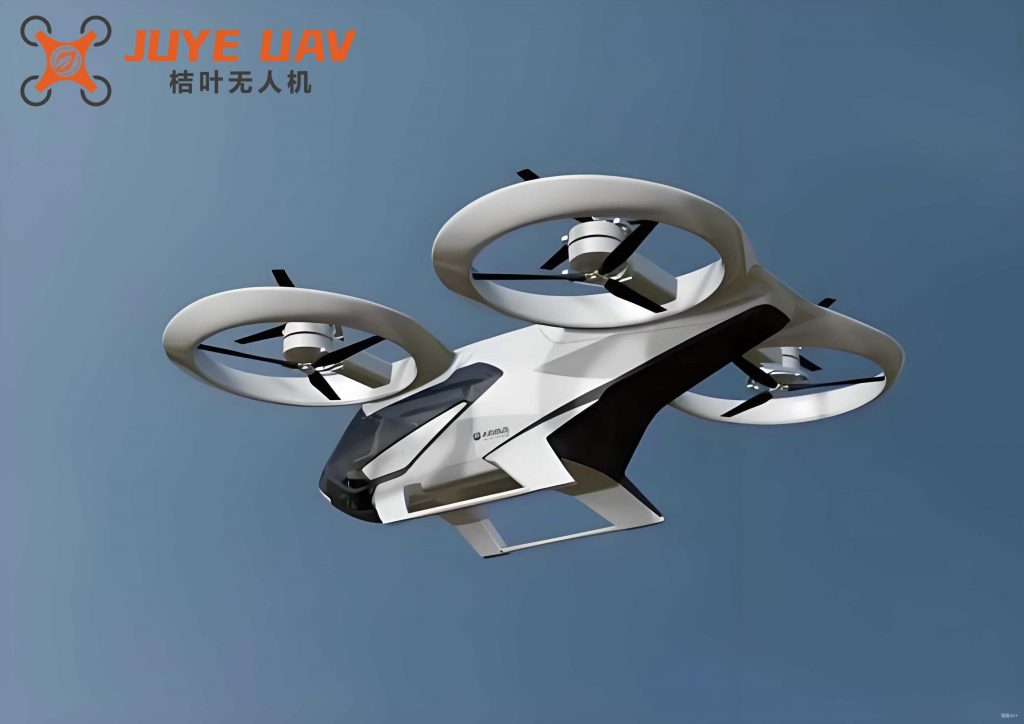
In the fluid dynamics analysis, I modeled the quadrotor body as a simplified structure to compute the equivalent pressure exerted by wind disturbances. The quadrotor was subjected to a uniform wind speed of 3 m/s, simulating moderate environmental conditions. The static pressure distribution on the XZ plane cross-section was analyzed, revealing an average pressure of 144 Pa. The projected area in the X-direction was integrated to yield a value of 0.0397 m², resulting in a total force of 5.71 N distributed across the quadrotor’s surface. This force was applied as discrete loads in the multi-body dynamics simulation to replicate real-world wind effects. The simplification of the quadrotor model was necessary to reduce computational complexity while maintaining accuracy in the pressure calculations.
The multi-body dynamics simulations were conducted using ADAMS software, where the quadrotor was modeled with three distinct center of mass configurations: aligned with the lift plane, elevated above it, and lowered below it. The applied forces included rotor lifts, gravity, and the distributed wind load. The angular displacement and acceleration of the quadrotor were measured over a 0.2-second duration to assess stability. The results indicated that when the center of mass coincides with the lift plane, the quadrotor exhibits minimal angular deviation. Conversely, a high center of mass leads to significant roll and pitch oscillations. The following table summarizes the angular displacement for different center of mass positions:
| Center of Mass Position | Maximum Angular Displacement (degrees) | Average Angular Acceleration (rad/s²) |
|---|---|---|
| Aligned with Lift Plane | 5.2 | 12.3 |
| Elevated | 37.1 | 45.6 |
| Lowered | 4.8 | 10.1 |
The data clearly shows that a lowered center of mass configuration results in the smallest angular displacement and acceleration, highlighting its superiority in stabilizing the quadrotor. The angular acceleration profile for the lowered center of mass case was nearly constant, indicating reduced sensitivity to disturbances. This is critical for foldable quadrotor designs, where compactness often compromises stability. The relationship between center of mass height $h$ and the restoring torque $\tau$ can be approximated by:
$$ \tau = m g h \sin \phi $$
where $m$ is the mass, $g$ is gravitational acceleration, and $\phi$ is the roll angle. A lower $h$ diminishes the torque, thereby enhancing inherent stability.
Experimental tests were performed to validate the simulation outcomes. A foldable quadrotor platform was equipped with adjustable mass components to alter the center of mass location. The quadrotor was launched vertically while motors provided lift, and its attitude was recorded using an inertial measurement unit. The roll angle variations over a 5-second interval are tabulated below:
| Time (s) | Roll Angle – Elevated COM (degrees) | Roll Angle – Lowered COM (degrees) |
|---|---|---|
| 1 | 12.5 | 2.3 |
| 2 | -25.7 | -3.1 |
| 3 | 37.0 | 4.5 |
| 4 | -31.9 | -4.8 |
| 5 | 28.4 | 3.2 |
The elevated center of mass configuration exhibited roll angles ranging from -32° to 37°, whereas the lowered center of mass limited variations to within -7° to 5°. This experimental evidence corroborates the simulation data, emphasizing the importance of a low center of mass in foldable quadrotor drones. The reduction in roll sensitivity directly translates to improved flight stability, especially during takeoff and hovering phases where external disturbances are prevalent.
In conclusion, the center of mass position is a pivotal factor in the design of foldable quadrotor drones. Through rigorous simulation and experimental analysis, I have demonstrated that aligning the center of mass with the lift plane or positioning it lower minimizes angular displacements and accelerations. This optimization reduces the quadrotor’s susceptibility to rolling and pitching, thereby enhancing overall flight performance. Designers should prioritize the placement of heavy components, such as batteries, closer to the lift plane to achieve these benefits. Future work will explore the integration of adaptive control systems that dynamically adjust to center of mass variations, further advancing the capabilities of foldable quadrotor platforms in diverse operational environments.