
In recent years, the rapid advancement of civilian UAV (Unmanned Aerial Vehicle) technology has revolutionized various sectors, including aerial photography, agricultural plant protection, traffic patrol, mapping, meteorological monitoring, and emergency rescue. As technology continues to improve, the application scope of civilian UAVs is expected to expand further, with projections indicating that within the next decade, the civilian UAV industry will become the most dynamic growth module in the global aviation sector. The new business formats of civilian UAVs are developing swiftly, representing the primary application of drones, which have been widely adopted in fields such as aerial photography, agriculture, emergency response, security, surveillance, and public health. Their value in scenarios like cargo and passenger transport, as well as air traffic management, is also set to be significant. For instance, logistics civilian UAVs from companies like SF Express and Meituan have undergone trial operations in Shenzhen, innovating and catalyzing commercial models for civilian UAV applications, while simultaneously presenting novel challenges for integrated airspace operations and comprehensive supervision.
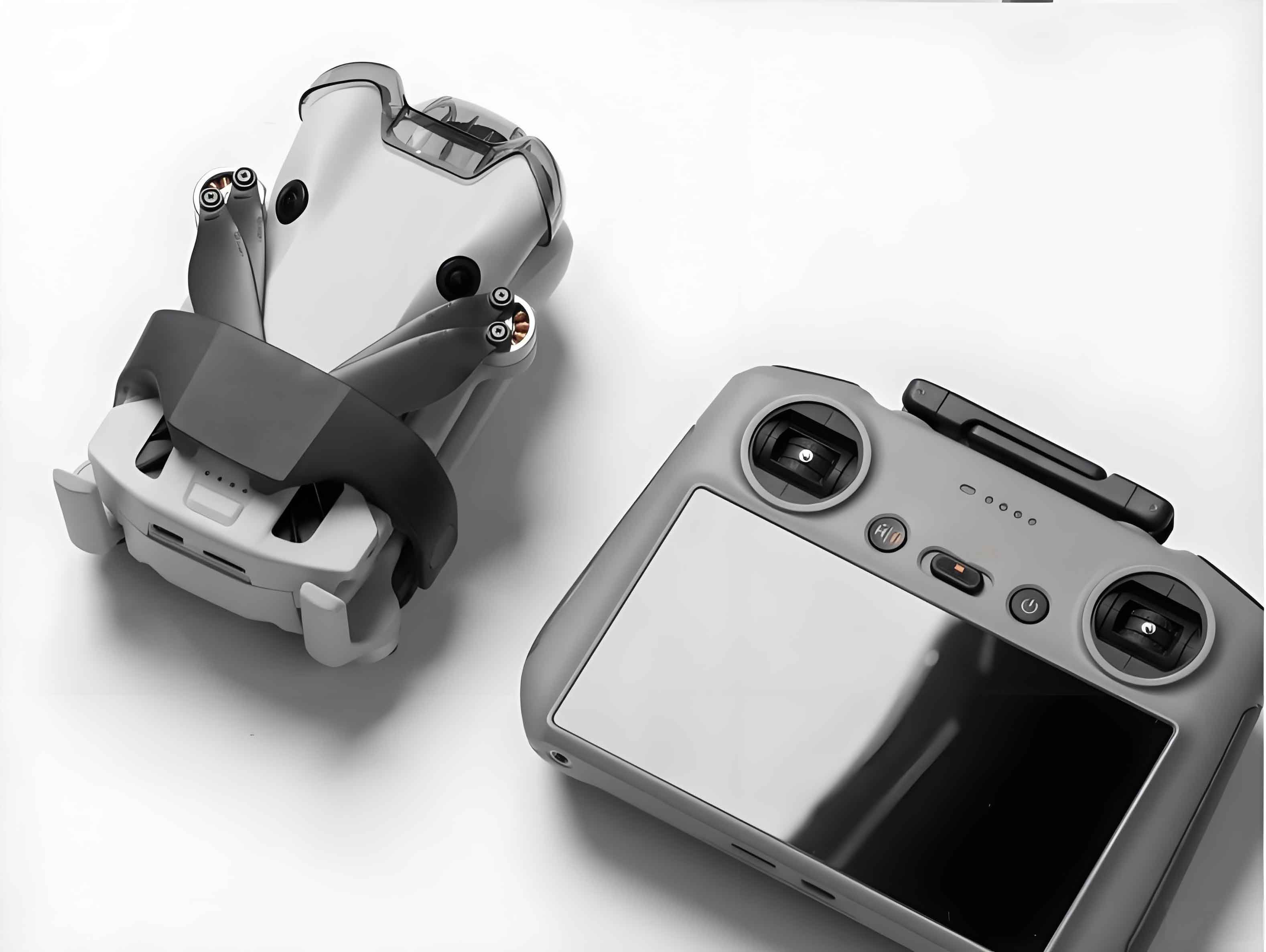
During the COVID-19 pandemic in 2021, enterprises in cities like Changsha and Kunming actively explored new models such as “5G + civilian UAV disinfection,” showcasing the versatility of civilian UAVs. Currently, the market size for civilian UAVs in China exceeds 21 billion yuan, with over 7,000 industry enterprises and 400,000 products, both growing at an annual rate of more than 30%. In line with economic trends, vocational technical schools have begun offering specialized programs in civilian UAVs, integrating learning applications with areas like environmental protection, agriculture, power, petroleum, meteorology, and land resources. China’s civilian UAV technology is at the forefront globally, and with the miniaturization and cost reduction of built-in chips, research and development upgrades are accelerating, costs are becoming lower, and commercial value is increasingly apparent.
Statistics reveal that China and the United States contribute the most to patents in the large civilian UAV sector, with China filing 1,446 patent applications and the U.S. 982, together accounting for 87% of the total, far surpassing other countries. Despite the rapid development of the civilian UAV industry in China, the formulation of administrative regulations for civilian UAVs has often felt like a forced “catch-up.” In contrast, the United States permitted civilian UAV flights in airspace as early as 1990 and explicitly regulated civilian UAV operations under Section 333 of the FAA Modernization and Reform Act of 2012. In recent years, China has witnessed multiple incidents of disorderly civilian UAV flights, ranging from the first criminal case of “black flight” in 2015 to four illegal flight events at Kunming Changshui Airport over two days in February 2017, and administrative detentions for违规施放 civilian UAVs in Shanghai in November 2020. In February 2021, an unidentified flying object at Xining Caojiabao International Airport caused multiple flight diversions and delays, stranding numerous passengers, followed by administrative penalties for私自放飞 civilian UAVs at Chengdu Tianfu Airport in June 2021. The current administrative regulations in China are insufficient to effectively constrain the frequent incidents of civilian UAV-related injuries. People hope to enjoy the convenient services provided by civilian UAVs while also ensuring that drones operate under the rule of law.
Aristotle noted that “law is order, and good law is good order.” Thus, how can we standardize the use and management of civilian UAVs? Currently, establishing a responsibility chain for design, production, sales, and use with effective accountability has become a critical research issue in administrative regulations for civilian UAVs and a major demand item for China’s technological and socio-economic reform and development. This is a forward-looking problem for national economic and social development. This article will use Guangdong Province as a case study, analyzing its administrative regulations for civilian UAVs. By clarifying the legal尺度 for civilian UAVs, balancing various needs under interest orientation, and pursuing legal coordination, we can move from points to surfaces—improving the civilian UAV registration system, establishing an external cloud system for civilian UAVs, optimizing insurance relief, and delineating specialized flight zones for civilian UAVs—to ensure the sustainable and healthy development of the civilian UAV industry.
1. Analysis of Administrative Regulations for Civilian UAVs
1.1 Current Administrative Regulations for Civilian UAVs in China
Since 2015, when the Chinese government explicitly promoted the development of the civilian UAV industry, the State Council and the Central Military Commission Air Traffic Control Committee have led the management of unmanned aircraft flight operations. Through an inter-ministerial joint working mechanism for unmanned aircraft management, they coordinate to resolve major issues arising in management. Industry authorities have issued 12 regulatory documents, including the Notice on Frequency Use for Unmanned Aircraft Systems released by the Ministry of Industry and Information Technology. Relevant departments such as the Civil Aviation Administration of China (CAAC) have successively promulgated policies like the Provisions for the Operation of Light and Small Unmanned Aircraft (Trial), Interim Provisions on Issues Related to the Management of Civilian UAVs, Provisions on the Management of Civilian UAV Pilots, and Provisions on the Real-Name Registration of Civilian Unmanned Aircraft. Various units and departments are responsible for managing civilian UAVs according to relevant regulations, primarily involving the State Council sports administrative department, in conjunction with the Air Force, CAAC, and the State Council public security department, to formulate rules on performance classification, licensing registration, and flight restrictions for civilian UAVs.
From an aviation policy perspective, the state has introduced policies such as the Decision on Accelerating the Cultivation and Development of Strategic Emerging Industries, the Medium- and Long-Term Development Plan for the Civil Aviation Industry (2013–2020), and the Opinions on Deepening the Reform of Low-Altitude Airspace Management, listing the aviation industry as a key direction for national strategic emerging industries, orderly opening low-altitude airspace, and guiding support for the growth of aviation equipment manufacturing and related industries.
From the perspective of civilian UAV industry policy, the 13th Five-Year Plan for National Strategic Emerging Industries released by the State Council in 2016 explicitly identified civilian UAVs as a development focus. In 2017, the Ministry of Industry and Information Technology issued the Guiding Opinions on Promoting and Regulating the Development of the Civilian UAV Manufacturing Industry, proposing that by 2020, the civilian UAV industry should achieve sustained rapid development with an output value of 60 billion yuan and an average annual growth rate of over 40%, and by 2025, reach an output value of 180 billion yuan with an average annual growth rate of over 25%. In 2019, the Ministry of Education included civilian UAV-related majors in the Secondary Vocational School Professional Directory, providing ample talent reserves for the civilian UAV industry. These regulations have played a significant role in standardizing civilian UAV production, improving product quality, and ensuring operational safety. Additionally, China has formulated corresponding management regulations and standards for the development, production, delivery, operation, and industry application of civilian UAVs.
To summarize the regulatory framework, I present a table of key administrative regulations for civilian UAVs in China:
| Regulatory Document | Issuing Authority | Key Focus | Year |
|---|---|---|---|
| Provisions for the Operation of Light and Small Unmanned Aircraft (Trial) | CAAC | Operational rules for light civilian UAVs | 2015 |
| Interim Provisions on Issues Related to the Management of Civilian UAVs | CAAC | General management principles | 2015 |
| Provisions on the Management of Civilian UAV Pilots | CAAC | Pilot qualifications and training | 2016 |
| Provisions on the Real-Name Registration of Civilian Unmanned Aircraft | CAAC | Mandatory registration for civilian UAV owners | 2017 |
| Notice on Frequency Use for Unmanned Aircraft Systems | MIIT | Frequency allocation for civilian UAVs | 2015 |
| Guiding Opinions on Promoting and Regulating the Development of the Civilian UAV Manufacturing Industry | MIIT | Industry development targets and norms | 2017 |
Furthermore, the regulatory efficiency can be modeled using a formula that considers compliance rates and enforcement intensity. Let \( E \) represent regulatory effectiveness, \( C \) the compliance rate of civilian UAV operators, \( D \) the density of regulatory measures, and \( \alpha \) a constant factor for external influences. Then:
$$ E = \alpha \cdot \frac{C}{D} $$
This formula suggests that effectiveness increases with higher compliance but may diminish with overly dense regulations, highlighting the need for balanced administrative approaches for civilian UAVs.
1.2 Typical Local Administrative Regulations: A Case Study of Guangdong Province
Guangdong Province leads the development momentum of civilian UAVs among Chinese regions. Data shows that DJI, based in Shenzhen, Guangdong, holds about 70% of the market share, and when combined with other civilian UAV enterprises in Guangdong, the proportion is even higher. In terms of the number of civilian UAV enterprises, Guangdong also holds an absolute advantage. Currently, there are approximately 55,000 in-service and surviving enterprises related to civilian UAVs in China, with nearly 13,000 distributed across various cities in Guangdong, ranking first nationwide. Guangdong’s civilian UAVs possess significant advantages globally, not only due to giants like DJI and other small and medium-sized civilian UAV enterprises but also because of extensive “supporting advantages.” For example, Guangdong has numerous companies involved in thermal infrared cameras, hyperspectral cameras, LiDAR, flight control system development, and civilian UAV assembly, forming a complete industrial chain with achievements in surveying, inspection, security, and other fields. Moreover, Guangdong is ahead in the application of civilian UAVs and pilot training. Data indicates that over the past five years, the number of enterprises related to unmanned pilot training in Guangdong has grown at an average annual rate of 19%, making it a training center for civilian UAVs in South China, with high-quality training enterprises like Global Eagle.
In 2017, Guangdong issued the Announcement on Strengthening the Safety Management of UAVs and Other “Low, Slow, and Small” Aircraft, classifying civilian UAVs and stipulating flight declaration processes. In 2018, Guangdong proposed the Measures for the Public Security Management of Civilian Unmanned Aircraft in Guangdong Province,首次提出建立群众举报民用无人机违规飞行活动奖励. Although some clauses were too激进 and never implemented, it reflects the comprehensive supervision by the Guangdong government, with its administrative regulations一直走在前列.
Shenzhen, due to its unique geographical location, hosts headquarters of civilian UAV enterprises like DJI and XAG, serving as a major global production base for civilian UAVs with the most civilian UAV enterprises in China, earning the title “Drone Capital.” In terms of administrative regulations for civilian UAVs, Shenzhen has also been at the forefront. On October 26, 2021, the Interim Measures for the Management of Civilian UAVs in Shenzhen (Draft for Comments) was published on the Shenzhen Municipal Bureau of Justice website, further regulating various aspects of civilian UAV production, sales, and control. Civilian UAVs are characterized by diversity in types and operational differences, coupled with the complexity and特殊性 of跨行业、跨领域 management. The draft introduced innovations, such as明文规定一机一号 production standards, immediate recall of non-compliant machines, clear操控规范和证照管理规定 for different civilian UAV types in different airspaces, mandatory real-name registration and资质 acquisition for civilian UAV owners and users, and strict flight areas and safety responsibilities. Through the elements of “person,” “machine,” and “environment,” the draft构建了对无人机全生命周期的管理.
To compare Guangdong’s approach with other regions, consider the following table highlighting regulatory differences:
| Region | Key Regulation | Year Implemented | Notable Features | Impact on Civilian UAV Activities |
|---|---|---|---|---|
| Guangdong | Announcement on Strengthening Safety Management | 2017 | Strict supervision with no-fly zones in dense areas | Reduced black flights but may hinder civilian UAV innovation |
| Shanghai | Joint Announcement on Safety Management | 2020 | Limited no-fly zones near airports and highways | More liberal, allowing broader civilian UAV use |
| Shenzhen | Interim Measures for Management (Draft) | 2021 | Comprehensive life-cycle management | Promotes accountability but increases compliance costs |
The regulatory disparity can be quantified using a formula for regional regulatory intensity \( I \), defined as \( I = \frac{N}{A} \), where \( N \) is the number of restrictive clauses and \( A \) is the area of permitted airspace for civilian UAVs. For Guangdong, \( I \) is high due to extensive no-fly zones, whereas for Shanghai, \( I \) is lower, reflecting a more permissive environment for civilian UAVs.
1.3 Overall Assessment
China’s civil aviation监管 is a vertical system, with central departments like CAAC managing aviation activities uniformly based on civil aviation regulations. This system is designed for traditional civil aviation activities that span large administrative regions. However, civilian UAV operations differ significantly, characterized by “low, slow, and small” features with tilt-rotor and other复合翼 designs. Typically, civilian UAV activities do not cross multiple administrative boundaries, limited to数百米 around takeoff points due to signal transmission技术. For管理 convenience, authority has been delegated to local governments, which have issued a series of local regulations for civilian UAVs. Yet,监管意识和监管措施 remain uneven regionally, lacking high-level legal certainty. Penalties for civilian UAV violations vary across localities, and local regulations exhibit明显的差异. Comparing Guangdong and Shanghai, as early as 2017, Guangdong implemented strict supervision through no-fly zones, effectively mitigating issues like black flights and privacy violations, while Shanghai only introduced regulations in 2020 with limited restrictions. The differences stem from the absence of high-level laws,分散监管权力, and混乱行政规制体系 due to过度分化行政监管权力.
2. Drawbacks of Administrative Regulations for Civilian UAVs in China
2.1 Regulatory Ambiguity
Traditional civil aviation监管 involves the national military统一调配空域资源, with CAAC uniformly managing national civil aviation activities. However,监管权过度集中于下层部门细化 leads to insufficient顶层设计融合度, resulting in low administrative efficiency in airspace resource management. Simultaneously, the civilian UAV industry has more监管主体, including CAAC, the Air Traffic Control Committee, the Ministry of Agriculture and Rural Affairs, and even authorized民间 organizations like the Aircraft Owners and Pilots Association of China, all holding regulatory power over civilian UAVs. This分散监管权力 causes模糊权力界限 and unclear分工, increasing the likelihood of监管漏洞.冗杂条款 and lack of合理性、合法性 in enforcement burden相关部门协同管理. Moreover,过度分化的行政监管权力 in the civilian UAV field forces civilian UAV enterprises and owners to navigate multiple administrative agencies, raising隐性成本 and dampening consumer enthusiasm for civilian UAVs.
To illustrate, consider a formula for regulatory overlap \( O \):
$$ O = \sum_{i=1}^{n} P_i \cdot C_i $$
where \( P_i \) represents the power of each regulatory body over civilian UAVs, and \( C_i \) denotes the compliance cost imposed. High \( O \) indicates inefficiency, common in China’s civilian UAV sector.
2.2 “One-Size-Fits-All” No-Fly Zones
China has always treated airspace as national sovereignty, with airspace management dominated by a公法管制一元体系. The current system relies excessively on行政管理 for effective airspace utilization, whereas civilian UAV development requires空域私法化 to tap into economic attributes. Thus, China’s现行无人机立法与监管需求远未对接. Presently, China still applies a “one-size-fits-all” approach, treating airspace access as a privilege without distinguishing the civilian UAV industry from traditional aviation. No-fly zones are primarily划定的净空区 around民用机场 or highways, often defined as elliptical areas extending \( X \) km from road centerlines, plus irregular restricted airspace near airports covering \( N \) km along departure routes. The Measures for Air Traffic Management of Civilian Unmanned Aircraft Systems issued by CAAC’s Air Traffic Management Office does not specify precise禁飞限制高度 for civilian UAVs,过度强调禁飞区域 and限制飞行, which may weaken industry enthusiasm for civilian UAVs. In contrast, foreign administrative regulations for civilian UAVs, such as Germany’s Aviation Act Article 1, state: “Unless prohibited by this Act, supplementary legal documents, applicable international law, or EU Council regulations, aircraft may use airspace freely.” This treats airspace access as a right, easing监管. Germany’s civilian UAV technology lags behind China’s, yet it has detailed rules for civilian UAV flight areas. The U.S., in the FAA Modernization and Reform Act of 2012, proposed integrating civilian UAV systems into the National Airspace System, allowing gradual expansion of access. This reflects a supportive stance toward the科技行业 in the U.S. and Germany.
A mathematical model for airspace utilization efficiency \( U \) can be expressed as:
$$ U = \frac{A_{\text{accessible}}}{A_{\text{total}}} \cdot \frac{1}{R_{\text{restriction}}} $$
where \( A_{\text{accessible}} \) is the accessible airspace for civilian UAVs, \( A_{\text{total}} \) is the total airspace, and \( R_{\text{restriction}} \) is the restriction intensity. In China, \( U \) is low due to high \( R_{\text{restriction}} \) from “one-size-fits-all” zones, hindering civilian UAV potential.
2.3 Inadequate Remedial Systems
As early as July 11, 2019, the EU promulgated “Commission Implementing Regulation (EU) 945 & 947,” the world’s first systematic专门性法规 for civilian UAVs. It covers operator资质认定, airworthiness, registration, and operational rules, while also distinguishing侵权责任认定 and空间隐私权界限 for civilian UAVs. In contrast, China lacks明文规定 for侵权损害行为处罚, relying solely on local administrative regulations. Recent无序飞行事件 involving civilian UAVs have been penalized under public security laws for violating low-altitude public routes or侵害公共权益, without legal protection for空间隐私权侵犯 like hovering拍摄. No司法判例 exist, contradicting modern公民人格权保护理念 for civilian UAVs.
The risk of privacy invasion by civilian UAVs can be modeled with a probability formula:
$$ P_{\text{privacy}} = \lambda \cdot \frac{F_{\text{flights}}}{D_{\text{density}}} $$
where \( P_{\text{privacy}} \) is the probability of privacy violation, \( \lambda \) is a constant, \( F_{\text{flights}} \) is the number of civilian UAV flights, and \( D_{\text{density}} \) is population density. Without clear remedies, \( P_{\text{privacy}} \) increases, underscoring the need for better regulations for civilian UAVs.
3. Improving Administrative Regulations for Civilian UAVs
Good laws enable good governance. Administrative regulations should serve relevant interest groups, and stable high-level legislation can保障 civilian UAV development. However, given the严重性、公共性、分散性、不确定性 of civilian UAV hazards, flexible legislative support is also needed. Administrative regulations can adjust及时, with强变通性, achieving统筹兼顾效果. Decision-makers often prioritize safety from公共安全和隐私权 perspectives, so it’s essential to梳理核心利益诉求 and current争议, paving the way for suggestions on administrative regulations for civilian UAVs.
3.1 Improving the Civilian UAV Registration and Filing System
Departments like the Ministry of Public Security and CAAC should establish an integrated registration and filing backend management to prevent重复登记. Although CAAC issued the Provisions on the Real-Name Registration of Civilian Unmanned Aircraft in 2017, requiring civilian UAV owners to register, the system only requires ID uploads without facial recognition, lacking真实性和准确性. Thus, improving the civilian UAV registration system is crucial to form an effective追溯责任链. A proposed formula for registration effectiveness \( R_{\text{eff}} \) is:
$$ R_{\text{eff}} = \frac{N_{\text{registered}}}{N_{\text{total}}} \cdot A_{\text{verification}} $$
where \( N_{\text{registered}} \) is the number of registered civilian UAVs, \( N_{\text{total}} \) is the total civilian UAVs, and \( A_{\text{verification}} \) is the verification accuracy score (0 to 1). Enhancing \( A_{\text{verification}} \) through biometrics can boost \( R_{\text{eff}} \) for civilian UAVs.
3.2 Establishing a Civilian UAV Cloud Monitoring System
Compatibility among different civilian UAV types in China is poor, with各企业 using各自的平台监测, risking个人信息泄露 and hindering后台监控 of civilian UAV flight paths. China can learn from NASA’s Airmap, which integrates global civilian UAV manufacturers and software developers into a management system. Establishing a unified civilian UAV cloud monitoring system would allow real-time dynamic monitoring of flight paths, with禁飞区域录入 for easy pilot queries. The system’s efficiency \( S_{\text{eff}} \) can be represented as:
$$ S_{\text{eff}} = \frac{M_{\text{monitored}}}{M_{\text{total}}} \cdot \frac{1}{T_{\text{lag}}} $$
where \( M_{\text{monitored}} \) is the number of monitored civilian UAVs, \( M_{\text{total}} \) is the total in operation, and \( T_{\text{lag}} \) is the monitoring lag time. Lower \( T_{\text{lag}} \) improves safety for civilian UAVs.
3.3 Forming Civilian UAV Industrial Park Bases
Inspired by tech industrial parks, China can establish civilian UAV industrial parks, offering专属飞行区域 for enthusiasts and users,远离居民楼、学校、国道、机场 to reduce public safety threats. These parks can connect to the civilian UAV cloud system, enabling online预约限流管理 to avoid overcrowding risks. The capacity \( C_{\text{park}} \) of such parks can be calculated as:
$$ C_{\text{park}} = \frac{A_{\text{park}}}{A_{\text{UAV}}} \cdot U_{\text{rate}} $$
where \( A_{\text{park}} \) is the park area, \( A_{\text{UAV}} \) is the average area per civilian UAV operation, and \( U_{\text{rate}} \) is the utilization rate. Optimizing \( C_{\text{park}} \) can foster sustainable civilian UAV activities.
3.4 Expanding Insurance Coverage for Civilian UAVs
Currently, civilian UAV pilots in China often lack sufficient安全飞行意识与风险意识, with weak承保意识 for civilian UAV insurance. The Interim Measures for the Management of Commercial Flight Activities of Civilian Unmanned Aircraft requires投保无人驾驶航空器地面第三人责任险 for commercial activities but excludes non-commercial ones. Thus, expanding insurance coverage and mandating insurance for civilian UAVs is necessary to mitigate risks. The insurance premium \( I_{\text{premium}} \) can be modeled as:
$$ I_{\text{premium}} = \beta \cdot R_{\text{risk}} \cdot V_{\text{UAV}} $$
where \( \beta \) is a constant, \( R_{\text{risk}} \) is the risk factor based on civilian UAV usage, and \( V_{\text{UAV}} \) is the value of the civilian UAV. Broadening coverage can lower \( R_{\text{risk}} \) for the industry.
4. Conclusion
Law must keep pace with technological advancements to address regulatory gaps and约束人们的行为. China’s current administrative regulations for civilian UAVs are远未对接技术发展需求, lacking a robust regulatory framework and system, which不利于国家保障公共安全. However, overly strict administrative regulations and过度限制用户飞行权利 could hinder the value of civilian UAVs and even drive enterprises abroad. Therefore, China’s administrative regulations for civilian UAVs should seek a reasonable限度, balancing the tension between protecting相关利益方权利 and industry growth, while规范相关方行为 without compromising national airspace system safety. Through measures like improved registration, cloud systems, industrial parks, and insurance, civilian UAVs can thrive in a法治的天空下, ensuring their continued contribution to economic and social development. The future of civilian UAVs depends on adaptive and proportionate regulations that foster innovation while safeguarding public interests.