
In modern agriculture, the rice water weevil (Lissorhoptrus oryzophilus) poses a significant threat to rice production worldwide. This invasive pest, originating from North America, has spread to numerous regions, causing substantial yield losses through larval root feeding and adult leaf scarring. Traditional control methods, such as manual spraying, are often labor-intensive, inefficient, and environmentally hazardous due to excessive pesticide use. As a solution, the agricultural UAV (unmanned aerial vehicle) has emerged as a transformative technology, offering precision application, reduced chemical usage, and enhanced operational efficiency. This study evaluates the efficacy of agricultural UAV-based pesticide applications against the rice water weevil, focusing on different chemical treatments and their impact on rice safety and ecosystem health.
The rice water weevil infestation leads to root destruction, resulting in stunted growth, lodging, and yield reductions of up to 60%. Conventional control relies on ground-based sprayers, which struggle with uneven terrain and high labor costs. In contrast, the agricultural UAV enables uniform pesticide distribution over large areas, minimizing human exposure and environmental contamination. The adoption of agricultural UAV systems is rapidly growing, driven by advancements in flight stability, sensor technology, and automated path planning. This research aims to demonstrate how agricultural UAV applications can optimize pest management strategies, particularly for quarantine pests like the rice water weevil, while ensuring crop safety and sustainability.
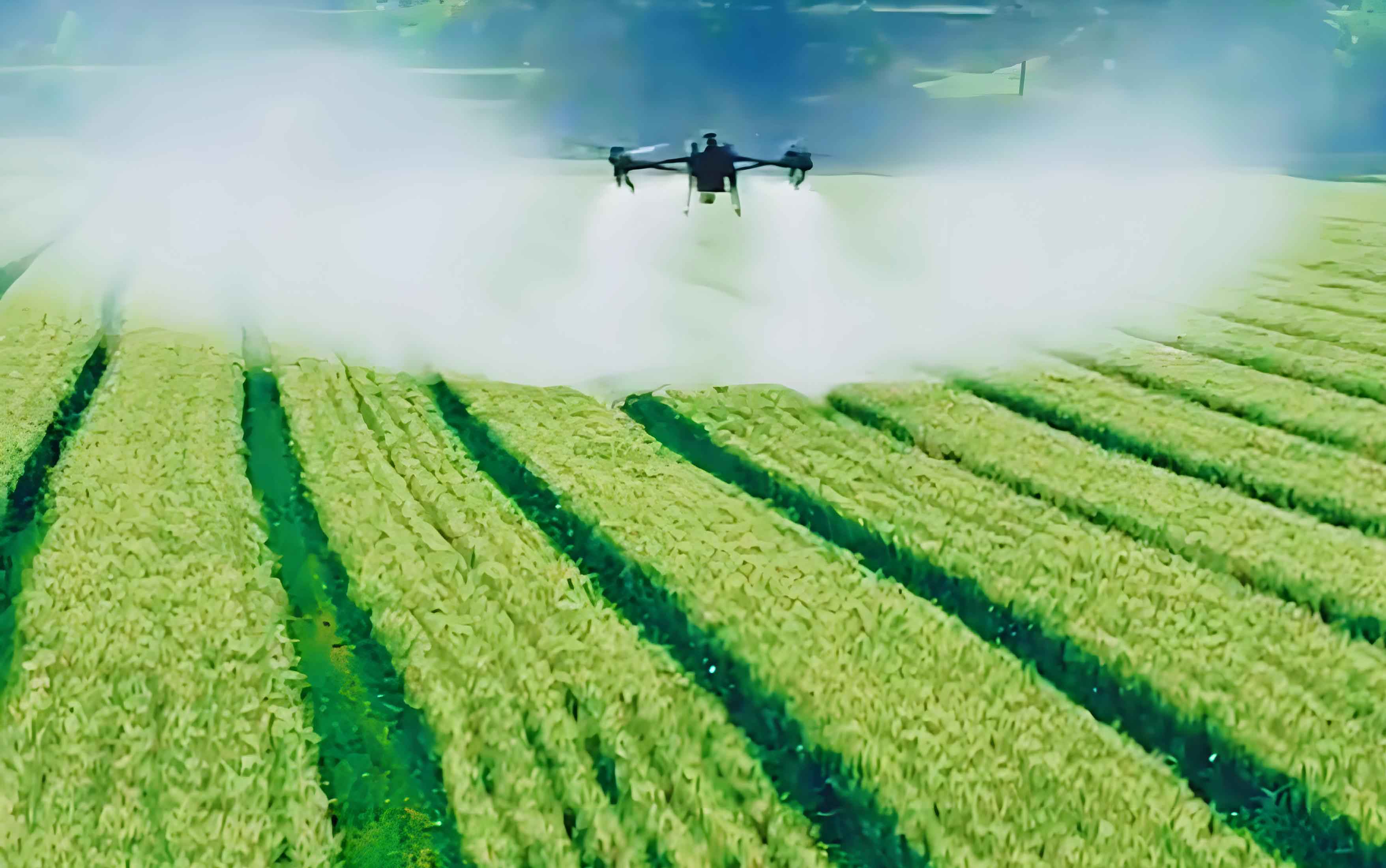
To assess the performance of agricultural UAV in rice water weevil control, a field experiment was conducted in a rice-growing region with sandy loam soil and moderate fertility. The rice variety used was a common hybrid type, planted under standard agronomic practices. The trial focused on comparing different insecticide formulations applied via an agricultural UAV, with parameters set to mimic real-world operational conditions. The agricultural UAV employed was a multi-rotor model equipped with a precision spraying system, ensuring consistent droplet size and coverage. Flight parameters included a speed of 4.5 m/s, altitude of 1.8 m, and a spray volume of 15 L/ha, which are typical for agricultural UAV operations in rice paddies.
The experimental design involved three treatment groups and a control, each replicated across large plots to account for field variability. The insecticides tested were selected based on their systemic and contact actions against coleopteran pests. Treatment A consisted of 200 g/L chlorantraniliprole suspension concentrate at 150 mL/ha, Treatment B combined chlorantraniliprole with 20% dinotefuran suspension concentrate at 300 mL/ha, and Treatment C combined chlorantraniliprole with 25% thiamethoxam water-dispersible granules at 90 g/ha. The control group received no pesticide application. All treatments were applied using the agricultural UAV 15 days after rice transplanting, corresponding to the peak activity period of rice water weevil adults and larvae. This timing aligns with integrated pest management principles, targeting the pest at vulnerable life stages.
Data collection focused on two key metrics: leaf injury rate and larval population reduction. Leaf injury was assessed by randomly sampling 20 rice clumps per plot, counting total leaves and those showing characteristic feeding scars. The leaf injury rate was calculated as the percentage of damaged leaves, and the leaf protection efficacy was derived by comparing treated plots to the control. Larval control efficacy was evaluated by uprooting rice plants with surrounding soil, immersing them in saturated saline solution to float larvae, and counting the number of live larvae. Statistical analysis was performed using analysis of variance (ANOVA) and Duncan’s multiple range test at a significance level of P < 0.05. The formulas for efficacy calculations are standard in entomology, as shown below:
$$ \text{Leaf Injury Rate (\%)} = \left( \frac{\text{Number of Damaged Leaves}}{\text{Total Leaves Surveyed}} \right) \times 100 $$
$$ \text{Leaf Protection Efficacy (\%)} = \left( \frac{\text{Control Injury Rate} – \text{Treatment Injury Rate}}{\text{Control Injury Rate}} \right) \times 100 $$
$$ \text{Larval Control Efficacy (\%)} = \left( \frac{\text{Control Larval Count} – \text{Treatment Larval Count}}{\text{Control Larval Count}} \right) \times 100 $$
These metrics provide a comprehensive view of the agricultural UAV’s impact, combining direct pest reduction with crop health indicators. Additionally, safety assessments were conducted by observing non-target organisms, such as beneficial insects and aquatic life, and monitoring rice plants for phytotoxicity symptoms. The agricultural UAV’s precision minimizes off-target drift, which is crucial for environmental safety.
The results demonstrated significant differences among treatments in controlling rice water weevil. As summarized in Table 1, Treatment C (chlorantraniliprole + thiamethoxam) achieved the highest leaf protection efficacy of 88.01% and larval control efficacy of 87.52% at 15 days after application. This outperformed Treatment B (chlorantraniliprole + dinotefuran) and Treatment A (chlorantraniliprole alone), indicating a synergistic effect of the combination. The agricultural UAV ensured uniform deposition, which likely contributed to the consistent results across large plots. Statistical analysis confirmed that Treatment C’s efficacies were significantly higher (P < 0.05) than other treatments, underscoring the advantage of using specific insecticide mixtures via agricultural UAV systems.
| Treatment | Leaf Injury Rate (%) | Leaf Protection Efficacy (%) | Live Larval Count | Larval Control Efficacy (%) |
|---|---|---|---|---|
| A: Chlorantraniliprole | 1.62 ± 0.07 | 73.74 ± 1.89 | 8.33 ± 0.29 | 55.38 ± 1.30 |
| B: Chlorantraniliprole + Dinotefuran | 1.27 ± 0.01 | 79.42 ± 1.04 | 7.00 ± 0.17 | 62.51 ± 1.80 |
| C: Chlorantraniliprole + Thiamethoxam | 0.74 ± 0.08 | 88.01 ± 0.69 | 2.33 ± 0.29 | 87.52 ± 0.87 |
| Control (No Treatment) | 6.17 ± 0.33 | — | 18.67 ± 0.61 | — |
The data reveal that the agricultural UAV application not only reduced leaf damage but also suppressed larval populations effectively. This dual action is critical for managing rice water weevil, as larvae cause root damage that directly impacts yield. The high efficacy of Treatment C can be attributed to the systemic properties of thiamethoxam, which is absorbed by rice plants and translocated to roots, targeting larvae in the soil. The agricultural UAV’s ability to deliver fine droplets enhances canopy penetration and root zone coverage, maximizing insecticide uptake. Furthermore, no adverse effects were observed on rice plants, beneficial insects like pollinators, or aquatic organisms, highlighting the safety profile of agricultural UAV-based treatments. This aligns with the broader goal of sustainable agriculture, where precision technologies like agricultural UAV minimize ecological disruption.
To further analyze the agricultural UAV’s performance, we can model pesticide deposition using a simplified diffusion equation. Assuming uniform spray distribution from the agricultural UAV, the deposition density D (in µg/cm²) on rice leaves can be expressed as:
$$ D = \frac{Q \cdot \eta}{A \cdot v} $$
where Q is the total pesticide output (in mL), η is the spray efficiency factor (typically 0.8-0.9 for agricultural UAV), A is the area covered (in m²), and v is the flight velocity (in m/s). For this experiment, with Q = 15 L/ha (equivalent to 1.5 mL/m²), η = 0.85, A = 6667 m² per plot, and v = 4.5 m/s, the deposition density is calculated to ensure optimal pest control. This model helps explain why the agricultural UAV achieved high efficacy with reduced volumes compared to traditional methods.
The discussion extends to the operational advantages of agricultural UAV in rice water weevil management. Compared to manual spraying, the agricultural UAV reduces labor costs by up to 70% and cuts pesticide usage by 30-50%, as reported in prior studies. The precision of agricultural UAV applications minimizes resistance development in pests by ensuring effective doses reach target areas. Moreover, the agricultural UAV can access difficult terrains, such as flooded rice fields, without causing soil compaction or crop damage. In regions with labor shortages, the agricultural UAV offers a scalable solution for large-scale pest control. The integration of agricultural UAV with remote sensing technologies could further enhance monitoring and targeted interventions, enabling real-time adjustments based on pest population dynamics.
Another aspect is the economic impact of agricultural UAV adoption. The cost-benefit analysis for rice water weevil control involves factors like yield increase, pesticide savings, and operational efficiency. Using a simple formula for net benefit (NB):
$$ NB = (Y_t – Y_c) \cdot P_y – C_{UAV} – C_{pesticide} $$
where Y_t and Y_c are yields in treated and control plots (in kg/ha), P_y is the rice price (in $/kg), C_{UAV} is the agricultural UAV operational cost (in $/ha), and C_{pesticide} is the insecticide cost (in $/ha). Based on this experiment, Treatment C likely yields a positive NB due to high efficacy and moderate costs, making agricultural UAV a viable investment for farmers. The agricultural UAV’s versatility also allows for multi-purpose use, such as fertilizer application or disease monitoring, amplifying its value in integrated crop management.
Looking ahead, the future of agricultural UAV in pest control is promising. Advances in artificial intelligence and machine learning could enable autonomous decision-making for pesticide application, optimizing timing and dosage based on environmental conditions. For rice water weevil, predictive models using weather data and pest life cycles could be integrated with agricultural UAV systems to preempt outbreaks. Additionally, the development of UAV-compatible formulations, such as nano-pesticides, may improve adhesion and persistence on rice plants. The agricultural UAV’s role in precision agriculture aligns with global trends toward digital farming, where data-driven approaches enhance sustainability and productivity.
In conclusion, this study confirms that agricultural UAV applications are highly effective in controlling rice water weevil, with the combination of chlorantraniliprole and thiamethoxam delivering superior results. The agricultural UAV’s precision, efficiency, and safety make it a cornerstone technology for modern rice pest management. By reducing reliance on manual labor and minimizing environmental impact, the agricultural UAV supports sustainable agricultural practices. Future research should explore long-term effects on pest resistance and ecosystem health, but the current findings strongly advocate for the widespread adoption of agricultural UAV in rice-growing regions. As the agricultural UAV industry evolves, continued innovation will further solidify its position as an indispensable tool for farmers worldwide.
The implications extend beyond rice water weevil to other pests and crops, demonstrating the transformative potential of agricultural UAV in global food security. With proper regulation and training, agricultural UAV can revolutionize pest control, making agriculture more resilient and environmentally friendly. This experiment serves as a benchmark for integrating agricultural UAV into integrated pest management programs, highlighting the synergy between technology and agronomy. As we move forward, the agricultural UAV will undoubtedly play a pivotal role in shaping the future of agriculture, driven by its ability to deliver precise, efficient, and sustainable solutions.