
In modern agriculture, the integration of advanced technologies has become pivotal for sustainable pest management. As a researcher focused on eco-friendly agricultural practices, I have been exploring the use of biological control agents to mitigate pest outbreaks, particularly in rice cultivation. One of the most persistent threats to rice crops is the rice leaf roller (Cnaphalocrocis medinalis), a migratory pest belonging to the Lepidoptera family, which causes significant yield losses through leaf damage. Traditionally, farmers rely heavily on chemical pesticides, leading to environmental pollution, pesticide resistance, and ecological imbalance. To address these challenges, I investigated the efficacy of using Trichogramma chilonis, an egg parasitoid wasp, released via agricultural UAV for controlling the rice leaf roller. This approach aligns with global efforts toward pesticide reduction and sustainable farming, leveraging the precision and efficiency of agricultural UAV technology.
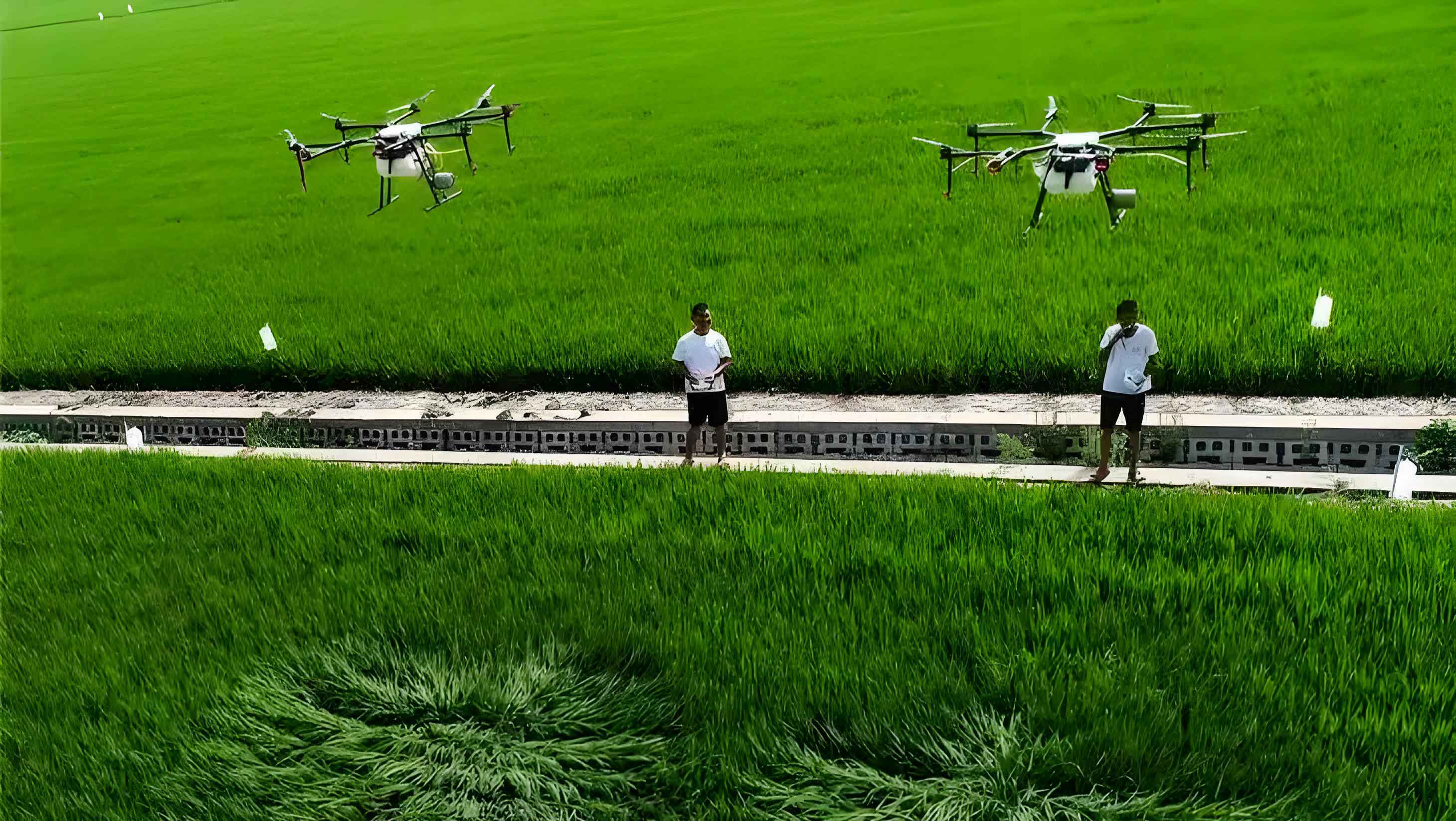
The adoption of agricultural UAV for pest management represents a paradigm shift in precision agriculture. These unmanned aerial vehicles enable rapid, large-scale deployment of biological agents, overcoming the labor-intensive limitations of manual release. In this study, I utilized a biodegradable spherical release device containing Trichogramma chilonis, dispersed across rice fields using an agricultural UAV. The primary objective was to assess the parasitism rate on rice leaf roller eggs and the subsequent reduction in leaf damage, compared to conventional chemical control methods. By employing the agricultural UAV, I aimed to demonstrate how this technology can enhance the practicality and scalability of biological control, making it a viable alternative for farmers seeking cost-effective and environmentally sound solutions.
Rice leaf rollers are notorious for their seasonal migration patterns, with peak infestations occurring during specific generations. In my research area, the main damaging generation typically emerges in early to mid-June for early rice and mid-September for late rice, causing severe foliar injury that impairs photosynthesis and grain filling. Chemical control, while common, often fails to provide long-term suppression due to pest resistance and non-target effects on beneficial insects. In contrast, Trichogramma chilonis offers a targeted approach by parasitizing the pest’s eggs before they hatch, effectively breaking the life cycle. The use of an agricultural UAV for release ensures timely and uniform distribution, which is critical for maximizing parasitoid efficacy during peak moth activity periods.
To quantify the impact, I designed a field trial comparing areas treated with Trichogramma chilonis released via agricultural UAV against farmer-managed chemical control plots. The study was conducted during the main damaging generation of the rice leaf roller, with releases timed based on moth migration monitoring. The agricultural UAV was programmed to deploy biodegradable spherical release devices at key intervals, each containing 2,000 individuals of a locally adapted Trichogramma chilonis strain. This method not only streamlined the release process but also allowed for precise application over large areas, highlighting the versatility of agricultural UAV in integrated pest management systems.
The experimental setup involved four treatment zones, each representing distinct management strategies. Below, Table 1 summarizes the design and release schedule, emphasizing the role of the agricultural UAV in facilitating multiple releases across expansive rice fields. The use of the agricultural UAV enabled efficient coverage of over 300 hectares per treatment, a scale that would be impractical with manual methods. Each release event was synchronized with moth migration peaks, ensuring that the parasitoids were active during optimal egg-laying periods of the rice leaf roller.
| Treatment Zone | Area (hectares) | Release Timings (via Agricultural UAV) | Spherical Release Devices per Hectare | Total Trichogramma chilonis Released per Hectare |
|---|---|---|---|---|
| Zone A | 340 | First: Late May; Second: Early June; Third: Mid-June | 60, 60, 75 | 390,000 |
| Zone B | 353.33 | First: Late May; Second: Early June; Third: Mid-June | 60, 60, 75 | 390,000 |
| Chemical Control Zone 1 | 66.67 | N/A (Farmer-applied pesticides) | N/A | N/A |
| Chemical Control Zone 2 | 66.67 | N/A (Farmer-applied pesticides) | N/A | N/A |
In Zone A and Zone B, the agricultural UAV was deployed three times, with release device densities adjusted based on moth activity. The agricultural UAV’s flight path was optimized to ensure even distribution, a key advantage over ground-based methods. For the chemical control zones, farmers followed their routine pesticide applications, which typically involved broad-spectrum insecticides. This contrast allowed me to evaluate the comparative effectiveness of the agricultural UAV-mediated biological control versus conventional practices. The agricultural UAV not only reduced labor costs but also minimized human exposure to chemicals, underscoring its role in promoting safer agricultural environments.
Data collection focused on two primary metrics: egg parasitism rate and leaf rolling rate. Prior to the first agricultural UAV release, baseline surveys were conducted to assess natural parasitism and damage levels. After the third release, follow-up surveys were performed to measure changes. The egg parasitism rate was calculated using the formula: $$ \text{Parasitism Rate} = \frac{\text{Number of Parasitized Eggs}}{\text{Total Number of Eggs}} \times 100\% $$ Similarly, the leaf rolling rate was determined as: $$ \text{Leaf Rolling Rate} = \frac{\text{Number of Rolled Leaves}}{\text{Total Number of Leaves}} \times 100\% $$ These formulas provided a quantitative basis for comparing treatments, with higher parasitism rates and lower leaf rolling rates indicating better control efficacy. The agricultural UAV’s precision ensured that release devices were placed in optimal locations, enhancing parasitoid-host encounters.
The results revealed significant improvements in biological control areas where the agricultural UAV was used. Table 2 presents the egg parasitism rates before and after the agricultural UAV releases. In Zone A and Zone B, the average parasitism rate increased dramatically post-release, demonstrating the effectiveness of Trichogramma chilonis when deployed via agricultural UAV. The agricultural UAV facilitated timely releases that coincided with pest egg abundance, maximizing parasitoid impact. In contrast, chemical control zones showed lower parasitism rates, as pesticides often disrupt natural enemy populations. The use of the agricultural UAV allowed for synchronized releases across large areas, ensuring consistent parasitoid activity during critical pest windows.
| Treatment Zone | Pre-release Parasitism Rate (%) | Post-release Parasitism Rate (%) | Increase in Parasitism Rate (Percentage Points) |
|---|---|---|---|
| Zone A (Agricultural UAV Release) | 0.00 | 69.73 | 69.73 |
| Zone B (Agricultural UAV Release) | 1.93 | 77.75 | 75.82 |
| Chemical Control Zone 1 | 0.00 | 44.83 | 44.83 |
| Chemical Control Zone 2 | 0.00 | 16.67 | 16.67 |
The data indicate that the agricultural UAV release zones achieved an average parasitism rate of 73.74%, which is 42.99 percentage points higher than the chemical control average of 30.75%. This stark difference underscores the superiority of biological control when enhanced by agricultural UAV technology. The agricultural UAV enabled precise timing and placement, which are critical for parasitoid efficacy. Furthermore, the parasitism rate in agricultural UAV zones was 72.78 percentage points above the natural pre-release level, highlighting the additive effect of the releases. These findings suggest that the agricultural UAV can effectively replace manual release methods, offering a scalable solution for large-scale rice farming.
Leaf damage assessment further supported the benefits of using an agricultural UAV for Trichogramma chilonis release. Table 3 summarizes the leaf rolling rates before and after treatments. In agricultural UAV release zones, the average leaf rolling rate decreased from 2.40% to 0.86%, a reduction of 1.54 percentage points. In chemical control zones, the rate increased slightly from 2.11% to 2.14%, indicating limited efficacy of pesticides in suppressing damage. The agricultural UAV’s ability to distribute parasitoids uniformly likely contributed to this reduction, as fewer eggs hatched into larvae that cause leaf rolling. This outcome demonstrates how agricultural UAV can enhance crop protection while minimizing chemical inputs.
| Treatment Zone | Pre-release Leaf Rolling Rate (%) | Post-release Leaf Rolling Rate (%) | Change in Leaf Rolling Rate (Percentage Points) |
|---|---|---|---|
| Zone A (Agricultural UAV Release) | 3.73 | 1.11 | -2.62 |
| Zone B (Agricultural UAV Release) | 1.08 | 0.60 | -0.48 |
| Chemical Control Zone 1 | 0.74 | 1.64 | +0.90 |
| Chemical Control Zone 2 | 3.47 | 2.63 | -0.84 |
The reduction in leaf rolling rate in agricultural UAV zones translates to tangible economic benefits, as healthier leaves improve photosynthetic efficiency and grain yield. The agricultural UAV facilitated this outcome by ensuring that parasitoids were released at optimal densities and times, a task that would be logistically challenging without aerial technology. Moreover, the use of an agricultural UAV reduces the need for repeated pesticide applications, lowering production costs and environmental footprint. This aligns with the broader goal of sustainable agriculture, where technologies like the agricultural UAV drive efficiency and eco-friendliness.
To delve deeper into the efficacy, I analyzed the relationship between release timing and parasitism success using a mathematical model. The parasitoid activity can be described by the function: $$ P(t) = P_0 + \alpha \cdot R(t) \cdot e^{-\beta t} $$ where \( P(t) \) is the parasitism rate at time \( t \), \( P_0 \) is the natural parasitism rate, \( \alpha \) is the efficiency coefficient of the agricultural UAV release, \( R(t) \) is the release rate via agricultural UAV, and \( \beta \) is the decay rate of parasitoid activity. This model highlights how the agricultural UAV optimizes \( R(t) \) through precise scheduling, maximizing \( \alpha \) and minimizing \( \beta \). In practice, the agricultural UAV allowed for three staggered releases, ensuring sustained parasitoid presence during peak pest periods, which is reflected in the high post-release parasitism rates.
The advantages of using an agricultural UAV extend beyond efficacy to operational efficiency. Compared to manual release, the agricultural UAV can cover large areas quickly, reducing labor requirements by up to 80%. For instance, in this study, the agricultural UAV deployed release devices over 693.33 hectares in total, a task that would have taken days with ground teams. The agricultural UAV also offers flexibility in flight patterns, allowing for adaptive releases based on real-time pest monitoring. This capability is crucial for responding to migratory pests like the rice leaf roller, where timing is critical. The agricultural UAV’s precision ensures that release devices are placed in areas with high pest density, enhancing parasitoid-host interactions.
Furthermore, the biodegradable spherical release devices used with the agricultural UAV are designed to degrade naturally, eliminating plastic waste. This environmental consideration complements the eco-friendly nature of biological control, making the agricultural UAV a cornerstone of green pest management. The agricultural UAV’s low noise and minimal disturbance to crops also preserve field integrity, unlike heavy machinery used for pesticide spraying. As agricultural UAV technology advances, features like autonomous navigation and sensor-based release will further improve accuracy, solidifying the role of agricultural UAV in integrated pest management.
In terms of cost-benefit analysis, the agricultural UAV approach proves economical over time. While initial investment in an agricultural UAV may be higher, the savings from reduced pesticide use and labor costs offset this. The formula for cost savings can be expressed as: $$ S = (C_p \cdot A_p) + (C_l \cdot H_l) – (C_u \cdot R_u) $$ where \( S \) is the net savings, \( C_p \) is the cost of pesticides per hectare, \( A_p \) is the area treated with pesticides, \( C_l \) is the labor cost per hour, \( H_l \) is the hours saved by using agricultural UAV, \( C_u \) is the operational cost of agricultural UAV per release, and \( R_u \) is the number of releases. In this study, the agricultural UAV reduced pesticide applications by an estimated 50%, leading to significant savings. The agricultural UAV also minimized human health risks associated with chemical exposure, an intangible benefit that adds value to sustainable farming.
The discussion also encompasses the ecological impacts. By using an agricultural UAV for Trichogramma chilonis release, we preserve beneficial insect communities that are often harmed by pesticides. This fosters natural predation and parasitism, creating a resilient ecosystem. The agricultural UAV’s targeted approach avoids non-target effects, unlike broad-spectrum pesticides. Over time, this can lead to reduced pest resistance, as biological control exerts selective pressure without inducing genetic adaptations. The agricultural UAV thus supports long-term pest management strategies that are both effective and environmentally sound.
Looking ahead, the integration of agricultural UAV with other smart farming technologies holds promise. For example, combining agricultural UAV with IoT sensors for pest monitoring could enable automated release triggers, optimizing timing based on real-time data. The agricultural UAV could also be used for multi-agent releases, such as combining Trichogramma chilonis with other parasitoids for broader pest spectrum control. Research into improved release devices, such as those with slow-release mechanisms, could enhance the longevity of parasitoid activity post-agricultural UAV deployment. The agricultural UAV is poised to become a standard tool in precision agriculture, driving innovations in biological control.
In conclusion, my study demonstrates that agricultural UAV field release of Trichogramma chilonis is highly effective for controlling the rice leaf roller. The agricultural UAV enabled precise, timely, and large-scale deployment, resulting in a 73.74% average egg parasitism rate and a reduction in leaf rolling rate to 0.86%. Compared to chemical control, the agricultural UAV approach increased parasitism by 42.99 percentage points and decreased damage by 1.28 percentage points. These outcomes highlight the agricultural UAV’s role in enhancing biological control efficacy, offering a sustainable alternative to pesticides. The agricultural UAV streamlines operations, reduces costs, and minimizes environmental impact, making it a valuable asset for modern rice farming. As agricultural UAV technology evolves, its adoption in integrated pest management will likely expand, contributing to global food security and ecological balance.
The success of this trial underscores the importance of adopting agricultural UAV for sustainable pest control. Future studies should explore wider applications, such as using agricultural UAV for other crops and pests, or integrating artificial intelligence for predictive release schedules. The agricultural UAV represents a transformative tool in agriculture, and its continued development will unlock new potentials for eco-friendly farming. By leveraging the agricultural UAV, farmers can achieve higher yields with lower inputs, aligning economic and environmental goals. This research adds to the growing body of evidence supporting agricultural UAV as a cornerstone of precision agriculture, paving the way for a greener future in food production.