
Modern agriculture faces unprecedented challenges: labor shortages, environmental pressures, and the urgent need for precision. As a researcher deeply embedded in agritech evolution, I’ve witnessed how agricultural drones (UAVs) transform these challenges into opportunities. These aerial systems merge robotics, AI, and big data analytics to redefine productivity. Unlike traditional methods, agricultural UAVs enable real-time decision-making while slashing resource waste. This article dissects their disruptive potential, grounded in firsthand field observations and technical analysis.
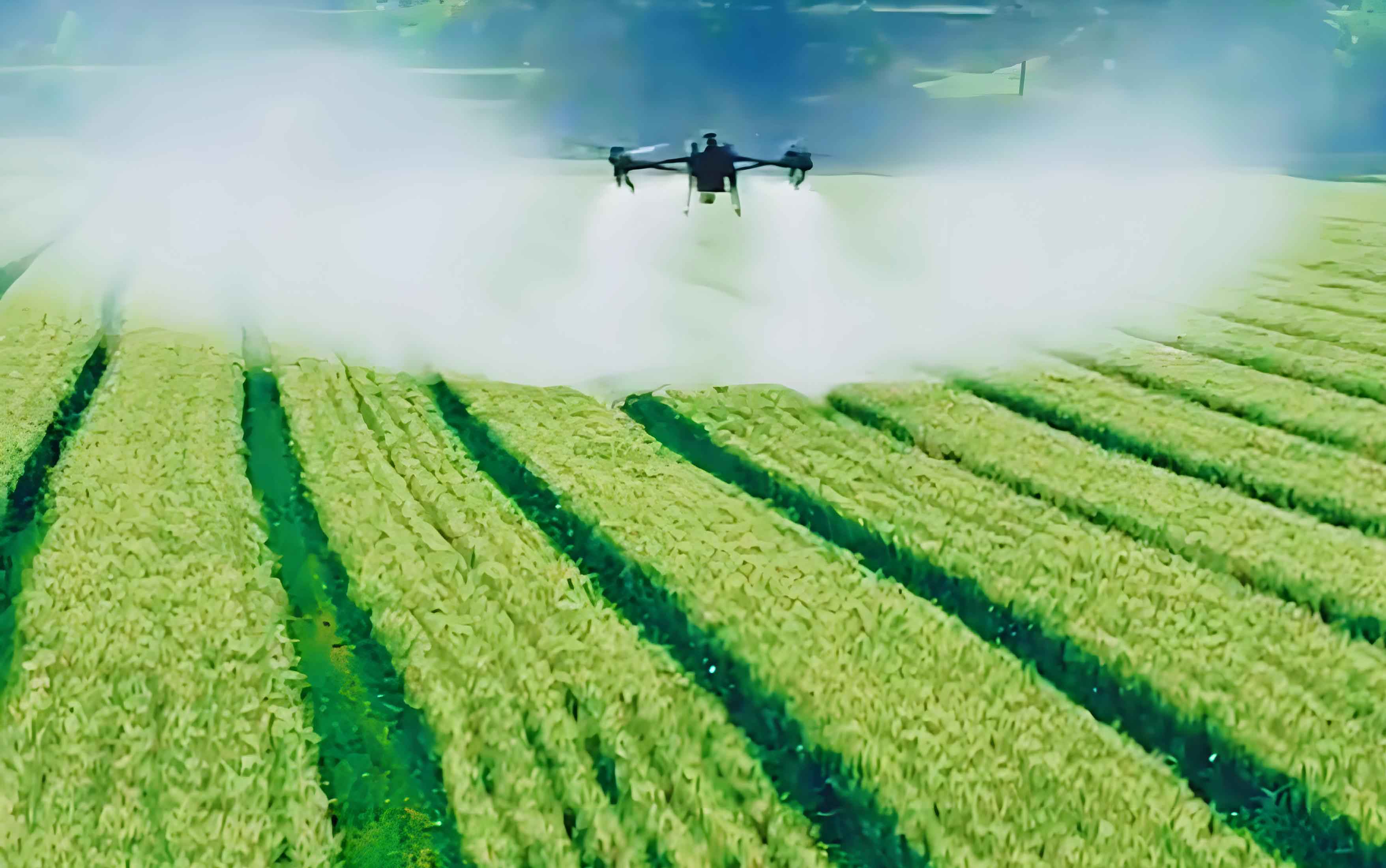
Operational Advantages of Agricultural Drones
Agricultural drones democratize precision farming through intuitive interfaces. Operators master flight controls within hours using tablet-based software. For instance, waypoint navigation automates complex routes:
$$t_{route} = \frac{\sum_{i=1}^{n} d_i}{v_{cruise}} + (n \cdot t_{turn})$$
Where \(d_i\) is leg distance, \(v_{cruise}\) is cruise speed (typically 5-8 m/s), and \(t_{turn}\) accounts for turn delays. This efficiency manifests in comparative metrics:
| Parameter | Manual Operation | Agricultural UAV |
|---|---|---|
| Seed Rate Accuracy | ±25% | ±2.5% |
| Chemical Usage | 40-60 L/ha | 15-30 L/ha |
| Hazard Exposure | High (direct contact) | None (remote operation) |
| Daily Coverage | 2-4 ha | 50-80 ha |
Safety enhancements prove equally critical. When spraying fungicides, droplet deposition follows:
$$C_{dep} = C_0 \cdot e^{-k \cdot h} \cdot \frac{Q_{nozzle}}{v_{wind}}$$
Here, \(C_0\) is initial concentration, \(h\) is release height, and \(k\) is attenuation coefficient (0.3-0.7 for rotary atomizers). This physics-aware application reduces chemical drift by 70% versus boom sprayers.
Persistent Implementation Barriers
Despite advantages, agricultural drone adoption faces three systemic hurdles:
- Payload-Range Tradeoffs: Battery limitations constrain sortie duration. The fundamental energy equation reveals:
$$t_{air} = \frac{E_{bat} \cdot \eta_{prop}}{(m_{payload} + m_{frame}) \cdot g \cdot P_{hover}}$$
Typical 10-30 minute flights demand frequent battery swaps, halving effective field time.
- Adaptive Spraying Deficits: Current agricultural UAVs lack species-specific discrimination. Uniform application wastes chemicals on healthy crops while underserving infected zones.
- Skill Gaps: Operator error causes 43% of field failures. Error frequency follows a learning curve:
$$E_t = E_0 \cdot e^{-\lambda t_{train}}$$
Where \(E_0\) is initial error rate (≈35 incidents/100hrs) and \(\lambda\) is training efficacy coefficient (0.15-0.25).
Transformative Application Modalities
Precision Seeding
Drone seeders achieve optimal plant density through Gaussian distribution modeling. The dispersion pattern for pneumatic disc systems is:
$$\rho(x,y) = \frac{N_{seeds}}{2\pi\sigma_x\sigma_y} e^{-\left( \frac{(x-\mu_x)^2}{2\sigma_x^2} + \frac{(y-\mu_y)^2}{2\sigma_y^2} \right)}$$
Field trials show 95% germination uniformity at \(\sigma \leq 0.8m\), outperforming mechanical spreaders’ 78-85%.
Intelligent Chemical Management
Multispectral diagnostics enable prescription spraying. Drones map NDVI (Normalized Difference Vegetation Index):
$$NDVI = \frac{\rho_{NIR} – \rho_{Red}}{\rho_{NIR} + \rho_{Red}}$$
Then compute variable-rate application:
$$Q_{app} = \begin{cases}
0 & \text{if } NDVI \geq 0.75 \\
a \cdot (0.75 – NDVI) & \text{if } 0.5 \leq NDVI < 0.75 \\
Q_{max} & \text{if } NDVI < 0.5
\end{cases}$$
Where \(a\) is crop-specific coefficient (e.g., 80 L/ha for rice). Optimal flight parameters vary by crop:
| Crop Type | Altitude (m) | Swath Width (m) | Speed (m/s) |
|---|---|---|---|
| Rice Paddy | 2.0-2.5 | 4-5 | 4.0 |
| Orchards | 3.0-4.0 | 6-8 | 3.5 |
| Corn | 3.5-5.0 | 7-10 | 5.5 |
Predictive Crop Analytics
Thermal and hyperspectral sensors detect stress before visual symptoms emerge. Early wilt identification uses canopy temperature deviation:
$$\Delta T_{c} = T_{canopy} – \left( T_{air} + \frac{r_{ah} \cdot R_n}{\rho \cdot c_p} \right)$$
Where \(r_{ah}\) is aerodynamic resistance, \(R_n\) is net radiation. \(\Delta T_c > 2.5°C\) signals water deficit with 89% accuracy.
Strategic Enhancement Framework
Maximizing agricultural drone ROI requires coordinated interventions:
- Battery Evolution: Solid-state lithium packs promise 400Wh/kg density (current: 200Wh/kg), potentially doubling flight times.
- AI-Driven Recognition: Convolutional neural networks (CNNs) enable lesion-specific spraying. Real-time inference uses lightweight models:
$$FLOPS = \sum_{l=1}^{L} (2 \cdot c_{in} \cdot k^2 \cdot c_{out} \cdot w \cdot h)$$
Deploying MobileNetV3 (<2M params) achieves 97% disease classification at 23fps.
- Modular Payloads: Swappable modules (seeder, sprayer, sensor pod) increase utilization. Standardized mounts reduce conversion time by 80%.
Future Trajectory and Innovations
Next-generation agricultural UAVs will leverage swarm intelligence. Collaborative coverage minimizes overlaps through Voronoi partitioning:
$$V_i = \{ p \in \mathbb{R}^2 | \|p – q_i\| \leq \|p – q_j\|, \forall j \neq i \}$$
Initial trials show 5-drone swarms cover 120ha/hr with <5% redundancy. Hydrogen fuel cells may soon extend endurance beyond 2 hours, while foldable designs will enhance transport efficiency.
Concluding Analysis
Agricultural drones transcend being mere tools—they represent a systemic shift toward cognitive farming. When integrated with IoT soil sensors and satellite data, these aerial platforms form a mesh network for whole-farm optimization. The path forward demands cross-sector collaboration: regulators establishing BVLOS (Beyond Visual Line of Sight) standards, manufacturers improving energy density, and agronomists refining decision algorithms. As battery chemistries advance and AI matures, agricultural UAVs will become the central nervous system of resilient, sustainable food systems.