
From my perspective as an agricultural machinery extension specialist, the rapid integration of agricultural drone technology represents one of the most significant shifts in modern farming practices in recent years. Our region, characterized by its intensive crop production and innovative farming systems like integrated rice-crayfish culture, has served as a fertile ground for testing and adopting this technology. The journey from initial pilot projects to widespread commercial application has been instructive, revealing both the immense potential and the practical hurdles of scaling this innovation.
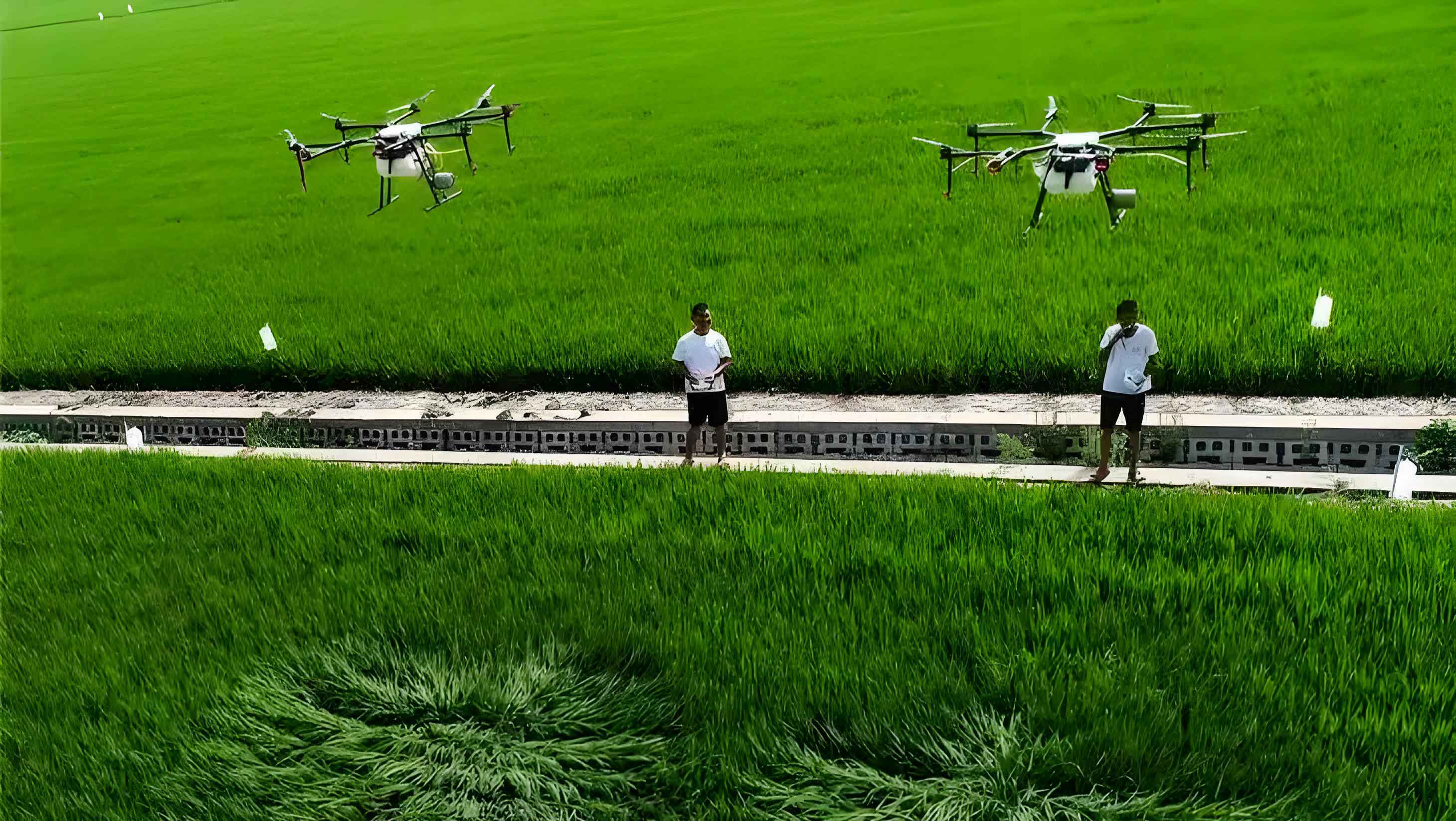
The foundational statistics speak to a technology in ascendancy. In our operational area, which encompasses over 120,000 hectares of cultivated land, the adoption curve for agricultural drones has been steep. Initially, the high capital cost was a formidable barrier. However, with strategic policy interventions and demonstrable field results, the fleet has grown exponentially. We have transitioned from a handful of pioneering service organizations to nearly thirty, operating a combined fleet exceeding 160 units. The service area covered by drone application, or ‘precision aerial application’, has expanded from approximately 66,000 hectares to over 100,000 hectares within a short period. This growth is underpinned by a parallel investment in human capital; we have trained and certified over 350 operators, ensuring that the technology is matched with skilled personnel.
The policy environment has been a critical accelerator. The inclusion of agricultural drones in the national subsidy pilot program was a watershed moment. Prior to this, the high upfront cost (often between $15,000 and $22,000 per unit) severely limited purchase to only the largest cooperatives. The subsidy, typically covering 20-30% of the cost, dramatically altered the economic calculus for medium-sized service providers. The subsidy data reveals a clear trend of increasing uptake following policy implementation. Furthermore, targeted demonstration projects, where the government partially funded drone application services for farmers, provided a low-risk opportunity for end-users to witness the benefits firsthand, creating a powerful pull-effect in the market.
| Period | Key Policy/Initiative | Approx. Fleet Size | Service Area Covered (Hectares) | Subsidy Impact |
|---|---|---|---|---|
| Pre-2018 | Pilot projects & training | < 50 | < 40,000 | No direct purchase subsidy |
| 2018-2019 | Inclusion in subsidy pilot | ~80 | ~66,000 | Moderate uptake; subsidy for organizations only |
| 2019-2020 | Expanded project funding | 160+ | 100,000+ | Significant growth; newer models awaited subsidy listing |
Technical Advantages and Quantitative Superiority
The core driver of this adoption is the multifaceted technical and economic superiority of the agricultural drone. Its advantages are not merely qualitative but can be expressed through clear operational formulas and metrics.
1. Operational Efficiency: The most cited benefit is unparalleled work rate. A standard 10-liter payload agricultural drone can cover between 2 to 2.5 hectares per hour, including battery swap and refill time. This efficiency, $E_{drone}$, can be modeled as a function of payload capacity ($P$ in liters), effective swath width ($W$ in meters), flight speed ($S$ in m/s), and operational duty cycle ($D_c$, accounting for refill/swap time).
$$
E_{drone} = \frac{P \times \rho_{liquid}}{R} \times S \times W \times D_c \times 3600 \times 10^{-4}
$$
Where $R$ is the application rate (L/ha) and $\rho_{liquid}$ is density. Compared to manual backpack spraying, which covers about 0.15-0.2 ha/hour, or even tractor-mounted sprayers constrained by field access, the agricultural drone offers a 15-20x productivity gain. This is crucial during narrow disease or pest outbreak windows.
2. Economic and Resource Efficiency: The cost structure is compelling. While manual spraying labor costs can reach $25-30 per hectare, drone service fees are typically $12-18. The savings, $C_{savings}$, per unit area can be significant:
$$
C_{savings} = (C_{manual} – C_{drone}) \times A
$$
where $A$ is the area. Beyond labor, the precision of drone systems leads to substantial input savings. Empirical data shows a 20-35% reduction in chemical usage due to better-targeted deposition and reduced drift. Water usage plummets by over 90%, as drones use ultra-low volume (ULV) sprays, typically 10-20 L/ha versus 300-600 L/ha for ground rigs. The total resource efficiency factor $F_{resource}$ can be approximated as:
$$
F_{resource} \approx \left(1 – \frac{R_{drone}}{R_{ground}}\right)_{chemical} + \left(1 – \frac{W_{drone}}{W_{ground}}\right)_{water}
$$
3. Agronomic Efficacy and Versatility: The aerodynamic downwash from the agricultural drone‘s rotors is a key agronomic feature. It promotes canopy penetration and leaf flipping, ensuring bi-sided coverage—a critical factor for effective pest and disease management. This effect enhances the effective deposition coefficient, $C_d$. Furthermore, the versatility of modern platforms is a game-changer. Beyond liquid spraying, modules for granular fertilizer broadcasting, seed sowing, and even feed dispersal for aquaculture (highly relevant for rice-crayfish systems) transform the agricultural drone from a single-purpose tool into a multi-role agricultural assistant.
| Parameter | Manual Backpack Sprayer | Tractor-Mounted Boom Sprayer | Agricultural Drone |
|---|---|---|---|
| Typical Work Rate (ha/hr) | 0.15 – 0.20 | 3 – 6 | 2 – 3.5 |
| Typical Application Volume (L/ha) | 300 – 500 | 200 – 400 | 10 – 20 |
| Chemical Savings Potential | Baseline | 0-10% | 20-35% |
| Operator Safety | Very Low (direct exposure) | Low (proximity, drift) | High (remote operation) |
| Terrain Adaptability | High | Low (requires dry, firm access) | Very High (independent of ground conditions) |
| Crop Damage Risk | Low | Moderate (wheel compaction) | Very Low |
Persistent Challenges and Systemic Bottlenecks
Despite the progress, several interconnected challenges constrain the full potential of agricultural drone technology. These are not merely technical but span regulatory, economic, and infrastructural domains.
1. Payload-Endurance Limitation: The fundamental physics of electric multi-rotors imposes a trade-off between payload ($P$), flight time ($T$), and cost. Battery energy density is the limiting factor. The useful work per sortie $U_{sortie}$ is directly proportional to payload, but the number of sorties per day $N_{sortie}$ is limited by charge time and battery logistics.
$$
U_{total} = (P \times A_{rate}) \times N_{sortie}
$$
where $A_{rate}$ is the area covered per liter. Most commercial models have a payload of 10-20 kg and a flight time of 10-20 minutes, necessitating complex logistics of multiple batteries and charging stations for large-scale operations. While hydrogen fuel cell and hybrid powertrains are emerging, they increase cost and complexity.
2. Regulatory and Policy Friction: A significant friction point is the misalignment between technology adoption and regulatory frameworks. The aviation authority manages airspace, but local agricultural authorities lack jurisdiction over airworthiness or pilot licensing, creating an enforcement gap. Furthermore, the initial subsidy policy that restricted support only to registered organizations, excluding individual farmers or smaller partnerships, created an artificial market distortion. This policy, $Policy_{subsidy}(t)$, initially had a limiting condition:
$$
Policy_{subsidy}(t=0) = \{ \text{Subsidy} | \text{Recipient} \in \text{Registered Organizations} \}
$$
This condition $C_{org-only}$ likely slowed the diffusion rate in its early phase. The process for new, improved drone models to be included in the official subsidy catalog is often slower than the product iteration cycle of manufacturers, causing a lag between market availability and financial support.
3. Skills and Service Ecosystem Gaps: Operating an agricultural drone effectively requires a blend of skills: remote piloting, agronomy, pest identification, and equipment maintenance. A gap in any of these reduces efficacy and can erode farmer trust. There is also a need for more robust local service networks for repair, calibration, and software support, which are currently often reliant on distant manufacturers or distributors.
| Internal (Inherent to Technology/System) | External (Market, Policy, Environment) | |
|---|---|---|
| Strengths | High operational efficiency; Superior terrain access; Input (water, chemical) savings; Enhanced application efficacy; Improved operator safety. | Growing market demand for precision services; Strong policy push for smart agriculture; Labor shortages in rural areas. |
| Weaknesses | Limited payload/battery endurance; High initial capital cost; Requires specialized operator skills; Sensitivity to strong winds. | Fragmented after-sales service network; High dependence on subsidy policies; Lack of standardized operation protocols. |
| Opportunities | Development of hybrid/hydrogen powertrains; AI for spot-spraying and disease detection; Multi-functional attachments (sowing, spreading). | Integration with digital farming platforms; Expansion into crop insurance & monitoring; Potential for carbon credit-linked farming. |
| Threats | Rapid technological obsolescence; Risk of aerial incidents/liability issues; Battery disposal environmental concerns. | Stringent and evolving aviation regulations; Market saturation and price wars; Farmer resistance due to misinformation. |
Strategic Recommendations for Sustainable Scaling
To transition from successful pilots to a mature, sustainable ecosystem for agricultural drones, a multi-pronged strategy is required, addressing the challenges holistically.
1. Optimize and De-Risk the Policy Framework: Policy must evolve to be technology-neutral and user-inclusive. The subsidy condition should be updated to:
$$
Policy_{subsidy}(t+) = \{ \text{Subsidy} | \text{Recipient} \in \text{Qualified Users}, \text{Drone} \in \text{Certified Models} \}
$$
This removes the restrictive condition $C_{org-only}$. A fast-track, transparent mechanism for including new models in the subsidy catalog is essential. Furthermore, clarifying regulatory responsibility at the local level—perhaps delegating certain oversight functions to agricultural departments under a national framework—would improve safety compliance and management.
2. Foster Innovation Across the Value Chain: Encouraging R&D into next-generation agricultural drone platforms is vital. Public-private partnerships could focus on improving the key ratio of Endurance-Payload-Cost (EPC ratio). Support should also extend to ancillary infrastructure, such as mobile, solar-powered charging stations to enable operations in remote fields. Developing standardized data protocols would allow drone-collected imagery and application data to seamlessly integrate with Farm Management Information Systems (FMIS), creating a closed-loop precision agriculture system.
3. Build Comprehensive Capacity: Training programs must move beyond basic piloting to encompass “precision application agronomy.” This includes calibration for different droplet sizes, understanding weather effects on spray drift, and integrating scouting data into prescription maps. Establishing a network of certified service centers for maintenance and repair would increase uptime and user confidence. Demonstrations should quantitatively highlight not just speed, but the total cost of ownership and return on investment, using formulas like:
$$
ROI_{drone} = \frac{\sum (C_{savings} + Y_{increase} \times P_{crop}) – C_{capital} – C_{operating}}{C_{capital}}
$$
where $Y_{increase}$ is yield increase from better protection and $P_{crop}$ is crop price.
4. Promote Ecosystem Services and New Business Models: The role of the agricultural drone should be framed within broader ecosystem services. Its ability to enable precise, timely application reduces chemical runoff, supporting environmental sustainability. New business models, such as “Crop Health as a Service” subscriptions, where farmers pay per hectare for a complete monitoring-and-protection package, could lower the entry barrier and align service provider incentives with optimal crop outcomes.
In conclusion, the agricultural drone is far more than a sprayer in the sky; it is the physical node of a digital-physical farming system. Its value proposition—encompassing efficiency, precision, safety, and versatility—is fundamentally sound and has been validated in our fields. The current challenges are not insurmountable but are typical of a disruptive technology scaling into a complex socio-technical system. By implementing coherent policies that support inclusive adoption, fostering continuous innovation, and building the human and infrastructural capacity around the technology, we can fully harness the potential of the agricultural drone to create a more productive, sustainable, and resilient agricultural sector. The trajectory is clear: the agricultural drone will continue to evolve from a novel tool into an indispensable cornerstone of 21st-century crop management.