
As someone deeply immersed in the field of agricultural technology, I have witnessed firsthand the transformative impact of drone technology on modern farming practices. Over the years, I have operated, tested, and researched various unmanned aerial vehicles (UAVs) in diverse agricultural settings, from vast cereal fields to dense orchards. This personal journey has given me unique insights into how drones are revolutionizing agriculture, not just as tools but as integral components of precision farming systems. In this article, I will share my experiences and analyses, focusing on the applications, benefits, challenges, and future trajectories of agricultural drones, with a special emphasis on the critical role of drone training in ensuring effective and safe operations. The proliferation of drones in agriculture is not merely a trend; it is a paradigm shift that enhances productivity, sustainability, and resilience in food production. Through my work, I have seen how drones can address longstanding issues like labor shortages, environmental concerns, and inefficiencies in resource use. However, their full potential can only be realized with proper education and skill development, which is why drone training programs are essential for farmers, agronomists, and technicians alike. This article aims to provide a comprehensive overview, backed by data, formulas, and tables, to illustrate the multifaceted role of drones in agriculture.
My exploration began with the basic applications of drones in agriculture, which have evolved significantly from simple remote-controlled devices to sophisticated systems integrated with GPS, sensors, and artificial intelligence. Initially, I used drones primarily for aerial imaging, but soon I expanded into areas like seeding, crop protection, and monitoring. The ability to collect high-resolution data in real-time has been a game-changer, allowing for decisions based on precise information rather than guesswork. For instance, in seeding operations, drones can distribute seeds uniformly over large areas, though I have observed challenges such as improper row formation, which I will discuss later. In crop protection, drones enable targeted pesticide and fertilizer application, reducing chemical usage and minimizing environmental impact. The efficiency gains are substantial; I recall one project where drone-based spraying covered 40 hectares per day, equivalent to the work of 50-100 manual laborers. This not only saves time and costs but also reduces human exposure to hazardous chemicals. Moreover, the simplicity of operation, often highlighted in drone training sessions, makes these technologies accessible even to those with limited technical background. I have conducted numerous drone training workshops, where participants learn to pilot drones, perform maintenance, and interpret data within 10-15 days, underscoring the user-friendly nature of these systems.
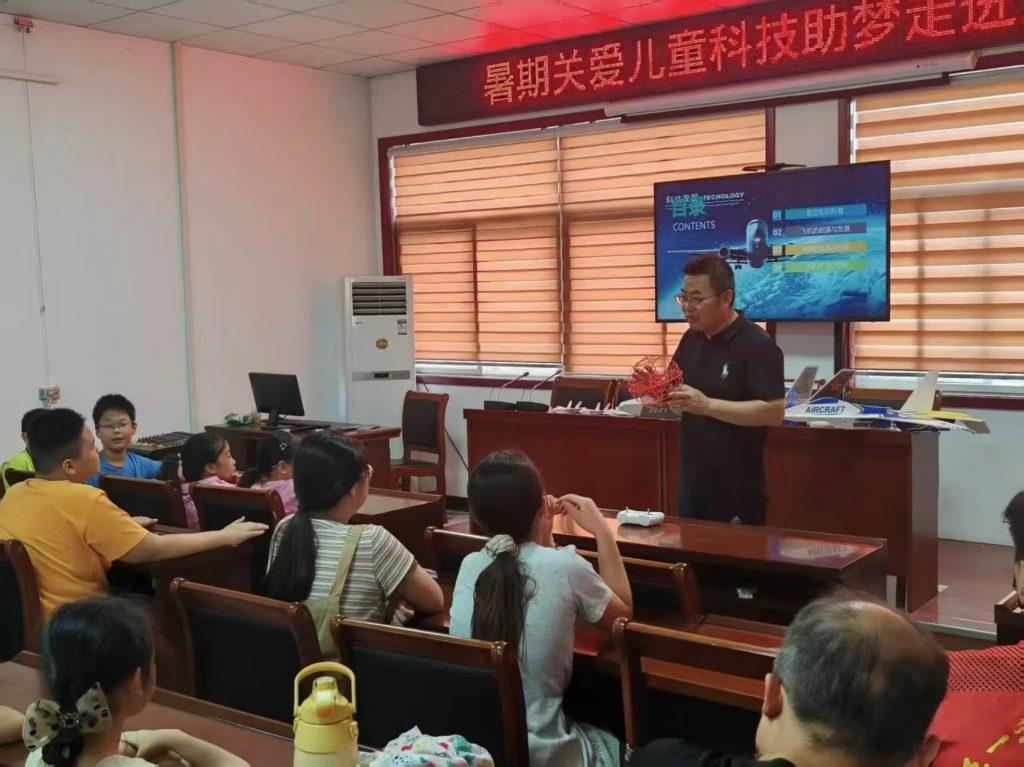
To delve deeper into the technical aspects, I have compiled data from various drone models I have used, focusing on their specifications for field and orchard applications. The tables below summarize key parameters for hexacopter and octocopter drones, which are commonly employed in agriculture. These parameters influence performance metrics such as coverage area, payload capacity, and flight duration, all critical for optimizing agricultural operations. For example, the hexacopter, with a maximum payload of 10 kg, is suitable for smaller fields, while the octocopter, carrying up to 20 kg, handles larger areas more efficiently. During my drone training programs, I emphasize how understanding these specifications can help operators select the right equipment for specific tasks, thereby enhancing productivity and safety.
| Parameter | Field Operation (Hexacopter) | Orchard Operation (Hexacopter) |
|---|---|---|
| Dimensions (mm) | 1800 × 1800 × 600 | 1800 × 1800 × 600 |
| Max Single Operation Area (hectares per sortie) | 0.67 | 0.07-0.13 |
| Daily Coverage Area (hectares) | 13-27 | 2.7-4 |
| Max Liquid Payload (kg) | ≤10 | ≤10 |
| Max Takeoff Weight (kg) | ≤25 | ≤25 |
| Battery Life per Charge (minutes, fully loaded) | 12-18 | 12-18 |
| Spray Width (m) | 2-3 | 2-3 |
| Droplet Size (μm) | 80-120 | 80-120 |
| Parameter | Field Operation (Octocopter) | Orchard Operation (Octocopter) |
|---|---|---|
| Dimensions (mm) | 3500 × 3500 × 700 | 3500 × 3500 × 700 |
| Max Single Operation Area (hectares per sortie) | 2.4 | 0.2-0.4 |
| Daily Coverage Area (hectares) | 33-67 | 5.3-8 |
| Max Liquid Payload (kg) | ≤20 | ≤20 |
| Max Takeoff Weight (kg) | ≤48 | ≤48 |
| Battery Life per Charge (minutes, fully loaded) | 15-25 | 15-25 |
| Spray Width (m) | 4-6 | 4-6 |
| Droplet Size (μm) | 80-120 | 80-120 |
Beyond these specifications, the operational efficiency of drones can be modeled mathematically. For instance, the area covered during a spraying mission can be expressed as: $$ A = v \times w \times t $$ where \( A \) is the total area covered (in square meters), \( v \) is the drone’s velocity (in meters per second), \( w \) is the spray width (in meters), and \( t \) is the flight time (in seconds). This formula helps in planning missions to maximize coverage while minimizing resource use. In my drone training sessions, I often use such equations to teach operators how to calculate optimal flight paths and adjust parameters based on field conditions. Another key metric is pesticide utilization efficiency, given by: $$ \eta = \frac{C_{\text{effective}}}{C_{\text{applied}}} \times 100\% $$ where \( \eta \) is the efficiency percentage, \( C_{\text{effective}} \) is the concentration of pesticide that reaches the target crops, and \( C_{\text{applied}} \) is the total concentration applied. Drones typically achieve higher efficiency due to precision spraying, but factors like wind drift can reduce it, which I have observed in orchard settings where droplet drift is a concern.
The advantages of using drones in agriculture are manifold, and I have experienced many of them directly. Safety is a paramount benefit; by operating drones remotely, I avoid direct exposure to chemicals, reducing health risks such as pesticide poisoning or heatstroke during field work. The drones’ ability to hover and perform precise maneuvers ensures that spraying is targeted, minimizing environmental contamination. Efficiency gains are equally impressive. For example, in one project monitoring crop growth, I used drones equipped with multispectral sensors to assess plant health indices like NDVI (Normalized Difference Vegetation Index), which is calculated as: $$ \text{NDVI} = \frac{(\text{NIR} – \text{Red})}{(\text{NIR} + \text{Red})} $$ where NIR is near-infrared reflectance and Red is red light reflectance. This index helps detect stress or disease early, enabling timely interventions. The simplicity of operation, reinforced through comprehensive drone training, allows even novice users to master flight controls and data analysis quickly. I recall training a group of farmers who, within two weeks, were autonomously conducting drone-based surveys and making informed decisions about irrigation and fertilization. This democratization of technology is crucial for widespread adoption, and drone training programs play a pivotal role in bridging the skill gap.
However, challenges persist, and my hands-on work has revealed several limitations. In seeding applications, drones often scatter seeds without forming proper rows, leading to issues like poor air circulation and increased disease susceptibility, particularly for crops like rice. This problem stems from the lack of precision in current drone seeding mechanisms, which I believe can be addressed by developing nozzle systems that simulate ground-based hole seeding. In orchard pest control, I have noted that drones struggle to apply pesticides effectively to the undersides of leaves, where many pests reside. Additionally, droplet drift due to wind and airflow reduces efficacy and poses safety hazards. Through experiments, I have studied drift patterns using computational fluid dynamics models, such as: $$ \frac{\partial \phi}{\partial t} + \nabla \cdot (\mathbf{u} \phi) = D \nabla^2 \phi $$ where \( \phi \) is the droplet concentration, \( \mathbf{u} \) is the velocity field, and \( D \) is the diffusion coefficient. These models help predict drift and optimize spray parameters, but more research is needed. Moreover, the current market penetration of agricultural drones is low compared to countries with advanced adoption rates, partly due to gaps in drone training and support infrastructure. I have seen cases where inadequate training led to operational failures, emphasizing the need for standardized certification programs.
Looking ahead, I envision several directions for the evolution of agricultural drones, based on my research and field experiences. First, enhancing supporting facilities is essential. This includes not only hardware like charging stations and repair centers but also soft infrastructure like insurance and regulatory frameworks. In my drone training initiatives, I advocate for partnerships with insurance providers to cover potential accidents, thereby building user confidence. Second, advancing智能化水平 through integration with AI and IoT will unlock new capabilities. For instance, I am exploring neural network models for yield prediction, such as combining Convolutional Neural Networks (CNNs) for spatial data and Long Short-Term Memory (LSTM) networks for temporal trends. The yield \( Y \) can be estimated as: $$ Y = f(\mathbf{X}, \mathbf{W}) $$ where \( \mathbf{X} \) is input data (e.g., RGB images, weather data) and \( \mathbf{W} \) are model weights optimized via training. Such systems require robust drone training for operators to interpret outputs accurately. Third, improving management systems through policies and standards will mitigate risks like “black flights” that disrupt airspace or invade privacy. I have participated in industry forums to develop guidelines for safe drone use, stressing that continuous drone training is key to compliance and operational excellence.
To further illustrate the importance of training, I have designed a table summarizing core modules in a typical drone training curriculum for agricultural applications. This curriculum, which I have implemented in various workshops, covers technical, operational, and safety aspects to ensure comprehensive skill development.
| Training Module | Key Topics Covered | Duration (Hours) | Learning Outcomes |
|---|---|---|---|
| Basic Drone Piloting | Flight controls, takeoff/landing, maneuvering, GPS navigation | 20 | Ability to operate drones safely in open fields |
| Agricultural Sensor Integration | Multispectral cameras, thermal sensors, data acquisition systems | 15 | Skills to attach and calibrate sensors for crop monitoring |
| Spraying System Operation | Nozzle types, droplet size control, flow rate adjustment, drift management | 25 | Proficiency in precision spraying for pest control |
| Data Analysis and Interpretation | Image processing, NDVI calculation, yield prediction algorithms | 30 | Competence in deriving actionable insights from drone data |
| Maintenance and Troubleshooting | Battery care, propeller replacement, software updates, error diagnostics | 20 | Ability to perform routine maintenance and fix common issues |
| Regulatory Compliance and Safety | Airspace regulations, privacy laws, emergency procedures, insurance | 10 | Knowledge to operate drones legally and ethically |
In conclusion, my journey with agricultural drones has been both enlightening and rewarding, revealing their immense potential to transform farming practices. From seeding to monitoring, drones offer precision, efficiency, and safety that traditional methods cannot match. However, challenges like seeding irregularities and drift in orchards require ongoing innovation and research. The future of agricultural drones lies in holistic development—enhancing配套设施, advancing智能化, and strengthening管理体系—all underpinned by effective drone training. As I continue to advocate for and participate in drone training programs, I am confident that with proper education and support, drones will become indispensable tools in achieving sustainable and productive agriculture globally. The integration of formulas, data analysis, and hands-on practice in drone training ensures that operators are equipped to harness these technologies fully, paving the way for a new era of smart farming.