
The integration of conventional aerodynamic configurations with multi-rotor systems represents a pivotal advancement in low-altitude drone technology, particularly for compound-wing Unmanned Aerial Vehicles (UAVs). These UAVs combine the endurance of fixed-wing designs with the vertical take-off and landing capabilities of multi-rotor systems, enabling versatile applications in logistics, surveillance, and rescue operations. During level flight, motor arms—structural components supporting the rotors—significantly influence aerodynamic performance, primarily by increasing drag. This study investigates the aerodynamic characteristics of motor arms in compound-wing UAVs and proposes a drag reduction optimization strategy based on airfoil shaping and fusion design. By employing computational fluid dynamics (CFD) with the Reynolds-Averaged Navier-Stokes (RANS) equations and the k-ω SST turbulence model, we analyze three configurations: a clean design without motor arms (Configuration A), a standard design with motor arms (Configuration B), and an optimized design with drag-reducing motor arms (Configuration C). The focus is on lift coefficient ($C_L$), drag coefficient ($C_D$), lift-to-drag ratio ($K = C_L / C_D$), pressure distributions, and flow characteristics around the motor arms. Results indicate that motor arms predominantly affect drag and lift-to-drag ratio, with minimal impact on lift. The optimized design reduces drag by up to 9.81% and improves lift-to-drag ratio by 21.41% at a 6° angle of attack, highlighting the potential for enhancing the efficiency of drone technology in practical scenarios.
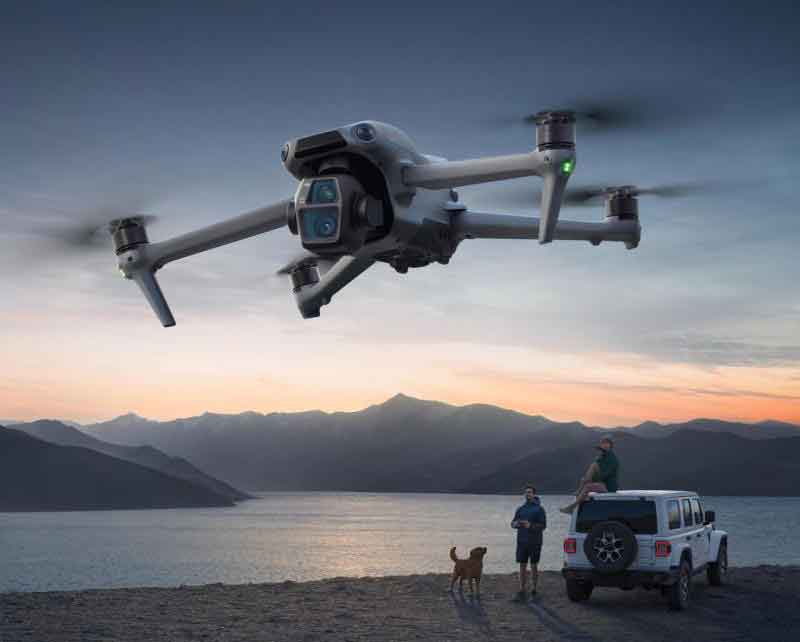
In the realm of Unmanned Aerial Vehicle development, compound-wing UAVs have emerged as a hybrid solution, leveraging the strengths of both fixed-wing and multi-rotor systems. Fixed-wing configurations offer high lift-to-drag ratios and extended cruise capabilities, making them ideal for long-endurance missions, while multi-rotor systems provide vertical take-off and landing (VTOL) abilities without requiring runways. The fusion of these designs in compound-wing UAVs addresses the need for adaptability in complex environments, such as urban areas or disaster zones. However, the inclusion of motor arms for rotor support introduces aerodynamic challenges, particularly during level flight where these components contribute to parasitic drag. This drag not only reduces fuel efficiency but also limits the operational range and payload capacity of the Unmanned Aerial Vehicle. Therefore, understanding and mitigating the aerodynamic impact of motor arms is crucial for advancing drone technology. Previous research has focused on overall UAV configurations and propeller interactions, but detailed analyses of motor arm effects remain scarce. This study fills that gap by evaluating the aerodynamic influence of motor arms and proposing an optimization approach that integrates airfoil-based shaping and fusion with the main wing, ultimately aiming to improve the performance metrics of compound-wing UAVs.
The aerodynamic analysis in this study relies on CFD simulations, which are widely used in drone technology for predicting flow behavior and optimizing designs. The governing equations for fluid flow are the RANS equations, which model turbulent flows by decomposing variables into mean and fluctuating components. For an incompressible flow, the continuity and momentum equations are expressed as:
$$\frac{\partial u_i}{\partial x_i} = 0$$
$$\rho \frac{\partial u_i}{\partial t} + \rho u_j \frac{\partial u_i}{\partial x_j} = -\frac{\partial p}{\partial x_i} + \mu \frac{\partial^2 u_i}{\partial x_j \partial x_j} + \frac{\partial}{\partial x_j} (-\rho \overline{u_i’ u_j’})$$
where $u_i$ represents the velocity components, $p$ is pressure, $\rho$ is density, $\mu$ is dynamic viscosity, and $-\rho \overline{u_i’ u_j’}$ denotes the Reynolds stress tensor. To close the system, the k-ω SST turbulence model is employed, which combines the k-ω model near walls with the k-ε model in free-stream regions, providing accurate predictions for flows with adverse pressure gradients and separation. The transport equations for turbulent kinetic energy $k$ and specific dissipation rate $\omega$ are:
$$\frac{\partial (\rho k)}{\partial t} + \frac{\partial (\rho u_j k)}{\partial x_j} = P_k – \beta^* \rho k \omega + \frac{\partial}{\partial x_j} \left[ (\mu + \sigma_k \mu_t) \frac{\partial k}{\partial x_j} \right]$$
$$\frac{\partial (\rho \omega)}{\partial t} + \frac{\partial (\rho u_j \omega)}{\partial x_j} = \alpha \frac{\omega}{k} P_k – \beta \rho \omega^2 + \frac{\partial}{\partial x_j} \left[ (\mu + \sigma_\omega \mu_t) \frac{\partial \omega}{\partial x_j} \right] + 2(1 – F_1) \rho \sigma_{\omega 2} \frac{1}{\omega} \frac{\partial k}{\partial x_j} \frac{\partial \omega}{\partial x_j}$$
where $P_k$ is the production term, $\mu_t$ is the turbulent viscosity, and $F_1$ is a blending function. These equations are solved numerically using the finite volume method in Fluent software, with a computational domain extending 10 body lengths upstream, 20 downstream, and 10 wing spans laterally and vertically. The mesh independence study ensured that results are grid-independent, as summarized in Table 1.
| Grid Count (Millions) | Computation Time (Minutes) | Lift Coefficient ($C_L$) | Drag Coefficient ($C_D$) | Lift-to-Drag Ratio ($K$) |
|---|---|---|---|---|
| 2.41 | 9 | 0.2124 | 0.0123 | 17.30 |
| 3.32 | 10 | 0.2139 | 0.0121 | 17.75 |
| 4.01 | 13 | 0.2141 | 0.0120 | 17.80 |
| 4.60 | 15 | 0.2129 | 0.0112 | 17.81 |
| 5.81 | 22 | 0.2134 | 0.0120 | 17.85 |
| 6.38 | 29 | 0.2139 | 0.0120 | 17.91 |
| 7.72 | 35 | 0.2131 | 0.0120 | 17.83 |
| 9.64 | 47 | 0.2128 | 0.0119 | 17.83 |
For the Unmanned Aerial Vehicle designs, three configurations are developed using CATIA software, with the NACA 63-012 airfoil selected for the main wing and NACA 0016 for the tail surfaces, ensuring stability and low drag. Configuration A is a clean design without motor arms, serving as a baseline. Configuration B includes standard motor arms with quadrilateral cross-sections mounted below the wing, while Configuration C incorporates optimized motor arms with airfoil-shaped cross-sections based on the NACA 4412 profile and fused with the wing to reduce interference drag. The motor arms in Configuration C feature a streamlined shape with a maximum thickness at 35% chord length, gradual leading-edge curvature, and tapered trailing edges, all integrated via NURBS surfaces to ensure smooth flow transitions. The aspect ratio of the motor arms is maintained at 16.5 across configurations to isolate geometric effects. The cruise conditions are set at a speed of 102 m/s (Mach 0.3) and an altitude of 1,000 m, typical for low-altitude drone operations. Boundary conditions include velocity inlet and pressure outlet for the far-field, with wall functions applied to resolve near-wall turbulence. The aerodynamic coefficients are computed over an angle of attack range from -4° to 10°, with increments of 2°, to capture performance variations across flight regimes.
The impact of motor arms on the aerodynamic characteristics of the compound-wing Unmanned Aerial Vehicle is significant, particularly in terms of drag and lift-to-drag ratio. Figure 1 compares the lift coefficients ($C_L$) for Configurations A and B over the angle of attack range. Configuration B shows a slight reduction in lift curve slope compared to Configuration A, with minimal differences at lower angles. For instance, at 6° angle of attack—identified as the optimal cruise condition—the lift coefficients are nearly identical at approximately 0.29. However, at higher angles (e.g., 10°), Configuration B exhibits a 2.6% decrease in $C_L$ due to flow separation and interference between the motor arms and wing. This underscores that motor arms have a limited effect on lift but alter the overall flow field, leading to performance degradation in high-angle scenarios. The drag coefficient ($C_D$) analysis, as shown in Figure 2, reveals a more pronounced impact. Configuration B consistently has higher $C_D$ values across all angles, with a 70.91% increase at 6° angle of attack ($C_D = 0.0174$ for B versus 0.0102 for A). This drag rise is attributed to the parasitic drag from the motor arms’ blunt cross-sections and the induced interference drag at the wing-motor arm junctions. The lift-to-drag ratio ($K$), a critical metric for cruise efficiency, is plotted in Figure 3. Configuration A achieves a maximum $K$ of 28.43 at 6°, while Configuration B peaks at 16.42—a reduction of 42.27%. This highlights the inefficiency introduced by standard motor arms, necessitating optimization for practical drone technology applications.
To quantify the drag reduction achieved through optimization, Configuration C is compared against Configuration B. The drag coefficient reduction is defined as $\Delta C_D = C_{D_B} – C_{D_C}$, and the percentage reduction as $\delta C_D = (\Delta C_D / C_{D_B}) \times 100\%$. Table 2 summarizes the drag coefficients and reductions for key angles of attack. At 6° angle of attack, $\Delta C_D = 0.0017$ and $\delta C_D = 9.81\%$, demonstrating the effectiveness of the airfoil-based shaping and fusion design. The lift coefficient also improves in Configuration C, with a 9.51% increase at 6° angle of attack ($C_L = 0.317$ for C versus 0.289 for B), due to the generation of additional pressure differential on the motor arm surfaces. Consequently, the lift-to-drag ratio rises by 21.41% to 19.93 at 6°, enhancing the overall aerodynamic efficiency of the Unmanned Aerial Vehicle. These improvements are consistent across the 2° to 8° angle of attack range, where $\delta C_D$ varies from 23.4% to 7.6%, and $K$ increases by 18% to 33%. The optimized design mitigates flow separation and reduces high-pressure zones at the motor arm leading edges and wing junctions, as evidenced by pressure nephograms and streamline analyses. For example, in Configuration B, high-pressure regions at the motor arm front and connection points contribute significantly to drag, while in Configuration C, these areas are minimized, and the flow remains attached and laminar, reducing energy losses.
| Angle of Attack (°) | Drag Coefficient, $C_{D_B}$ | Drag Coefficient, $C_{D_C}$ | Drag Reduction, $\Delta C_D$ | Percentage Reduction, $\delta C_D$ (%) |
|---|---|---|---|---|
| -4 | 0.0184 | 0.0124 | 0.0060 | 32.6 |
| -2 | 0.0148 | 0.0099 | 0.0049 | 33.2 |
| 0 | 0.0126 | 0.0091 | 0.0036 | 28.2 |
| 2 | 0.0128 | 0.0098 | 0.0030 | 23.4 |
| 4 | 0.0141 | 0.0120 | 0.0022 | 15.4 |
| 6 | 0.0174 | 0.0157 | 0.0017 | 9.8 |
| 8 | 0.0232 | 0.0215 | 0.0018 | 7.6 |
| 10 | 0.0306 | 0.0349 | -0.0043 | -14.1 |
Pressure distribution and flow field analyses provide deeper insights into the aerodynamic behavior of the motor arms. For Configuration B at 6° angle of attack, pressure nephograms reveal high-pressure zones at the motor arm leading edges and the junctions with the wing, which are primary sources of drag. Streamlines around the motor arms show complex vortical structures and flow separations, particularly at the trailing edges, leading to increased turbulent dissipation. In contrast, Configuration C exhibits smoother pressure contours, with reduced high-pressure areas and attached flow along the motor arm surfaces. The fusion design eliminates the abrupt junctions, allowing for a seamless transition that minimizes interference drag. The aerodynamic performance can be further described using the drag polar equation, which relates $C_D$ to $C_L$:
$$C_D = C_{D_0} + K C_L^2$$
where $C_{D_0}$ is the zero-lift drag coefficient and $K$ is the induced drag factor. For Configuration B, $C_{D_0}$ is higher due to the motor arm contributions, whereas Configuration C reduces $C_{D_0}$ through streamlined shaping. Additionally, the pitching moment coefficient ($C_m$) is analyzed to assess stability. Figure 4 compares $C_m$ for all configurations, showing that Configuration B introduces a larger nose-down moment compared to Configuration A, with a 21.7% increase at 8° angle of attack. Configuration C, however, closely matches Configuration A, indicating that the optimized design preserves stability while improving efficiency. This is crucial for the control and maneuverability of Unmanned Aerial Vehicles in dynamic environments.
The optimization of motor arms in compound-wing UAVs represents a significant step forward in drone technology, enabling better performance without compromising structural integrity. The use of airfoil-based profiles and fusion techniques not only reduces drag but also enhances lift, contributing to higher lift-to-drag ratios and extended endurance. This approach can be applied to existing UAV designs to improve their aerodynamic efficiency, particularly for missions requiring long-range cruise. Future work could explore the effects of distributed propulsion and propeller-wing interactions, which may further optimize the performance of compound-wing Unmanned Aerial Vehicles. In conclusion, this study demonstrates that motor arms are critical components influencing the aerodynamics of UAVs, and through careful design, their negative impacts can be mitigated, paving the way for more efficient and versatile drone technology applications.