
In recent years, the integration of unmanned aerial vehicles (UAVs) into law enforcement operations has revolutionized public safety strategies, aligning with global initiatives to enhance technological capabilities in policing. As a researcher focused on educational methodologies within police academies, I have observed a growing emphasis on drone training to address complex security challenges. This article delves into the current state of drone training in police academies, identifies critical pain points, and proposes a comprehensive framework for improving practical teaching. The goal is to establish a robust drone training system that not only meets immediate operational needs but also fosters long-term innovation in law enforcement. Through systematic analysis and the incorporation of evaluation models, this study aims to contribute to the development of high-quality drone training programs that serve as a cornerstone for technology-driven policing.
The rapid advancement of drone technology has necessitated a shift in police training paradigms, moving from theoretical knowledge to hands-on, scenario-based learning. However, many police academies struggle with outdated curricula, insufficient resources, and a lack of standardized assessment methods. This gap hinders the effective application of drones in real-world policing tasks, such as surveillance, search and rescue, and crime scene investigation. In this context, I explore the necessity of enhancing drone training to ensure that law enforcement personnel can leverage UAVs to their full potential. By adopting a first-person perspective, I share insights drawn from educational research and practical observations, emphasizing the need for a holistic approach to drone training that combines theoretical foundations with实战化 applications.
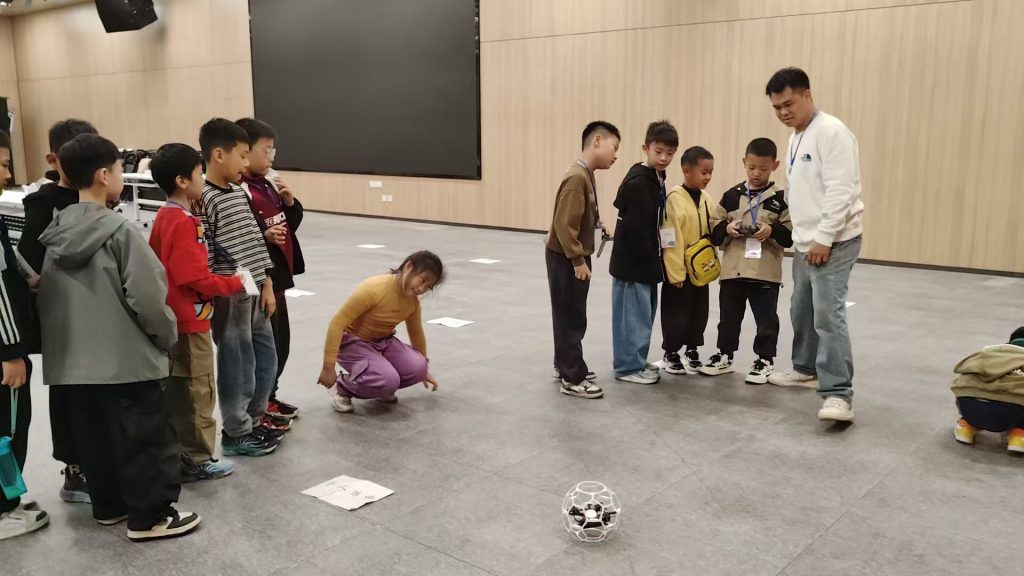
Drone training in police academies is not merely about piloting skills; it encompasses a multidisciplinary domain involving law, meteorology, engineering, and tactical operations. The current drone training landscape reveals several challenges. For instance, training materials often lack specificity to police work, leading to fragmented knowledge among trainees. Additionally, limited access to飞行空域 and实战化模拟 environments restricts the ability to conduct effective drone training sessions. These issues underscore the urgency for reform in drone training methodologies. In this article, I propose a series of measures, including师资培训 enhancements, curriculum redesign, resource optimization, and the establishment of specialized training bases. These initiatives are designed to create a seamless drone training pipeline that bridges the gap between academy education and field deployment.
To begin with, the value of drone training in police academies lies in its capacity to enhance operational efficiency and officer safety. Through实战化 drone training, law enforcement agencies can achieve “human-machine” integration, where无人机 become extensions of the officers’ capabilities. This synergy allows for rapid response in diverse scenarios, from traffic management to criminal apprehension. For example, drone training enables officers to conduct aerial reconnaissance in challenging terrains, reducing risks associated with ground operations. Moreover, drone training fosters innovation in policing tactics, as evidenced by cases where UAVs have been used to coordinate multi-agency responses. Thus, investing in comprehensive drone training is crucial for modernizing law enforcement and aligning with broader goals like the “科技兴警” initiative, which promotes technological empowerment in public security.
However, the current state of drone training in police academies presents significant obstacles. A common issue is the disjointed nature of课程体系, where theoretical modules on航空法规 or飞行原理 are taught in isolation from practical skills like空中侦查 or三维建模. This disconnection hampers the effectiveness of drone training, as trainees fail to apply knowledge in real-time situations. Furthermore,师资短缺 is prevalent, with many instructors lacking hands-on experience in drone operations due to constraints like空域管制. To address these challenges, I advocate for a collaborative approach in drone training, where police academies partner with专业培训机构 to develop “定制化” programs. Such partnerships can enhance师资培训, ensuring that educators are proficient in both drone technology and law enforcement applications. Table 1 summarizes a proposed theoretical curriculum for drone training, designed to build a strong foundation for实战化 applications.
| Learning Module | Content | Expected Efficacy |
|---|---|---|
| Fundamental Knowledge | Aviation regulations, meteorology, principles of flight, and legal frameworks for drone use in policing. | To establish a solid theoretical base,激发 trainee interest, and ensure compliance with operational standards. |
| Drone Operations | Basic piloting skills, safety protocols, maintenance procedures, and emergency response techniques. | To develop core competencies in drone handling, enabling trainees to perform routine tasks confidently. |
| Advanced Applications | Aerial imaging technology, radio communication, data analysis, and integration with policing systems like facial recognition. | To enhance technical proficiency, allowing for innovative uses in surveillance, investigation, and指挥赋能. |
In addition to theoretical drone training,实战化 components are essential for bridging the gap between learning and application. A well-structured实战化 drone training program should include scenario-based exercises that simulate real police work. For instance, trainees can engage in mock operations involving search and rescue, crowd monitoring, or crime scene documentation. This hands-on drone training not only reinforces theoretical knowledge but also cultivates critical thinking and adaptability. Table 2 outlines a practical curriculum for drone training, emphasizing skill transfer to field conditions.
| Practical Focus | Learning Content | Expected Efficacy |
|---|---|---|
| Tactical Integration | Combining drone operations with existing policing methods, such as ground patrols or信息化 systems, to develop “1+X” tactics. | To achieve seamless空地一体 coordination, improving response efficiency and decision-making in complex scenarios. |
| Case-Based Learning | Using real-world案例 to teach drone applications, encouraging trainees to analyze and solve problems in模拟现实 contexts. | To foster实战化 thinking, ensuring that drone training aligns with actual policing needs and challenges. |
| Field Collaboration | Partnering with local police departments for实习 opportunities, where trainees apply drone skills in live operations. | To validate training outcomes, enhance practical abilities, and prepare trainees for immediate deployment. |
The necessity of drone training extends beyond immediate operational gains; it is a strategic imperative for future-proofing law enforcement. As犯罪模式 evolve, drones offer a versatile tool for proactive policing, enabling continuous monitoring and rapid intervention. For example, drone training can equip officers to handle emerging threats like无人机干扰 or cyber-physical attacks. By embedding drone training into the core curriculum, police academies can cultivate a generation of tech-savvy officers who are adept at leveraging UAVs for public safety. This aligns with the “科技兴警三年行动计划,” which emphasizes人才梯队培育 and technological innovation. Therefore, drone training must be viewed as a长期 investment, requiring sustained efforts in curriculum development, resource allocation, and evaluation.
To institutionalize effective drone training, a multifaceted approach is needed. First,师资培训 should be prioritized through partnerships with industry experts. These collaborations can provide police instructors with up-to-date knowledge on drone technology,飞行技能, and实战化 applications. After training, instructors can serve as “中间缓冲点,” translating theoretical insights into practical lessons. Second,课程体系建设 must be holistic, integrating法律依据,气象条件, and维修维护 into a cohesive drone training framework. This ensures that trainees gain a comprehensive understanding of drone operations, from pre-flight checks to post-mission analysis. Third,教学资源 optimization is critical. Establishing dedicated无人机实验室 within police academies can centralize drone management, maintenance, and training activities. Such labs can support模拟飞行教室 and “教、学、管、练、战、考”一体化 systems, enhancing the efficiency of drone training.
Moreover, building specialized “特训” and “轮训” bases for drone training can further enhance实战化 readiness. These bases, developed through校局合作, offer realistic environments for trainees to hone their skills. By adopting an “订单式” education model, police academies can tailor drone training programs to specific law enforcement needs, ensuring that graduates are job-ready. For instance, a base focused on urban policing might emphasize drone use in traffic control, while a rural base could highlight search and rescue operations. This targeted approach in drone training maximizes resource utilization and fosters innovation in teaching methods.
Evaluating the outcomes of drone training is equally important to ensure its effectiveness. In this study, I propose a systematic assessment framework that combines a岗位胜任力 model for drone operators with the Kirkpatrick four-level evaluation model. The岗位胜任力 model for drone training encompasses three tiers:特性层次 (innate traits like professionalism and adaptability),中间层次 (technical skills such as安全飞行 and空中协同), and重塑层次 (abilities to adapt to new technologies and challenges). This model provides a comprehensive view of a trainee’s capabilities, guiding the design of drone training programs. Mathematically, the competency score $C$ can be expressed as a weighted sum:
$$ C = \alpha \cdot T + \beta \cdot I + \gamma \cdot R $$
where $T$, $I$, and $R$ represent scores for特性,中间, and重塑层次, respectively, and $\alpha$, $\beta$, $\gamma$ are weighting coefficients adjusted based on drone training priorities.
The Kirkpatrick model, applied to drone training, involves four levels of evaluation:反应评估 (trainee satisfaction),学习评估 (knowledge and skill acquisition),行为评估 (application in work settings), and结果评估 (organizational impact). This structured approach allows for a multi-dimensional analysis of drone training effectiveness. For example, at the learning level, we can measure proficiency through tests on航空法规 or flight simulations. The行为评估 might involve observing trainees during实战化 exercises, while结果评估 could track metrics like crime reduction or operational efficiency post-training. By integrating these models, drone training programs can be continuously refined to meet evolving needs.
To illustrate, consider a drone training program where trainees undergo a series of modules. Their progress can be assessed using the following formula for overall training effectiveness $E$:
$$ E = \sum_{i=1}^{4} w_i \cdot L_i $$
where $L_i$ denotes the score for each Kirkpatrick level (i=1 for reaction, i=2 for learning, etc.), and $w_i$ are weights reflecting the importance of each level in drone training. This quantitative approach complements qualitative feedback, providing a holistic view of drone training outcomes.
In practice, the application of these models in drone training requires careful implementation. For instance, during反应评估, surveys can gauge trainee engagement with drone training content.学习评估 might involve practical exams on drone piloting, scored using rubrics aligned with the岗位胜任力 model.行为评估 can be conducted through field simulations, where trainees demonstrate空中侦查 skills in controlled environments. Finally,结果评估 may analyze long-term data on无人机 deployment success rates in real police operations. By embedding these assessments into drone training cycles, academies can ensure that their programs yield tangible benefits.
The innovation of this approach lies in its ability to address systemic gaps in drone training. Traditionally, police academies have focused on technical skills without adequate evaluation of实战化 readiness. By combining competency and Kirkpatrick models, this framework offers a科学的方法 for measuring drone training impact. For example, it can identify areas where drone training falls short, such as in危机管理 or teamwork, prompting curriculum adjustments. Moreover, this integrated assessment supports the “科技兴警” goal of building a robust人才梯队, as it ensures that drone training produces competent operators who can adapt to dynamic policing environments.
Looking ahead, the future of drone training in police academies hinges on continuous improvement and collaboration. As无人机 technology advances, with trends like autonomous flight and AI integration, drone training must evolve accordingly. This requires ongoing师资培训 updates, investment in cutting-edge模拟 tools, and partnerships with tech firms. Additionally, global exchanges on drone training best practices can enrich local programs, fostering innovation in实战化教学. By prioritizing drone training as a core component of police education, academies can contribute to safer communities and more efficient law enforcement.
In conclusion, enhancing drone training for police practical applications is a multifaceted endeavor that demands strategic planning, resource allocation, and rigorous evaluation. Through the proposed measures—such as师资培训 enhancements, curriculum redesign, and the establishment of特训 bases—police academies can overcome current challenges in drone training. The integration of岗位胜任力 and Kirkpatrick models provides a robust framework for assessing training outcomes, ensuring that drone training programs are effective and aligned with operational needs. As a researcher, I believe that investing in high-quality drone training is essential for modernizing law enforcement and achieving the goals of initiatives like “科技兴警.” By fostering a culture of innovation and实战化 learning, drone training can empower police officers to leverage technology for public safety, ultimately contributing to a more secure society.
This article has explored key aspects of drone training, from theoretical foundations to实战化 applications, emphasizing the need for a systematic approach. Future research could delve into specific technologies, such as the use of virtual reality in drone training, or cross-cultural comparisons of drone training programs. Regardless, the centrality of drone training in policing education will only grow, making it imperative for academies to adapt and innovate. Through sustained efforts, drone training can become a cornerstone of 21st-century law enforcement, driving progress in public security and technological integration.