
As a researcher deeply immersed in the field of human-computer interaction and aviation technology, I have witnessed the remarkable evolution of unmanned aerial vehicle (UAV) technology over recent decades. The maturity of systems such as GPS, gyro-stabilization, and wireless data transmission has propelled the civilian UAV sector into a phase of explosive growth, with companies like DJI leading the market. However, this rapid proliferation of civilian UAVs has unveiled significant challenges, primarily centered around user interaction and safety. The complexity of control interfaces for civilian UAVs demands considerable skill from operators, contributing to alarmingly high accident rates that pose threats to personal and property security. In this article, I will argue for a novel research approach that integrates physiological evaluation techniques to systematically assess and enhance the user experience (UX) of civilian UAV control interfaces, ultimately aiming to reduce operational errors and improve overall safety.
The journey of UAV technology began in the early 20th century, with the first successful unmanned flight recorded in 1916. Over the years, advancements have transitioned from military applications to widespread civilian use. Today, civilian UAVs are ubiquitous in sectors such as agriculture, surveying, disaster relief, and aerial photography, driven by innovations in multi-rotor designs and affordable hardware. Market analyses project a compound annual growth rate of approximately 68% over the next five years, with unit sales expected to reach millions annually. This surge underscores the economic potential of civilian UAVs, yet it also amplifies the urgency of addressing inherent risks. Accident statistics reveal that civilian UAV incidents occur at a rate substantially higher than those of manned aviation, with human error emerging as the predominant cause as mechanical failures have diminished through technological refinement. These errors often stem from decision-making lapses, perceptual mistakes, and inadequate operator training, exacerbated by the complex three-dimensional environments in which civilian UAVs frequently operate.
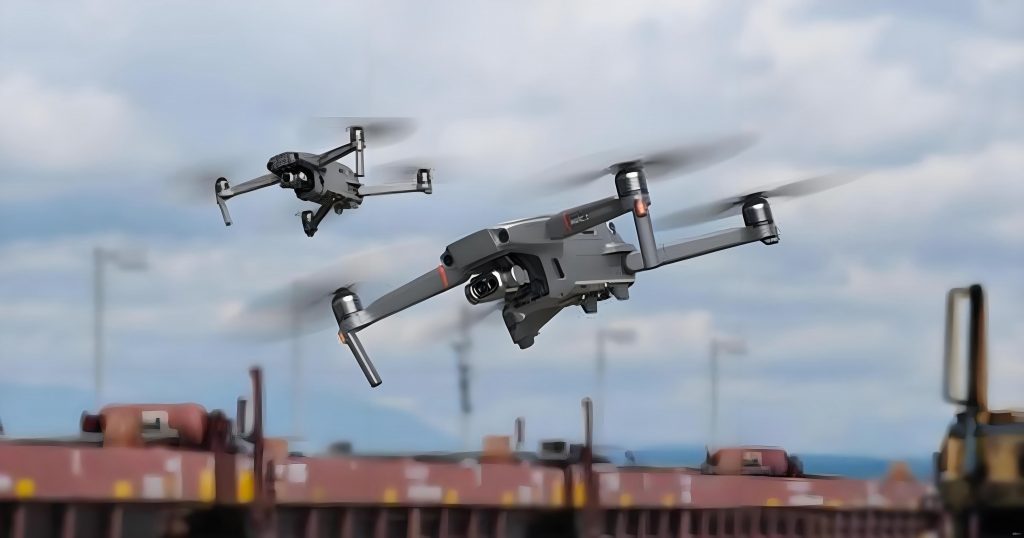
To contextualize the problem, consider the control interfaces for civilian UAVs. Unlike military-grade ground control stations with large displays and dedicated hardware, civilian UAVs typically rely on mobile devices like smartphones or tablets, or built-in controller screens, which impose severe constraints on screen real estate. This limitation complicates the presentation of critical flight data, such as battery status, altitude, obstacle warnings, and navigation maps, potentially overwhelming operators and increasing cognitive load. My review of existing literature indicates that while substantial research focuses on military UAV interfaces—covering aspects like system control, signal transmission, and mission planning—studies dedicated to civilian UAV interfaces are sparse. Most development in this area is driven by manufacturers, with limited academic exploration into optimizing UX for non-expert users. Key contributions from scholars have outlined design principles, human-function allocation theories, and interface frameworks, but a comprehensive, empirically grounded evaluation methodology tailored to civilian UAVs remains lacking.
In response, I propose a research framework that leverages physiological evaluation techniques to quantitatively assess the UX of civilian UAV control interfaces. Physiological metrics offer objective, real-time insights into operators’ cognitive and emotional states, complementing traditional subjective methods like questionnaires and interviews. Below, I detail the core physiological measures relevant to civilian UAV interface evaluation, summarizing their applications and benefits in a table for clarity.
| Physiological Metric | Primary Indicators | Application in Civilian UAV UX | Advantages |
|---|---|---|---|
| Electrodermal Activity (EDA) | Arousal level, emotional response | Measures stress or engagement during tasks like takeoff or obstacle avoidance | Non-invasive, cost-effective, high sensitivity to arousal |
| Heart Rate (HR) & Heart Rate Variability (HRV) | Cognitive load, emotional valence | Assesses mental workload across flight phases; HRV decreases with increased load | High temporal resolution, correlates with workload fluctuations |
| Eye Tracking | Visual attention, fixation duration, scan paths | Evaluates interface layout efficiency, warning salience, and information hierarchy | Direct insight into visual interaction, identifies design flaws |
| Electroencephalography (EEG) | Brain wave patterns (e.g., alpha, beta, theta) | Monitors cognitive load and mental fatigue; theta power increases with memory demand | Real-time cognitive state assessment, high precision for workload |
The integration of these metrics enables a holistic view of operator experience. For instance, skin conductance responses can signal moments of high stress during critical maneuvers, while eye-tracking data might reveal that operators overlook low-battery warnings due to poor interface placement. Such multi-modal physiological data, when combined with performance metrics like task completion time and error rates, forms a robust evaluation体系. To formalize this, I derive a conceptual model linking interface design parameters to operator states and outcomes. Let the operator’s cognitive load $C$ be a function of interface complexity $I$, task difficulty $T$, and individual skill $S$:
$$
C = f(I, T, S) = \alpha I + \beta T – \gamma S
$$
where $\alpha, \beta, \gamma$ are weighting coefficients determined empirically. Similarly, emotional arousal $A$ can be modeled using physiological signals such as EDA:
$$
A(t) = \frac{1}{\tau} \int_{0}^{t} e^{-(t-s)/\tau} \cdot \text{EDA}(s) \, ds
$$
where $\tau$ is a time constant for smoothing. These models help quantify how design changes affect operator states, guiding iterative improvements for civilian UAV interfaces.
Previous studies have demonstrated the efficacy of physiological evaluation in UX research. For example, investigations into web page layout using ECG and EDA showed that heart rate variability significantly differed between resting and browsing states, indicating emotional engagement. Similarly, eye-tracking experiments on appliance interfaces revealed that reduced fixation times on improved designs correlated with higher usability ratings. In aviation contexts, EEG beta wave power has been linked to increased cognitive load during simulated driving, suggesting applicability to UAV operation. However, most existing research employs isolated metrics or laboratory setups that do not fully replicate the civilian UAV usage scenario. Therefore, adapting these methods specifically for civilian UAVs is crucial.
My proposed methodology addresses this gap by incorporating simulated flight environments that closely mimic real-world civilian UAV operation. Many civilian UAV manufacturers, such as DJI, offer simulation apps (e.g., DJI GO) that replicate actual control interfaces on mobile devices. By conducting experiments in controlled laboratory settings, we can use head-mounted eye trackers and wearable sensors to collect physiological data during simulated tasks like takeoff, cruising, and landing. This setup balances ecological validity with experimental control, allowing for precise measurement of how interface elements impact operator performance and state. The framework involves the following steps:
- Participant Recruitment: Enlist operators with varying skill levels, from novices to experts, to account for individual differences.
- Task Design: Develop standardized flight scenarios that include routine operations and emergency situations (e.g., battery warnings, obstacle avoidance).
- Data Collection: Synchronize physiological signals (EDA, ECG, eye tracking) with performance metrics (completion time, errors) and subjective feedback via post-task questionnaires.
- Analysis: Employ statistical models to correlate physiological indices with interface design variables and outcomes.
To illustrate, consider evaluating a new interface layout for a civilian UAV. We might measure eye-gaze patterns to assess whether critical alerts are noticed promptly. A heatmap generated from eye-tracking data can visually represent areas of high attention, informing redesigns to enhance salience. Concurrently, EDA spikes during complex maneuvers could indicate excessive arousal, suggesting a need for interface simplification. By iterating this process, we can derive design guidelines optimized for civilian UAV safety and usability.
The potential benefits of this approach are substantial. For civilian UAV operators, improved interfaces can reduce training time, minimize errors, and enhance situational awareness. From a broader perspective, lower accident rates contribute to public safety and regulatory compliance, fostering sustainable growth in the civilian UAV industry. Moreover, the integration of physiological evaluation sets a precedent for other complex human-machine systems, such as autonomous vehicles or industrial robotics.
In conclusion, as civilian UAVs become increasingly integral to modern society, addressing their human-factor challenges is paramount. The complexity of control interfaces remains a key contributor to operational incidents, necessitating innovative research methods. Through the fusion of physiological evaluation techniques—including electrodermal activity, heart rate variability, eye tracking, and electroencephalography—with simulated flight tasks, we can establish a comprehensive UX assessment framework tailored to civilian UAVs. This multidisciplinary approach not only advances interface design but also paves the way for safer, more accessible civilian UAV operations. Future work should explore machine learning algorithms to real-time adapt interfaces based on physiological feedback, further personalizing the interaction for diverse operator needs. By embracing these strategies, we can unlock the full potential of civilian UAV technology while ensuring its responsible integration into our airspace.
To summarize key physiological metrics and their formulas for civilian UAV interface evaluation, the table below provides a concise reference:
| Metric | Mathematical Representation | Interpretation in Civilian UAV Context |
|---|---|---|
| Cognitive Load (EEG-based) | $\text{Load} = \frac{\beta_{\text{power}}}{\alpha_{\text{power}}}$ | Higher ratios indicate increased mental demand during flight tasks |
| Arousal (EDA-based) | $A = \max(\text{EDA}_{\text{response}}) – \text{EDA}_{\text{baseline}}$ | Peak arousal levels during critical events signal stress or engagement |
| Visual Attention (Eye Tracking) | $T_{\text{fix}} = \frac{1}{N} \sum_{i=1}^{N} t_i$ | Average fixation time on interface elements; shorter times may indicate better design |
| Workload (HRV-based) | $\text{HRV} = \sqrt{\frac{1}{N-1} \sum_{i=1}^{N} (RR_i – \overline{RR})^2}$ | Decreased HRV correlates with higher cognitive load in civilian UAV operations |
Ultimately, the goal is to create civilian UAV interfaces that are intuitive, efficient, and resilient to human error. By continuously refining our evaluation methods through physiological insights, we can contribute to a future where civilian UAVs are not only technologically advanced but also universally safe and accessible. This endeavor requires collaboration across engineering, psychology, and design disciplines, emphasizing the human-centered ethos that should guide all technological progress.