
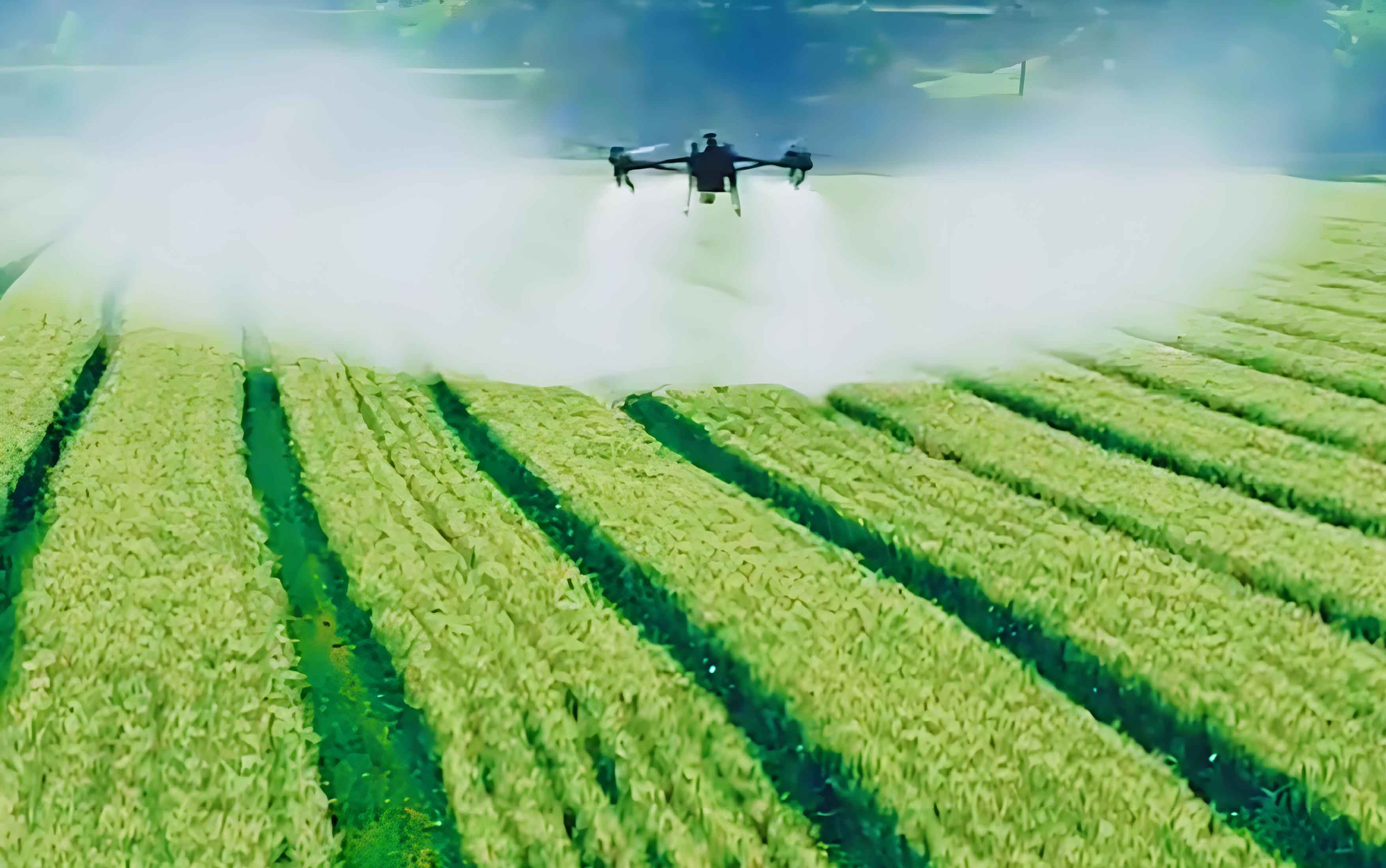
The rapid adoption of agricultural UAV technology for crop protection presents a unique set of challenges for predicting application efficacy and environmental impact. Unlike ground-based operations, spray outcomes from an agricultural UAV are profoundly influenced by the complex, unsteady downwash flow generated by its rotors, interacting with ambient wind, terrain, and crop canopy. Predictive modeling of droplet transport, deposition, and drift under these conditions is crucial for optimizing application parameters and minimizing off-target movement. This article reviews the key technologies in numerical modeling for agricultural UAV spraying, analyzing their principles, capabilities, and limitations. Furthermore, we discuss contemporary methods for validating these models, concluding with perspectives on future developments in this critical field of precision agriculture.
1. Introduction to Numerical Modeling Frameworks
Predicting the fate of spray droplets released from an agricultural UAV requires solving two tightly coupled problems: accurately simulating the turbulent, vortex-laden downwash airflow, and then modeling the trajectories of millions of droplets within this dynamic flow field. Various numerical approaches have been developed, each with distinct methodologies and computational trade-offs. These can be broadly categorized into inviscid vortex models, Computational Fluid Dynamics (CFD) models, and the Lattice Boltzmann Method (LBM). The core challenge lies in balancing physical fidelity—especially in capturing the evolution and dissipation of rotor tip vortices—with computational efficiency to enable practical use.
2. Inviscid Vortex Models
Inviscid models, rooted in potential flow theory, offer a computationally efficient approach by neglecting fluid viscosity and turbulence in their core formulation. They represent vorticity through discrete elements, tracking their convection and interaction. A prominent example integrated into spray prediction is the combination of the Comprehensive Hierarchical Aeromechanics Rotorcraft Model (CHARM) and the AGricultural DISPersal (AGDISP) model.
2.1. The CHARM Model for Near-Field Flow
CHARM is designed to simulate the rotor wake development of helicopters and, by extension, multi-rotor agricultural UAV platforms. Its key feature is the Constant Vorticity Contour (CVC) method, which models the free wake using vortex elements of constant strength. The velocity $$ \vec{q} $$ induced at a point in space by a vortex filament is computed using the Biot-Savart law:
$$ \vec{q} = -\frac{1}{4\pi} \int_{C} \Gamma \frac{\vec{r} \times d\vec{s}}{|\vec{r}|^{3}} $$
where $$ \Gamma $$ is the vortex strength, $$ \vec{r} $$ is the position vector from the vortex element, and $$ d\vec{s} $$ is the segment of the vortex filament. CHARM couples this with a vortex lattice model for the rotor blades and source/doublet panel methods for fuselage effects. A hierarchical fast vortex algorithm reduces the computational cost from $$ O(N^{2}) $$ to $$ O(N \log N) $$, where N is the number of vortex elements, enabling faster simulation of complex wakes. However, as a purely inviscid method, it inherently cannot model the viscous diffusion and turbulent decay of vortices, causing tip vortices to persist indefinitely without dissipation—a significant deviation from reality, especially in the far-field.
2.2. The AGDISP Model for Droplet Transport
AGDISP is an industry-standard model for predicting spray drift from aerial applications. For near-field simulation (within ~1000 m), it uses a Lagrangian approach where droplet motion is governed primarily by gravity and aerodynamic drag. The simplified equation of motion for a droplet is:
$$ \frac{d^{2}X_{i}}{dt^{2}} = (U_{i} – V_{i})\frac{1}{\tau_{p}} + g_{i} $$
where $$ X_{i} $$ is the droplet position, $$ U_{i} $$ and $$ V_{i} $$ are the air and droplet velocity components, $$ g_{i} $$ is gravity, and $$ \tau_{p} $$ is the droplet relaxation time. For the far-field, AGDISP switches to a Gaussian puff model to estimate cloud dispersion efficiently. It also includes simplified canopy interception models. The integration of CHARM’s 3D wake with AGDISP’s droplet physics aims to provide a complete, fast simulation tool for agricultural UAV spraying.
2.3. Analysis of the Coupled Model
The primary advantage of the inviscid coupled model is speed, making it suitable for real-time or near-real-time prediction scenarios, such as potential integration into agricultural UAV ground control stations. However, its major limitations stem from the lack of viscosity. The inability to correctly model vortex decay and atmospheric turbulence can lead to inaccuracies in droplet dispersion, particularly over longer distances or in complex atmospheric conditions. Furthermore, the current integration between the 3D CHARM wake and the 2D far-field AGDISP algorithms, as well as the adaptation of canopy models, require further development and rigorous experimental validation specifically for agricultural UAV configurations.
| Model Category | Key Principle | Strengths | Weaknesses | Typical Application Context |
|---|---|---|---|---|
| Inviscid (CHARM/AGDISP) | Vortex element method (Biot-Savart) + Lagrangian droplets. | Very fast computation; Good for near-field vortex structure. | No viscous dissipation; Simplified turbulence; Limited canopy interaction. | Rapid operational planning, real-time drift risk assessment. |
| CFD – Finite Volume Method (FVM) | Solves discretized RANS/LES equations on control volumes. | High robustness; Handles complex geometries & environments; Mature commercial tools. | High artificial dissipation (low-order schemes); High computational cost for high fidelity; Mesh quality sensitive. | Engineering analysis of spray deposition, effect of complex terrain/structures. |
| CFD – Finite Difference Method (FDM) | Solves discretized NS equations on structured grids with high-order schemes. | Very high accuracy for vortex preservation (e.g., WENO schemes); Excellent for flow physics studies. | Extremely high computational cost; Difficult with complex geometries; Not common for full spray simulation. | Fundamental research on rotor wake dynamics and vortex interactions. |
| Lattice Boltzmann Method (LBM) | Models fluid as particle distributions on a lattice; solves Boltzmann equation. | Native 4th-order accuracy; Automatic adaptive mesh refinement; Efficient parallel scaling. | Simplified droplet evaporation/chemistry models; Cubical meshes can limit wall resolution; Less mature than FVM. | High-fidelity simulation of UAV downwash and near-to-mid field droplet dynamics. |
3. Computational Fluid Dynamics (CFD) Models
CFD models solve the fundamental Navier-Stokes equations governing fluid motion, directly accounting for viscosity and turbulence. This provides a more physically complete representation of the agricultural UAV downwash but at a significantly higher computational cost. The governing equations for an incompressible flow are the continuity and momentum (Reynolds-Averaged Navier-Stokes, RANS) equations:
$$ \nabla \cdot (\rho \vec{\overline{v}}) = 0 $$
$$ \frac{\partial}{\partial t} (\rho \vec{\overline{v}}) + \nabla \cdot (\rho \vec{\overline{v}} \otimes \vec{\overline{v}}) = -\nabla \overline{p} + \nabla \cdot \overline{\overline{\tau}} + \rho \vec{g} $$
where $$ \rho $$ is density, $$ \vec{\overline{v}} $$ is the mean velocity vector, $$ \overline{p} $$ is pressure, and $$ \overline{\overline{\tau}} $$ is the viscous stress tensor. Droplet trajectories are typically computed using a discrete phase model (DPM), integrating the Basset-Boussinesq-Ossen (BBO) equation or a simplified form thereof, which includes forces like drag, pressure gradient, and virtual mass.
3.1. Finite Volume Method (FVM)
FVM is the most common discretization scheme in commercial CFD software (e.g., ANSYS Fluent, OpenFOAM). It divides the domain into discrete control volumes and solves integral forms of the conservation equations. Its main strength is robustness and flexibility in handling complex agricultural UAV geometries and environmental features like crop canopies. However, standard second-order accurate schemes often exhibit significant numerical diffusion. This causes the simulated rotor tip vortices to dissipate much faster than observed in reality, as illustrated in the following conceptual representation of vortex core decay. This limits the accurate prediction of the unsteady flow structures that critically affect droplet dispersion from an agricultural UAV. Despite this, FVM has been widely used to study time-averaged downwash patterns, spray deposition in the immediate swath, and the interaction of downwash with model canopies.
3.2. Finite Difference Method (FDM)
FDM approximates derivatives in the governing equations using Taylor series expansions on structured grids. Its primary advantage is the relative ease of implementing high-order accurate schemes (e.g., 4th or 5th order WENO/ENO). These schemes dramatically reduce numerical dissipation, enabling high-fidelity simulation of rotor tip vortex evolution over multiple rotations. This makes FDM the preferred choice for fundamental aerodynamic studies of rotorcraft wakes. However, its requirement for structured meshes makes it exceptionally difficult to apply to a full agricultural UAV with complex rotors, arms, and fuselage. The computational cost for such high-accuracy, body-fitted simulations is currently prohibitive for routine engineering analysis of spray applications.
4. Lattice Boltzmann Method (LBM)
The Lattice Boltzmann Method (LBM) offers a different paradigm from traditional CFD. Instead of solving the macroscopic Navier-Stokes equations, it models the fluid as an ensemble of fictitious particles propagating and colliding on a regular lattice. The core variable is the particle distribution function $$ f_{\alpha}(\vec{r}, t) $$, representing the probability of finding a particle at lattice site $$ \vec{r} $$ and time $$ t $$ with discrete velocity $$ \vec{e}_{\alpha} $$. The evolution is governed by the Lattice Boltzmann Equation, often with a collision operator like the Multiple-Relaxation-Time (MRT) model:
$$ f_{\alpha}(\vec{r} + \vec{e}_{\alpha} \Delta t, t + \Delta t) = f_{\alpha}(\vec{r}, t) – \mathbf{M}^{-1} \cdot \mathbf{S} \cdot [\mathbf{m}(\vec{r}, t) – \mathbf{m}^{eq}(\vec{r}, t)] + F_{\alpha} $$
where $$ \mathbf{M} $$ is a transformation matrix, $$ \mathbf{S} $$ is the relaxation matrix, $$ \mathbf{m} $$ and $$ \mathbf{m}^{eq} $$ are moments and their equilibrium values, and $$ F $$ represents external forces. The macroscopic fluid density and velocity are then obtained from moments of the distribution functions.
4.1. Advantages for Agricultural UAV Simulation
LBM possesses several inherent advantages for simulating agricultural UAV downwash. First, its native formulation delivers effectively fourth-order spatial accuracy, which excellently preserves vortical structures with less dissipation than standard FVM. Second, the regular Cartesian lattice naturally facilitates automatic, gradient-based adaptive mesh refinement (AMR). The grid can be dynamically coarsened or refined based on local vorticity or proximity to the agricultural UAV surfaces, optimizing computational resources. Third, LBM algorithms are highly parallelizable, scaling efficiently on modern high-performance computing clusters. Commercial LBM software (e.g., XFlow) has been used to simulate the full-scale, time-accurate downwash flow of an agricultural UAV in forward flight over large domains (tens of meters), capturing the “wind curtain” effect and complex vortex interactions.
4.2. Current Limitations and Applications
The primary limitation of current LBM implementations for agricultural UAV spray simulation lies in the physical models for the discrete phase. While droplet trajectories are calculated, advanced models for droplet evaporation, collision-coalescence, and dynamic breakup in the turbulent flow are less developed compared to mature FVM codes. Furthermore, the use of cubic voxels can lead to a “staircase” approximation of curved surfaces, potentially affecting boundary layer resolution unless very fine meshes are used. Despite this, LBM has proven highly effective for high-fidelity analysis of downwash flow field structures and their direct influence on near-field to mid-field droplet dispersion patterns, serving as a powerful tool for optimizing agricultural UAV design and operational parameters.
5. Validation of Numerical Models
The credibility of any numerical model for agricultural UAV spraying hinges on rigorous validation against experimental data. Validation efforts typically focus on two main aspects: the accuracy of the predicted airflow field and the accuracy of the predicted droplet deposition pattern.
5.1. Field Measurement Techniques
Field tests provide the most realistic validation context but are subject to environmental variability.
- Wind Field Measurement: Arrays of anemometers are deployed. Cup anemometers are low-cost but have poor frequency response. 3D ultrasonic anemometers (20-100 Hz) are better suited for capturing the unsteady nature of agricultural UAV downwash. Hot-wire anemometers offer very high frequency (>1 kHz) but are typically single-point.
- Deposition Measurement: The standard method uses discrete collectors like water-sensitive paper (WSP) or polyethylene cards placed on the ground or within the canopy. While informative, spatial resolution is limited by collector density. Continuous sampling systems, such as moving fluorescent tracer-laden tape, provide much higher spatial resolution deposition maps.
- Non-Contact Methods: Techniques like LiDAR, infrared thermography, and open-path FTIR spectroscopy can remotely sense spray cloud movement and concentration, offering qualitative and quantitative spatial-temporal data, though often at lower resolution and with challenging signal processing.
5.2. Laboratory Measurement Techniques
Controlled laboratory experiments are essential for obtaining detailed, high-fidelity data for model validation and development.
- Phase Doppler Interferometry (PDI): This laser-based technique measures the size and velocity of individual droplets passing through a small probe volume. It is the gold standard for characterizing the initial spray spectrum (droplet size distribution and velocity) from nozzles, which serves as a critical input boundary condition for any spray simulation.
- Particle Image Velocimetry (PIV): PIV is the premier tool for validating flow field simulations. A laser sheet illuminates seeded particles in the flow, and high-speed cameras record their motion. Cross-correlation analysis yields instantaneous, high-resolution 2D or 3D velocity vector fields. Time-resolved PIV can directly capture the formation, convection, and decay of rotor tip vortices from a hovering or moving agricultural UAV (or its scaled model), providing an indispensable benchmark for evaluating a model’s ability to simulate unsteady vortex dynamics.
| Technique | Measured Quantity | Spatial Resolution | Temporal Resolution | Primary Use in Validation | Key Limitation |
|---|---|---|---|---|---|
| 3D Ultrasonic Anemometer Array | 3D Wind Velocity | Low (Discrete Points) | Medium (10-100 Hz) | Field validation of average/momentary downwash velocity profiles. | Limited spatial coverage; Point measurement. |
| Water-Sensitive Paper (WSP) | Droplet Density & Size (indirect) | Medium (Discrete Points) | Integrated (No time series) | Field validation of ground deposition pattern & coverage. | Low resolution; No dynamic data; Affected by environment. |
| Continuous Fluorescent Tape | Deposited Tracer Mass | High (Continuous line) | Integrated per line scan | High-resolution field validation of deposition spatial distribution. | Line measurement only; Requires post-processing. |
| Particle Image Velocimetry (PIV) | 2D/3D Flow Velocity Field | Very High | Very High (>100 Hz) | Lab validation of instantaneous vortex structures & flow dynamics. | Complex setup; Requires optical access; Usually scaled models. |
| Phase Doppler Interferometry (PDI) | Droplet Size & Velocity (Point) | Very High (Point) | Very High (>10 kHz) | Lab measurement of initial spray characteristics (nozzle boundary condition). | Single-point measurement; Cannot resolve dense sprays. |
6. Future Perspectives
The evolution of numerical modeling for agricultural UAV spraying will likely follow parallel paths tailored to different objectives.
Inviscid Models will focus on enhancing speed and real-time capability, potentially evolving into onboard or ground-control-station modules for dynamic drift risk assessment and mitigation during flight operations.
CFD-FVM Models will continue to advance in accuracy through improved turbulence modeling (e.g., Hybrid RANS/LES), better adaptive mesh refinement, and more efficient parallel computing. They will remain the workhorse for simulating spray applications in complex, realistic environments involving variable meteorology, intricate terrain, and detailed canopy architecture.
CFD-FDM and similar high-order methods will continue their role in foundational research, providing benchmark-quality simulations of fundamental flow physics to guide the development and calibration of more practical engineering models.
LBM is poised for significant growth. Future development will focus on integrating more sophisticated multiphase physics (evaporation, collision) and enhancing wall-modeling techniques to improve accuracy near surfaces with coarser grids. Its combination of inherent accuracy, automatic mesh adaptation, and excellent scalability makes it a strong candidate for becoming a standard high-fidelity design and analysis tool for the agricultural UAV industry.
Validation Methodologies will see convergence of field and lab techniques. The development of portable, high-speed PIV/PDI systems for field use, combined with dense arrays of low-cost, high-frequency micro-anemometers and automated deposition sensors, will provide unprecedented datasets. These will drive the development of “digital twin” frameworks where real-time sensor data from the agricultural UAV and environment are continuously assimilated into high-fidelity models, enabling predictive control and truly optimized, site-specific application.
In conclusion, the numerical modeling of agricultural UAV spray applications is a rapidly maturing interdisciplinary field. The choice of modeling technology depends on the specific question—be it real-time operational guidance, engineering design optimization, or fundamental fluid dynamics research. As models improve in fidelity and validation datasets grow in richness and resolution, we move closer to the goal of fully predictable, efficient, and environmentally responsible precision aerial application.