
The field of geomatics engineering, fundamental to national infrastructure and spatial data acquisition, has undergone a paradigm shift with the integration of Unmanned Aerial Vehicle (UAV) remote sensing technology. Historically reliant on labor-intensive, time-consuming, and sometimes hazardous terrestrial and manned aerial surveys, the discipline now benefits from the agility, cost-effectiveness, and high-resolution data acquisition capabilities of drones. Within the context of rapid technological adoption, the deployment of China UAV drone systems across various engineering sectors has become particularly noteworthy, reflecting both the global trend and specific regional advancements. This article, from my perspective as a practitioner and observer in this evolving field, explores the technical foundations, diverse applications, inherent challenges, and future trajectory of UAV remote sensing within geomatics engineering, with a sustained focus on developments pertinent to the China UAV drone ecosystem.
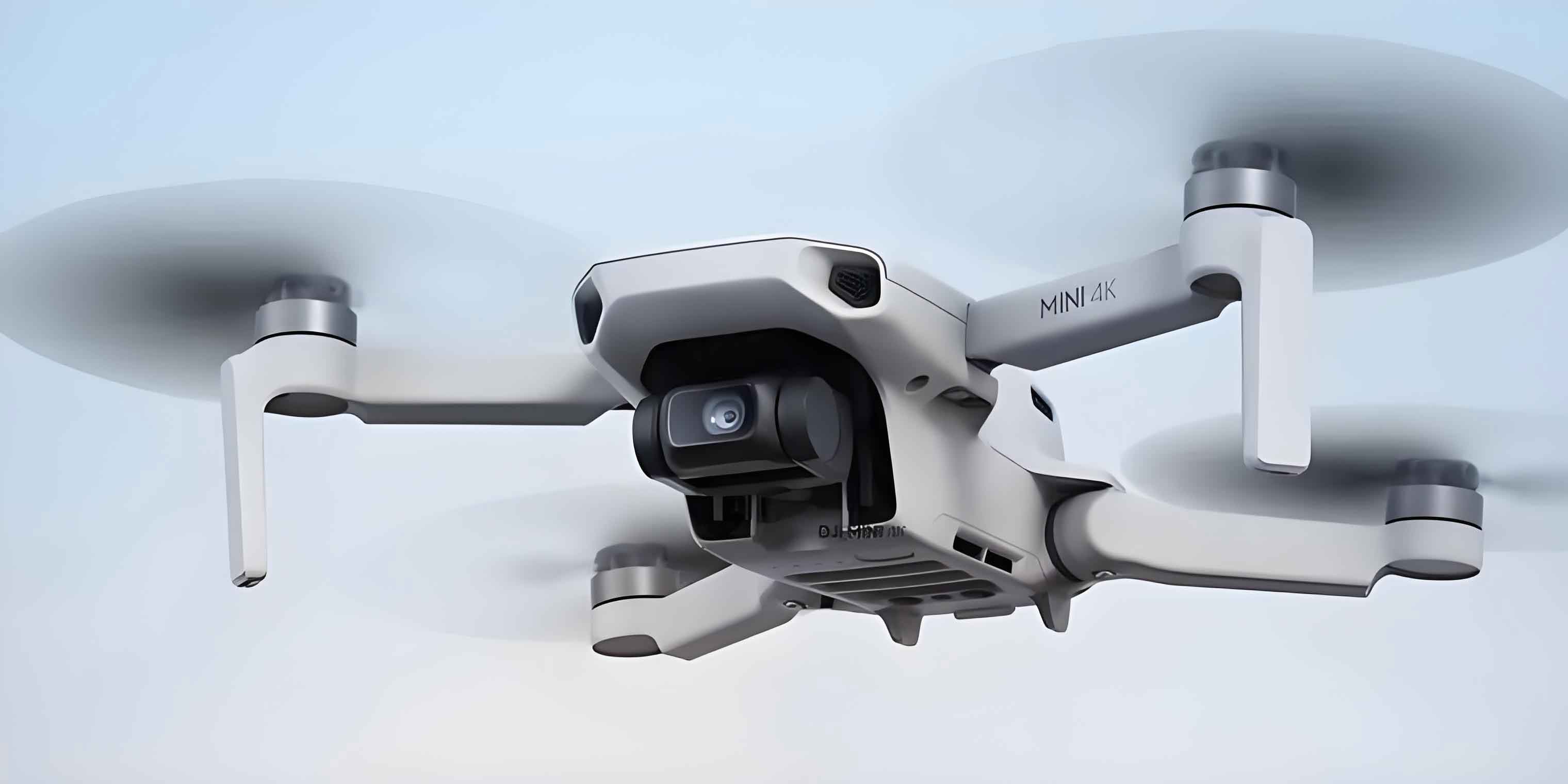
The core of this technological revolution lies in the synergistic combination of a mobile aerial platform, advanced sensors, and sophisticated data processing workflows. Modern UAVs, or drones, serve as highly flexible carriers for a suite of payloads. The sensor suite typically includes high-resolution RGB cameras for photogrammetry, multispectral and hyperspectral sensors for analyzing vegetation health and material properties, and Light Detection and Ranging (LiDAR) scanners for direct, highly accurate 3D point cloud generation. The data processing pipeline is equally critical, involving structure-from-motion (SfM) and multi-view stereo (MVS) algorithms to transform overlapping 2D imagery into 3D models. The fundamental photogrammetric equation, relating image coordinates $(x, y)$ to ground coordinates $(X, Y, Z)$, is solved at scale through bundle adjustment, a key optimization process:
$$
\begin{bmatrix} x \\ y \end{bmatrix} = \lambda \mathbf{R} \begin{bmatrix} X – X_0 \\ Y – Y_0 \\ Z – Z_0 \end{bmatrix} + \begin{bmatrix} x_p \\ y_p \end{bmatrix}
$$
where $\lambda$ is a scale factor, $\mathbf{R}$ is the rotation matrix defining the camera’s orientation, $(X_0, Y_0, Z_0)$ are the coordinates of the perspective center, and $(x_p, y_p)$ are the principal point offsets. The efficiency of solving for these parameters for thousands of images is what enables the rapid creation of accurate spatial products.
Technical Foundations and System Parameters
The performance of a China UAV drone surveying system is determined by a matrix of interrelated parameters. Selection depends on the specific application’s requirements for accuracy, coverage, and type of data. The following table summarizes key platform and sensor specifications that influence mission planning and output quality.
| Platform/Sensor Type | Key Parameters | Typical Range/Value | Primary Influence on Output |
|---|---|---|---|
| Fixed-Wing UAV | Endurance, Cruise Speed, Wing Span | 60-120 min, 15-25 m/s, 1.5-3.0 m | Large-area coverage, efficiency for linear projects |
| Multi-Rotor UAV | Flight Time, Hovering Accuracy, Payload Capacity | 20-40 min, ±0.1 m, 1.0-6.0 kg | High-precision, low-altitude mapping; flexibility in complex terrain |
| RGB Camera | Sensor Size, Pixel Size, Focal Length | Full Frame (36×24 mm), 3.5-6.0 µm, 20-35 mm | Ground Sampling Distance (GSD), image texture quality |
| Multispectral Sensor | Number of Bands, Spectral Bandwidth, Radiometric Resolution | 5-10 bands (e.g., R, G, B, NIR, Red Edge), 10-40 nm, 12-16 bit | Vegetation indices (e.g., NDVI), land cover classification accuracy |
| LiDAR Scanner | Pulse Rate, Scan Frequency, Beam Divergence, Range Accuracy | 100-2000 kHz, 10-200 Hz, 0.1-1.0 mrad, ±1-5 cm | Point density, ability to penetrate vegetation, vertical accuracy |
The planning of a UAV mission is governed by the required Ground Sampling Distance (GSD), which is the distance between two consecutive pixel centers measured on the ground. It is a function of the sensor’s physical pixel size ($p$), the focal length ($f$), and the flight altitude above ground ($H$):
$$
GSD = \frac{H \times p}{f}
$$
For a project demanding a GSD of 3 cm, using a sensor with a pixel size of 4 µm and a focal length of 24 mm, the maximum flight altitude $H$ would be calculated as $H = \frac{GSD \times f}{p} = \frac{0.03 \times 0.024}{0.000004} = 180$ meters. This simple formula is central to all mission planning software used with China UAV drone platforms.
Applications in Topographic and Geomorphological Surveying
One of the most transformative applications of China UAV drone technology is in topographic mapping and geomorphological analysis. Drones efficiently capture the high-resolution data necessary for generating Digital Elevation Models (DEMs), Digital Terrain Models (DTMs), and Digital Surface Models (DSMs). The comparative advantage over traditional GNSS RTK surveying or manned aerial photogrammetry is profound in terms of cost, safety in dangerous terrain, and resolution.
The accuracy of a UAV-derived DEM can be statistically validated. Let $Z_{UAV_i}$ represent the elevation of point $i$ from the UAV model, and $Z_{RTK_i}$ represent the elevation of the same check point measured by high-precision RTK GNSS. The Root Mean Square Error (RMSEZ) in the vertical dimension is calculated as:
$$
RMSE_Z = \sqrt{\frac{\sum_{i=1}^{n} (Z_{UAV_i} – Z_{RTK_i})^2}{n}}
$$
where $n$ is the number of independent check points. Modern UAV-photogrammetry workflows, especially when using Ground Control Points (GCPs), routinely achieve RMSEZ values between 1-3 times the GSD. For a 5 cm GSD project, this implies vertical accuracies of 5-15 cm, which is sufficient for a vast majority of engineering design and earthwork volume calculation tasks. The volume $V$ of a stockpile or cut/fill area can be computed by integrating the difference between two DEMs (e.g., pre- and post-construction) over the area $A$:
$$
V = \iint_{A} \left( Z_{final}(x,y) – Z_{initial}(x,y) \right) \,dx\,dy
$$
In practice, this is performed using specialized software, but the mathematical principle underpins all UAV-based volumetric surveys, demonstrating a key quantitative benefit. The following table contrasts traditional and UAV-based methods for key surveying tasks.
| Surveying Task | Traditional Method | UAV-Based Method | Advantage of UAV |
|---|---|---|---|
| High-Resolution DEM Generation | Aerial photogrammetry (manned aircraft), LIDAR (manned), Terrestrial Laser Scanning (TLS) for small areas | Photogrammetry from UAV imagery or UAV-LiDAR | Lower cost, higher resolution, faster deployment, safer for hazardous sites |
| Slope Stability Analysis | Field inspection, sparse GNSS point measurement, terrestrial photogrammetry | High-res DSM/DTM time series for change detection and displacement tracking | Comprehensive area coverage, quantitative displacement vectors, historical baseline creation |
| Coastal and Riverbank Monitoring | Bathymetric surveys (boats), periodic GNSS profiling | Frequent high-res surveys of exposed areas, calculation of erosion/accretion rates | High temporal frequency, detailed quantification of volumetric change, safe for unstable banks |
| Quarry and Mine Surveying | Total station surveys, GNSS surveys of crest and toe lines | Complete 3D model of pit, accurate volume calculations of stockpiles and voids | Complete data capture in hours vs. days, improved safety by removing personnel from pit floor |
Applications in Urban Planning and Construction
In the dynamic realm of urban environments, China UAV drone systems provide city planners, architects, and construction managers with an unparalleled real-time spatial data feed. The ability to rapidly generate updated orthomosaics and 3D models supports the entire urban development lifecycle, from initial planning and design through construction monitoring to final asset management.
A primary output is the creation of detailed 3D city models or Building Information Modeling (BIM) context models. The geometric accuracy of models generated via SfM-MVS photogrammetry is suitable for many planning applications. The completeness of facade texture is a particular strength. For quantifying construction progress or earthworks, the change detection methodology is key. By comparing a DSM from time $t_1$ to a DSM from time $t_2$, progress can be measured. The area $A_{built}$ where new construction has risen above a certain threshold $\Delta Z_{min}$ can be identified:
$$
A_{built} = \iint_{Domain} \mathbf{1}_{\{Z_{t_2}(x,y) – Z_{t_1}(x,y) > \Delta Z_{min}\}} \,dx\,dy
$$
Similarly, the volume of material moved or the percentage of a structure completed can be automatically calculated. Furthermore, UAVs equipped with thermal sensors can perform energy audits of building envelopes, identifying heat leaks. The detection is based on the analysis of surface temperature $T_s$ from thermal imagery, comparing it to expected values or neighboring surfaces. Urban green space analysis is another critical application. Using multispectral data, the Normalized Difference Vegetation Index (NDVI) is calculated per pixel to assess plant health and density:
$$
NDVI = \frac{NIR – Red}{NIR + Red}
$$
where $NIR$ and $Red$ are the reflectance values in the near-infrared and red bands, respectively. Municipalities can use time-series NDVI maps from China UAV drone surveys to monitor the health of urban forests, parks, and green roofs, supporting environmental sustainability goals.
Applications in Land Use and Cadastral Surveying
Accurate and up-to-date land use and land cover (LULC) information is fundamental for resource management, agricultural planning, and cadastral administration. UAV remote sensing offers a powerful tool for high-resolution LULC classification and boundary mapping. The high spatial resolution (often 5-10 cm GSD) allows for the discrimination of small plot boundaries, crop types within fields, and subtle land cover features that are invisible to satellite sensors.
The classification process typically involves supervised machine learning algorithms. A set of training samples $\{(\mathbf{x}_1, y_1), (\mathbf{x}_2, y_2), …, (\mathbf{x}_n, y_n)\}$ is created by an analyst, where $\mathbf{x}_i$ is a feature vector (e.g., spectral bands, texture indices, elevation) for a pixel or segment, and $y_i$ is its land use class label (e.g., “residential,” “wheat,” “forest,” “water”). Algorithms like Random Forest or Support Vector Machines (SVMs) learn a decision function $f(\mathbf{x})$ that maps new feature vectors to class labels. The accuracy of the resulting map is assessed using a confusion matrix and metrics like Overall Accuracy (OA) and the Kappa coefficient ($\kappa$):
$$
OA = \frac{\sum_{k=1}^{q} n_{kk}}{N}, \quad \kappa = \frac{N \sum_{k=1}^{q} n_{kk} – \sum_{k=1}^{q} (n_{k+} \cdot n_{+k})}{N^2 – \sum_{k=1}^{q} (n_{k+} \cdot n_{+k})}
$$
where $q$ is the number of classes, $N$ is the total number of validation samples, $n_{kk}$ are the diagonal elements of the confusion matrix (correct classifications), and $n_{k+}$ and $n_{+k}$ are the row and column totals, respectively. UAV-derived classifications regularly achieve OA > 90% for a moderate number of classes, far surpassing the capabilities of moderate-resolution satellite imagery for parcel-level mapping. This supports precise cadastral updates and the monitoring of land use change, such as urban encroachment on agricultural land or illegal construction.
Applications in Environmental and Engineering Monitoring
Environmental monitoring represents a domain where the temporal frequency, spatial detail, and sensor versatility of China UAV drone systems create unique value. Drones serve as platforms for proactive and responsive environmental stewardship and infrastructure health assessment.
1. Ecological Monitoring: Multispectral and hyperspectral sensors enable detailed vegetation stress analysis beyond simple NDVI. Indices like the Photochemical Reflectance Index (PRI) or specific narrow-band indices can be linked to physiological parameters. For wetland monitoring, drones map invasive species spread and water extent with high temporal regularity. The area of an algal bloom or invasive plant cover $A_{inv}$ can be tracked over time $t$ by classifying successive orthomosaics:
$$
A_{inv}(t) = \iint_{Wetland} \mathbf{1}_{\{Class(x,y,t) = ‘Invasive Species’\}} \,dx\,dy
$$
2. Pollution and Site Investigation: While drones cannot directly measure most air pollutant concentrations, they can carry lightweight sensors for methane (CH₄), carbon dioxide (CO₂), or particulate matter (PM2.5/10) to create 2D/3D concentration plume models. For soil and water contamination, drones with specialized sensors can induce and detect fluorescence in hydrocarbons or map electrical conductivity. In mining, they monitor the stability of tailings dams by creating frequent, high-accuracy DTMs to detect millimeter-level deformation using differential analysis, a process where the displacement vector $\mathbf{d}_i$ for a point $i$ is:
$$
\mathbf{d}_i = \mathbf{X}_{i, t_2} – \mathbf{X}_{i, t_1}
$$
where $\mathbf{X}$ represents the 3D coordinates of the point at two different epochs.
3. Linear Infrastructure Inspection: For pipelines, railways, and highways, UAVs provide a safe and efficient method for routine inspection. Corridor mapping identifies encroaching vegetation, land subsidence, or erosion risks. Thematic layers from multispectral data can quantify vegetation health right up to the infrastructure edge, informing maintenance schedules.
| Monitoring Type | Key UAV Sensor | Measured Parameter/Output | Engineering/Environmental Insight |
|---|---|---|---|
| Structural Deformation | High-res RGB, LiDAR | 3D point cloud time series, displacement vectors $\mathbf{d}_i$ | Quantification of settlement, tilt, or crack propagation in dams, bridges, historical structures |
| Vegetation Health (Precision) | Multispectral (6-10 band) | Advanced indices (e.g., PRI, Chlorophyll Index), canopy height models | Early stress detection in crops or forests, yield prediction, biodiversity assessment |
| Water Quality Indicators | Hyperspectral, Thermal | Chlorophyll-a concentration, surface temperature, turbidity patterns | Monitoring of eutrophication, thermal pollution from outfalls, sediment transport |
| Post-Disaster Assessment | RGB, LiDAR | Rapid damage classification map, volumetric debris estimation, change detection maps | Immediate situational awareness for responders, quantification of impact for insurance and recovery planning |
Future Trends and Challenges
The trajectory of China UAV drone technology in geomatics points towards greater automation, integration, and intelligence. Several key trends and corresponding challenges will define the next decade.
Trend 1: AI and Edge Computing: Artificial Intelligence will move beyond classification to enable real-time, on-board data processing. Edge computing on the drone itself will allow for immediate change detection, object identification (e.g., cracks, defects), and even adaptive flight path planning based on initial findings. This reduces data bandwidth needs and speeds up decision loops.
Trend 2: Enhanced Autonomy and BVLOS: Beyond Visual Line of Sight (BVLOS) operations will become more common, enabled by robust sense-and-avoid systems and regulatory evolution. This will unlock efficient large-scale surveys for linear infrastructure and rural areas. Swarm robotics, where multiple drones collaborate on a single surveying task, could further revolutionize data acquisition speed and redundancy.
Trend 3: Multi-Sensor Fusion and IoT Integration: The fusion of data from UAV-based LiDAR, hyperspectral imagery, and thermal sensors will become more seamless, providing hyper-rich datasets for complex analysis. Furthermore, UAV data will integrate with terrestrial IoT sensor networks, creating a comprehensive, multi-perspective monitoring system.
Challenges: Despite the promise, significant hurdles remain. Regulatory frameworks need to continuously evolve to safely accommodate BVLOS and autonomous operations, a process actively underway in many regions, including those governing China UAV drone operations. Data processing, while increasingly automated, still requires significant expertise for quality assurance and complex analysis, creating a skills gap. Standardization of accuracy assessment methodologies, data formats, and processing workflows is needed to ensure reliability and interoperability. Finally, issues of data privacy and security, especially in urban and sensitive areas, require clear ethical guidelines and operational protocols.
In conclusion, UAV remote sensing has firmly established itself as an indispensable tool in the geomatics engineering arsenal. Its impact spans from the granular detail of centimeter-accurate topographic models to the macro-scale monitoring of environmental change. The ongoing innovation in China UAV drone platforms, sensors, and analytical software promises to further deepen this impact, driving the field towards unprecedented levels of efficiency, accuracy, and actionable intelligence. The future of geomatics is intimately linked to the autonomous, intelligent, and integrated eyes in the sky that drones provide, reshaping how we measure, model, and manage our world.