
Unmanned Aerial Vehicle (UAV) systems represent a pinnacle of modern drone technology, offering autonomous operation and reusability across civilian and military domains. Quadrotor configurations, specifically, enable vertical takeoff/landing and low-speed maneuverability in complex environments. This article details a comprehensive approach to overcoming proprietary limitations in commercial UAV systems by redesigning the core dynamics, control architecture, and sensor integration for enhanced stability and precision.
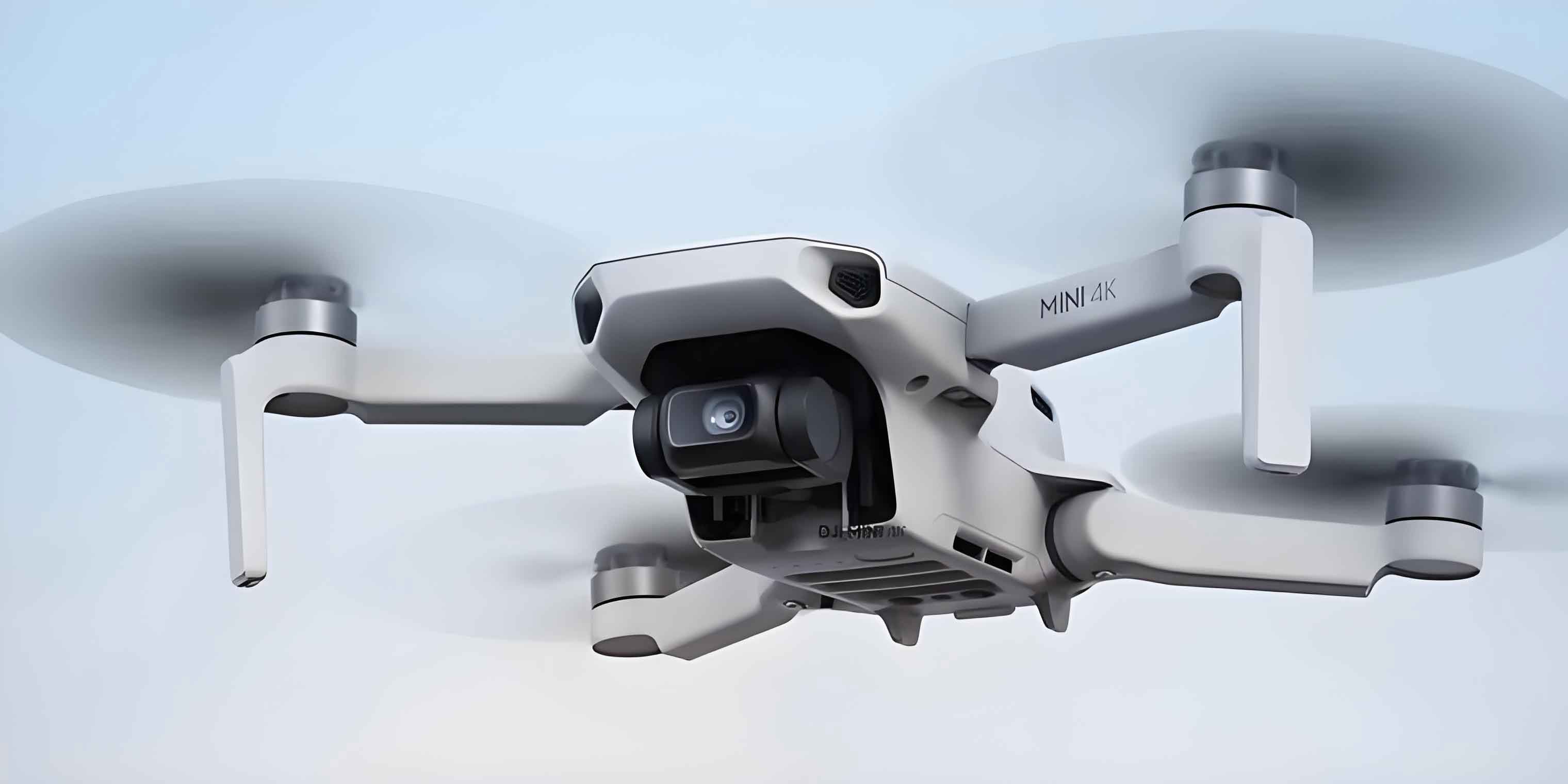
1. Quadrotor Dynamics and Physical Modeling
An X-configuration quadrotor drone utilizes four symmetrically positioned rotors. Motors A (front-left) and C (rear-right) rotate clockwise with reverse propellers, while motors B (front-right) and D (rear-left) rotate counterclockwise with standard propellers. This arrangement balances torque and generates lift $F_i$ perpendicular to the drone plane:
$$ F_{total} = \sum_{i=A}^{D} F_i $$
The drone’s spatial orientation is defined by Euler angles $(\phi, \theta, \psi)$ relative to body axes $(x,y,z)$. Net forces determine translational acceleration:
$$
\begin{cases}
a_x = \frac{F_{total} \sin\theta \cos\psi}{m} \\
a_y = \frac{F_{total} \sin\psi}{m} \\
a_z = \frac{F_{total} \cos\theta \cos\psi – mg}{m}
\end{cases}
$$
where $m$ denotes mass and $g$ gravitational acceleration. Angular momentum equilibrium is maintained through counter-rotating rotor pairs satisfying:
$$ \sum \tau = I \dot{\omega} + \omega \times (I\omega) = 0 $$
where $I$ is the inertia tensor and $\omega$ angular velocity.
2. Hardware Architecture
The system integrates specialized modules for real-time control, forming the backbone of reliable Unmanned Aerial Vehicle operations.
| Module | Specifications | Function |
|---|---|---|
| Main Controller | STM32F103C8T6 (72MHz Cortex-M3, 256KB Flash) | Sensor fusion, PID computation, motor control |
| Attitude Sensor | MPU6050 (3-axis gyro/accelerometer, DMP) | Raw angular velocity/acceleration data |
| Barometer | BMP180 (0.03hPa resolution) | Altitude measurement |
| Wireless Comms | NRF24L01 (2.4GHz, 2Mbps) | Remote control & telemetry |
3. Control Algorithm Implementation
3.1 Kalman Filter for Sensor Fusion
Kalman filtering reduces noise in attitude estimation. The prediction/correction cycle follows:
$$
\begin{align*}
\text{Prediction:} & \\
\hat{x}_k^- &= A\hat{x}_{k-1} + Bu_k \\
P_k^- &= AP_{k-1}A^T + Q \\
\text{Update:} & \\
K_k &= P_k^-H^T(HP_k^-H^T + R)^{-1} \\
\hat{x}_k &= \hat{x}_k^- + K_k(z_k – H\hat{x}_k^-) \\
P_k &= (I – K_kH)P_k^-
\end{align*}
$$
where $\hat{x}$ is state estimate (attitude), $P$ error covariance, $K$ Kalman gain, $z$ sensor measurements, and $Q$, $R$ process/measurement noise matrices.
3.2 Cascade PID Control Architecture
A dual-loop structure decouples angle and angular rate control:
| Control Loop | Input | Output | PID Equation |
|---|---|---|---|
| Outer (Angle) | $e_\phi = \phi_{target} – \phi_{measured}$ | $\dot{\phi}_{target}$ | $\dot{\phi}_{target} = K_{P,outer} \cdot e_\phi$ |
| Inner (Rate) | $e_{\dot{\phi}} = \dot{\phi}_{target} – \dot{\phi}_{measured}$ | Motor PWM | $u = K_{P}e_{\dot{\phi}} + K_I\int e_{\dot{\phi}} dt + K_D\frac{de_{\dot{\phi}}}{dt}$ |
4. Parameter Optimization and Flight Performance
Empirical tuning yielded optimal parameters for roll/pitch axes:
| Parameter | Roll/Pitch Value | Yaw Value | Impact |
|---|---|---|---|
| $K_{P,outer}$ | 5.0 | – | Limits max angular rate |
| $K_P$ | 1.15 | 0.5 | Reduces oscillation |
| $K_I$ | 0.015 | 0 | Eliminates steady-state error |
| $K_D$ | 4.00 | 0 | Damps overshoot |
Key performance metrics after optimization:
- Angular tracking error: ±2°
- Response time: <200ms for 30° step input
- Overshoot: <10% with anti-windup clamping
The control law transforms error signals into motor commands:
$$
\begin{bmatrix}
PWM_A \\ PWM_B \\ PWM_C \\ PWM_D
\end{bmatrix} = \mathbf{M}
\begin{bmatrix}
F_{total} \\ \tau_\phi \\ \tau_\theta \\ \tau_\psi
\end{bmatrix}
$$
where $\mathbf{M}$ is the motor mixing matrix and $\tau$ control torques.
5. Conclusion
This work demonstrates a robust framework for quadrotor drone technology development, integrating physics-based modeling with advanced estimation and control. The STM32-based hardware platform, combined with Kalman filtering and cascade PID, achieves precise attitude regulation under dynamic disturbances. Optimized parameters balance responsiveness and stability, enabling reliable Unmanned Aerial Vehicle operation in diverse environments. Future work will integrate GPS and obstacle avoidance to enhance autonomy, further advancing drone technology applications in industrial inspection and emergency response.