
The coordinated flight of multiple unmanned aerial vehicles (UAVs), or drone formation, represents a pivotal advancement in autonomous systems, transitioning from military operations to vast civilian applications such as precision agriculture, infrastructure inspection, and disaster response. The core challenge lies in enabling a group of drones to autonomously achieve and maintain a prescribed spatial configuration while synchronizing their motion, using only local neighbor-to-neighbor communication. This article presents a comprehensive, robust control framework for drone formation flight, addressing nonlinear dynamics and external disturbances through a synthesis of consensus theory, graph-theoretic tools, and nonlinear control techniques.
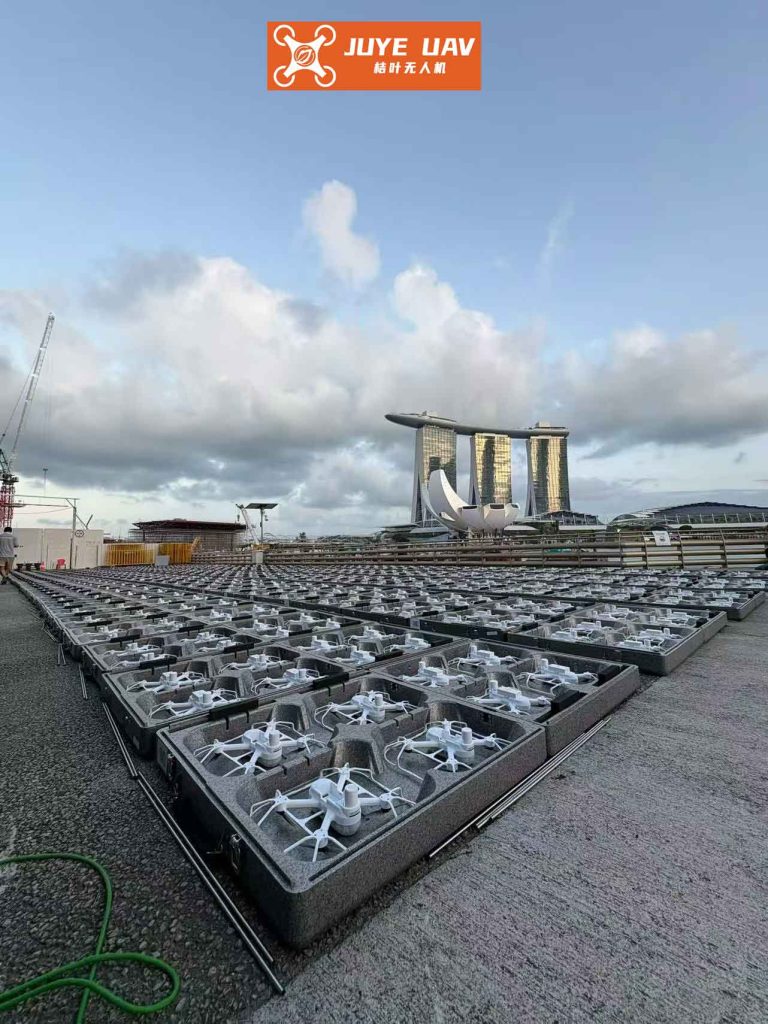
The effectiveness of any drone formation hinges on the underlying distributed control law. Traditional approaches include leader-follower structures, virtual structures, and behavior-based methods. However, the paradigm of consensus-based control, rooted in multi-agent systems theory, offers a fundamentally distributed and flexible solution. In this framework, the objective of stable drone formation is reformulated as an agreement problem on suitably defined agent states. This work delves into a sophisticated method for achieving this agreement under directed communication networks, employing the concept of the edge Laplacian. This mathematical tool allows the transformation of the formation consensus problem into a more tractable stabilization problem for an edge-based error system. We consider a realistic, nonlinear fixed-wing UAV model equipped with autopilot loops, subject to longitudinal-decoupled dynamics and bounded environmental disturbances. A rigorous control algorithm is developed using feedback linearization and backstepping techniques, with stability guarantees provided by Lyapunov theory. Extensive simulation results validate the robustness and performance of the proposed strategy for a multi-drone formation.
1. Theoretical Foundations: Graph and Edge Laplacian Frameworks
The communication topology within a drone formation is naturally modeled by graph theory. Consider a weighted directed graph $\mathcal{G}=(\mathcal{V},\mathcal{E},\mathcal{A})$, where $\mathcal{V}=\{1,…,n\}$ is the set of nodes (drones), $\mathcal{E} \subseteq \mathcal{V} \times \mathcal{V}$ is the set of $m$ directed edges (communication links), and $\mathcal{A}=[a_{ij}]$ is the adjacency matrix with $a_{ij}>0$ if information flows from node $j$ to node $i$. The node Laplacian matrix $\mathbf{L}_n=\mathbf{D}-\mathbf{A}$ is fundamental, where $\mathbf{D}=\text{diag}(d_i)$ is the in-degree matrix with $d_i=\sum_{j \in \mathcal{N}_i} a_{ij}$. For a connected graph containing a spanning tree, $\mathbf{L}_n$ has a simple zero eigenvalue.
The edge Laplacian provides an alternative perspective crucial for formation control. We define the incidence matrix $\mathbf{E} \in \mathbb{R}^{n \times m}$. For a directed graph, it is useful to distinguish the in-incidence matrix $\mathbf{E}^-$ and the out-incidence matrix $\mathbf{E}^+$, where $\mathbf{E}^-_{ik}=1$ if node $i$ is the terminating node of edge $e_k$, and $\mathbf{E}^+_{ik}=1$ if node $i$ is the originating node. The standard incidence matrix is $\mathbf{E} = \mathbf{E}^- + \mathbf{E}^+$.
A key relationship links the node and edge Laplacians:
$$ \mathbf{L}_n = \mathbf{E} \mathbf{E}^T \quad \text{and} \quad \mathbf{L}_e = \mathbf{E}^T \mathbf{E}. $$
Here, $\mathbf{L}_e \in \mathbb{R}^{m \times m}$ is the edge Laplacian. Crucially, $\mathbf{L}_e$ and $\mathbf{L}_n$ share the same non-zero eigenvalues. For a graph with a spanning tree, $\mathbf{L}_e$ is positive semi-definite. This property allows us to analyze consensus and formation stability through the dynamics defined on the edges of the communication graph, simplifying the controller design for the drone formation.
2. Problem Formulation: UAV Dynamics and Control Objectives
We consider a fleet of $n$ fixed-wing UAVs. For outer-loop path control design, the dynamics can be modeled as a decoupled 3D kinematic point mass with autopilot loops for speed, heading, and altitude. The model for the $i$-th drone is:
$$
\begin{aligned}
\dot{x}_i &= v_i \cos(\psi_i), \\
\dot{y}_i &= v_i \sin(\psi_i), \\
\dot{v}_i &= \alpha_v (v_i^c – v_i) + \delta_i^v, \\
\dot{h}_i &= v_i^h, \\
\dot{\psi}_i &= \omega_i, \\
\dot{v}_i^h &= \alpha_h (\omega_i^{h,c} – v_i^h) + \delta_i^h.
\end{aligned}
$$
where $(x_i, y_i, h_i)$ is the 3D position, $v_i$ is the horizontal ground speed, $\psi_i$ is the heading/yaw angle, and $v_i^h$ is the vertical (climb/sink) speed. The control inputs are the commanded horizontal speed $v_i^c$, commanded heading rate $\omega_i$, and commanded vertical speed $\omega_i^{h,c}$. The terms $\delta_i^v$ and $\delta_i^h$ represent unknown but bounded disturbances in the horizontal and vertical channels, satisfying $|\delta_i^v| \leq \bar{\delta}^v$ and $|\delta_i^h| \leq \bar{\delta}^h$. The positive constants $\alpha_v, \alpha_h$ are known autopilot time constants. Practical constraints include bounds on velocities and accelerations:
| Parameter | Constraint |
|---|---|
| Horizontal Speed | $v_{min} < v_i < v_{max}$ |
| Horizontal Acceleration | $a_{min} \leq \dot{v}_i \leq a_{max}$ |
| Vertical Speed | $v^h_{min} < v_i^h < v^h_{max}$ |
| Vertical Acceleration | $a^h_{min} \leq \dot{v}_i^h \leq a^h_{max}$ |
| Heading Rate | $|\omega_i| \leq \omega_{max}$ |
The drone formation control objective is defined in terms of relative states. Let $s_{ij}^x, s_{ij}^y, s_{ij}^h$ be the desired relative distances between drones $i$ and $j$ along the $x$, $y$, and $h$ (vertical) axes, respectively, in a common coordinate frame. The goal is to design distributed control laws such that asymptotically:
$$
\begin{aligned}
\lim_{t\to\infty} (x_i(t) – x_j(t)) &= s_{ij}^x, \\
\lim_{t\to\infty} (y_i(t) – y_j(t)) &= s_{ij}^y, \\
\lim_{t\to\infty} (h_i(t) – h_j(t)) &= s_{ij}^h, \\
\lim_{t\to\infty} (v_i(t) – v_j(t)) &= 0, \\
\lim_{t\to\infty} (\psi_i(t) – \psi_j(t)) &= 0, \\
\lim_{t\to\infty} (v_i^h(t) – v_j^h(t)) &= 0.
\end{aligned}
$$
This ensures the drones achieve the desired geometric formation while flying at a common speed and heading.
3. Control Algorithm Design via Feedback Linearization and Backstepping
The nonlinear model is first simplified using feedback linearization. Define virtual control inputs in the inertial frame:
$$
\begin{aligned}
v_i^x &= v_i \cos(\psi_i), \quad v_i^y = v_i \sin(\psi_i), \\
u_i^x &= \dot{v}_i^x, \quad u_i^y = \dot{v}_i^y, \quad u_i^h = \dot{v}_i^h.
\end{aligned}
$$
Applying this transformation decouples the dynamics into three double-integrator subsystems, one for each spatial axis ($\xi \in \{x, y, h\}$):
$$
\begin{aligned}
\dot{\xi}_i &= v_i^\xi, \\
\dot{v}_i^\xi &= u_i^\xi + \tilde{\delta}_i^\xi,
\end{aligned}
\qquad \text{for } i=1,\dots,n.
$$
where $\tilde{\delta}_i^x, \tilde{\delta}_i^y, \tilde{\delta}_i^h$ are the transformed disturbances, which remain bounded. The actual autopilot commands ($v_i^c, \omega_i, \omega_i^{h,c}$) can be recovered from $(u_i^x, u_i^y, u_i^h)$ and the states.
The core innovation lies in formulating the drone formation problem using the edge Laplacian. For each axis $\xi$, define the edge position error for edge $k$ connecting drones $j$ (tail) and $i$ (head) as:
$$ z_k^\xi = (\xi_i – \xi_j) – s_{ij}^\xi. $$
Stacking all $m$ edge errors gives the vector $\mathbf{z}^\xi = \mathbf{E}^T \boldsymbol{\xi} – \mathbf{s}^\xi$, where $\boldsymbol{\xi}$ is the vector of all drone positions along axis $\xi$, and $\mathbf{s}^\xi$ is the vector of desired edge distances. The formation objective is equivalent to $\mathbf{z}^\xi \to \mathbf{0}$. Differentiating, we get the edge error dynamics:
$$ \dot{\mathbf{z}}^\xi = \mathbf{E}^T \mathbf{v}^\xi, $$
where $\mathbf{v}^\xi$ is the vector of drone velocities along axis $\xi$. To stabilize these dynamics, we define a virtual velocity command for the edges. Let $\bar{v}^\xi$ be the desired common formation speed along axis $\xi$ (typically $\bar{v}^h=0$). We propose the following virtual control law for $\mathbf{E}^T \mathbf{v}^\xi$:
$$ \mathbf{E}^T \mathbf{v}^\xi \stackrel{\text{desired}}{=} -k_1^\xi \mathbf{L}_e \mathbf{z}^\xi + \mathbf{1}_m \bar{v}^\xi, $$
where $k_1^\xi > 0$ is a control gain and $\mathbf{1}_m$ is a vector of ones. Since $\mathbf{E}^T \mathbf{v}^\xi$ is not a direct control input, we define the velocity tracking error for the edges:
$$ \boldsymbol{\eta}^\xi = \mathbf{E}^T \mathbf{v}^\xi + k_1^\xi \mathbf{L}_e \mathbf{z}^\xi – \mathbf{1}_m \bar{v}^\xi. $$
The complete edge-level error system becomes:
$$
\begin{aligned}
\dot{\mathbf{z}}^\xi &= -k_1^\xi \mathbf{L}_e \mathbf{z}^\xi + \boldsymbol{\eta}^\xi + \mathbf{1}_m \bar{v}^\xi, \\
\dot{\boldsymbol{\eta}}^\xi &= \mathbf{E}^T \dot{\mathbf{v}}^\xi + k_1^\xi \mathbf{L}_e \dot{\mathbf{z}}^\xi.
\end{aligned}
$$
Substituting $\dot{\mathbf{v}}^\xi = \mathbf{u}^\xi + \tilde{\boldsymbol{\delta}}^\xi$ and the expression for $\dot{\mathbf{z}}^\xi$, we get:
$$ \dot{\boldsymbol{\eta}}^\xi = \mathbf{E}^T \mathbf{u}^\xi + k_1^\xi \mathbf{L}_e (-k_1^\xi \mathbf{L}_e \mathbf{z}^\xi + \boldsymbol{\eta}^\xi + \mathbf{1}_m \bar{v}^\xi) + \mathbf{E}^T \tilde{\boldsymbol{\delta}}^\xi. $$
We now employ a backstepping approach to design $\mathbf{u}^\xi$. Consider the Lyapunov function candidate for the $\xi$-subsystem:
$$ V^\xi = \frac{1}{2} (\mathbf{z}^\xi)^T \mathbf{P} \mathbf{z}^\xi + \frac{1}{2} (\boldsymbol{\eta}^\xi)^T \boldsymbol{\eta}^\xi, $$
where $\mathbf{P}$ is a symmetric positive definite matrix satisfying $\mathbf{P} \mathbf{L}_e + \mathbf{L}_e^T \mathbf{P} = \mathbf{Q} \succeq 0$, with $\mathbf{Q}$ having a minimum non-zero eigenvalue $\lambda_2(\mathbf{Q}) > 0$. The time derivative is:
$$
\begin{aligned}
\dot{V}^\xi &= (\mathbf{z}^\xi)^T \mathbf{P} \dot{\mathbf{z}}^\xi + (\boldsymbol{\eta}^\xi)^T \dot{\boldsymbol{\eta}}^\xi \\
&= (\mathbf{z}^\xi)^T \mathbf{P}(-k_1^\xi \mathbf{L}_e \mathbf{z}^\xi + \boldsymbol{\eta}^\xi) + (\boldsymbol{\eta}^\xi)^T \Big[ \mathbf{E}^T \mathbf{u}^\xi – (k_1^\xi)^2 \mathbf{L}_e^2 \mathbf{z}^\xi \\
&\quad + k_1^\xi \mathbf{L}_e \boldsymbol{\eta}^\xi + \mathbf{E}^T \tilde{\boldsymbol{\delta}}^\xi \Big].
\end{aligned}
$$
We choose the distributed formation control law as:
$$
\begin{aligned}
u_i^\xi &= -k_2^\xi \eta_i^\xi – \gamma^\xi \text{sign}(\eta_i^\xi) – \sum_{j \in \mathcal{N}_i} \left[ k_1^\xi k_2^\xi ( (\xi_i – \xi_j) – s_{ij}^\xi ) + k_2^\xi (v_i^\xi – v_j^\xi) \right] \\
&\quad + \alpha^\xi \bar{v}^\xi,
\end{aligned}
$$
where $\eta_i^\xi$ is a component derived from the edge errors connected to drone $i$, $k_2^\xi > 0$ and $\gamma^\xi > 0$ are control gains, and $\alpha^\xi$ is 1 for $x$ and $y$ axes if $\bar{v}^\xi$ is the desired ground speed component, and 0 for the $h$ axis. The signum term provides robustness against the bounded disturbances $\tilde{\delta}_i^\xi$. In vector form, this control law can be expressed as:
$$ \mathbf{u}^\xi = -k_2^\xi \mathbf{E} \boldsymbol{\eta}^\xi – \gamma^\xi \text{sign}(\mathbf{E} \boldsymbol{\eta}^\xi) – k_1^\xi k_2^\xi \mathbf{E} \mathbf{z}^\xi – k_2^\xi \mathbf{E} \mathbf{E}^T \mathbf{v}^\xi + \alpha^\xi \bar{v}^\xi \mathbf{1}_n. $$
Substituting this control law into the expression for $\dot{V}^\xi$ and using properties of the edge Laplacian ($\mathbf{E}^T \mathbf{E} = \mathbf{L}_e$, $\mathbf{E}^T \mathbf{1}_n = \mathbf{0}$ for connected graphs), we can show, after significant algebraic manipulation, that:
$$ \dot{V}^\xi \leq -\frac{1}{2} \lambda_2(\mathbf{Q}) k_1^\xi \|\mathbf{z}^\xi\|^2 – (k_2^\xi – \frac{1}{2} \|\mathbf{P}\|_F k_1^\xi) \|\boldsymbol{\eta}^\xi\|^2 – (\gamma^\xi – \bar{\delta}^\xi) \|\boldsymbol{\eta}^\xi\|_1, $$
where $\|\cdot\|_F$ is the Frobenius norm and $\|\cdot\|_1$ is the 1-norm. By selecting gains such that:
$$
k_2^\xi > \frac{1}{2} \|\mathbf{P}\|_F k_1^\xi \quad \text{and} \quad \gamma^\xi > \bar{\delta}^\xi,
$$
we ensure $\dot{V}^\xi$ is negative definite. By the Lyapunov stability theorem and LaSalle’s invariance principle, this guarantees global asymptotic convergence of the edge errors to zero: $\mathbf{z}^\xi \to \mathbf{0}$ and $\boldsymbol{\eta}^\xi \to \mathbf{0}$, which in turn implies achievement of the drone formation objectives for axis $\xi$.
The final control signals for the original UAV autopilot are obtained by inverting the feedback linearization:
$$
\begin{aligned}
v_i^c &= v_i + \frac{1}{\alpha_v}(u_i^x \cos\psi_i + u_i^y \sin\psi_i – \delta_i^v), \\
\omega_i &= \frac{1}{v_i}(-u_i^x \sin\psi_i + u_i^y \cos\psi_i), \\
\omega_i^{h,c} &= v_i^h + \frac{1}{\alpha_h}(u_i^h – \delta_i^h).
\end{aligned}
$$
The disturbance estimates $\delta_i^v, \delta_i^h$ can be set to zero if the robust signum term is used, or replaced by observer estimates if available.
4. Numerical Simulation and Performance Validation
To validate the proposed drone formation control algorithm, a simulation of a four-UAV system was conducted under a directed communication topology. The desired formation was a horizontal triangle with a leader, defined by the following relative distance matrices in the path-following frame:
| Edge (i,j) | $s_{ij}^x$ (m) | $s_{ij}^y$ (m) | $s_{ij}^h$ (m) |
|---|---|---|---|
| (1,2) | 0 | 0 | 0 |
| (1,3) | -500 | 0 | 100 |
| (1,4) | -250 | 433 | 100 |
The UAV parameters and constraints were set as follows:
| Parameter | Value |
|---|---|
| $\alpha_v$, $\alpha_h$ | 0.2, 0.8447 |
| $v_{min}$, $v_{max}$ | 5 m/s, 200 m/s |
| $a_{min}$, $a_{max}$ | -60 m/s², 60 m/s² |
| $\omega_{max}$ | 30 deg/s |
| Disturbance $\delta_i^v$, $\delta_i^h$ | $0.1 v_i^2$, $0.1 (v_i^h)^2$ |
The control gains were chosen according to the stability conditions, using $\lambda_2(\mathbf{Q})=0.0508$ and $\|\mathbf{P}\|_F=0.7151$ computed from the graph’s edge Laplacian:
$$
k_1^x = k_1^y = k_1^h = 4.0, \quad k_2^x = k_2^y = k_2^h = 2.0, \quad \gamma^x = \gamma^y = \gamma^h = 4.0.
$$
The desired common horizontal speed was set to 30 m/s. The simulation results demonstrate the effectiveness of the controller. The drones successfully achieve and maintain the prescribed 3D formation from random initial conditions. The position errors $z_k^\xi$ converge to zero, confirming precise formation keeping. The horizontal speeds synchronize to the desired 30 m/s, and the vertical speeds synchronize to zero, indicating level flight. The heading angles also converge to a common value. Critically, the control inputs remain within the specified actuator constraints throughout the maneuver, and the system exhibits robustness against the modeled dynamic disturbances. This successful simulation underscores the practicality of the edge-Laplacian-based backstepping approach for robust, distributed drone formation control.
5. Conclusion and Future Directions
This article has presented a rigorous framework for the distributed formation control of multiple UAVs using edge Laplacian consensus. By reformulating the drone formation problem as the stabilization of an edge-based error system, we developed a nonlinear control law via backstepping that guarantees asymptotic convergence even in the presence of bounded external disturbances. The method is fully distributed, requiring each drone to communicate only with its neighbors in a potentially directed interaction topology. Simulation studies confirm the robustness and performance of the approach.
Future work will focus on extending this framework to address more complex real-world challenges for autonomous drone formation. Key directions include: 1) Time-Varying and Switching Topologies: Analyzing stability and designing protocols for communication graphs that change dynamically due to link failures or intentional reconfiguration. 2) Formation Maneuvers and Reconfiguration: Developing smooth transition strategies for the drone formation to switch between different geometric patterns online. 3) Output Feedback Control: Designing observers to estimate relative states when only partial measurements (e.g., relative bearing) are available, instead of assuming full relative position knowledge. 4) Integration with Collision Avoidance: Incorporating real-time, reactive obstacle avoidance schemes that temporarily modify the desired formation offsets to ensure safe operation in cluttered environments. Addressing these challenges will further enhance the resilience and autonomy of multi-drone formation systems, paving the way for their widespread deployment in complex scenarios.