
The reliable operation of high-voltage power transmission networks is fundamental to modern infrastructure, yet it faces persistent threats from vegetation encroachment, commonly known as tree obstacles. When trees grow too close to power lines, they can cause faults, leading to power outages, fires, and significant economic and safety hazards. Traditional manual inspection and trimming in complex terrains like mountains or near water bodies are inefficient, costly, and dangerous. The emergence of Unmanned Aerial Vehicles (UAVs), or drones, has offered a promising alternative, bringing efficiency and precision to such operations. However, the vision of a single UAV drone is often obstructed during critical tasks like mechanical arm operation, limiting situational awareness and compromising both accuracy and safety. This fundamental limitation of single-agent systems highlights the need for collaborative multi-agent solutions.
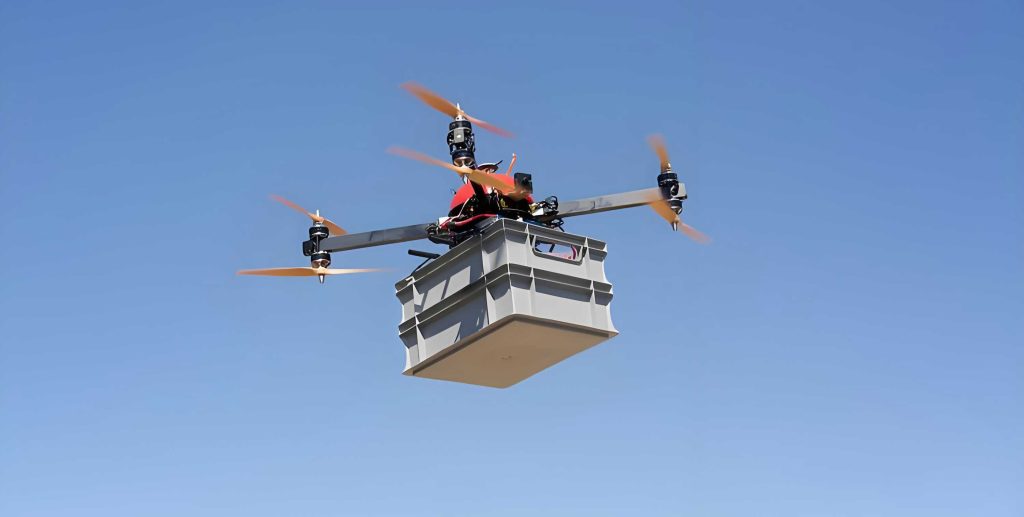
To address this, we propose a multi-UAV drone cooperative following system. In this framework, one UAV drone acts as the leader (or host), equipped with tools to perform the trimming task. Multiple follower UAV drones, equipped with gimbal cameras, autonomously maintain specific positions around the leader, such as front, rear, left, right, above, and below. These followers provide real-time, multi-perspective video feeds to a ground control station, allowing human operators to monitor the operation comprehensively and make precise adjustments. This effectively eliminates the leader’s blind spots and significantly enhances operational safety and efficiency. The core technological challenge lies in developing a robust and precise control method that enables these follower UAV drones to maintain a desired formation relative to a moving leader and to switch between different viewing angles smoothly and safely in three-dimensional space.
Cooperative formation control for multi-agent systems has been extensively studied, with methods including leader-follower, virtual structure, behavior-based, and consensus-based approaches. The leader-follower strategy is particularly favored for its conceptual simplicity, ease of implementation, and good scalability. Within this paradigm, the follower agents control their states based on the state information of the leader and a predefined desired relative posture. While existing research has achieved good results in formation keeping and trajectory tracking, challenges remain, especially concerning smooth, stable switching of observation angles in 3D space and robust performance under disturbances, which are critical for practical industrial applications like obstacle clearing.
This article presents our research on a cooperative follow-control technology specifically designed for tree obstacle-clearing operations using a fleet of UAV drones. We adopt a single-leader, multiple-follower architecture. The core of our contribution is a two-layer control framework: an upper-layer cooperative controller based on a Super-Twisting Sliding Mode Control (ST-SMC) algorithm and a lower-layer trajectory and attitude tracker. For tasks requiring fixed relative distance and azimuth, we establish the follower’s desired relative pose and reference velocity model in the leader’s heading coordinate frame and design the ST-SMC law. For dynamic 3D azimuth-switching tasks, we introduce a polar-coordinate feedforward term into the reference velocity while maintaining the sliding mode control structure, enabling followers to execute smooth circular transitions around the leader. Comprehensive simulations demonstrate the high accuracy, robustness, and smooth switching capability of our proposed method.
System Architecture and Cooperative Mechanism
Our designed cooperative control system is tailored for complex industrial environments. It integrates a ground control platform, the core cooperative follow-control system, and a reliable communication link between all UAV drones. We employ a centralized control strategy where the leader broadcasts its state (position, velocity, attitude) to all followers. Each follower possesses sufficient onboard computational capability to process this information, calculate its own control commands, and execute them locally. The system architecture is designed to support real-time command and status flow, ensuring synchronized operation of the entire UAV drone fleet.
The human operator controls the leader UAV drone via a remote controller to perform the trimming task. Through the ground control interface, the operator can also initiate autonomous follow commands for the follower drones, selecting from a pre-defined library of formation patterns (e.g., “side-follow,” “top-follow”). These patterns are parameterized by desired relative distances and angles. The control system’s data processing module continuously receives the states of all UAV drones and the active task parameters. It calculates the following errors and solves the kinematic equations. These results are fed into the core cooperative following controller, which employs the ST-SMC algorithm to compute control inputs that drive the errors to zero. The generated velocity and attitude rate commands are then sent to each follower’s flight controller, closing the loop through its inner attitude control and outer position control loops to achieve stable and precise formation flight.
The communication topology for our multi-UAV drone system is a star network centered on the leader. The leader UAV drone broadcasts its state information to all follower UAV drones. There is no direct communication requirement between the followers for the basic follow task, which simplifies the network structure and reduces communication overhead. This topology is highly suitable for the described application where all coordination is relative to a single dynamic reference point—the operational leader.
Mathematical Modeling and Kinematics
We model each UAV drone as a rigid body with motion primarily defined in a horizontal plane with altitude control. The kinematic model for the i-th drone (where $i=0$ denotes the leader) in an inertial frame $\{O_I, X_I, Y_I, Z_I\}$ is given by:
$$
\begin{aligned}
\dot{x}_i &= v_i \cos(\psi_i) \\
\dot{y}_i &= v_i \sin(\psi_i) \\
\dot{z}_i &= v_{z_i} \\
\dot{\psi}_i &= \omega_i
\end{aligned}
$$
where $(x_i, y_i, z_i)$ is the position, $\psi_i$ is the yaw angle, $v_i$ is the horizontal speed, $v_{z_i}$ is the vertical speed, and $\omega_i$ is the yaw rate.
The core of the leader-follower strategy is to define the follower’s desired state relative to the leader’s body frame $\{O_B, X_B, Y_B, Z_B\}$, where $X_B$ points in the leader’s heading direction. Let $(L_{x_i}, L_{y_i}, L_{z_i})$ represent the actual relative position of follower $i$ in the leader’s body frame. The relationship between inertial and body-frame coordinates is given by the rotation matrix $R(\psi_0)$:
$$
R(\psi_0) = \begin{bmatrix}
\cos\psi_0 & -\sin\psi_0 \\
\sin\psi_0 & \cos\psi_0
\end{bmatrix}
$$
The relative position in the leader’s body frame can be derived as:
$$
\begin{aligned}
L_{x_i} &= -(x_0 – x_i)\cos\psi_0 – (y_0 – y_i)\sin\psi_0 \\
L_{y_i} &= (x_0 – x_i)\sin\psi_0 – (y_0 – y_i)\cos\psi_0 \\
L_{z_i} &= z_i – z_0
\end{aligned}
$$
This can also be expressed in polar form within the horizontal plane: $L_{x_i} = L_i \cos(\gamma_i)$, $L_{y_i} = L_i \sin(\gamma_i)$, where $L_i$ is the horizontal distance and $\gamma_i$ is the relative bearing angle.
For a fixed formation task, we define constant desired relative coordinates $(L_{xd}, L_{yd}, L_{zd})$ in the leader’s body frame. The follower’s desired inertial position and yaw are therefore:
$$
\begin{aligned}
x_{id} &= x_0 + L_{xd} \cos\psi_0 – L_{yd} \sin\psi_0 \\
y_{id} &= y_0 + L_{xd} \sin\psi_0 + L_{yd} \cos\psi_0 \\
z_{id} &= z_0 + L_{zd} \\
\psi_{id} &= \psi_0
\end{aligned}
$$
To enable the follower to track a moving reference point effectively, we need its desired velocity, which includes a feedforward term to compensate for the leader’s rotation. Differentiating the above equations with respect to time yields the desired velocity:
$$
\begin{aligned}
\dot{x}_{id} &= \dot{x}_0 + ( -L_{xd} \sin\psi_0 – L_{yd} \cos\psi_0 ) \omega_0 \\
\dot{y}_{id} &= \dot{y}_0 + ( L_{xd} \cos\psi_0 – L_{yd} \sin\psi_0 ) \omega_0 \\
\dot{z}_{id} &= \dot{z}_0 \\
\dot{\psi}_{id} &= \omega_0
\end{aligned}
$$
For the more complex task of smooth 3D azimuth switching—where a follower needs to move from one observation angle to another (e.g., from below to above, or from left to right) while circling the leader—we model the desired relative position using spherical coordinates that vary smoothly over time. Let $D(t)$ be the desired spatial distance, $\alpha(t)$ the horizontal azimuth angle, and $\beta(t)$ the vertical elevation angle. The time-varying relative position in the leader’s body frame is:
$$
\begin{aligned}
L_x(t) &= D(t) \cos\beta(t) \cos\alpha(t) \\
L_y(t) &= D(t) \cos\beta(t) \sin\alpha(t) \\
L_z(t) &= D(t) \sin\beta(t)
\end{aligned}
$$
The corresponding feedforward velocity component $\dot{L}(t)$ required for smooth tracking during the switch is obtained by differentiation:
$$
\begin{aligned}
\dot{L}_x(t) &= \dot{D}\cos\beta\cos\alpha – D(\sin\beta\dot{\beta}\cos\alpha + \cos\beta\sin\alpha\dot{\alpha}) \\
\dot{L}_y(t) &= \dot{D}\cos\beta\sin\alpha – D(\sin\beta\dot{\beta}\sin\alpha – \cos\beta\cos\alpha\dot{\alpha}) \\
\dot{L}_z(t) &= \dot{D}\sin\beta + D\cos\beta\dot{\beta}
\end{aligned}
$$
To ensure the transition is smooth and avoids abrupt changes in acceleration (jerk), we parameterize the switching path using a normalized time variable $\tau = t/T \in [0, 1]$, where $T$ is the total switching duration. The evolution of parameters like $\alpha(t)$ or $\beta(t)$ is governed by a fifth-degree polynomial, a $C^2$ smooth function:
$$
s(\tau) = 10\tau^3 – 15\tau^4 + 6\tau^5
$$
A parameter $p(t)$ transitions from its initial value $p_0$ to its final value $p_f$ as: $p(t) = p_0 + (p_f – p_0) s(\tau)$. This guarantees smoothness in position, velocity, and acceleration throughout the maneuver for the UAV drone.
Design of the Cooperative Following Controller
The core challenge is to design a controller that drives a follower UAV drone to its desired state $(x_{id}, y_{id}, z_{id}, \psi_{id})$ as defined by the formation or switching logic. We define the tracking error in the inertial frame as $e_x = x_i – x_{id}$, $e_y = y_i – y_{id}$, $e_z = z_i – z_{id}$, $e_{\psi} = \psi_i – \psi_{id}$. A simple trajectory tracker might struggle with disturbances and unmodeled dynamics. Therefore, we propose a two-layer structure: a high-level cooperative Sliding Mode Controller (SMC) generates velocity and yaw rate commands $(v_{x_i}^{cmd}, v_{y_i}^{cmd}, v_{z_i}^{cmd}, \omega_i^{cmd})$, which are then tracked by the low-level drone’s internal attitude and thrust controllers.
Sliding Mode Control is chosen for its robustness to model uncertainties and external disturbances. First, we define a sliding surface $s$ for each channel (x, y, z, $\psi$) such that when $s=0$, the tracking error dynamics are stable and converge to zero. We use a linear combination of velocity error and position error:
$$
\begin{aligned}
s_x &= (v_{x_i} – \dot{x}_{id}) + \lambda_x e_x \\
s_y &= (v_{y_i} – \dot{y}_{id}) + \lambda_y e_y \\
s_z &= (v_{z_i} – \dot{z}_{id}) + \lambda_z e_z \\
s_{\psi} &= (\omega_i – \dot{\psi}_{id}) + \lambda_{\psi} e_{\psi}
\end{aligned}
$$
where $\lambda_x, \lambda_y, \lambda_z, \lambda_{\psi} > 0$ are tuning parameters that determine the convergence rate on the sliding surface, and $v_{x_i}, v_{y_i}$ are the follower’s current inertial velocities.
A traditional SMC law often uses a sign function, which leads to chattering—high-frequency switching of the control signal that is detrimental to UAV drone actuators. To suppress chattering while maintaining robustness and finite-time convergence, we employ the Super-Twisting Algorithm (STA), a second-order sliding mode technique. The control law for each channel is:
$$
\begin{aligned}
u_{j} &= -k_{1j} |s_j|^{1/2} \text{sign}(s_j) + m_j \\
\dot{m}_j &= -k_{2j} \text{sign}(s_j)
\end{aligned}
$$
where $j \in \{x, y, z, \psi\}$, $k_{1j}, k_{2j} > 0$ are control gains, and $m_j$ is an auxiliary state. This controller is continuous and effectively mitigates chattering.
The final velocity command from the cooperative controller to the follower’s low-level system is:
$$
\begin{aligned}
v_{x_i}^{cmd} &= \dot{x}_{id} – \lambda_x e_x + u_x \\
v_{y_i}^{cmd} &= \dot{y}_{id} – \lambda_y e_y + u_y \\
v_{z_i}^{cmd} &= \dot{z}_{id} – \lambda_z e_z + u_z \\
\omega_i^{cmd} &= \dot{\psi}_{id} – \lambda_{\psi} e_{\psi} + u_{\psi}
\end{aligned}
$$
For azimuth switching tasks, the terms $\dot{x}_{id}, \dot{y}_{id}, \dot{z}_{id}$ are calculated using the combined velocity from the leader’s motion and the feedforward component $\dot{L}(t)$ derived from the spherical coordinate model, ensuring the UAV drone accurately tracks the dynamic reference point moving along the planned transition arc.
Stability can be analyzed using Lyapunov theory. Consider the Lyapunov function candidate $V = \frac{1}{2} s^T s$. Its derivative, under the chosen ST-SMC law with appropriate gains satisfying $k_{2j} > \Delta_{max}$ (the bound on disturbance derivatives), becomes negative definite. This guarantees that the sliding surface $s$ reaches zero in finite time, after which the tracking errors $e$ converge to zero exponentially, proving the stability of the closed-loop system for each follower UAV drone.
Simulation Verification and Performance Analysis
We conducted extensive simulations in MATLAB/Simulink and a Gazebo-based Software-in-the-Loop (SITL) platform to validate our proposed cooperative control method for multi-UAV drone systems. The SITL platform utilizes the Robot Operating System (ROS) for communication, ArduPilot as the flight control firmware, and Gazebo for realistic physics simulation, providing a comprehensive testbed for our algorithms.
1. Formation Keeping Under Complex Trajectories: We simulated a system with one leader and two follower UAV drones. The followers were initialized at positions $(\pm6\text{m}, 20\text{m})$ relative to the leader. The leader then followed two challenging 3D paths: an S-shaped curve and a ascending spiral trajectory. The followers were commanded to maintain fixed offsets (e.g., left and right). The results, as shown in the trajectory plots, demonstrate that both follower UAV drones accurately tracked the leader’s path while maintaining the prescribed formation. The tracking errors for position and yaw remained within small bounds throughout the maneuver, confirming the controller’s precision and stability.
2. Smooth 3D Azimuth Switching: To test the dynamic reconfiguration capability, we commanded one follower to switch from a position below the leader ($L_z = -6\text{m}$) to above ($L_z = +6\text{m}$) while another switched from left ($L_y = +6\text{m}$) to right ($L_y = -6\text{m}$). The switching was designed as a circular arc around the leader using the spherical coordinate transition model with the fifth-polynomial smoothing. The simulation results showed seamless transitions. The followers executed smooth, curved paths without any abrupt movements. The associated error plots showed rapid convergence after the switch, with minimal transient deviation, proving the effectiveness of the feedforward design and the smooth transition function.
3. Comparative Analysis and Robustness: We performed a critical comparison of our ST-SMC approach against other common controllers under identical conditions (following a spiral trajectory). The compared methods included Open-loop (no feedback), Proportional-Integral-Derivative (PID) control, traditional Sliding Mode Control (SMC), and our proposed Super-Twisting SMC (ST-SMC). The results are summarized qualitatively and quantitatively below.
| Control Method | Steady-State Error | Convergence Speed | Chattering | Robustness to Disturbances |
|---|---|---|---|---|
| Open-Loop | Very Large / Unstable | N/A (Diverges) | None | Very Poor |
| PID Control | Small | Moderate | None | Moderate |
| Traditional SMC | Very Small | Fast | Significant | Good |
| Proposed ST-SMC | Extremely Small | Very Fast | Negligible | Excellent |
The error curves clearly showed that our ST-SMC method achieved the smallest steady-state error and the fastest convergence. Crucially, it did so without the high-frequency chattering evident in the traditional SMC, which is vital for the longevity of UAV drone motor and servo systems.
4. Robustness Test Under Wind Disturbance: To evaluate performance in realistic conditions, we introduced a simulated gust wind disturbance model along the inertial X-axis, with a peak velocity of $6 \text{m/s}$, modeled as:
$$
V_{wind}(t) = \frac{V_{max}}{2} \left(1 – \cos\left(2\pi\frac{t-t_0}{T}\right)\right)
$$
for $t \in [t_0, t_0+T]$. The leader continued its spiral trajectory during this disturbance. The results were striking. The open-loop system failed completely. The PID controller maintained stability but showed noticeable and persistent tracking errors. The traditional SMC performed better but still exhibited some deviation. Our proposed ST-SMC-based follower, however, showed remarkable robustness. Its trajectory closely overlapped with the desired one, and the tracking errors remained minimal throughout the gust, demonstrating its superior disturbance rejection capability—a key requirement for reliable outdoor operation of UAV drone fleets.
Conclusion and Future Work
In this research, we have addressed a critical challenge in using UAV drones for industrial inspection and maintenance tasks like tree obstacle clearing: the limited field of view of a single operating agent. By proposing a multi-UAV drone cooperative following system based on a leader-follower architecture, we enable comprehensive, multi-angle visual coverage of the worksite. The technical core of our solution is a robust cooperative controller built on the Super-Twisting Sliding Mode Control algorithm. This design provides high-precision trajectory tracking and formation keeping while effectively suppressing control chattering.
Furthermore, we developed a novel method for smooth, dynamic 3D azimuth switching by incorporating a time-varying spherical coordinate model with a smooth polynomial transition function into the reference generation. This allows follower UAV drones to seamlessly change their observation points around the leader along graceful circular arcs, which is essential for adaptive monitoring without causing disruptive or unsafe maneuvers.
Our simulation studies, conducted in both numerical and high-fidelity SITL environments, comprehensively validated the proposed method. The controller demonstrated excellent accuracy in following complex leader trajectories, seamless and stable performance during方位 switching, and superior robustness against significant wind disturbances compared to conventional PID and traditional SMC methods.
The presented framework is not limited to tree-clearing operations. It holds significant potential for generalization to a wide range of industrial and commercial applications where multi-perspective, real-time monitoring by a fleet of UAV drones is beneficial. Examples include infrastructure inspection (bridges, wind turbines), search and rescue missions, cinematography, and agricultural monitoring. Future work will focus on implementing and testing this system on real UAV drone platforms, integrating real-time visual servoing for absolute positioning relative to the target structure, and extending the controller to handle dynamic obstacle avoidance within the formation during following and switching maneuvers.