
In the rapidly evolving field of drone technology, Unmanned Aerial Vehicles (UAVs) have emerged as versatile tools for various applications, including rescue operations, disaster monitoring, and military missions. Among these, quadrotor drones stand out due to their ability to perform vertical take-off and landing, hover in place, and navigate complex environments with precision. However, many commercial drone systems rely on proprietary or undocumented code, limiting transparency and customization. To address this, we present a comprehensive design and implementation of a quadrotor Unmanned Aerial Vehicle, focusing on re-establishing the modeling and control processes from first principles. Our approach integrates advanced hardware components with sophisticated algorithms, such as Kalman filtering and cascade PID control, to achieve stable and efficient flight. This paper details the entire development cycle, from theoretical modeling to practical system integration, emphasizing the importance of open frameworks in advancing drone technology. By sharing our methodology, we aim to contribute to the broader adoption and innovation of Unmanned Aerial Vehicle systems in both civilian and military domains.
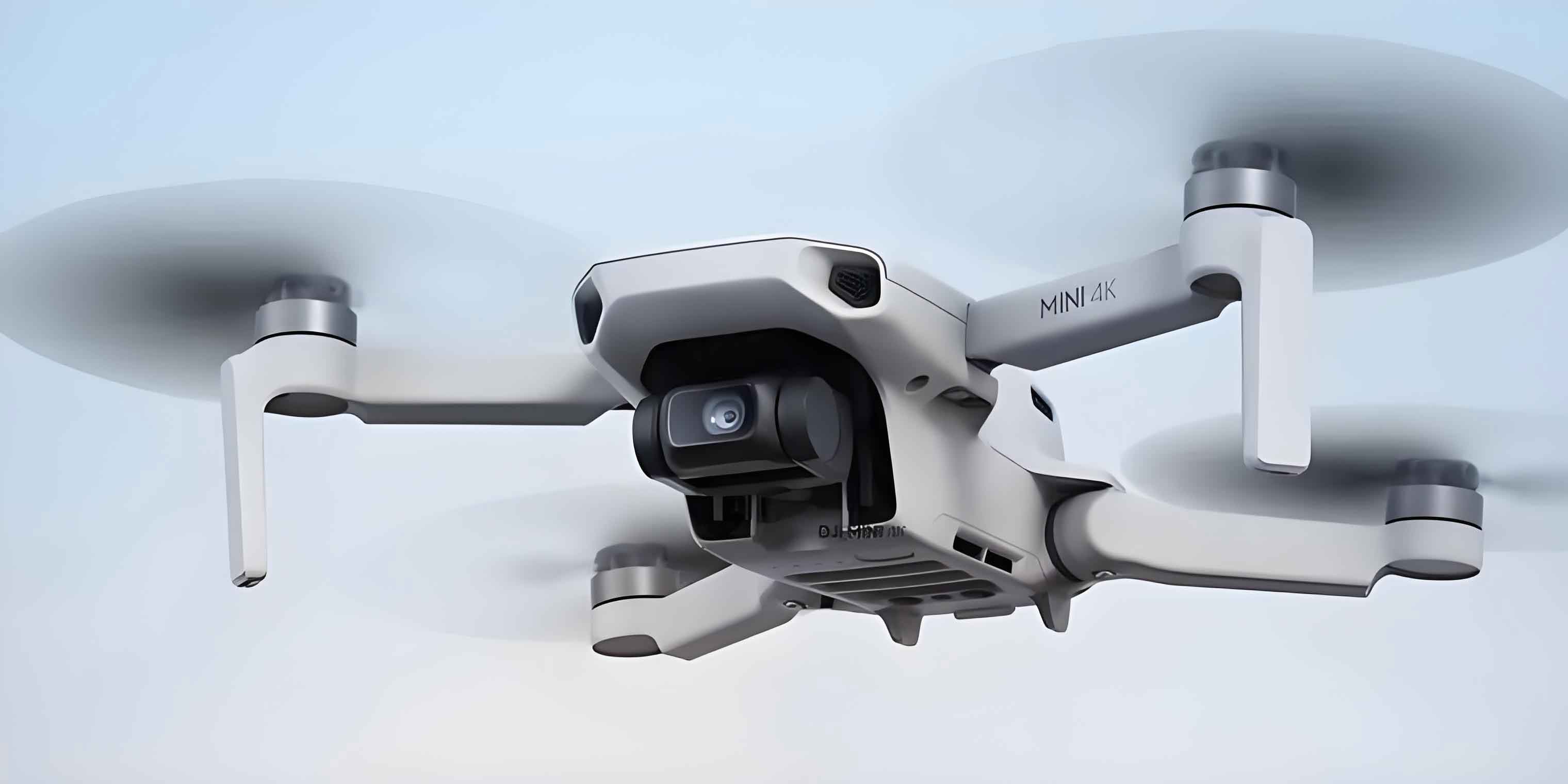
The foundation of our quadrotor Unmanned Aerial Vehicle design begins with a thorough understanding of its control principles and physical modeling. We adopt an X-configuration layout for the drone, which efficiently distributes lift forces from four rotors. In this setup, motor A is positioned at the front-left, with motors B, C, and D arranged clockwise. Motors A and C rotate clockwise, while motors B and D rotate counterclockwise, ensuring torque balance. Additionally, motors A and C are fitted with reverse propellers, and motors B and D with standard propellers, generating upward lift for agile maneuverability. This configuration is critical for minimizing instability and enhancing the drone’s responsiveness in dynamic environments, a key aspect of modern drone technology.
To model the spatial state of the quadrotor Unmanned Aerial Vehicle, we define its position and orientation using three-dimensional coordinates and Euler angles. The initial state is set at the coordinate origin during take-off, with Euler angles serving as the baseline. This allows for precise tracking of the drone’s movements and provides a basis for control algorithms. The dynamics of the Unmanned Aerial Vehicle can be described using Newton-Euler equations, where the forces and moments are analyzed in a simplified 2D plane. The lift forces from the four rotors, combined with gravity, determine the drone’s acceleration and orientation. For instance, in the xOz plane, a pitch angle increase of θ results in a force component along the x-axis given by \( F \sin \theta \), which influences lateral acceleration. Similarly, in the yOz plane, a roll angle increase of ψ produces a y-axis force component of \( F \sin \psi \). The vertical force component is expressed as \( F \cos \theta \cos \psi \), leading to the overall force balance equations:
$$ \sum F_x = F (\sin \theta \cos \psi) $$
$$ \sum F_y = F (\sin \psi) $$
$$ \sum F_z = F (\cos \theta \cos \psi) – mg $$
where \( F \) is the total lift force, \( m \) is the mass of the drone, and \( g \) is gravitational acceleration. These equations are fundamental to predicting the motion of the Unmanned Aerial Vehicle and form the core of our control strategy.
In terms of moment analysis, the quadrotor drone rotates about an axis passing through its center of mass. The angular momentum is governed by the rotors’ moments of inertia and angular velocities, adhering to the conservation of angular momentum. By having two rotors spin clockwise and two counterclockwise, we achieve a balanced system with zero net angular momentum when stationary, enabling stable attitude control. The moments can be derived from the rotor forces and their positions relative to the center of mass. For example, the roll moment \( M_\phi \) is influenced by the difference in forces between the left and right rotors, while the pitch moment \( M_\theta \) depends on the front and rear rotor force differences. The yaw moment \( M_\psi \) arises from the counter-torque effects of the rotors. This is summarized in the following moment equations:
$$ M_\phi = l (F_2 – F_4) $$
$$ M_\theta = l (F_1 – F_3) $$
$$ M_\psi = k (-\omega_1^2 + \omega_2^2 – \omega_3^2 + \omega_4^2) $$
where \( l \) is the arm length from the center to each rotor, \( F_i \) are the individual rotor forces, \( \omega_i \) are the angular velocities, and \( k \) is a torque constant. These principles are essential for designing a robust control system for the Unmanned Aerial Vehicle, ensuring it can handle various flight conditions.
Moving to the system design, we selected specific hardware modules to realize our quadrotor drone. The core processing unit is the STM32F103C8T6 microcontroller, which features a 32-bit Cortex-M3 core, 256 KB of flash memory, and a 72 MHz clock speed. This microcontroller supports numerous peripherals, such as GPIO, timers, IIC, and SPI interfaces, making it ideal for handling sensor data and control tasks in drone technology applications. For attitude sensing, we integrated the MPU6050 module, which includes a three-axis accelerometer and gyroscope. This sensor provides real-time angular velocity and acceleration data, processed through its built-in DMP library to offload computation from the main controller. Additionally, the BMP180 barometric pressure sensor is used for altitude estimation, offering high accuracy and low power consumption. Wireless communication is handled by the NRF24L01 module, a low-power 2.4 GHz transceiver that enables real-time control and data transmission to a ground station. These components are summarized in the table below, highlighting their roles in the Unmanned Aerial Vehicle system.
| Module | Specifications | Function in UAV |
|---|---|---|
| STM32F103C8T6 | 32-bit Cortex-M3, 256 KB flash, 72 MHz | Main control processing |
| MPU6050 | 3-axis accelerometer and gyroscope, IIC communication | Attitude sensing and data fusion |
| BMP180 | Capacitive digital pressure sensor, low power | Altitude measurement |
| NRF24L01 | 2.4 GHz transceiver, 2 Mbit/s data rate | Wireless communication and control |
The control logic of our quadrotor Unmanned Aerial Vehicle centers on the STM32 microcontroller, which processes data from sensors and executes control algorithms. We employ a distributed processing approach, where sub-tasks are handled by dedicated microprocessors to reduce the main controller’s load. For instance, the MPU6050 and BMP180 sensors provide real-time position and attitude information, while a PS2 remote controller sends commands via SPI interface. Pulse-width modulation (PWM) signals are used to regulate motor speeds, ensuring precise thrust control. To enhance data accuracy, we implemented a Kalman filter algorithm, which combines historical data with current measurements to estimate the true state of the drone. The Kalman filter operates based on the state update equation:
$$ \hat{x}_k = A \hat{x}_{k-1} + B u_k + K_k (z_k – H A \hat{x}_{k-1}) $$
where \( \hat{x}_k \) is the estimated state vector at time \( k \), \( A \) is the state transition matrix, \( B \) is the control input matrix, \( u_k \) is the control vector, \( K_k \) is the Kalman gain, \( z_k \) is the measurement vector, and \( H \) is the observation matrix. This filtering technique significantly reduces noise and improves the stability of the Unmanned Aerial Vehicle during flight, as demonstrated in simulations where the filtered data closely tracks the actual values with minimal deviation.
For control strategy, we developed a cascade PID system that consists of an outer loop for angle control and an inner loop for angular rate control. This structure allows for precise attitude regulation by first computing the desired angles and then adjusting the angular velocities accordingly. The cascade PID control law can be expressed as:
$$ \text{Outer Loop: } u_{\text{outer}} = K_{P,\text{outer}} e_{\theta} + K_{I,\text{outer}} \int e_{\theta} dt + K_{D,\text{outer}} \frac{de_{\theta}}{dt} $$
$$ \text{Inner Loop: } u_{\text{inner}} = K_{P,\text{inner}} e_{\omega} + K_{I,\text{inner}} \int e_{\omega} dt + K_{D,\text{inner}} \frac{de_{\omega}}{dt} $$
where \( e_{\theta} \) is the angle error (target angle minus measured angle), \( e_{\omega} \) is the angular rate error, and \( K_P \), \( K_I \), \( K_D \) are the proportional, integral, and derivative gains, respectively. In our implementation, we set the outer loop parameters to \( K_{P,\text{outer}} = 5.0 \), \( K_{I,\text{outer}} = 0 \), and \( K_{D,\text{outer}} = 0 \) to limit the maximum angular rate and enhance response to large attitude changes. For the inner loop, we focused on tuning the pitch and roll angles through extensive testing. The proportional gain \( K_{P,\text{inner}} \) was adjusted to achieve steady oscillation around the target value; we found that \( K_{P,\text{inner}} = 1.15 \) provided optimal performance. Introducing the derivative gain \( K_{D,\text{inner}} = 4.00 \) reduced oscillations and stabilized the response. Finally, the integral gain \( K_{I,\text{inner}} = 0.015 \) was added to eliminate steady-state error, resulting in a balanced system with minimal overshoot and fast response. The table below summarizes the PID parameters used in our quadrotor Unmanned Aerial Vehicle.
| Control Loop | Parameter | Value | Effect |
|---|---|---|---|
| Outer (Angle) | K_P | 5.0 | Limits max angular rate |
| Outer (Angle) | K_I | 0 | No integral action |
| Outer (Angle) | K_D | 0 | No derivative action |
| Inner (Angular Rate) | K_P | 1.15 | Ensures stable oscillation |
| Inner (Angular Rate) | K_I | 0.015 | Eliminates steady-state error |
| Inner (Angular Rate) | K_D | 4.00 | Reduces oscillations |
| Yaw Control | K_P | 0.5 | Maintains static stability |
| Yaw Control | K_I | 0 | No integral action |
| Yaw Control | K_D | 0 | No derivative action |
In terms of yaw control, the quadrotor Unmanned Aerial Vehicle does not require dynamic stability but focuses on static characteristics. We set the yaw PID parameters to \( K_P = 0.5 \), \( K_I = 0 \), and \( K_D = 0 \), allowing the drone to maintain a fixed heading with an error of approximately ±1°. This simplification reduces computational overhead while ensuring adequate performance for typical flight missions. The overall cascade PID system demonstrates a effective balance between response speed and stability, enabling the drone to handle complex maneuvers and environmental disturbances. Through iterative testing, we validated that this control approach minimizes errors and enhances the reliability of the Unmanned Aerial Vehicle in practical scenarios.
To further optimize the control system, we incorporated output and integral clamping in the cascade PID loops. This prevents windup and excessive overshoot by limiting the maximum values of the control outputs. For example, the outer loop output is clamped to restrict the commanded angular rate, and the inner loop integral term is limited to avoid large accumulations. The dynamic response after clamping shows reduced oscillations and faster settling times, as evidenced by our experimental data where the pitch and roll angles stabilized within acceptable bounds. The effectiveness of our design is captured by the transfer function of the closed-loop system, which can be approximated as:
$$ G(s) = \frac{K_P s + K_I}{s^2 + K_D s + K_P} $$
for a simplified second-order model, where \( s \) is the Laplace variable. This model helps in predicting the system’s behavior and fine-tuning the parameters for different flight conditions.
In conclusion, our work on the quadrotor Unmanned Aerial Vehicle integrates advanced drone technology with practical engineering solutions. By re-deriving the dynamics model and implementing a cascade PID control system with Kalman filtering, we have achieved a high level of flight stability and precision. The use of commercial off-the-shelf components, such as the STM32 microcontroller and MPU6050 sensor, makes this approach accessible and scalable for various applications in drone technology. Future directions include incorporating machine learning for adaptive control and expanding the system for autonomous navigation in GPS-denied environments. This project underscores the potential of open-source frameworks in advancing Unmanned Aerial Vehicle capabilities, contributing to safer and more efficient aerial systems. Through continuous innovation, we believe that drone technology will play an increasingly vital role in addressing global challenges, from disaster response to environmental monitoring.