
In recent decades, unmanned aerial vehicles (UAVs) have played a crucial role in various civil and military applications, such as surveillance, disaster relief, and aerial photography. However, conventional UAVs face limitations: fixed-wing drones require runways for takeoff and landing and cannot hover, while traditional quadrotor drones suffer from low forward flight speed and short endurance due to their design. To address these challenges, we have developed a novel hybrid UAV that combines the vertical takeoff and landing (VTOL) capabilities of a quadrotor drone with the high-speed, long-endurance flight of a fixed-wing aircraft. This vehicle, which we refer to as a quad tilt-rotor (QTR) drone, features tilting rotors and wings to enable seamless transitions between flight modes. In this article, we present the design, modeling, and control of this quadrotor drone, with a focus on attitude control during the critical transition phase. We employ a Robust Servo Linear Quadratic Regulator (RSLQR) approach to ensure stability and performance across varying tilt angles, and we validate our methods through simulation experiments.
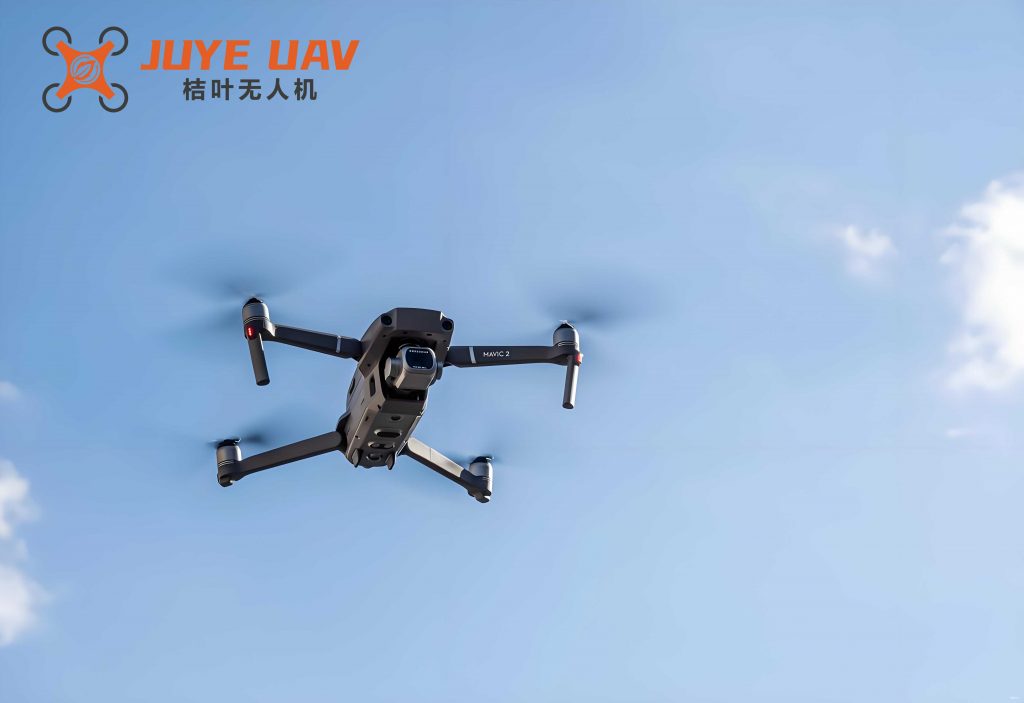
Our quad tilt-rotor drone is designed with a compact structure consisting of two carbon fiber plates that house the flight controller, sensors, and battery. The drone features four rotors mounted on tilting wings, which are actuated by servos via linkage mechanisms. This design allows the quadrotor drone to operate in three distinct modes: vertical mode (wings perpendicular to the fuselage for VTOL and hovering), transition mode (wings tilting to change flight mode), and horizontal mode (wings at a fixed angle for high-speed forward flight). To minimize aerodynamic interference during vertical flight, we selected a symmetric airfoil (NACA0009) for the wings, which provides negligible lift at zero angle of attack. The key parameters of our quadrotor drone are summarized in Table 1, derived from a detailed 3D model.
| Symbol | Description | Value |
|---|---|---|
| \( M \) | Mass of the quadrotor drone | 1.4 kg |
| \( l_s \) | Lateral distance from motor to center of mass | 0.2 m |
| \( l_l \) | Longitudinal distance from motor to center of mass | 0.2 m |
| \( I_x \) | Moment of inertia about x-axis | 0.012 kg·m² |
| \( I_y \) | Moment of inertia about y-axis | 0.028 kg·m² |
| \( I_z \) | Moment of inertia about z-axis | 0.036 kg·m² |
| \( J_{\text{prop}} \) | Moment of inertia of a single rotor | 6×10⁻⁵ kg·m² |
| \( A \) | Effective area of a single wing | 0.0452 m² |
To develop a control system for this quadrotor drone, we first establish a comprehensive dynamic model. We assume the drone is a rigid body with six degrees of freedom, and we neglect the aerodynamic interaction between rotor wash and wing surfaces for simplicity. Two coordinate systems are defined: the world frame \( W: (O_w, x_w, y_w, z_w) \) with North-East-Down (NED) orientation, and the body frame \( B: (O_b, x_b, y_b, z_b) \) with forward-right-down orientation. The position and linear velocity in the world frame are given by \( \mathbf{P} = [X, Y, Z]^T \) and \( \mathbf{v}_w = \dot{\mathbf{P}} = [\dot{X}, \dot{Y}, \dot{Z}]^T \), respectively. The attitude angles (roll \( \phi \), pitch \( \theta \), yaw \( \psi \)) and angular rates are defined as \( \boldsymbol{\alpha}_w = [\phi, \theta, \psi]^T \) and \( \boldsymbol{\Omega}_w = \dot{\boldsymbol{\alpha}}_w = [\dot{\phi}, \dot{\theta}, \dot{\psi}]^T \). The rotation matrix from body to world frame is:
$$ \mathbf{R}_{wb} = \begin{bmatrix} c\psi c\theta & c\psi s\theta s\phi – s\psi c\phi & c\psi s\theta c\phi + s\psi s\phi \\ s\psi c\theta & s\psi s\theta s\phi + c\psi c\phi & s\psi s\theta c\phi – c\psi s\phi \\ -s\theta & c\theta s\phi & c\theta c\phi \end{bmatrix} $$
where \( c(\cdot) \) and \( s(\cdot) \) denote cosine and sine functions. The linear velocity in the body frame is \( \mathbf{v}_b = \mathbf{R}_{wb}^T \mathbf{v}_w = [v_x, v_y, v_z]^T \), and the angular velocity in the body frame \( \boldsymbol{\Omega}_b = [p, q, r]^T \) relates to \( \dot{\boldsymbol{\alpha}}_w \) through:
$$ \begin{bmatrix} p \\ q \\ r \end{bmatrix} = \begin{bmatrix} 1 & 0 & -s\theta \\ 0 & c\phi & s\phi c\theta \\ 0 & -s\phi & c\phi c\theta \end{bmatrix} \begin{bmatrix} \dot{\phi} \\ \dot{\theta} \\ \dot{\psi} \end{bmatrix} $$
Using Newton-Euler formulation, the dynamics of the quadrotor drone are expressed as:
$$ \begin{bmatrix} m\mathbf{I}_{3\times3} & \mathbf{0}_{3\times3} \\ \mathbf{0}_{3\times3} & \mathbf{I}_b \end{bmatrix} \begin{bmatrix} \dot{\mathbf{v}}_b \\ \dot{\boldsymbol{\Omega}}_b \end{bmatrix} + \begin{bmatrix} \boldsymbol{\Omega}_b \times (m\mathbf{v}_b) \\ \boldsymbol{\Omega}_b \times (\mathbf{I}_b \boldsymbol{\Omega}_b) \end{bmatrix} = \begin{bmatrix} \mathbf{F}_t \\ \mathbf{M}_t \end{bmatrix} $$
Here, \( m \) is the mass, \( \mathbf{I}_b = \text{diag}(I_x, I_y, I_z) \) is the inertia matrix, \( \mathbf{F}_t \) is the total force, and \( \mathbf{M}_t \) is the total moment acting on the quadrotor drone. The total force combines rotor thrust \( \mathbf{F}_{\text{th}} \), aerodynamic forces from wings \( \mathbf{F}_w \), and gravity \( \mathbf{F}_g \):
$$ \mathbf{F}_t = \mathbf{R}_{wb} (\mathbf{F}_{\text{th}} + \mathbf{F}_w) + \mathbf{F}_g $$
The rotor thrust vector depends on the rotor speeds \( \omega_i \) and tilt angle \( \theta_w \):
$$ \mathbf{F}_{\text{th}} = \begin{bmatrix} 0 \\ 0 \\ -k(\omega_1^2 + \omega_2^2 + \omega_3^2 + \omega_4^2) \end{bmatrix} $$
where \( k \) is the rotor lift coefficient. The wing aerodynamic forces for each wing \( i \) are calculated based on the angle of attack \( \alpha \) and airspeed \( v_\alpha = \sqrt{v_x^2 + v_z^2} \):
$$ \begin{bmatrix} F_{D_i} \\ F_{L_i} \end{bmatrix} = \frac{1}{2} \rho A v_\alpha^2 \begin{bmatrix} c_D(\alpha) \\ c_L(\alpha) \end{bmatrix} $$
with \( \rho \) as air density, \( c_D \) and \( c_L \) as drag and lift coefficients. The total moment \( \mathbf{M}_t \) includes contributions from rotor thrust \( \mathbf{M}_{\text{th}} \), wing aerodynamics \( \mathbf{M}_w \), and gyroscopic effects \( \mathbf{M}_{\text{gyro}} \):
$$ \mathbf{M}_t = \mathbf{M}_{\text{th}} + \mathbf{M}_w + \mathbf{M}_{\text{gyro}} $$
The control inputs for this quadrotor drone are defined as total thrust \( u_1 \), roll moment \( u_2 \), pitch moment \( u_3 \), and yaw moment \( u_4 \), derived from rotor speeds:
$$ \begin{aligned} u_1 &= k(\omega_1^2 + \omega_2^2 + \omega_3^2 + \omega_4^2) \\ u_2 &= k l_s (-\omega_1^2 + \omega_2^2 + \omega_3^2 – \omega_4^2) \\ u_3 &= k l_l (\omega_1^2 + \omega_2^2 – \omega_3^2 – \omega_4^2) \\ u_4 &= \lambda (-\omega_1^2 – \omega_2^2 + \omega_3^2 + \omega_4^2) \end{aligned} $$
where \( \lambda \) is the rotor torque coefficient. The full nonlinear dynamics of the quadrotor drone can be summarized as:
$$ \begin{aligned} \ddot{X} &= \frac{1}{m} [c\psi c\theta u_1 + W_x] \\ \ddot{Y} &= \frac{1}{m} [s\psi c\theta u_1 + W_y] \\ \ddot{Z} &= \frac{1}{m} [-s\theta u_1 + mg + W_z] \\ \dot{p} &= \frac{1}{I_x} [u_2 s\theta_w + u_4 c\theta_w + (I_y – I_z)qr – J_{\text{prop}} q \omega_p] \\ \dot{q} &= \frac{1}{I_y} [u_3 c\theta_w + (I_z – I_x)pr + J_{\text{prop}} p \omega_p] \\ \dot{r} &= \frac{1}{I_z} [-u_3 s\theta_w + u_4 c\theta_w + (I_x – I_y)pq] \end{aligned} $$
with \( W_x, W_y, W_z \) as aerodynamic force components and \( \omega_p = \sum \eta_i \omega_i \) representing the gyroscopic term.
The transition phase, where the quadrotor drone tilts its wings from vertical to horizontal orientation, poses significant control challenges due to varying dynamics. To address this, we design an attitude controller based on Robust Servo LQR (RSLQR) theory, which offers robustness against model uncertainties and ensures accurate tracking of desired attitudes. For each attitude channel (roll, pitch, yaw), we linearize the dynamics around a trim point at a 45° tilt angle, representing a mid-transition state. The state vector for the roll channel, for example, is \( \mathbf{x} = [\phi, p]^T \), with linearized state equation:
$$ \dot{\mathbf{x}} = \mathbf{A} \mathbf{x} + \mathbf{B} u_2 $$
and output equation \( y = \mathbf{C} \mathbf{x} + \mathbf{D} u_2 \). To incorporate integral action for error tracking, we augment the system with an error state \( e = y – r \), where \( r \) is the reference signal. The augmented system becomes:
$$ \dot{\mathbf{z}} = \tilde{\mathbf{A}} \mathbf{z} + \tilde{\mathbf{B}} \mu $$
with \( \mathbf{z} = [e, \mathbf{x}^T]^T \) and \( \mu = \dot{u}_2 \). We then solve the infinite-horizon LQR problem by minimizing the cost function:
$$ J = \int_0^\infty (\mathbf{z}^T \mathbf{Q} \mathbf{z} + \mu^T R \mu) d\tau $$
where \( \mathbf{Q} \geq 0 \) and \( R > 0 \) are weighting matrices. The algebraic Riccati equation yields the optimal feedback gain \( \mathbf{K}_c \), leading to the control law:
$$ \mu = -\mathbf{K}_c \mathbf{z} $$
After integration, the actual control input for the roll channel is derived as:
$$ u = -\mathbf{K}_x \mathbf{x} – K_i \int e \, dt $$
with \( \mathbf{K}_x \) and \( K_i \) obtained from \( \mathbf{K}_c \). Similar designs are applied to pitch and yaw channels. The weighting matrices for each channel are selected to balance performance and robustness, as shown in Table 2.
| Channel | State Weighting Matrix \( \mathbf{Q} \) | Control Weighting \( R \) |
|---|---|---|
| Roll | \(\text{diag}(100, 2, 0.1)\) | \(1 \times 10^{-4}\) |
| Pitch | \(\text{diag}(150, 2, 0.1)\) | \(1 \times 10^{-4}\) |
| Yaw | \(\text{diag}(100, 5, 0.1)\) | \(1 \times 10^{-4}\) |
For the transition phase, we devise a control strategy that defines the tilt angle trajectory based on the flight envelope of the quadrotor drone. The flight envelope, computed from rotor thrust and aerodynamic data, outlines the feasible speed-tilt angle combinations. We plan a two-stage tilt trajectory to ensure stable altitude maintenance: first, tilt from 90° to 40° at 25°/s over 2 seconds, accelerating to 9 m/s; second, tilt from 40° to 10° at 15°/s over 2 seconds, accelerating to 13 m/s. This trajectory, plotted against the flight envelope, provides sufficient margin for smooth transition, as summarized in Table 3.
| Stage | Tilt Angle Change | Duration | Forward Speed |
|---|---|---|---|
| 1 | 90° to 40° | 2 s | 0 to 9 m/s |
| 2 | 40° to 10° | 2 s | 9 to 13 m/s |
We conduct simulation experiments to evaluate the performance of our RSLQR controller for the quadrotor drone, comparing it with a conventional PID controller. The tests include step responses at specific tilt angles (90°, 60°, 30°, 10°) and attitude maintenance during continuous tilt transitions. For step responses, the RSLQR controller shows superior performance across all channels, with faster settling times and minimal overshoot compared to PID. For instance, in the pitch channel at 90° tilt, the RSLQR achieves settling within 1 second, while PID takes over 2 seconds. Similar results are observed for roll and yaw channels, demonstrating the robustness of RSLQR to varying tilt angles. During continuous tilt transitions, the RSLQR controller maintains attitude angles within ±0.01°, ensuring stability throughout the phase. These results highlight the effectiveness of our approach for controlling this advanced quadrotor drone.
In conclusion, we have presented a comprehensive study on the design and control of a quad tilt-rotor drone, focusing on attitude control during the transition phase. Our dynamic model captures the complex interactions between rotor thrust and aerodynamic forces, enabling precise control design. The RSLQR-based controller provides robust attitude tracking across all flight modes, outperforming traditional PID methods in simulations. The transition strategy, based on a planned tilt trajectory, ensures smooth mode switching. This work lays a foundation for further development of hybrid quadrotor drones, combining VTOL agility with fixed-wing efficiency. Future efforts will involve hardware implementation and flight testing to validate our designs in real-world scenarios.