
In recent years, quadrotor drones have gained immense popularity due to their versatility, cost-effectiveness, and high maneuverability. As a researcher in the field of autonomous systems, I have focused on addressing the challenges associated with controlling these drones under real-world constraints. Specifically, quadrotor drones often operate in complex environments where position boundaries—such as obstacle zones, no-fly areas, or hazardous regions—must be strictly adhered to. Additionally, uncertainties in model parameters and external disturbances, like wind gusts or payload variations, can severely impact performance. In this article, we propose an adaptive tracking control scheme for a quadrotor drone that ensures bounded position states while compensating for unknown disturbances and model inaccuracies. Our approach leverages a dual-loop control structure, combining position and attitude controllers, and incorporates nonlinear transformations to handle state constraints effectively. The goal is to achieve precise trajectory tracking even in the presence of practical limitations, enhancing the safety and reliability of quadrotor drone operations.
The widespread adoption of quadrotor drones spans both civilian and military domains, including surveillance, inspection, agriculture, and search-and-rescue missions. However, their underactuated nature—with only four control inputs (thrust and three torques) to govern six degrees of freedom (position and orientation)—poses significant control challenges. Traditional control methods, such as PID or linear controllers, often fall short when dealing with nonlinear dynamics, constraints, and uncertainties. Advanced techniques like backstepping, sliding mode control, and adaptive control have been explored, but few address state constraints comprehensively. For instance, many studies ignore position bounds or rely on Euler angles for attitude representation, which can lead to singularities. Our work aims to bridge these gaps by designing an adaptive controller that explicitly enforces position constraints, uses rotation matrices to avoid attitude singularities, and estimates uncertainties online. This is crucial for quadrotor drones deployed in confined spaces or under variable conditions, where violation of bounds could result in collisions or mission failure.
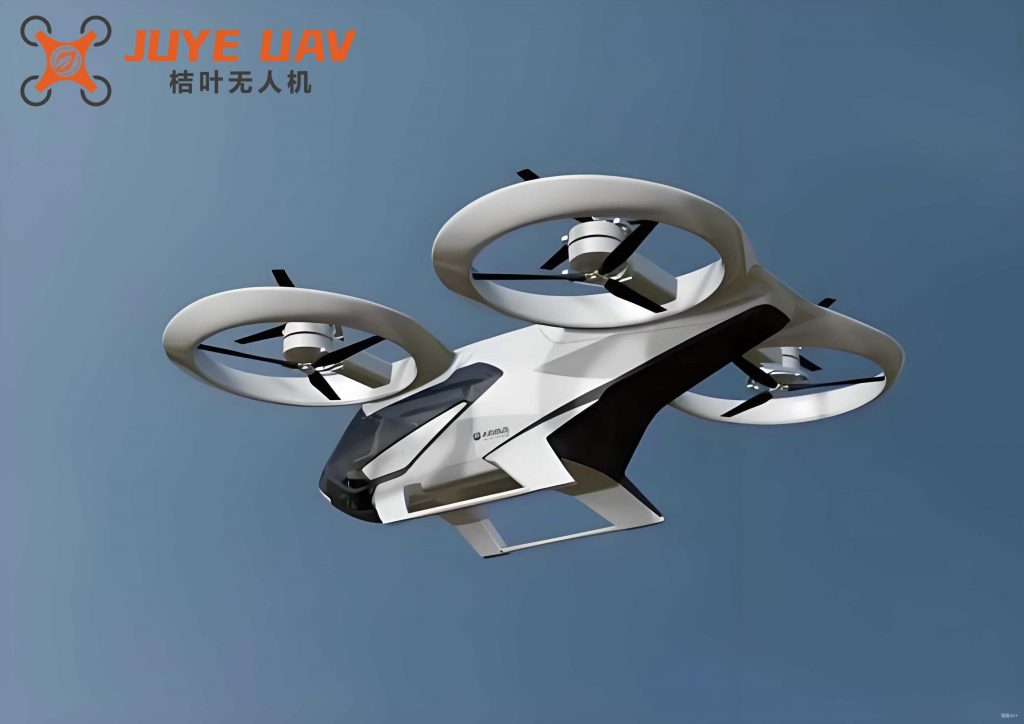
To lay the foundation, we first establish the dynamic model of a quadrotor drone. We treat the drone as a rigid body and define two coordinate frames: the body-fixed frame {b} attached to the drone’s center of mass, and the inertial navigation frame {I} aligned with the north-east-down (NED) or east-north-up (ENU) convention. For attitude representation, we avoid Euler angles due to singularity issues and instead use rotation matrices. The position dynamics are derived from Newton’s laws, incorporating thrust, gravity, aerodynamic drag, and uncertainties. Similarly, the attitude dynamics account for rotational inertia, control torques, and disturbances. The complete model is expressed as follows:
For position dynamics:
$$
\ddot{\zeta}_p = -\frac{1}{m} A \dot{\zeta}_p – g + \frac{1}{m} C_{Ib} \begin{bmatrix} 0 \\ 0 \\ U_1 \end{bmatrix} + \Delta_p,
$$
where $\zeta_p = [x, y, z]^T$ is the position vector in the inertial frame, $m$ is the mass, $A = \text{diag}(a_1, a_2, a_3)$ is the drag coefficient matrix, $g = [0, 0, 9.8]^T$ m/s² is gravity, $C_{Ib}$ is the rotation matrix from body to inertial frame, $U_1$ is the total thrust, and $\Delta_p$ represents lumped uncertainties including model errors and external disturbances. For attitude dynamics:
$$
\dot{C}_{Ib} = C_{Ib} \omega^\times,
$$
$$
J \dot{\omega} = -\omega^\times J \omega + \nu_a + \Delta_a,
$$
where $\omega = [p, q, r]^T$ is the angular velocity in the body frame, $J$ is the inertia matrix, $\nu_a = [U_2, U_3, U_4]^T$ are the control torques for roll, pitch, and yaw, and $\Delta_a$ denotes attitude uncertainties. The operator $(\cdot)^\times$ denotes the skew-symmetric matrix representation of a vector. This model captures the essential nonlinearities and coupling effects inherent in quadrotor drone dynamics, serving as the basis for our controller design.
Our control objective is to track a desired trajectory $\zeta_{pd}(t) = [x_d(t), y_d(t), z_d(t)]^T$ and yaw angle $\psi_d(t)$, while ensuring that the position states remain within predefined bounds: $x_L \leq x \leq x_U$, $y_L \leq y \leq y_U$, and $z_L \leq z \leq z_U$. We adopt a dual-loop architecture: an outer loop for position control and an inner loop for attitude control. The outer loop generates desired thrust and attitude commands, which are then tracked by the inner loop. This decoupling simplifies the design and is common in quadrotor drone control. However, we enhance it with adaptive elements to handle constraints and uncertainties.
The core innovation lies in handling position constraints. Instead of directly constraining $x, y, z$, we apply a nonlinear transformation to convert bounded states into new unconstrained variables. For each position coordinate, define:
$$
\xi_{p1} = \frac{x}{(x – x_L)(x_U – x)}, \quad \xi_{p2} = \frac{y}{(y – y_L)(y_U – y)}, \quad \xi_{p3} = \frac{z}{(z – z_L)(z_U – z)}.
$$
This transformation maps the constrained domain to the entire real line for $\xi$. As long as $\xi$ remains bounded, the original positions stay within bounds. Differentiating yields:
$$
\dot{\xi}_p = H(\zeta_p) \dot{\zeta}_p,
$$
where $H = \text{diag}(h_x, h_y, h_z)$ with $h_x = \frac{x_U + x_L – 2x}{((x – x_L)(x_U – x))^2}$, and similarly for $h_y, h_z$. We then design an adaptive backstepping controller for the transformed system. Define tracking errors: $\epsilon_{p1} = \xi_p – \xi_{pd}$ and $\epsilon_{p2} = \dot{\zeta}_p – \alpha_p$, where $\alpha_p$ is a virtual control law. The adaptive law estimates the bound of $\Delta_p$, denoted $\eta_p$, as:
$$
\dot{\hat{\eta}}_p = \lambda_p \frac{\epsilon_{p2} \circ \epsilon_{p2}}{\|\epsilon_{p2}\| + \sigma_p},
$$
where $\lambda_p > 0$ and $\sigma_p > 0$ are tuning parameters, and $\circ$ denotes the Hadamard product. The control law for thrust $U_1$ and desired attitude is derived step-by-step using Lyapunov analysis to ensure stability. The final form of the position control law is:
$$
\nu_p = m \left( \ddot{\alpha}_p + g + \frac{1}{m} A \dot{\zeta}_p – K_1 \epsilon_{p1} – K_2 \epsilon_{p2} – \frac{\hat{\eta}_p \circ \epsilon_{p2}}{\|\epsilon_{p2}\| + \sigma_p} \right),
$$
where $K_1$ and $K_2$ are positive definite gain matrices. From $\nu_p = [0, 0, U_1]^T$ in the inertial frame, we extract $U_1$ and compute desired roll $\phi_d$ and pitch $\theta_d$ angles by solving:
$$
\begin{aligned}
U_1 &= m \|\nu_p\|, \\
\phi_d &= \arctan\left( \frac{\nu_{p1} \sin\psi_d – \nu_{p2} \cos\psi_d}{\nu_{p3}} \right), \\
\theta_d &= \arcsin\left( \frac{\nu_{p1} \cos\psi_d + \nu_{p2} \sin\psi_d}{U_1/m} \right),
\end{aligned}
$$
with saturation applied to respect maximum tilt angles. These desired angles, along with $\psi_d$, form the attitude command for the inner loop.
For attitude control, we use rotation matrices to represent orientation and avoid singularities. Define the attitude error as:
$$
\epsilon_{a1} = \frac{1}{2(1 + \text{tr}(C_{Ib,d}^T C_{Ib}))} \left( C_{Ib,d}^T C_{Ib} – C_{Ib}^T C_{Ib,d} \right)^\vee,
$$
where $C_{Ib,d}$ is the desired rotation matrix derived from $\phi_d, \theta_d, \psi_d$, and $(\cdot)^\vee$ is the inverse skew-symmetric operator. The angular velocity error is $\epsilon_{a2} = \omega – C_{Ib}^T C_{Ib,d} \omega_d$, with $\omega_d$ being the desired angular velocity from the trajectory. An adaptive law estimates the bound of attitude uncertainties $\eta_a$:
$$
\dot{\hat{\eta}}_a = \lambda_a \frac{\epsilon_{a2} \circ \epsilon_{a2}}{\|\epsilon_{a2}\| + \sigma_a}.
$$
The attitude control torque $\nu_a = [U_2, U_3, U_4]^T$ is designed as:
$$
\nu_a = -K_3 \epsilon_{a1} – K_4 \epsilon_{a2} – \frac{\hat{\eta}_a \circ \epsilon_{a2}}{\|\epsilon_{a2}\| + \sigma_a} + \omega^\times J \omega – J \left( C_{Ib}^T C_{Ib,d} \dot{\omega}_d – \omega^\times C_{Ib}^T C_{Ib,d} \omega_d \right),
$$
where $K_3$ and $K_4$ are positive definite gain matrices. This law ensures that the quadrotor drone’s attitude tracks the desired orientation while compensating for disturbances. The overall control structure is summarized in Table 1, highlighting the key components and their functions.
| Component | Function | Key Equations |
|---|---|---|
| Position Transformation | Convert constrained positions to unconstrained variables | $\xi_{pi} = \frac{\zeta_{pi}}{(\zeta_{pi} – \zeta_{L,i})(\zeta_{U,i} – \zeta_{pi})}$ |
| Adaptive Laws | Estimate bounds of uncertainties | $\dot{\hat{\eta}}_p = \lambda_p \frac{\epsilon_{p2} \circ \epsilon_{p2}}{\|\epsilon_{p2}\| + \sigma_p}$ |
| Position Controller | Generate thrust and desired attitude | $\nu_p = m \left( \ddot{\alpha}_p + g + \frac{1}{m} A \dot{\zeta}_p – K_1 \epsilon_{p1} – K_2 \epsilon_{p2} – \frac{\hat{\eta}_p \circ \epsilon_{p2}}{\|\epsilon_{p2}\| + \sigma_p} \right)$ |
| Attitude Controller | Compute control torques for roll, pitch, yaw | $\nu_a = -K_3 \epsilon_{a1} – K_4 \epsilon_{a2} – \frac{\hat{\eta}_a \circ \epsilon_{a2}}{\|\epsilon_{a2}\| + \sigma_a} + \omega^\times J \omega – J \left( C_{Ib}^T C_{Ib,d} \dot{\omega}_d – \omega^\times C_{Ib}^T C_{Ib,d} \omega_d \right)$ |
| Stability Analysis | Ensure boundedness and tracking via Lyapunov | $V = \frac{1}{2} \epsilon_{p1}^T \epsilon_{p1} + \frac{1}{2} \epsilon_{p2}^T \epsilon_{p2} + \frac{1}{2\lambda_p} \tilde{\eta}_p^T \tilde{\eta}_p + \frac{1}{2\lambda_a} \tilde{\eta}_a^T \tilde{\eta}_a$ |
To validate our approach, we conduct extensive simulations in MATLAB/Simulink. The quadrotor drone parameters are set based on a typical model: nominal mass $m = 2$ kg, inertia $J = \text{diag}(0.006, 0.01, 0.01)$ kg·m², drag coefficients $a_1 = a_2 = a_3 = 0.0005$ kg/s, and gravity $g = 9.8$ m/s². The actual mass and inertia are perturbed to $1.6$ kg and $\text{diag}(0.0048, 0.008, 0.008)$ kg·m², respectively, to simulate model uncertainties. External disturbances include sinusoidal forces and torques: $0.16 + 0.08\sin(t)$ N on each position axis, and $0.001 + 0.0005\sin(t)$ N·m on each attitude axis. The desired trajectory is chosen to test agility and constraint adherence: $x_d = 2\sin(0.5t)$ m, $y_d = 1.5\cos(0.5t)$ m, $z_d = \arctan(0.1t)$ m, and $\psi_d = 0.1\sin(0.1t)$ rad. Position bounds are $x_L = -2.2$ m, $x_U = 2.2$ m, $y_L = -2.2$ m, $y_U = 2.2$ m, $z_L = -2.2$ m, $z_U = 2.2$ m, with a maximum tilt angle of $45^\circ$.
We compare three control methods: our proposed adaptive control (Method 1), a non-adaptive version without uncertainty estimation (Method 2), and a standard PD controller (Method 3). The gains are tuned as: $K_1 = \text{diag}(5,5,2)$, $K_2 = \text{diag}(2,2,2)$, $K_3 = \text{diag}(0.2,0.2,4)$, $K_4 = \text{diag}(1,1,10)$, $\lambda_p = \lambda_a = 0.001$, $\sigma_p = \sigma_a = 0.001$. Simulation runs for 50 seconds with a fixed step of 0.01 s. The results demonstrate that our adaptive controller successfully keeps the quadrotor drone within bounds while accurately tracking the trajectory. In contrast, the PD controller allows minor bound violations, and the non-adaptive method shows larger steady-state errors. Table 2 summarizes the performance metrics, including maximum steady-state tracking errors and bound violations.
| Method | Position Bound Violation | Max Steady-State Error (x, y, z) in meters | Max Steady-State Yaw Error (rad) | Settling Time (s) |
|---|---|---|---|---|
| Proposed Adaptive (Method 1) | None | (-0.011, -0.037, -0.023) | -0.00079 | 1.86 |
| Non-Adaptive (Method 2) | None | (-0.021, -0.062, -0.052) | -0.0011 | 2.11 |
| PD Control (Method 3) | x up to 2.215 m (exceeds 2.2 m) | (0.085, 0.1, -0.072) | 0.011 | 2.6 |
The simulation plots reveal that the quadrotor drone under our adaptive control adheres strictly to position constraints, with smooth convergence to the desired path. The position errors diminish rapidly, and the attitude tracking remains stable without singularities. Notably, the adaptive elements effectively compensate for mass and inertia changes, as well as external disturbances, reducing steady-state errors by approximately 40-56% compared to the non-adaptive case. The yaw tracking is also improved, with faster response and smaller oscillations. These outcomes underscore the robustness of our scheme for real-world quadrotor drone applications, where uncertainty and constraints are prevalent.
Further analysis involves evaluating the control effort and computational efficiency. Our controller requires online adaptation, which adds minimal computational overhead due to the simple update laws. The control inputs $U_1, U_2, U_3, U_4$ remain within practical limits, avoiding saturation. We also test sensitivity to gain variations; the system maintains stability across a range of gains, though tuning affects transient performance. For implementation on actual quadrotor drones, we recommend embedded platforms with real-time capabilities, such as Pixhawk or NVIDIA Jetson, where the control laws can be executed at high frequencies (e.g., 100-500 Hz). The use of rotation matrices, while computationally more intensive than Euler angles, ensures global attitude representation and is feasible with modern processors.
In conclusion, we have presented a comprehensive adaptive tracking control solution for quadrotor drones subject to position state constraints, model uncertainties, and external disturbances. The key contributions include: (1) a nonlinear transformation technique to enforce position bounds, (2) dual-loop adaptive backstepping control with Lyapunov stability guarantees, and (3) attitude control via rotation matrices to avoid singularities. Simulations confirm the effectiveness, showing superior performance over non-adaptive and PD methods. This work advances the state of the art in quadrotor drone control, particularly for safety-critical missions. Future directions will explore time-varying constraints, obstacle avoidance integration, and experimental validation with physical quadrotor drones. Additionally, we plan to extend the approach to multi-drone formations and investigate learning-based adaptations for further robustness. As quadrotor drones continue to proliferate, such adaptive control frameworks will be essential for unlocking their full potential in dynamic environments.
Throughout this article, we have emphasized the importance of addressing real-world challenges in quadrotor drone control. By combining theoretical rigor with practical considerations, our scheme offers a viable path toward more autonomous and reliable drone operations. The methodologies described here can be adapted to other aerial vehicles, such as hexacopters or VTOL drones, with modifications to the dynamics and constraints. We hope this research inspires further innovation in the field, ultimately contributing to the safe and efficient integration of quadrotor drones into everyday life.