
Quadcopters, as a class of unmanned aerial vehicles (UAVs), have gained significant attention due to their versatility, agility, and cost-effectiveness in applications such as military reconnaissance, agricultural monitoring, geological surveys, and power grid inspections. However, the quadcopter dynamics are characterized by high nonlinearity, strong coupling, and underactuation, making them susceptible to uncertainties, external disturbances, and actuator faults. These challenges can degrade performance and even lead to system instability. In particular, actuator faults, which may arise from propeller damage or motor inefficiencies, are critical issues that need to be addressed to ensure reliable operation. This paper proposes an adaptive sliding mode control (ASMC) approach based on radial basis function neural network (RBFNN) to achieve robust position and attitude tracking for a quadcopter under actuator faults, model uncertainties, and unknown disturbances. The control strategy divides the quadcopter dynamics into fully actuated and underactuated subsystems, designs controllers for each, and employs RBFNN to estimate aggregated disturbances, including uncertain parameters and faults. Lyapunov theory is used to prove system stability, and simulation results validate the effectiveness of the proposed method.
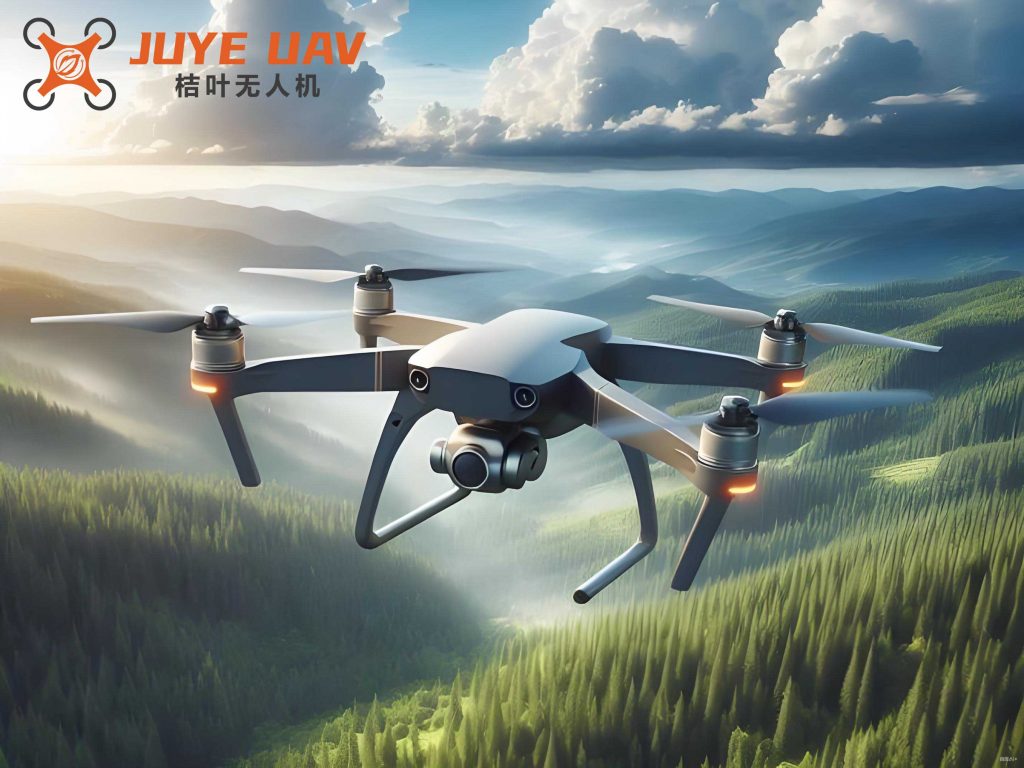
Introduction to Quadcopter Dynamics and Challenges
The quadcopter is a highly nonlinear system with six degrees of freedom (DOF) but only four control inputs, leading to underactuation. Its dynamics involve complex interactions between translational and rotational motions, which are influenced by factors such as aerodynamic drag, payload variations, and environmental disturbances. Actuator faults, such as partial or complete failure of rotors, further complicate control design. For instance, a fault in one rotor can cause imbalances in thrust and torque, affecting the entire system’s stability. Traditional control methods often struggle to handle these issues due to their reliance on accurate models and lack of adaptability. To address this, we integrate RBFNN into an adaptive sliding mode control framework, enabling online estimation of uncertainties and faults without requiring prior knowledge of their bounds. This approach enhances the quadcopter’s robustness and ensures precise tracking of desired trajectories and attitudes.
Mathematical Modeling of Quadcopter with Actuator Faults
The quadcopter dynamics are derived using the Euler-Lagrange formulation, considering a body-fixed frame and an inertial frame. The system states include position $(x, y, z)$ and attitude $(\phi, \theta, \psi)$, representing roll, pitch, and yaw angles, respectively. The equations of motion account for gravitational forces, aerodynamic effects, and disturbances. Actuator faults are modeled by introducing fault coefficients $\chi_i$ for each rotor $i$ (where $i = 1, 2, 3, 4$), which scale the nominal thrust $F_i$ as follows:
$$ F_{if} = (1 – \chi_i) F_i, \quad 0 \leq \chi_i \leq 1 $$
Here, $\chi_i = 0$ indicates no fault, $\chi_i = 1$ denotes complete failure, and $0 < \chi_i < 1$ represents partial fault. The overall dynamics with faults, uncertainties, and disturbances are expressed as:
$$ \ddot{x} = \frac{(\cos\phi \sin\theta \cos\psi + \sin\phi \sin\psi) u_1}{m} – \frac{K_1 \dot{x}}{m} + d_1 + u_x $$
$$ \ddot{y} = \frac{(\cos\phi \sin\theta \sin\psi – \sin\phi \cos\psi) u_1}{m} – \frac{K_2 \dot{y}}{m} + d_2 + u_y $$
$$ \ddot{z} = \frac{\cos\phi \cos\theta}{m} u_1 – g – \frac{K_3 \dot{z}}{m} + d_3 + u_z $$
$$ \ddot{\phi} = \frac{u_2}{I_x} + q r \frac{I_y – I_z}{I_x} + \frac{I_r}{I_x} q \Omega_r – \frac{K_4}{I_x} p^2 + d_4 + u_\phi $$
$$ \ddot{\theta} = \frac{u_3}{I_y} + p r \frac{I_z – I_x}{I_y} – \frac{I_r}{I_y} p \Omega_r – \frac{K_5}{I_y} q^2 + d_5 + u_\theta $$
$$ \ddot{\psi} = \frac{u_4}{I_z} + p q \frac{I_x – I_y}{I_z} – \frac{K_6}{I_z} r^2 + d_6 + u_\psi $$
where $m$ is the mass, $g$ is gravity, $I_x, I_y, I_z$ are moments of inertia, $K_i$ are drag coefficients, $d_i$ represent unmodeled dynamics and disturbances, and $u_i$ are control inputs. The fault terms $u_x, u_y, u_z, u_\phi, u_\theta, u_\psi$ capture the effects of actuator failures and are defined as:
$$ u_x = -\frac{(\cos\phi \sin\theta \cos\psi + \sin\phi \sin\psi)}{m + \Delta m} \sum_{i=1}^{4} \chi_i F_i $$
$$ u_y = -\frac{(\cos\phi \sin\theta \sin\psi – \sin\phi \cos\psi)}{m + \Delta m} \sum_{i=1}^{4} \chi_i F_i $$
$$ u_z = -\frac{\cos\phi \cos\theta}{m + \Delta m} \sum_{i=1}^{4} \chi_i F_i $$
$$ u_\phi = -\frac{l}{I_x + \Delta I_x} (\chi_2 F_2 – \chi_4 F_4) $$
$$ u_\theta = -\frac{l}{I_y + \Delta I_y} (\chi_1 F_1 – \chi_3 F_3) $$
$$ u_\psi = -\frac{k_t}{k_l (I_z + \Delta I_z)} \sum_{i=1}^{4} (-1)^{i+1} \chi_i F_i $$
Here, $\Delta m$, $\Delta I_x$, $\Delta I_y$, $\Delta I_z$ account for parameter uncertainties, $l$ is the arm length, and $k_t$, $k_l$ are thrust and torque coefficients. The aggregated disturbance terms $f_x, f_y, f_z, f_\phi, f_\theta, f_\psi$ combine uncertainties, disturbances, and fault effects, simplifying the control design.
Control System Design Using RBF Neural Network and Adaptive Sliding Mode
The control design partitions the quadcopter dynamics into two subsystems: the fully actuated subsystem (height $z$ and yaw $\psi$) and the underactuated subsystem (positions $x$, $y$ and attitudes $\phi$, $\theta$). For each subsystem, sliding mode control (SMC) is employed to achieve robustness, while RBFNN estimates the unknown disturbances adaptively.
Fully Actuated Subsystem Control
The fully actuated subsystem dynamics are:
$$ \ddot{z} = f_z + \frac{\cos\phi \cos\theta}{m} u_1 – g $$
$$ \ddot{\psi} = f_\psi + \frac{1}{I_z} u_4 $$
where $f_z$ and $f_\psi$ represent the total disturbances. Define tracking errors $e_z = z_d – z$ and $e_\psi = \psi_d – \psi$, and sliding surfaces:
$$ s_z = c_z e_z + \dot{e}_z, \quad s_\psi = c_\psi e_\psi + \dot{e}_psi $$
with $c_z > 0$ and $c_\psi > 0$. The reaching law is chosen as:
$$ \dot{s}_i = -\sigma_i s_i – \mu_i \tanh(s_i), \quad i = z, \psi $$
where $\sigma_i > 0$ and $\mu_i > 0$. The ideal controllers $u_1^*$ and $u_4^*$ are derived as:
$$ u_1^* = \frac{m}{\cos\phi \cos\theta} \left( -f_z + g + \ddot{z}_d + c_z \dot{e}_z + \sigma_z s_z + \mu_z \tanh(s_z) \right) $$
$$ u_4^* = I_z \left( -f_\psi + \ddot{\psi}_d + c_\psi \dot{e}_\psi + \sigma_\psi s_\psi + \mu_\psi \tanh(s_\psi) \right) $$
Since $f_z$ and $f_\psi$ are unknown, RBFNN is used to approximate them. The neural network output is:
$$ \hat{f}_i = \hat{W}_i^T h_i(x_i), \quad i = z, \psi $$
where $x_i = [e_i, \dot{e}_i]^T$ is the input, $\hat{W}_i$ is the estimated weight vector, and $h_i$ is the Gaussian activation function. The actual controllers become:
$$ u_1 = \frac{m}{\cos\phi \cos\theta} \left( g – \hat{f}_z – \hat{\varepsilon}_z + \ddot{z}_d + c_z \dot{e}_z + \sigma_z s_z + \mu_z \tanh(s_z) \right) $$
$$ u_4 = I_z \left( -\hat{f}_\psi – \hat{\varepsilon}_\psi + \ddot{\psi}_d + c_\psi \dot{e}_\psi + \sigma_\psi s_\psi + \mu_\psi \tanh(s_\psi) \right) $$
where $\hat{\varepsilon}_z$ and $\hat{\varepsilon}_\psi$ are estimates of the approximation error bounds. The adaptive laws for updating $\hat{W}_i$ and $\hat{\varepsilon}_i$ are:
$$ \dot{\hat{W}}_i = -\frac{1}{\gamma_1} s_i h_i(x_i), \quad \dot{\hat{\varepsilon}}_i = -\frac{1}{\gamma_2} s_i, \quad i = z, \psi $$
with $\gamma_1 > 0$ and $\gamma_2 > 0$.
Underactuated Subsystem Control
The underactuated subsystem dynamics are:
$$ \ddot{x} = \frac{(\cos\phi \sin\theta \cos\psi + \sin\phi \sin\psi) u_1}{m} + f_x $$
$$ \ddot{y} = \frac{(\cos\phi \sin\theta \sin\psi – \sin\phi \cos\psi) u_1}{m} + f_y $$
$$ \ddot{\phi} = \frac{u_2}{I_x} + f_\phi $$
$$ \ddot{\theta} = \frac{u_3}{I_y} + f_\theta $$
Sliding surfaces are defined as:
$$ s_\phi = c_1 \dot{e}_y + c_2 e_y + \dot{e}_\phi + c_3 e_\phi $$
$$ s_\theta = c_4 \dot{e}_x + c_5 e_x + \dot{e}_\theta + c_6 e_\theta $$
where $e_x = x_d – x$, $e_y = y_d – y$, $e_\phi = \phi_d – \phi$, $e_\theta = \theta_d – \theta$, and $c_1$ to $c_6$ are positive constants. The reaching law is:
$$ \dot{s}_i = -\sigma_i s_i – \mu_i \tanh(s_i), \quad i = \phi, \theta $$
The ideal controllers $u_2^*$ and $u_3^*$ are:
$$ u_2^* = I_x \left( c_1 \ddot{e}_y + c_2 \dot{e}_y + c_3 \dot{e}_\phi + \ddot{\phi}_d – f_\phi + \sigma_\phi s_\phi + \mu_\phi \tanh(s_\phi) \right) $$
$$ u_3^* = I_y \left( c_4 \ddot{e}_x + c_5 \dot{e}_x + c_6 \dot{e}_\theta + \ddot{\theta}_d – f_\theta + \sigma_\theta s_\theta + \mu_\theta \tanh(s_\theta) \right) $$
Using RBFNN approximation $\hat{f}_i = \hat{W}_i^T h_i(x_i)$ for $i = \phi, \theta$, the actual controllers are:
$$ u_2 = I_x \left( c_1 \ddot{e}_y + c_2 \dot{e}_y + c_3 \dot{e}_\phi + \ddot{\phi}_d – \hat{f}_\phi – \hat{\varepsilon}_\phi + \sigma_\phi s_\phi + \mu_\phi \tanh(s_\phi) \right) $$
$$ u_3 = I_y \left( c_4 \ddot{e}_x + c_5 \dot{e}_x + c_6 \dot{e}_\theta + \ddot{\theta}_d – \hat{f}_\theta – \hat{\varepsilon}_\theta + \sigma_\theta s_\theta + \mu_\theta \tanh(s_\theta) \right) $$
with adaptive laws:
$$ \dot{\hat{W}}_i = -\frac{1}{\gamma_3} s_i h_i(x_i), \quad \dot{\hat{\varepsilon}}_i = -\frac{1}{\gamma_4} s_i, \quad i = \phi, \theta $$
where $\gamma_3 > 0$ and $\gamma_4 > 0$.
Stability Analysis Based on Lyapunov Theory
The stability of the closed-loop system is proven using Lyapunov functions. For the fully actuated subsystem, consider the Lyapunov candidate:
$$ V_i = \frac{1}{2} s_i^2 + \frac{1}{2} \gamma_1 \tilde{W}_i^T \tilde{W}_i + \frac{1}{2} \gamma_2 \tilde{\varepsilon}_i^2, \quad i = z, \psi $$
where $\tilde{W}_i = W_i^* – \hat{W}_i$ and $\tilde{\varepsilon}_i = \varepsilon_i – \hat{\varepsilon}_i$ are estimation errors. Differentiating $V_i$ and substituting the adaptive laws yields:
$$ \dot{V}_i = -\sigma_i s_i^2 – \mu_i s_i \tanh(s_i) \leq -\sigma_i s_i^2 \leq 0 $$
Thus, $s_i$ converges to zero, ensuring tracking error convergence. Similarly, for the underactuated subsystem, the Lyapunov function:
$$ V_i = \frac{1}{2} s_i^2 + \frac{1}{2} \gamma_3 \tilde{W}_i^T \tilde{W}_i + \frac{1}{2} \gamma_4 \tilde{\varepsilon}_i^2, \quad i = \phi, \theta $$
leads to $\dot{V}_i \leq -\sigma_i s_i^2$, proving stability.
Simulation Results and Performance Evaluation
To validate the proposed control method, simulations are conducted in MATLAB/Simulink using the quadcopter parameters listed in Table 1. The desired trajectories are set as: $x_d = 0$, $y_d = 0$ for $t < 5$ s, and $x_d = \sin(0.1t)$, $y_d = \cos(0.1t)$ for $t \geq 5$ s; $z_d = 0$ for $t < 3$ s, and $z_d = \tanh(0.4t)$ for $t \geq 3$ s; and $[\phi_d, \theta_d, \psi_d] = [0, 0, 0.1\sin(0.5t)]$ rad. Model uncertainties are introduced as 20% reductions in $m$, $I_x$, $I_y$, and $I_z$, and external disturbances are defined as:
$$ d_x = \cos(0.1t), \quad d_y = \sin(0.1t), \quad d_z = \sin(t)\cos(t) $$
$$ d_\phi = 0.5\sin(0.5t), \quad d_\theta = 0.5\cos(0.5t), \quad d_\psi = 0.25\sin(0.5t)\cos(0.5t) $$
Actuator fault scenarios are tested with fault coefficients $\chi_i$ set to 10%, 20%, 30%, and 50% for all rotors at $t = 40$ s. The simulation results demonstrate that the quadcopter achieves accurate tracking of position and attitude under all fault conditions, with the RBFNN effectively compensating for disturbances and uncertainties. The control inputs adjust smoothly to maintain stability, showcasing the robustness of the approach.
| Variable | Value | Unit |
|---|---|---|
| Mass, $m$ | 1.1 | kg |
| Arm Length, $l$ | 0.21 | m |
| Moment of Inertia, $I_x = I_y$ | 1.22 | N·s²/rad |
| Moment of Inertia, $I_z$ | 2.2 | N·s²/rad |
| Rotor Inertia, $I_r$ | 0.2 | N·s²/rad |
Conclusion
This paper presents an adaptive sliding mode control strategy integrated with RBF neural network for quadcopter position and attitude control under actuator faults, model uncertainties, and external disturbances. By decomposing the system into fully actuated and underactuated subsystems, the controller design simplifies while maintaining robustness. The RBFNN provides accurate estimation of unknown dynamics, and Lyapunov-based stability analysis ensures convergence. Simulation results confirm that the quadcopter achieves precise tracking even with significant actuator faults, highlighting the method’s effectiveness for real-world applications. Future work will focus on optimizing controller parameters and extending the approach to multi-quadcopter systems.