
In recent years, drone technology has revolutionized the field of aerial surveying, with Unmanned Aerial Vehicle systems offering cost-effective and efficient solutions for large-scale mapping. The integration of Real-time Kinematic (RTK) positioning systems into drones, such as those developed by DJI, has enabled the possibility of conducting surveys without ground control points, a method known as “control-free” or “image control-free” aerial photogrammetry. This approach significantly reduces fieldwork time and costs while maintaining high accuracy. However, achieving reliable results in large-scale mapping without ground control requires strict adherence to specific adaptive conditions. This article analyzes the key factors influencing the accuracy of control-free aerial surveys using DJI RTK-equipped drones, including RTK positioning data quality, camera calibration parameters, aerial photography quality, and the application of GNSS-assisted aerial triangulation. Through experimental validation, we demonstrate that under controlled conditions, this method can meet the precision requirements of national standards for large-scale topographic mapping, providing a theoretical and practical foundation for widespread adoption in drone technology.
The proliferation of Unmanned Aerial Vehicle systems in surveying has been driven by their flexibility and ability to capture high-resolution imagery. DJI’s RTK series, such as the Matrice 300 RTK, incorporate high-precision GNSS receivers, mechanical global shutters, and synchronized time-stamping capabilities, which are essential for minimizing errors in photogrammetric processing. Despite these advancements, the effectiveness of control-free mapping depends on multiple technical aspects. For instance, the quality of RTK data must be ensured to avoid inaccuracies in position information, while camera parameters need precise calibration to correct for lens distortions. Additionally, flight planning and image overlap play crucial roles in the success of aerial triangulation. This paper delves into these aspects, offering insights into the optimal conditions for employing drone technology in large-scale surveys without ground control points, thereby enhancing the practical value and economic benefits of Unmanned Aerial Vehicle applications.
Key Technologies for Control-Free Aerial Survey with Drones
Control-free aerial surveying using drone technology relies on several critical technologies to achieve high accuracy without ground control points. The core components include the quality of RTK positioning data, camera calibration parameters, aerial photography quality, and the methodology for GNSS-assisted aerial triangulation. Each of these factors must be meticulously managed to ensure that the resulting maps meet the stringent requirements of large-scale topographic standards. The integration of these elements in Unmanned Aerial Vehicle systems allows for efficient data acquisition and processing, but any deviation can lead to significant errors. Below, we explore these technologies in detail, highlighting their interdependencies and the best practices for implementation in drone-based surveys.
RTK Positioning Data Quality
The accuracy of RTK positioning is paramount in control-free aerial surveys using drone technology. DJI RTK drones typically achieve centimeter-level precision in fixed solution mode, but environmental factors such as signal obstructions, multipath effects, and radio interference can degrade this to float or single-point solutions. For Unmanned Aerial Vehicle operations, it is essential to monitor the standard deviations of latitude, longitude, and height stored in each image’s metadata. If these values exceed 0.1 meters, the images should not be used in control-free aerial triangulation. DJI drones support multiple methods for obtaining fixed solutions, including connection to CORS networks, use of the D-RTK2 mobile station, network RTK, and PPK post-processing. The choice of method depends on the survey environment; for instance, PPK is preferable in areas with poor network coverage. The reliability of RTK data directly influences the weight assigned to position observations in the aerial triangulation process, making it a cornerstone of accurate drone mapping.
Camera Calibration Parameters
Non-metric cameras used in drone technology, such as the DJI P1, often exhibit lens distortions that must be corrected through calibration. While factory calibration parameters are provided, they can change due to physical shocks, temperature variations, or prolonged storage. Therefore, it is necessary to perform on-site camera calibration in a test area that mirrors the terrain and features of the survey region. This involves using a bundle adjustment with self-calibration to derive accurate parameters, including focal length, principal point coordinates, and distortion coefficients. The calibration area should have diverse topography and textures, and ground control points should be measured with high precision using RTK. Once validated, these parameters can be applied uniformly across the entire survey area to maintain consistency in photogrammetric processing. Proper camera calibration ensures that image coordinates are accurately projected, which is vital for the success of control-free mapping with Unmanned Aerial Vehicle systems.
Aerial Photography Quality
The quality of aerial photography is a critical factor in drone technology for achieving high precision in control-free surveys. Flight parameters such as image overlap, resolution, and stability must be optimized. For large-scale mapping, a forward overlap of at least 70% and a side overlap of 50% are recommended to ensure sufficient tie points for aerial triangulation. Additionally, the ground sampling distance (GSD) should be selected based on the target map scale; for example, a GSD of 0.05 meters is suitable for 1:500 scale mapping. In areas with significant relief, terrain-following flight modes can help maintain a consistent GSD. The accuracy of tie points in aerial triangulation is generally 2-3 times the GSD, so adhering to these guidelines minimizes errors. Furthermore, the use of additional flight lines, such as cross strips, can enhance the robustness of the block adjustment. By controlling these aspects, drone operators can ensure that the imagery supports accurate and reliable photogrammetric outcomes.
GNSS-Assisted Aerial Triangulation with Integrated System Error Consideration
GNSS-assisted aerial triangulation is a key enabler of control-free mapping in drone technology. This method incorporates GNSS-derived position data as weighted observations in the bundle adjustment, reducing the reliance on ground control points. The error equation for this approach accounts for corrections in exterior orientation parameters and ground coordinates. For a given image point, the error equations can be expressed as:
$$
\begin{aligned}
v_x &= a_{11} \Delta X_S + a_{12} \Delta Y_S + a_{13} \Delta Z_S + a_{14} \Delta \phi + a_{15} \Delta \omega + a_{16} \Delta \kappa + a_{17} \Delta X + a_{18} \Delta Y + a_{19} \Delta Z – l_x \\
v_y &= a_{21} \Delta X_S + a_{22} \Delta Y_S + a_{23} \Delta Z_S + a_{24} \Delta \phi + a_{25} \Delta \omega + a_{26} \Delta \kappa + a_{27} \Delta X + a_{28} \Delta Y + a_{29} \Delta Z – l_y
\end{aligned}
$$
where \( v_x \) and \( v_y \) are the residuals for image coordinates, \( \Delta X_S, \Delta Y_S, \Delta Z_S \) are corrections to the exterior orientation position elements, \( \Delta \phi, \Delta \omega, \Delta \kappa \) are corrections to the attitude angles, \( \Delta X, \Delta Y, \Delta Z \) are corrections to ground coordinates, and \( l_x, l_y \) are the observed minus computed values. The coefficients \( a_{ij} \) are derived from partial derivatives. In the weight design, GNSS position data are assigned the highest weights due to their high accuracy, while attitude data from the IMU are given lower weights or excluded from iteration to prevent error propagation. Camera parameters, pre-calibrated in a test area, are treated as fixed values with moderate weights. This weighting strategy ensures that the adjustment prioritizes accurate position information, leading to reliable results in Unmanned Aerial Vehicle-based surveys.
Experimental Validation and Analysis
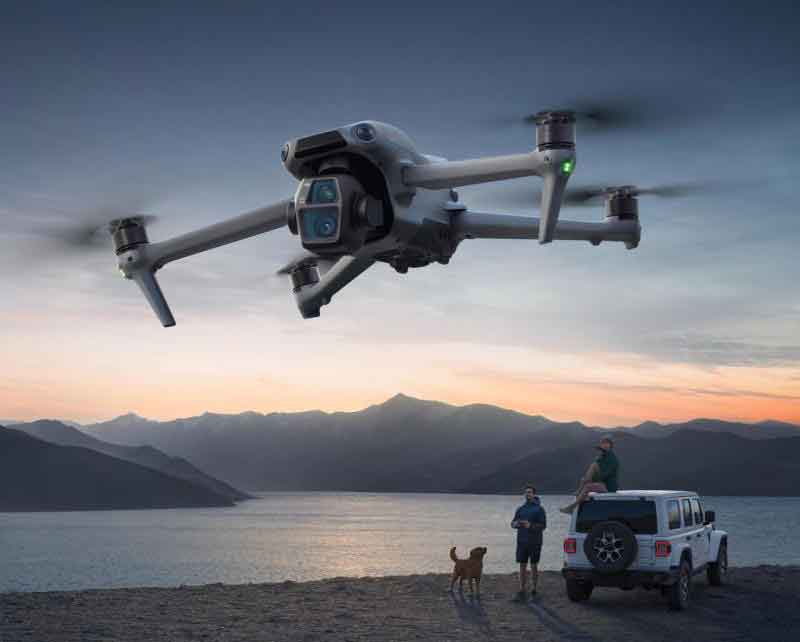
To validate the adaptive conditions for control-free aerial survey using drone technology, we conducted an experiment in a diverse terrain area covering approximately 116 square kilometers. The region featured hilly topography, dense residential zones, and industrial facilities, representing a typical scenario for large-scale mapping. We employed a DJI Matrice 300 RTK drone equipped with a Zenmuse P1 camera, which has a mechanical shutter and supports RTK positioning. The flight was planned with 80% forward overlap and 60% side overlap, and a GSD of 0.06 meters was achieved. PPK processing was used to enhance the accuracy of the position data, with a base station established on a high point in the area. A total of 121 check points were distributed evenly across the survey area and measured using RTK with CORS network correction to serve as independent accuracy controls. These points were not used in the aerial triangulation but were employed for post-adjustment validation.
The aerial images were processed using photogrammetric software that supports GNSS-assisted bundle adjustment. The camera calibration parameters, determined from a prior calibration flight, were fixed during the adjustment. The GNSS positions were assigned high weights, while the IMU-derived attitudes were used only as initial values. After dense matching, outlier removal, and block adjustment, the aerial triangulation results were imported into a mapping software for stereo compilation. The coordinates of the check points were measured in the stereo environment and compared with their field-surveyed values to compute errors. The results demonstrated that the planimetric and vertical accuracies met the requirements for 1:500 scale mapping, as per national standards. The following table summarizes the optimal GSD selections for different map scales in control-free surveys, based on theoretical accuracy considerations.
| Scale | Point Type | Plane Error (m) | Height Error (m) | GSD (m) |
|---|---|---|---|---|
| 1:500 | Mapping Control | 0.13-0.20 | 0.11-0.40 | < 0.05 |
| 1:1,000 | Mapping Control | 0.30-0.40 | 0.20-0.40 | 0.06-0.08 |
| 1:2,000 | Mapping Control | 0.60-0.80 | 0.20-0.90 | 0.12-0.16 |
The camera calibration parameters obtained from the test area are listed below. These parameters were used throughout the survey to ensure consistency in the photogrammetric processing.
| Parameter | Value | Description |
|---|---|---|
| f | 8194.9918 | Focal length (pixels) |
| cx | -18.3903 | Principal point x-coordinate |
| cy | 31.9357 | Principal point y-coordinate |
| b1 | 1.06815591767989 | Affinity and non-orthogonality coefficient |
| b2 | -0.0223266213844603 | Affinity and non-orthogonality coefficient |
| k1 | -0.0555768385948978 | Radial distortion coefficient |
| k2 | 0.0672832225642811 | Radial distortion coefficient |
| k3 | -0.15753729752517 | Radial distortion coefficient |
| k4 | -0.115227039138801 | Radial distortion coefficient |
| p1 | -0.00103390420205888 | Tangential distortion coefficient |
| p2 | 0.000735923503563805 | Tangential distortion coefficient |
The accuracy standards for basic orientation points and check points, as per national specifications, are provided in the following table. These standards were used to evaluate the performance of the control-free method.
| Scale | Point Type | Plane Error Limit (m) | Height Error Limit (m) |
|---|---|---|---|
| 1:500 | Basic Orientation | 0.13-0.20 | 0.11-0.26 |
| 1:500 | Check Point | 0.175-0.35 | 0.15-0.40 |
| 1:1,000 | Basic Orientation | 0.30-0.40 | 0.20-0.40 |
| 1:1,000 | Check Point | 0.50-0.70 | 0.28-0.60 |
| 1:2,000 | Basic Orientation | 0.60-0.80 | 0.20-0.60 |
| 1:2,000 | Check Point | 1.00-1.40 | 0.28-1.00 |
In our experiment, the control-free aerial triangulation using GNSS assistance yielded accuracies that complied with these standards. The comparison between control-free and traditional methods with ground control points for 1:500 scale mapping is shown below. The control-free approach used only 12 check points for validation, whereas the traditional method required 121 ground control points for adjustment, highlighting the efficiency gains of drone technology.
| Method | Points Used | Plane RMSE (m) | Height RMSE (m) | Efficiency (Days) | Cost (USD) |
|---|---|---|---|---|---|
| Control-Free | 12 | 0.101 | 0.093 | 1 | 800 |
| Traditional | 121 | 0.091 | 0.074 | 6 | 4800 |
The detailed accuracy statistics for the check points are presented in the following table. The errors are within acceptable limits, confirming the viability of control-free mapping with Unmanned Aerial Vehicle systems.
| Point ID | Plane Error (m) | Height Error (m) |
|---|---|---|
| J09-1 | 0.0593 | -0.0751 |
| J11-1 | 0.0782 | -0.2219 |
| J14-1 | 0.0811 | -0.1165 |
| J15-1 | 0.1511 | -0.1017 |
| J16-1 | 0.0433 | 0.0310 |
| J17-4 | 0.1144 | 0.1496 |
| J18-1 | 0.0871 | -0.0349 |
| J19-1 | 0.1441 | -0.0438 |
| J20-2 | 0.0833 | 0.0619 |
| J21-2 | 0.1019 | -0.0415 |
| J22-2 | 0.1092 | -0.1037 |
| J27-3 | 0.0685 | 0.0620 |
The distribution of errors across the survey area was uniform, with no significant biases in planimetric or vertical dimensions. This consistency underscores the robustness of the GNSS-assisted aerial triangulation method in drone technology. The mathematical foundation of this approach, as described by the error equations, ensures that systematic errors are minimized through proper weighting and parameter estimation. The integration of high-precision RTK data allows the bundle adjustment to converge to accurate solutions without ground control, making it a powerful tool for large-scale mapping with Unmanned Aerial Vehicle systems. Furthermore, the use of additional flight lines and careful image quality control contributed to the strong network geometry, reducing the impact of random errors.
Conclusion
In conclusion, control-free aerial surveying using DJI RTK drones is a feasible and efficient method for large-scale topographic mapping when specific adaptive conditions are met. The key factors—RTK data quality, camera calibration, aerial photography quality, and GNSS-assisted aerial triangulation—must be rigorously controlled to achieve accuracies compliant with national standards. Our experimental results demonstrate that this approach can yield planimetric and vertical errors within 0.101 meters and 0.093 meters, respectively, for 1:500 scale mapping, which is sufficient for practical applications. The significant reduction in fieldwork, from 121 ground control points to just 12 check points, translates to substantial time and cost savings, enhancing the economic viability of drone technology in surveying.
The adoption of control-free methods in Unmanned Aerial Vehicle systems requires attention to technical details, such as ensuring RTK fixed solutions, performing on-site camera calibration, and optimizing flight parameters. The mathematical framework of GNSS-assisted bundle adjustment, with appropriate weighting strategies, is crucial for mitigating errors. As drone technology continues to evolve, these methods will become more accessible and reliable, enabling broader implementation in various sectors, including urban planning, agriculture, and environmental monitoring. By adhering to the adaptive conditions outlined in this article, practitioners can leverage the full potential of Unmanned Aerial Vehicle for high-precision, large-scale aerial surveys without the need for ground control points, driving innovation and efficiency in the geospatial industry.