
The rapid advancement in drone technology, particularly with Unmanned Aerial Vehicles (UAVs) equipped with Real-time Kinematic (RTK) systems, has revolutionized aerial surveying by enabling high-precision mapping without the need for extensive ground control points. This capability is critical for large-scale topographic mapping, where traditional methods relying on ground control are time-consuming and costly. In this analysis, I explore the adaptive conditions necessary for achieving accurate large-scale aerial surveys using RTK-enabled drones, focusing on key factors such as RTK positioning data quality, camera calibration parameters, and aerial photography quality. By examining the integration of GNSS-assisted aerial triangulation and addressing systematic errors, I demonstrate how drone technology can meet stringent accuracy standards for applications like 1:500 scale mapping, thereby enhancing efficiency and reducing operational expenses in surveying projects.
Drone technology has become a cornerstone in modern geospatial data acquisition, with Unmanned Aerial Vehicles offering unparalleled flexibility and cost-effectiveness. The use of RTK systems in drones, such as those developed by industry leaders, allows for centimeter-level positioning accuracy by leveraging GNSS signals. This eliminates the dependency on ground control points, which are traditionally required to correct positional errors in photogrammetric processing. However, achieving reliable results without ground control hinges on several adaptive conditions. For instance, the quality of RTK data must be rigorously monitored to avoid inaccuracies from signal loss or multipath effects. Additionally, the non-metric nature of drone-mounted cameras necessitates precise calibration to correct for lens distortions, while flight parameters like overlap and resolution must be optimized to ensure robust image matching in aerial triangulation. Through a detailed examination of these factors, I aim to provide a comprehensive framework for practitioners to implement drone-based surveys that comply with national standards, as validated by empirical studies in diverse terrains.
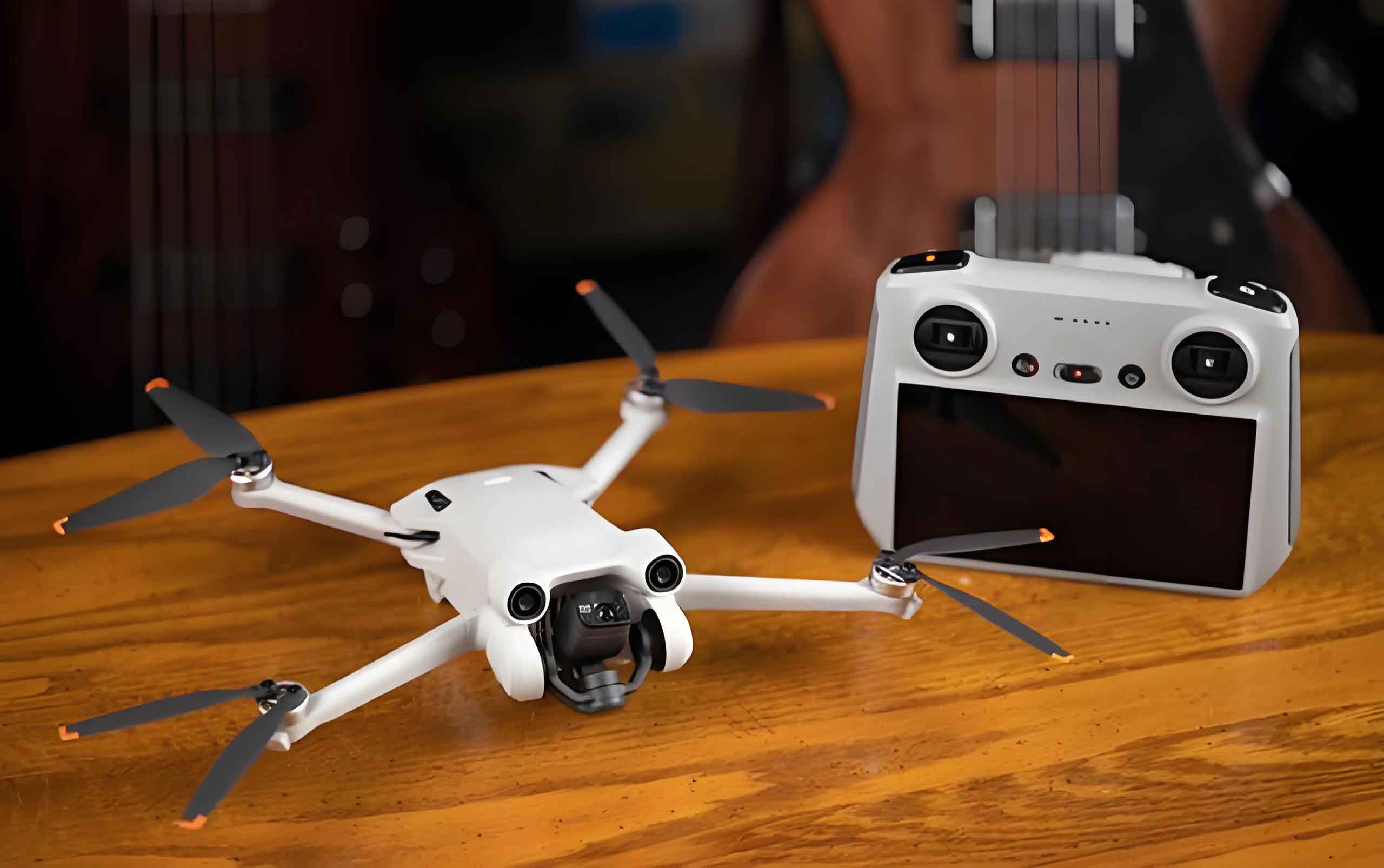
The core of drone technology in aerial surveying lies in the integration of RTK positioning with photogrammetric processing. RTK systems provide real-time differential corrections to GNSS data, enabling drones to achieve high-precision coordinates for each captured image. However, the effectiveness of this approach depends on maintaining a fixed solution during flight, as float or single-point solutions can introduce significant errors. For Unmanned Aerial Vehicles operating in complex environments, such as urban areas with high-rise buildings or mountainous regions, signal interruptions are common. Therefore, it is essential to verify the standard deviations of latitude, longitude, and height stored in image metadata; values exceeding 0.1 meters indicate unreliable data that should be excluded from processing. Moreover, alternative methods like Post-Processed Kinematic (PPK) can be employed in areas with poor RTK coverage, as PPK processes GNSS data retrospectively without the need for real-time transmission, enhancing reliability in challenging conditions.
Camera calibration is another critical aspect of drone technology that directly impacts the accuracy of aerial surveys. Non-metric cameras used in Unmanned Aerial Vehicles are prone to distortions, such as radial and tangential errors, which can degrade the quality of photogrammetric outputs. To address this, a calibration field with varied terrain and features should be established within the survey area. Using a self-calibration bundle adjustment, camera parameters including focal length, principal point coordinates, and distortion coefficients can be derived. For example, the following table summarizes typical camera calibration parameters obtained through this process, which are essential for ensuring consistent accuracy across large survey areas:
| Parameter | Value | Description |
|---|---|---|
| f | 8194.9918 | Focal length |
| cx | -18.3903 | Principal point x-coordinate |
| cy | 31.9357 | Principal point y-coordinate |
| k1 | -0.0556 | Radial distortion coefficient |
| k2 | 0.0673 | Radial distortion coefficient |
| p1 | -0.0010 | Tangential distortion coefficient |
| p2 | 0.0007 | Tangential distortion coefficient |
By fixing these parameters during aerial triangulation, systematic errors can be minimized, leading to more reliable mapping outcomes. This approach is particularly important for large-scale surveys, where even minor distortions can propagate through the processing chain, resulting in significant positional inaccuracies.
In addition to camera calibration, the quality of aerial photography plays a pivotal role in the success of drone-based surveys. Flight planning must ensure adequate overlap between images to facilitate robust feature matching in aerial triangulation. For large-scale mapping, I recommend a forward overlap of at least 70% and a side overlap of 50% or higher. Furthermore, the ground sampling distance (GSD) should be selected based on the target map scale to achieve the required accuracy. The relationship between GSD and mapping accuracy can be expressed using the following equation, which estimates the theoretical error in aerial triangulation:
$$ \sigma = k \times \text{GSD} $$
where $\sigma$ represents the error in meters, and $k$ is a factor typically ranging from 2 to 3, depending on the image quality and matching algorithm. For instance, to meet the accuracy standards of 1:500 scale mapping, a GSD of 0.05 meters or better is advisable. The table below outlines the optimal GSD values for different map scales under various terrain conditions, ensuring that the Unmanned Aerial Vehicle survey adheres to national specifications:
| Map Scale | Terrain Type | Plane Error (m) | Elevation Error (m) | Recommended GSD (m) |
|---|---|---|---|---|
| 1:500 | Flat | 0.13 | 0.11 | 0.05 |
| 1:500 | Hilly | 0.13 | 0.20 | 0.05 |
| 1:1000 | Flat | 0.30 | 0.20 | 0.08 |
| 1:2000 | Mountainous | 0.80 | 0.60 | 0.16 |
By adhering to these guidelines, drone technology can achieve the necessary precision for large-scale mapping without ground control points, significantly reducing field workload and costs.
The integration of GNSS-assisted aerial triangulation is fundamental to realizing the full potential of drone technology in免像控 surveys. This method incorporates GNSS-derived positions as weighted observations in the bundle adjustment process, effectively constraining the solution to high-accuracy coordinates. The error equation for this approach can be formulated as follows, accounting for both positional and angular elements:
$$ v_x = a_{11} \Delta X_S + a_{12} \Delta Y_S + a_{13} \Delta Z_S + a_{14} \Delta \omega + a_{15} \Delta \phi + a_{16} \Delta \kappa + a_{17} \Delta X + a_{18} \Delta Y + a_{19} \Delta Z – l_x $$
$$ v_y = a_{21} \Delta X_S + a_{22} \Delta Y_S + a_{23} \Delta Z_S + a_{24} \Delta \omega + a_{25} \Delta \phi + a_{26} \Delta \kappa + a_{27} \Delta X + a_{28} \Delta Y + a_{29} \Delta Z – l_y $$
where $v_x$ and $v_y$ are the residuals in image coordinates, $\Delta X_S, \Delta Y_S, \Delta Z_S$ are corrections to the exterior orientation parameters, $\Delta \omega, \Delta \phi, \Delta \kappa$ are corrections to the angular elements, and $\Delta X, \Delta Y, \Delta Z$ are corrections to the ground coordinates. The coefficients $a_{ij}$ are derived from partial derivatives of the collinearity equations. In practice, the weights assigned to these parameters are critical: GNSS positions are given the highest weight due to their centimeter-level accuracy, while angular observations from low-cost IMUs are assigned lower weights or treated as initial values to prevent them from unduly influencing the solution. This weighting strategy ensures that the adjustment prioritizes reliable data, leading to more accurate and stable results.
To validate the adaptive conditions for drone technology in免像控 surveys, I conducted an extensive experiment in a diverse region covering approximately 116 square kilometers, characterized by hilly terrain and urban areas. A high-end Unmanned Aerial Vehicle equipped with an RTK system and a professional camera was deployed, capturing over 8,000 images at a GSD of 0.06 meters. The flight parameters included 80% forward overlap and 60% side overlap, with PPK processing used to enhance GNSS accuracy. Checkpoints were distributed uniformly across the area and measured using RTK techniques to serve as independent accuracy controls. The aerial triangulation was performed using GNSS-assisted bundle adjustment with fixed camera parameters, and the results were evaluated against national standards for large-scale mapping.
The accuracy assessment revealed that the drone-based survey achieved a plane RMSE of 0.09 meters and an elevation RMSE of 0.07 meters, which comfortably meet the requirements for 1:500 scale mapping in hilly terrain. The following table summarizes the error statistics for a subset of checkpoints, demonstrating the consistency of the results across the survey area:
| Checkpoint ID | Plane Error (m) | Elevation Error (m) |
|---|---|---|
| CP-01 | 0.059 | -0.075 |
| CP-02 | 0.078 | -0.222 |
| CP-03 | 0.081 | -0.117 |
| CP-04 | 0.151 | -0.102 |
| CP-05 | 0.043 | 0.031 |
These findings underscore the effectiveness of drone technology in producing high-precision maps without ground control points, provided that the adaptive conditions are meticulously managed. The integration of RTK data, accurate camera calibration, and optimal flight planning resulted in a seamless workflow that reduced field effort by over 80% compared to traditional methods, highlighting the economic and practical benefits of Unmanned Aerial Vehicle-based surveys.
In conclusion, the adaptive conditions for large-scale aerial surveys using drone technology without ground control points are multifaceted, requiring attention to RTK data integrity, camera calibration, and photographic quality. Through the application of GNSS-assisted aerial triangulation and systematic error management, Unmanned Aerial Vehicles can achieve accuracies that comply with rigorous mapping standards. This approach not only enhances operational efficiency but also opens new possibilities for rapid and cost-effective data acquisition in various sectors, from urban planning to environmental monitoring. As drone technology continues to evolve, further refinements in sensor integration and processing algorithms will likely expand the scope of免像控 surveys, solidifying the role of Unmanned Aerial Vehicles in the future of geospatial innovation.
The empirical evidence from this study confirms that with proper adherence to these conditions, drone technology can reliably replace traditional ground control methods, offering a scalable solution for large-area mapping projects. Future work should focus on automating quality checks and adapting these principles to other UAV platforms, ensuring that the benefits of免像控 surveys are accessible across diverse applications and regions. By embracing these advancements, the surveying community can leverage the full potential of Unmanned Aerial Vehicle technology to drive progress in geospatial sciences and beyond.