
The integration of high-precision Real-Time Kinematic (RTK) positioning technology with Unmanned Aerial Vehicle (UAV) platforms, exemplified by DJI’s industry-grade series such as the Matrice 300 RTK, has significantly lowered the technical and financial barriers to entry for high-accuracy photogrammetry. This technological convergence enables the potential for large-scale mapping operations to proceed with minimal or even zero reliance on traditional ground control points (GCPs). While the marketing of such “GCP-free” solutions is widespread, their successful implementation in practice hinges on meeting a specific set of rigorous preconditions. Failure to control these factors often leads to project deliverables that fail to meet national mapping accuracy standards. This article provides a systematic analysis of the critical adaptability conditions required for achieving reliable, large-scale (e.g., 1:500 scale) surveying without GCPs using DJI drone technology. It delves into the core technical considerations, verifies the methodology through practical project data, and offers guidance that is valuable for the broader application of UAV-based photogrammetry.
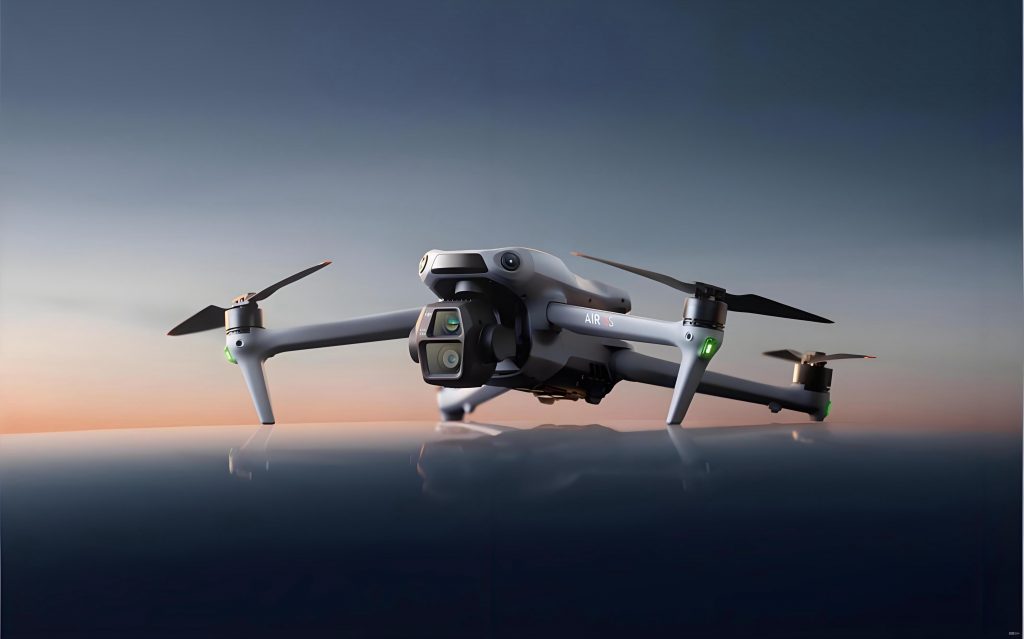
The promise of GCP-free operation stems primarily from using precise camera station coordinates obtained via GNSS (Global Navigation Satellite System) to heavily constrain the bundle adjustment process, a method known as GNSS-assisted Aerial Triangulation (AT). For DJI drone models equipped with RTK modules, this involves capturing the geotag for each image with centimeter-level accuracy. However, the photogrammetric workflow is a chain with multiple links; the final accuracy is only as good as the weakest one. Key factors influencing the success of GCP-free surveys include the quality and reliability of the RTK/PPK positioning data, the stability and accuracy of the camera’s interior orientation parameters (IOPs), the flight and image acquisition quality, and the proper configuration of the bundle adjustment to account for residual systematic errors.
Critical Technical Preconditions for GCP-Free Operation
1. GNSS Positioning Data Quality and Reliability
DJI drone platforms offer several pathways to obtain fixed-integer RTK solutions for precise geotagging: connection to a Network RTK/CORS service, use of DJI’s proprietary D-RTK 2 base station, a network “1+1” mode, or Post-Processed Kinematic (PPK) techniques. While real-time RTK is convenient, it is susceptible to communication dropouts, signal multipath, or loss of satellite lock during flight, especially in complex environments with obstacles or radio interference. This can result in images being tagged with float or even single-point solutions, whose positional errors can be decimeters or more. Introducing such low-accuracy coordinates as high-weight observations into a bundle adjustment will severely degrade the final output.
Adaptability Condition: A rigorous pre-processing check is non-negotiable. The latitude, longitude, and altitude standard deviation values stored in each image’s metadata must be scrutinized. Any image where these values exceed a threshold (typically 0.1 m) should be considered unsuitable for a GCP-free workflow and either be corrected via PPK or excluded.
2. Camera Calibration Parameter Stability
The cameras used on DJI drone platforms, such as the Zenmuse P1, are consumer-grade or prosumer-grade sensors. Their interior parameters—focal length, principal point coordinates, and lens distortion coefficients—are not mechanically stable over time. Factors like vibrations during transport, changes in temperature, and general use can cause shifts from the factory calibration. Using inaccurate or unstable IOPs introduces systematic errors that the GNSS-assisted bundle block adjustment cannot fully absorb, leading to doming or bowling effects in the final model.
Adaptability Condition: A site-specific camera calibration must be performed before major project execution. This involves flying a calibration field within the project area (or a representative area with similar terrain and texture) at the intended operational Ground Sampling Distance (GSD). The field must contain well-distributed, accurately surveyed GCPs. A standard bundle adjustment with self-calibration is performed on this block. The resulting set of IOPs, verified to produce accurate 3D results against check points, is then “frozen” and used as fixed parameters for all subsequent production flights over the entire project area. This ensures consistency and controls IOP-related systematic errors. A sample set of self-calibrated parameters is shown below.
| Parameter Type | Symbol | Value | Description |
|---|---|---|---|
| Focal Length & Principal Point | f | 8194.9918 | Focal Length (pixels) |
| cx, cy | (-18.3903, 31.9357) | Principal Point Offsets (pixels) | |
| Affinity & Skew | b1, b2 | (1.06816, -0.02233) | Affinity and Non-Orthogonality Coefficients |
| Radial Distortion | k1, k2, k3, k4 | (-0.05558, 0.06728, -0.15754, -0.11523) | Radial Distortion Coefficients |
| p1, p2 | (-0.001034, 0.000736) | Tangential (Decentering) Distortion Coefficients |
3. Flight Mission and Image Quality
The geometric strength of the photogrammetric block is fundamental. While multi-rotor DJI drones offer excellent stability, mission planning must adhere to stringent parameters to ensure robust tie point matching and error distribution. Key considerations include:
- Overlap: High overlap is critical for redundancy and accuracy. A forward overlap of ≥80% and a side overlap of ≥60% are recommended for GCP-free workflows.
- Ground Sampling Distance (GSD): The choice of GSD directly influences the theoretical accuracy of derived 3D points. The tie point measurement precision in image space is typically 1/2 to 1/3 of a pixel. Therefore, to meet a desired ground accuracy, an appropriate GSD must be selected. The optimal GSDs for different map scales under GCP-free conditions are summarized below.
- Flight Pattern: Incorporating cross-flight strips or adding oblique images can significantly strengthen the block geometry, especially in reducing systematic errors along the flight direction.
| Map Scale | Planimetric Accuracy Requirement (RMSE, m) | Elevation Accuracy Requirement* (RMSE, m) | Recommended GSD (m) |
|---|---|---|---|
| 1:500 | 0.13 – 0.20 | 0.11 – 0.40 | ≤ 0.05 |
| 1:1,000 | 0.30 – 0.40 | 0.20 – 0.40 | 0.06 – 0.08 |
| 1:2,000 | 0.60 – 0.80 | 0.20 – 0.90 | 0.12 – 0.16 |
*Elevation accuracy varies with terrain type (flat, hilly, mountainous).
Bundle Adjustment Methodology: GNSS-Assisted AT with System Error Consideration
The core mathematical process is a bundle adjustment where the observed image coordinates of tie points are related to unknown object space coordinates and camera exterior orientation parameters (EOPs). In a GNSS-assisted adjustment for a DJI drone survey, the camera position (XS, YS, ZS) for each image is introduced as a weighted observation. The linearized error equation for an image point observation is:
$$
\begin{aligned}
v_x &= a_{11}\Delta X_S + a_{12}\Delta Y_S + a_{13}\Delta Z_S + a_{14}\Delta \omega + a_{15}\Delta \phi + a_{16}\Delta \kappa + a_{17}\Delta X + a_{18}\Delta Y + a_{19}\Delta Z – l_x \\
v_y &= a_{21}\Delta X_S + a_{22}\Delta Y_S + a_{23}\Delta Z_S + a_{24}\Delta \omega + a_{25}\Delta \phi + a_{26}\Delta \kappa + a_{27}\Delta X + a_{28}\Delta Y + a_{29}\Delta Z – l_y
\end{aligned}
$$
where \(v_x, v_y\) are the residuals for the image coordinates; \(\Delta X_S, \Delta Y_S, \Delta Z_S, \Delta\omega, \Delta\phi, \Delta\kappa\) are corrections to the exterior orientation parameters; \(\Delta X, \Delta Y, \Delta Z\) are corrections to the object point coordinates; \(a_{ij}\) are the partial derivatives; and \(l_x, l_y\) are the constant terms derived from the observation equation.
The critical step for GCP-free adjustment is the appropriate weighting strategy for the different observation groups:
- GNSS Position Observations: Given the high accuracy of RTK fixed solutions (e.g., ~0.02-0.05 m horizontally), these are assigned the highest weight, effectively constraining the network’s scale and translation. The weight for vertical coordinates may be slightly lower due to typically lower GNSS height accuracy.
- Camera IOPs: The parameters determined from the pre-project calibration are held fixed or given very high weights, treating them as known constants.
- Image Coordinate Observations: Tie point measurements are given standard weights based on expected measurement precision.
- Exterior Orientation Angles: The attitude data from the DJI drone‘s integrated IMU is generally of lower accuracy. Therefore, these angles are either introduced with very low weights or treated as free unknowns with no observation constraint, allowing the bundle adjustment to solve for them primarily based on the image tie points and GNSS positions.
This weighting scheme ensures that the high-precision GNSS coordinates drive the solution, while the imagery resolves the camera attitudes and the object point cloud, effectively compensating for the less reliable IMU data.
Experimental Verification and Accuracy Assessment
A large-scale project was executed to validate the GCP-free methodology under controlled conditions. The survey area covered approximately 116 km² of hilly terrain in a coastal region. A DJI Matrice 300 RTK DJI drone equipped with a Zenmuse P1 camera was deployed. Mission parameters were set to 80% forward overlap, 60% side overlap, and a GSD of 0.06 m. PPK processing was employed using a permanently installed base station to ensure the highest possible positioning quality for every image, mitigating risks associated with real-time RTK dropouts.
Processing Workflow:
- Pre-flight: Camera IOPs were determined via a calibration flight over a dedicated test field and fixed for the main project processing.
- Data Check: All 8,257 images were verified for PPK positioning quality, ensuring sub-decimeter precision in all coordinates.
- Aerial Triangulation: A GNSS-assisted bundle adjustment was performed in professional photogrammetry software (e.g., Agisoft Metashape). The PPK-derived camera coordinates were added as high-weight observations. The pre-calibrated IOPs were fixed. The software’s standard tie point matching, outlier filtering, and self-calibration (for any potential residual distortion) were executed.
- Accuracy Assessment: A total of 121 independent check points were surveyed using Network RTK across the project area. These points were not used in the AT process. Their 3D coordinates were then extracted from the resulting dense point cloud or orthomosaic and compared to the surveyed ground truth.
The results demonstrated that the GCP-free approach successfully met the stringent accuracy standards for 1:500 scale mapping in hilly terrain. The table below summarizes the checkpoint error statistics.
| Statistic | Planimetric Error (m) | Vertical Error (m) |
|---|---|---|
| Maximum | 0.213 | 0.280 |
| Minimum | 0.020 | 0.010 |
| Root Mean Square Error (RMSE) | 0.090 | 0.070 |
Comparing the resource expenditure, the traditional method requiring 121 GCPs for a project of this scale would involve approximately 6 field days for measurement. The GCP-free method, requiring only 12 check points for final quality assurance, reduced the ground survey effort to about 1 day, representing a significant reduction in cost and time, while also enhancing safety by minimizing work in potentially hazardous terrain.
Conclusions
The analysis and experimental verification lead to the following conclusions:
- Large-scale, high-accuracy topographic mapping without ground control points is a viable and practical reality using modern DJI drone RTK platforms, provided that a rigorous framework of preconditions and processing protocols is followed.
- The success of the GCP-free workflow is contingent upon several interdependent factors: ensuring high-quality, reliable GNSS positioning data for every image (via RTK/PPK with stringent quality control); establishing and fixing accurate, project-specific camera calibration parameters; executing flight missions with high overlap and appropriate GSD; and implementing a GNSS-assisted bundle adjustment with a carefully designed weighting strategy that prioritizes GNSS position observations while mitigating the impact of lower-accuracy IMU attitude data.
- The methodology outlined provides a replicable framework. Its principles are transferable to other UAV systems equipped with similar high-precision GNSS capabilities. The economic and operational benefits are substantial, offering drastic reductions in field survey time, labor costs, and exposure to site risks, making it a highly attractive approach for widespread adoption in professional surveying and mapping projects.
In summary, while the DJI drone with RTK technology provides the toolset for GCP-free operation, its successful application is not automatic. It demands a disciplined, knowledge-based approach that respects the underlying photogrammetric principles and systematically addresses each potential source of error. When these adaptability conditions are met, the technology fulfills its promise of efficient, accurate, and cost-effective large-scale aerial surveying.