
In modern power system maintenance, the automation of inspection processes is crucial for enhancing efficiency and safety. Traditional manual methods for power line inspection, which involve skilled operators controlling drones to approach potential hazard points, present several challenges. These include high operational stress, inconsistent data collection due to environmental variations, and limited productivity, often resulting in accidents like collisions or crashes. To address these issues, automated inspection using DJI UAVs offers a viable solution by leveraging advanced technologies such as differential positioning and structured mission planning. This paper explores the implementation of an automatic inspection system based on DJI drones, focusing on key technical aspects, mission design, and practical considerations.
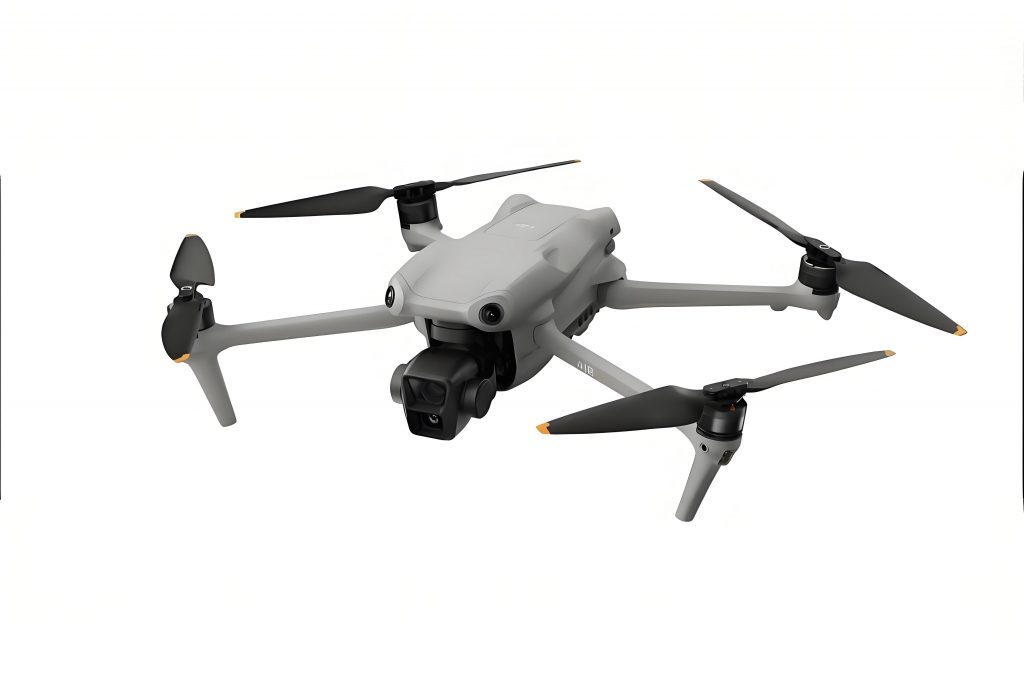
The necessity for automated power line inspection stems from the demanding requirements of power infrastructure monitoring. Objects such as towers, conductors, transformers, and insulators require periodic checks for defects. Manual drone operations, while effective, are prone to human error and inefficiency. For instance, a skilled operator might inspect only up to six towers per flight session, with variations in image angles and positions complicating comparative analysis over time. Automation, therefore, aims to standardize data collection, improve accuracy, and reduce operational risks. DJI drones, particularly models like the DJI Phantom 4 RTK, provide the necessary precision and programmability for such tasks. Key technical requirements include centimeter-level positioning accuracy and the ability to execute complex mission files containing waypoints and actions.
Differential positioning technology is fundamental to achieving the required accuracy in automated inspections. Traditional drones relying on pseudo-range positioning typically achieve accuracies of 3–5 meters, which is insufficient for safe navigation near power lines, where distances as close as 1.5 meters may be necessary. DJI UAVs incorporate real-time kinematic (RTK) differential positioning, which utilizes carrier phase measurements to enhance accuracy. This method involves a base station transmitting correction data to the drone via radio or 4G signals, enabling real-time error compensation. For example, the DJI Phantom 4 RTK employs multi-frequency, multi-constellation GNSS systems, including GPS, BeiDou, GLONASS, and Galileo, resulting in horizontal and vertical accuracies as high as 1 cm + 1 ppm and 1.5 cm + 1 ppm, respectively. The term “1 ppm” refers to an error increase of 1 mm per kilometer of movement, which is negligible for typical inspection ranges. The positioning error can be modeled using the formula: $$ \Delta P = \Delta P_{\text{base}} + \Delta P_{\text{rover}} + \epsilon $$ where $\Delta P$ is the total positioning error, $\Delta P_{\text{base}}$ and $\Delta P_{\text{rover}}$ represent errors from the base station and drone, respectively, and $\epsilon$ accounts for atmospheric and multipath effects. This high precision ensures that the DJI drone can maintain safe distances and correct attitudes during flight.
| Parameter | Value |
|---|---|
| GNSS Systems | GPS+BeiDou+Galileo (Asia); GPS+GLONASS+Galileo (Others) |
| RTK Frequencies | GPS: L1/L2; GLONASS: L1/L2; BeiDou: B1/B2; Galileo: E1/E5 |
| Time to First Fix | < 50 seconds |
| Horizontal Accuracy | 1 cm + 1 ppm (RMS) |
| Vertical Accuracy | 1.5 cm + 1 ppm (RMS) |
Mission design for automated inspection relies on the Keyhole Markup Language (KML) with extended data elements specific to DJI drones. KML, an XML-based format, describes geographic features like points and lines, and by extending DJI’s namespace, it can encapsulate all necessary flight parameters. For instance, a route task might include elements such as altitude, speed, and gimbal pitch, while waypoints define actions like taking photos or adjusting orientation. The extended data structure allows for precise control over the DJI drone’s behavior during inspection. Consider the following example of a route definition in KML:
<ExtendedData xmlns:mis="www.dji.com">
  <mis:altitude>50.0</mis:altitude>
  <mis:autoFlightSpeed>5.0</mis:autoFlightSpeed>
  <mis:actionOnFinish>GoHome</mis:actionOnFinish>
  <mis:headingMode>UsePointSetting</mis:headingMode>
  <mis:gimbalPitchMode>UsePointSetting</mis:gimbalPitchMode>
</ExtendedData>
Similarly, a waypoint might specify actions and orientations:
<ExtendedData xmlns:mis="www.dji.com">
  <mis:heading>177</mis:heading>
  <mis:turnMode>Auto</mis:turnMode>
  <mis:gimbalPitch>0</mis:gimbalPitch>
  <mis:actions>ShootPhoto</mis:actions>
</ExtendedData>
These elements enable the DJI UAV to perform complex sequences autonomously. The supported actions for waypoints include photo capture, video recording, and attitude adjustments, which are essential for comprehensive inspections. The relationship between mission parameters and drone behavior can be expressed mathematically. For example, the desired gimbal pitch angle $\theta_g$ at a waypoint can be calculated based on the target’s position and drone altitude: $$ \theta_g = \arctan\left(\frac{\Delta h}{d}\right) $$ where $\Delta h$ is the height difference between the drone and the target, and $d$ is the horizontal distance.
| Object | Elements |
|---|---|
| Route | Speed, Altitude, Aircraft Yaw, Gimbal Control, Completion Action |
| Waypoint | Altitude, Aircraft Yaw, Turn Mode, Gimbal Pitch, Actions |
| Action | Example |
|---|---|
| Take Photo | <mis:actions>ShootPhoto</mis:actions> |
| Start Recording | <mis:actions>StartRecording</mis:actions> |
| End Recording | <mis:actions>StopRecording</mis:actions> |
| Aircraft Yaw | <mis:actions param=”10″>AircraftYaw</mis:actions> |
| Gimbal Pitch | <mis:actions param=”-7″>GimbalPitch</mis:actions> |
| Hover | <mis:actions param=”10000″>Hovering</mis:actions> |
The design of automatic inspection missions is not merely a technical enhancement but a practical necessity. Manual mission planning using DJI’s ground station software is feasible for simple routes but becomes impractical for power line inspections due to the high density of points. A single tower may require dozens of inspection points, often arranged in complex three-dimensional patterns, such as layered insulators. Manual design is labor-intensive, error-prone, and inefficient. Automation through programmatic generation of KML files addresses these issues by ensuring consistency, accuracy, and scalability. This approach allows for the precise definition of waypoints and actions based on geometric calculations, reducing the risk of omissions or collisions.
The automated inspection process involves a structured workflow, beginning with data definition. Waypoints are categorized into types such as start (S), end (P), tower (T), points of interest (POI), and avoidance points. POIs are further divided into left (L) and right (R) points relative to the flight direction. For example, a tower unit might include points labeled T01 for the tower itself, L01-1 to L01-6 for left-side interests, and R01-1 to R01-6 for right-side interests. The flight sequence for a tower proceeds as: T01 → L01-1 → L01-2 → … → L01-6 → T01 → R01-1 → … → R01-6 → T01. This ensures comprehensive coverage of all critical components. Between towers, the DJI drone follows the power line, switching to video recording mode to capture the conductor conditions. The flight path between towers, say from T01 to T02, involves linear navigation with predefined actions.
In terms of sequence management, the mission automatically selects the higher altitude between the start point and the first tower for takeoff, and similarly for landing. At each tower, the DJI UAV executes a series of actions at POIs and avoidance points before returning to the tower center and proceeding to the next. This logical flow minimizes unnecessary movements and ensures data consistency. The entire route can be visualized in three dimensions, as shown in the generated flight path, which highlights the precision of the DJI FPV system in navigating complex environments.
Program development for generating inspection missions is best implemented using GIS platforms due to the extensive geometric computations involved. Input data consists of coordinates and elevations for all points, formatted as: S (start), P (end), T (towers), L (left POIs), R (right POIs), and avoidance points. For instance:
S N E H
T01 N E H
L01-1 N E H
...
R01-1 N E H
...
P N E H
The development process follows a flowchart: data input → identification of S, P, and towers → computation of camera positions and orientations for L and R points → iteration through towers to define waypoints and actions → output of a KML mission file. This file can be uploaded to DJI ground station software for execution or reviewed in tools like Google Earth. The use of projected coordinates, such as the China Geodetic Coordinate System 2000 with Gauss-Krüger projection, is recommended for easier calculations, with conversions to latitude and longitude for KML output. The distance between a POI and the drone’s position can be calculated using the Euclidean formula: $$ d = \sqrt{(x_2 – x_1)^2 + (y_2 – y_1)^2 + (z_2 – z_1)^2} $$ where $(x_1, y_1, z_1)$ and $(x_2, y_2, z_2)$ are the coordinates of the drone and POI, respectively.
Several considerations are critical for the successful implementation of this method. First, the accuracy of waypoint coordinates is paramount for safety. These can be collected using prismless total stations or by conducting an initial manual flight with a DJI drone equipped with differential GPS to extract precise points. Second, obstacles along the route must be identified and marked as avoidance points in the mission plan. Third, for tower inspections, POIs should be offset by a safety distance to determine the drone’s actual position during photo capture. This offset, $d_{\text{safe}}$, ensures that the DJI UAV maintains a safe standoff from the structure, as illustrated in the safety distance diagram. The adjusted position can be derived as: $$ P_{\text{drone}} = P_{\text{POI}} + d_{\text{safe}} \cdot \vec{n} $$ where $\vec{n}$ is the unit vector pointing away from the tower. Additionally, environmental factors like wind and electromagnetic interference should be accounted for in mission planning to ensure the reliability of the DJI drone’s operations.
In conclusion, the automation of power line inspection using DJI UAVs represents a significant advancement in infrastructure maintenance. By leveraging high-precision differential positioning, structured KML-based mission design, and programmatic workflow management, this method enhances efficiency, safety, and data consistency. The integration of DJI drones, including models like the DJI FPV, into automated systems requires careful attention to coordinate accuracy, obstacle avoidance, and geometric calculations. Future developments could involve real-time adaptive planning and machine learning for defect detection, further optimizing the inspection process. This approach not only addresses the limitations of manual methods but also sets a foundation for scalable, reliable power system monitoring.