
The evolution of Unmanned Aerial Vehicles (UAVs), or drones, since the 1970s has unlocked transformative potential across surveillance, reconnaissance, and numerous other domains. Compared to their manned counterparts, UAV drones offer significant advantages in terms of lower cost, greater operational flexibility, and a substantial reduction in risks to human life. These attributes have propelled UAV drones to the forefront of both military and civilian applications. With continuous technological advancements, UAV drones are increasingly granted greater autonomy, giving rise to coordinated swarm operations that are fundamentally reshaping the paradigms of system warfare. However, the realization of fully autonomous, intelligent cooperative combat by UAV drone swarms remains a formidable challenge for the foreseeable future. Consequently, integrating human cognitive and decision-making superiority with the performance advantages of UAV drones to form Manned/Unmanned Aerial Vehicle (M/UAV) cooperative combat systems has emerged as a critical and widely researched课题 internationally.
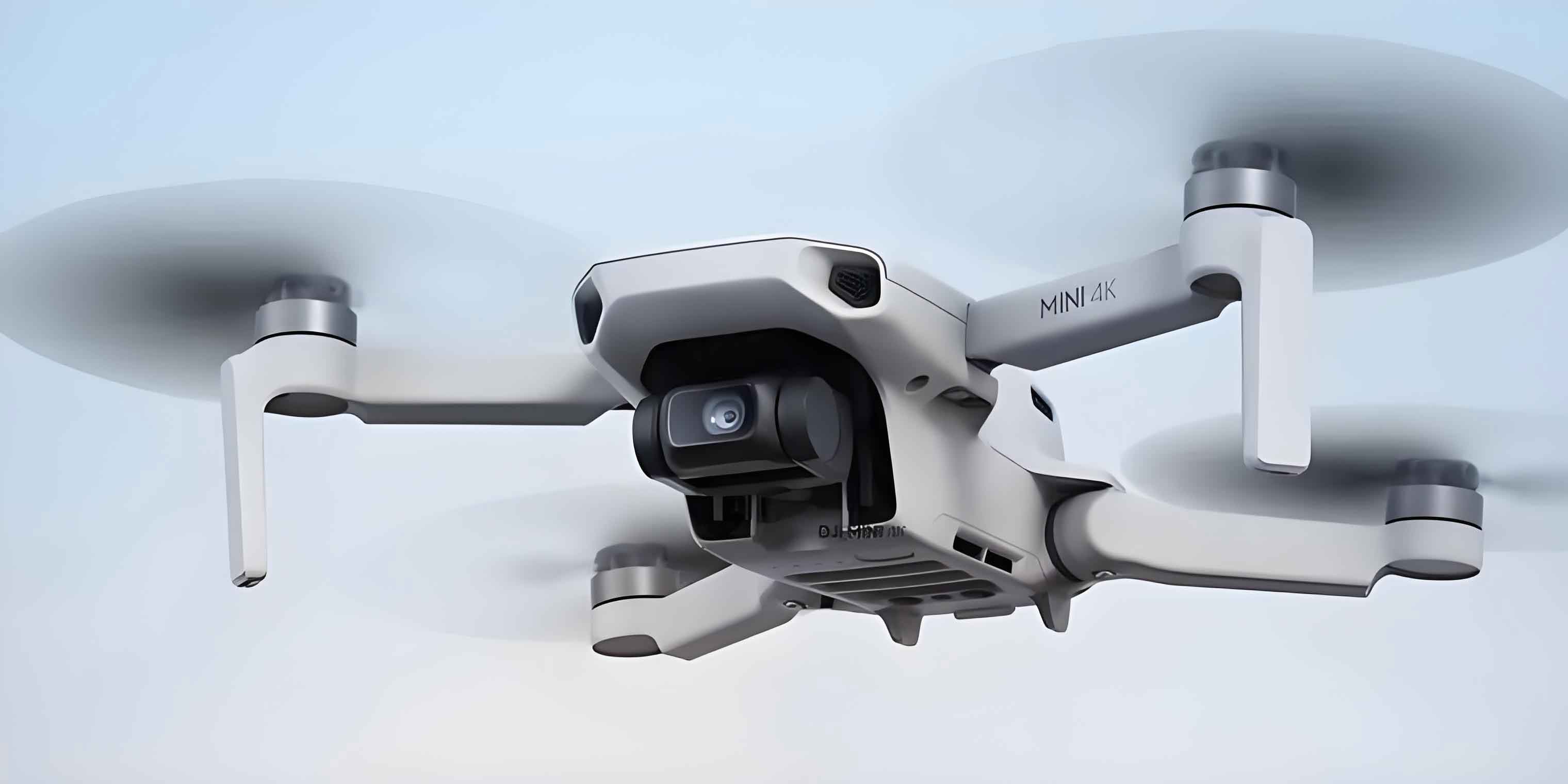
Current research on M/UAV cooperative operations spans several key areas, including architecture design and optimization, detection and situational awareness, cooperative decision-making, path/trajectory planning, formation control, and combat effectiveness evaluation. Among these, system architecture design and optimization serve as the foundational bedrock for all subsequent research. Within this domain, architecture modeling is the pivotal first step. It establishes the blueprint for the entire system-of-systems, enabling subsequent效能评估 and optimization, and is therefore essential for integrated research into the “modeling, evaluation, and optimization” lifecycle.
Existing architecture modeling studies often suffer from a critical disconnect: they tend to focus either on a macro-level perspective, dealing with high-level operational activity logic and strategic frameworks, or on a micro-level perspective, concentrating on the specific details of weapon system configurations and deployments. This separation between macro and micro modeling can lead to a misalignment between top-level strategic decisions and bottom-level tactical execution. Strategies may be formulated without a deep understanding of actual platform capabilities, or tactical decisions may fail to adequately consider their impact on overarching strategic objectives, thereby compromising the overall coherence and effectiveness of the system-of-systems.
To address this gap, we propose a forward modeling methodology for M/UAV cooperative combat system architecture that integrates macro and micro perspectives from the outset. Our approach is grounded in the Department of Defense Architecture Framework (DoDAF) version 2.02. We select, tailor, and synthesize specific viewpoints and views from DoDAF, and further integrate executable domain models (e.g., MATLAB scripts for tactical algorithms) to create a cohesive modeling process. This methodology ensures that strategic intent is faithfully traced down to tactical implementation details.
We selected DoDAF as our foundational framework after evaluating alternatives like the UK’s MoDAF and the Unified Architecture Framework (UAF). The rationale for this choice is summarized in the table below:
| Framework | Primary Advantage for M/UAV Modeling | Key Consideration for Our Context |
|---|---|---|
| DoDAF 2.02 | Specifically designed for military systems; provides a mature, detailed metamodel (DM2) and comprehensive views (e.g., OV, SV, CV) covering full lifecycle; ensures interoperability and traceability. | Ideal fit for describing military-specific elements, tactical behaviors, and rapid response needs of M/UAV协同作战. |
| UAF | Cross-industry applicability and good support for enterprise architecture. | Requires significant customization for military细节; dynamic behavior modeling is less refined than DoDAF’s OV-6c/SV-10c; better suited for long-term, multi-national projects. |
| MoDAF | Shares origins with DoDAF, with a focus on network-enabled capabilities. | Tailored to UK defense needs, leading to potential compatibility issues in global协同 contexts; less tool support available. |
DoDAF 2.02 describes system architectures through 52 standardized view models organized across eight perspectives. For our purpose, we focus on the critical triad of Capability (CV), Operational (OV), and Systems (SV) viewpoints. The views within these viewpoints are not isolated; they are intricately linked through the underlying data metamodel, forming a web of relationships that ensures consistency and traceability from capabilities down to system functions.
Proposed Forward Modeling Process
Guided by the operational concepts of M/UAV cooperative combat—encompassing early warning and reconnaissance, formation flight, and aerial engagement—we developed a macro/micro integrated conceptual design. We then formulated a structured forward modeling process by “tailoring, supplementing, and integrating” the DoDAF viewpoints. This process consists of five sequential yet iterative stages, as outlined below:
| Stage | Objective | Key DoDAF Views Generated | Macro/Micro Focus |
|---|---|---|---|
| 1. Concept Design | Establish top-level vision, capabilities, and operational concepts. | AV-1, CV-1, OV-1 | Macro (Strategic Vision) |
| 2. Capability Analysis | Decompose and analyze top-level capabilities and their dependencies. | CV-2, CV-4 | Macro (Capability Decomposition) |
| 3. Activity Description | Detail operational activities, nodes, flows, and state behaviors. | OV-2, OV-5a/b, OV-6b/c | Macro (Operational Logic) |
| 4. System Implementation | Define system configurations, functions, behaviors, and integrate domain models. | SV-1, SV-2, SV-4, SV-10a/b/c | Micro (System & Function Details) |
| 5. Mapping & Correlation | Establish explicit traceability links between capabilities, activities, and systems. | CV-6, SV-5a, SV-5b | Integration (Macro-Micro Links) |
Stage 1: Concept Design. This stage establishes the overarching context. The AV-1 view provides a textual overview of the architecture’s purpose, scope, and key stakeholders. The CV-1 view articulates the high-level capabilities required for M/UAV协同作战, such as Reconnaissance & Detection, Cooperative Flight, Command & Control, and Cooperative Strike. The OV-1 view offers a high-level operational concept graphic, visually depicting the main operational nodes (e.g., Early Warning Radar, Command Center, Manned Aircraft, UAV Drone Formation) and their interactions within a typical engagement scenario.
Stage 2: Capability Analysis. Here, the top-level capabilities from CV-1 are decomposed into a hierarchical taxonomy in CV-2. This breaks down, for instance, “Cooperative Strike Capability” into sub-capabilities like “Target Assignment,” “Coordinated Fire Control,” and “Battle Damage Assessment.” The CV-4 view then analyzes the dependencies between these capability units, identifying which capabilities enable or depend on others.
Stage 3: Activity Description. This stage fleshes out the operational narrative. The OV-2 view defines the operational nodes and the resources (information, commands) exchanged between them. The operational activities are decomposed hierarchically in OV-5a and their sequential/logical flow is detailed in OV-5b. For example, the “Aerial Engagement” activity decomposes into “Receive Task,” “Perform Combat Decision,” “Execute Coordinated Strike,” etc. The dynamic behavior is captured in OV-6b (state transitions for nodes, like a UAV drone formation cycling through states: Idle, Tasked, Navigating, Engaging, Assessing) and OV-6c (event traces showing the sequence of messages/interactions between nodes over time).
Stage 4: System Implementation. This is where the micro-level details and integration occur. The SV-1 view specifies the physical systems (e.g., specific models of预警雷达, Command Center server, Manned Aircraft platform, UAV A/B/C/D drones) and their interconnections. The SV-2 view details the data flows between these systems. The system functionality is decomposed in SV-4, translating operational activities into system functions. Crucially, the SV-10a view allows for the integration of executable domain models. We integrate MATLAB M-files for algorithms critical to UAV drone operations, such as task allocation, path planning, and flight control. For instance, a task allocation algorithm can be linked to the “Perform Target Assignment” function. This integration is a key enabler for macro/micro co-simulation. The SV-10b view describes state machine behavior for each system (e.g., detailed states of a single UAV drone: Powered_Off, On_Ground, Taking_Off, In_Flight_Loiter, In_Flight_Attack, Returning), and SV-10c provides system-level event traces.
Stage 5: Mapping & Correlation. The final stage creates explicit links to ensure traceability and validate completeness. The CV-6 matrix maps operational activities (OV-5a) to the capabilities they fulfill (CV-2). The SV-5a matrix traces system functions (SV-4) back to the operational activities they implement. Finally, the SV-5b matrix shows which physical systems (SV-1) support which operational activities. These matrices form the backbone of the integrated model, ensuring that every capability is realized by activities, and every activity is supported by system functions and ultimately by physical assets like UAV drones.
Architecture Model Instantiation for M/UAV Cooperative Combat
Following the proposed process, we instantiated a comprehensive architecture model for a notional M/UAV cooperative combat scenario within the MagicDraw modeling environment, leveraging its DoDAF plugin. The model integrates views from all three core viewpoints.
From the Capability viewpoint, the CV-2 taxonomy provides a structured breakdown of all necessary capabilities. The Operational viewpoint models detail the activity flow. For instance, the OV-5b for the “Aerial Engagement” phase shows the sequence from threat detection to weapon release. The corresponding OV-6b model for the “UAV Formation” node defines its behavioral states and transitions in response to events.
The Systems viewpoint models add the necessary granularity. The SV-2 resource flow diagram specifies all data exchanges between the Command Center, Manned Aircraft, and individual UAV drones. The SV-4 system functionality flow refines the operational activities into technical functions. A critical part of the “Coordinated Firepower Strike” function, for example, involves a task allocation algorithm. This is where our integrated MATLAB model comes into play via the SV-10a view. The algorithm can be represented as a function that takes inputs like target locations and UAV drone statuses and outputs an assignment plan. Its logic can be summarized by an objective function aimed at maximizing overall effectiveness:
$$ \text{Maximize } Z = \sum_{i=1}^{M} \sum_{j=1}^{N} [E_{ij} \cdot x_{ij} – C_{ij} \cdot x_{ij}] $$
Subject to:
$$ \sum_{j=1}^{N} x_{ij} \leq 1 \quad \forall i \text{ (Each target assigned to at most one UAV drone)} $$
$$ \sum_{i=1}^{M} x_{ij} \leq Q_j \quad \forall j \text{ (UAV drone capacity)} $$
$$ x_{ij} \in \{0,1\} $$
Where \( E_{ij} \) is the effectiveness score of UAV drone \( j \) engaging target \( i \), \( C_{ij} \) is the associated cost (e.g., fuel, risk), \( x_{ij} \) is the binary decision variable, \( M \) is the number of targets, \( N \) is the number of UAV drones, and \( Q_j \) is the weapon load capacity of UAV drone \( j \).
The SV-10b model for a specific UAV drone details its internal states, such as Receiving_Assignment, Computing_Trajectory, Arming_Weapon, and Firing. The traceability matrices (SV-5a, SV-5b) explicitly link these system functions and the UAV drone platforms back to the operational activities they enable, closing the loop between macro and micro elements.
Architecture Model Verification and Simulation
We conducted a multi-faceted verification and validation campaign to ensure the correctness, consistency, and utility of the developed architecture model.
1. Syntax Verification: Using the built-in model validator in MagicDraw, we performed static checks on the entire model to ensure compliance with DoDAF meta-model rules and the correct usage of modeling elements. All syntax errors and warnings were resolved, confirming the model’s structural integrity.
2. Semantic Verification (Dynamic Consistency): This involved executing the behavioral models to verify logical consistency. We ran simulations based on the state machines (OV-6b, SV-10b) and activity flows. The simulation engine automatically generated execution traces in the form of OV-6c and SV-10c sequence diagrams. By comparing these automatically generated sequences against the expected operational and system logic defined in OV-5b and SV-4, we validated the dynamic semantic correctness of the model. For example, the OV-6c trace confirmed that the “UAV Formation” correctly received a strike order after the “Manned Aircraft” performed combat decision-making. The more detailed SV-10c trace showed the individual interactions between the specific UAV drone systems (UAV A, B, C, D) during the coordinated strike phase.
3. Multi-Domain Model Integrated Simulation: This was the most comprehensive validation, demonstrating the macro/micro integration. We configured a specific engagement scenario: one Manned Aircraft协同 with four UAV drones to intercept two hostile aircraft. Initial positions were defined in a simulated environment. During the architecture model’s execution, the integrated MATLAB models from the SV-10a views were invoked. This included the task allocation algorithm and kinematic flight models for the UAV drones. The simulation produced a real-time, visualizable execution trace of the entire mission, displaying the coordinated behaviors such as formation flying, task allocation, and simultaneous engagement. The successful execution of this end-to-end scenario, where high-level operational commands triggered low-level algorithmic computations and simulated physical behaviors of the UAV drones, conclusively validated the effectiveness of our forward modeling methodology and the executable nature of the resulting integrated architecture model.
| Verification Method | Layer | Tool/Technique | Validated Aspect |
|---|---|---|---|
| Syntax Verification | Static/Model Structure | MagicDraw Model Validator | Compliance with DoDAF metamodel and modeling rules. |
| Semantic Verification | Dynamic/Model Behavior | Execution of OV-6b/SV-10b & generation of OV-6c/SV-10c | Logical consistency and correctness of operational and system workflows. |
| Integrated Simulation | Holistic/Executable Performance | Co-simulation invoking integrated MATLAB models | End-to-end operational feasibility and macro/micro integration. |
Conclusion and Future Work
This paper addresses the critical issue of macro/micro modeling separation in M/UAV cooperative combat system architecture research. By introducing and adapting the DoDAF framework, we have proposed a structured forward modeling methodology that integrates strategic, operational, and systems perspectives from the initial design phase. The defined process—”Concept Design, Capability Analysis, Activity Description, System Implementation, Mapping & Correlation”—provides a clear roadmap for developing coherent and traceable architecture models. The instantiated model, incorporating executable domain-specific algorithms for UAV drone control and decision-making, successfully represents the complete M/UAV协同作战 lifecycle. Rigorous verification through syntax checking, semantic simulation, and integrated multi-domain co-simulation has demonstrated the model’s correctness, consistency, and practical utility.
The primary contribution of this work is the establishment of a foundational, integrated architecture model that ensures alignment between top-level strategic objectives and low-level tactical execution involving UAV drones. This model is not an endpoint but a vital starting point. It creates a formalized, executable digital backbone that is ideally suited for subsequent stages of the system-of-systems engineering lifecycle. Specifically, the integrated simulation environment and the explicit traceability links provide the necessary infrastructure for conducting quantitative architecture效能评估. Metrics related to survivability, mission success probability, kill chain timelines, and resource utilization can be derived from simulation runs. Furthermore, the model’s structure, especially the parameterized algorithms in SV-10a, allows for the direct application of architecture optimization techniques. Optimization algorithms can be integrated to iterate over system configurations, task allocation rules, or formation parameters, with the model providing the evaluation function for different design choices.
Therefore, this forward modeling methodology enables and facilitates the ultimate goal of “modeling, evaluation, and optimization” research for M/UAV cooperative combat systems. While presented in the context of aerial协同作战, the methodology is generic and can be adapted to other complex, heterogeneous system-of-systems problems, such as integrated air and missile defense or multi-domain UAV drone swarm operations, providing a robust framework for their architectural design and analysis.