
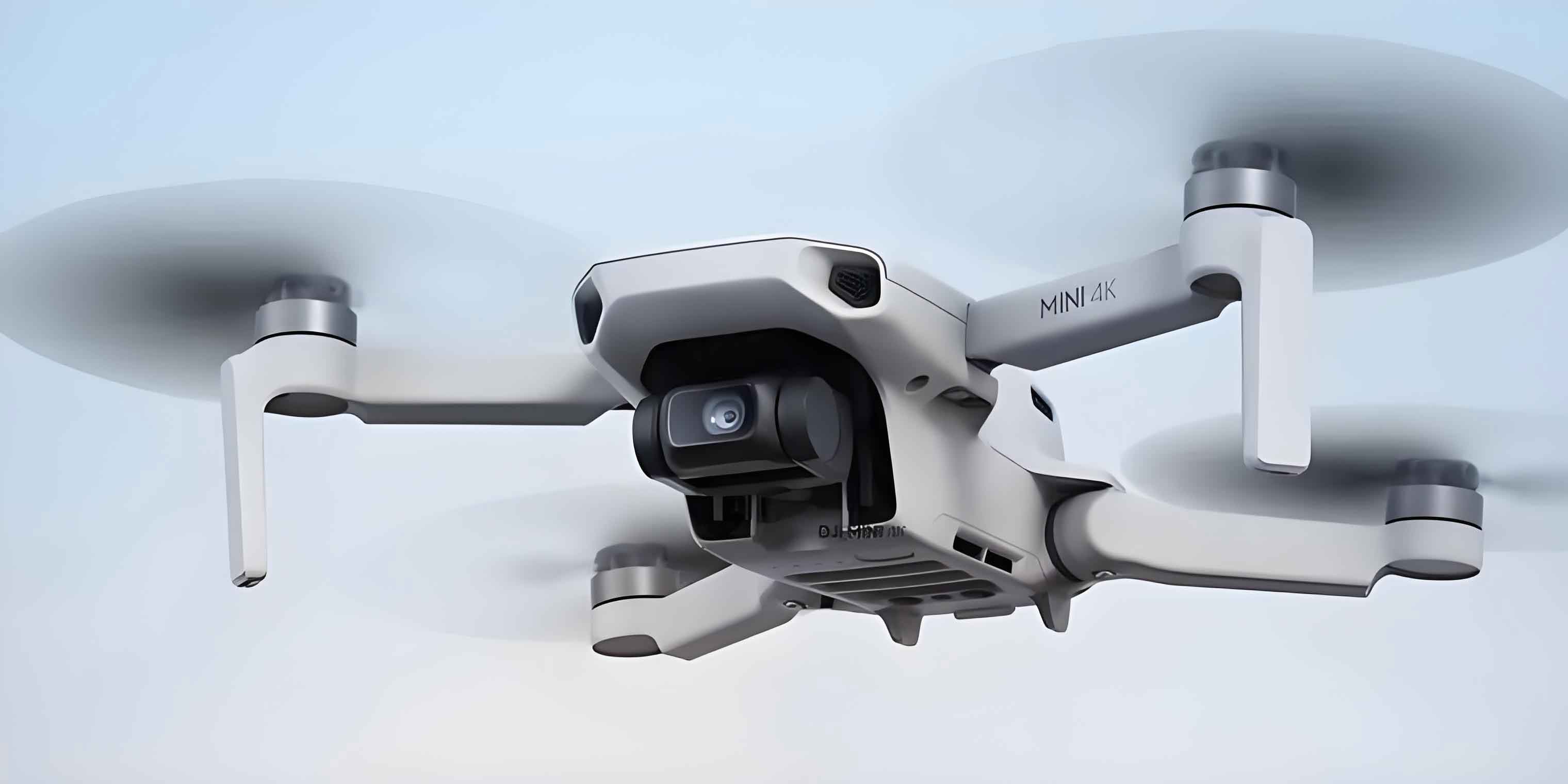
The rapid miniaturization and cost reduction of Unmanned Aerial Vehicles (UAVs) have propelled UAV drone networks into the spotlight for their remarkable capability to enable sophisticated multi-UAV collaborative operations. In missions ranging from aerial reconnaissance and disaster response to precision agriculture and infrastructure inspection, the coordination among a fleet of UAV drones is paramount. This coordination is fundamentally reliant on efficient, reliable, and low-latency communication protocols that can handle the dynamic nature of airborne networks.
This paper focuses on a centralized UAV drone network architecture, which has gained significant traction due to its inherent advantages in coordination and control. In such a topology, a designated central UAV drone node assumes the role of a network coordinator, managing all subordinate UAV drone nodes. This structure eliminates the extensive overhead and uncertainty associated with distributed negotiation protocols common in mobile ad-hoc networks. By providing a unified scheduling authority, it effectively minimizes data packet collisions and transmission redundancies, thereby enhancing overall network stability and cooperative efficiency. A critical requirement in many collaborative UAV drone missions is the ability for the central node to issue commands not to the entire fleet via broadcast, but to specific, task-oriented subgroups through multicast communication. Consequently, designing a reliable multicast protocol characterized by minimal latency and low collision probability is of utmost importance for effective UAV drone swarm management.
Traditional Medium Access Control (MAC) protocols, particularly those based on Time Division Multiple Access (TDMA), have been widely studied. However, their designs are often optimized for communication scenarios involving a single, static antenna mode—either purely omnidirectional or purely directional. The advent and proliferation of smart antenna and adaptive antenna array technologies have introduced new dimensions to network design. Modern UAV drones can be equipped with antennas capable of dynamically switching between omnidirectional and directional modes to adapt to varying channel conditions and diverse service requirements. This hybrid antenna capability presents both opportunities and significant challenges for MAC protocol design.
The two predominant operational modes for such smart antennas in UAV drone networks are Omnidirectional Transmit with Directional Receive (OTDR) and Directional Transmit with Omnidirectional Receive (DTOR). While OTDR simplifies neighbor discovery, it may suffer from excessive interference. DTOR, on the other hand, allows for longer-range, focused transmissions but introduces complexity in the initial network setup and synchronization, especially when external positioning systems like GPS are unreliable or unavailable. Existing hybrid-mode TDMA protocols for UAV drone networks face several key limitations. Firstly, achieving fine-grained clock synchronization within a communication frame (intra-frame synchronization) under a DTOR model without prior GPS-derived location information is nontrivial. Secondly, many protocols employ a fixed-duration time frame structure. This rigidity leads to poor slot utilization—slots remain idle under light traffic loads, while under heavy loads, packets may experience excessive queuing delays as they wait for the next fixed frame to begin, even if slots are available in the current frame. Thirdly, existing protocols often lack efficient mechanisms for multicast communication, typically resorting to either inefficient omnidirectional broadcasts (wasting energy and causing interference) or time-consuming directional scans across all sectors.
To address these challenges, this paper proposes a novel Sector-based Collaborative Optimized Protocol for Hybrid antenna mode Time Division Multiple Access, designated as SCOP-HTDMA. The protocol is designed for a centralized network of UAV drones, all equipped with identical dual-mode (omnidirectional/directional) smart antennas. The core contributions are threefold, each targeting a specific shortcoming of prior work.
1. Geomagnetic Field-Assisted Sector Confirmation Mechanism: We introduce a novel mechanism that leverages the Earth’s geomagnetic field to establish a common directional reference for all UAV drone nodes. By employing binary encoding of antenna sectors based on magnetic North and exploiting the geometrical symmetry between transmitting and receiving sectors, this mechanism enables reliable intra-frame clock synchronization and network establishment in DTOR mode without requiring prior GPS location or timing information.
2. Traffic-Adaptive Dynamic Time Frame Structure: We propose an optimized time frame structure that dynamically adjusts its length based on the instantaneous traffic load within the network. This departs from the fixed-frame paradigm, allowing the protocol to shorten frames during light load to reduce latency and efficiently accommodate more transmissions during high load, thereby significantly improving slot utilization.
3. Sector-Aware Omnidirectional-Directional Collaborative Multicast Mechanism: We design an intelligent multicast strategy that judiciously chooses between omnidirectional and directional transmissions (or a combination of both) based on the spatial distribution of the target UAV drone nodes relative to the central node. This mechanism minimizes the number of time slots required for reliable multicast delivery, reducing both latency and channel resource waste.
The remainder of this paper is organized as follows. First, we detail the network model and formally describe the problems. Next, we present the comprehensive design of the SCOP-HTDMA protocol, explaining the three key mechanisms in depth. Following this, we provide a theoretical performance analysis comparing SCOP-HTDMA with two relevant baseline protocols. We then outline the complete operational workflow of the protocol. Finally, we present and discuss simulation results that validate the performance advantages of our proposed protocol under various network conditions.
Network Model and Problem Formulation
The network model underpinning the SCOP-HTDMA protocol is a centralized architecture, as illustrated conceptually in the figure. This model consists of a single central UAV drone node and a set of \(N\) subordinate service UAV drone nodes, where \(N\) can scale up to several tens. All UAV drones in the network are assumed to be identical in terms of communication hardware, each equipped with the same smart antenna system capable of operating in two distinct modes.
1.1 Antenna and Communication Model
The antenna model is central to the protocol’s operation. Each UAV drone’s smart antenna can switch between:
• Omnidirectional Mode: In this mode, the antenna radiates power uniformly in all horizontal directions, providing broad coverage but limited range due to path loss. The omnidirectional communication radius is denoted as \(D_o\).
• Directional Mode: In this mode, the antenna concentrates its radiation pattern into a narrow, high-gain beam towards a specific sector. This dramatically extends the communication range within that sector but restricts coverage to a confined angular area. The directional communication radius is denoted as \(D_d\), where typically \(D_d > D_o\). The beamwidth is assumed to be \(60^\circ\), dividing the horizontal plane into \(K = 6\) sectors.
The relationship \(D_o = 0.5 \times D_d\) is used in our model, meaning the omnidirectional range is half the directional range. This reflects the practical trade-off between coverage area and signal strength.
1.2 Problem Description
Analysis of existing hybrid-antenna TDMA protocols reveals several specific shortcomings that our work aims to resolve:
Problem 1: GPS-Independent Synchronization in DTOR Mode. Many protocols rely on GPS for both positioning and timing to facilitate directional beamforming and slot alignment. In contested or degraded environments where GPS signals are jammed or spoofed, this dependency becomes a critical vulnerability. The challenge is to design a MAC-layer mechanism that allows a UAV drone transmitting directionally to be “heard” by a UAV drone receiving omnidirectionally, and for the receiver to subsequently determine the precise directional sector to use when replying—all without shared prior location or synchronized clock information from GPS.
Problem 2: Inflexible Time Frame Leading to Low Utilization. Protocols like CU-MAC employ a fixed-duration time frame divided into Control Intervals (CI) and Service Intervals (SI). While the CI length may be adaptive, the overall frame length remains constant. This creates inefficiency: if a data packet arrives just after a node’s assigned slot in the SI, it must wait nearly an entire frame duration before the next transmission opportunity, unnecessarily increasing latency. Conversely, under light load, many slots in the fixed frame remain unused, wasting channel resources. A dynamic frame structure that contracts and expands based on actual demand is needed.
Problem 3: Inefficient Multicast in Hybrid Antenna Networks. For multicast communications from the central UAV drone to a selected group of subordinate UAV drones, naive strategies are inefficient. Using only omnidirectional mode fails to reach nodes outside \(D_o\) but within \(D_d\). Using only directional mode requires the central node to sequentially beamform to every sector containing at least one target node. If all or some target nodes lie within \(D_o\), an omnidirectional transmission could service them in a single slot, making a full directional scan wasteful. An intelligent, adaptive multicast strategy is required to minimize slot consumption.
SCOP-HTDMA Protocol Design
This section elaborates on the design of the SCOP-HTDMA protocol, detailing its time frame structure, the three core innovative mechanisms, and their integration.
2.1 Hierarchical and Dynamic Time Frame Structure
The SCOP-HTDMA protocol operates over a repeating superframe structure, but unlike prior work, the length of this superframe is not fixed. The structure of the very first superframe (initialization) differs from subsequent ones (steady-state).
First Superframe (Network Initialization): This frame is dedicated to neighbor discovery and fixed time slot assignment for all joining UAV drone nodes. It is subdivided into two distinct phases:
1. Omnidirectional Neighbor Discovery Phase: The central UAV drone broadcasts beacon frames omnidirectionally. Subordinate UAV drone nodes within \(D_o\) receive these beacons and contend for network entry during a following contention period.
2. Directional Neighbor Discovery Phase: After omnidirectional nodes have joined, the central node switches to directional mode and sequentially broadcasts beacons in each sector. UAV drones located outside \(D_o\) but within \(D_d\) receive the beacon in their respective sector and contend for entry. This two-phase approach reduces collision probability during the contention process.
Subsequent Superframes (Steady-State Operation): From the second superframe onward, the structure consists of two main parts:
• Broadcast & Control Period: The central UAV drone directionally broadcasts a beacon in each sector. This beacon contains the time slot allocation map for the current superframe. A very short omnidirectional pulse is also transmitted at the start to allow nodes within \(D_o\) to update their status.
• Data Transmission Period: This period is further divided into:
– Fixed Allocation Slots: Pre-assigned slots for subordinate nodes to send their basic traffic (e.g., status updates) to the central node.
– Dynamic Allocation Slots: Slots that can be assigned on-demand by the central node for extra or multicast traffic.
The total superframe length \(T_f\) is dynamically determined as:
$$T_f = \min(T_{total}, T_{max})$$
where \(T_{total}\) is the sum of all broadcast, fixed, and dynamic slot durations calculated for the current frame, and \(T_{max}\) is a hard upper bound (e.g., 100 ms) to guarantee a maximum latency for basic traffic.
2.2 Geomagnetic Field-Assisted Sector Confirmation Mechanism
This mechanism solves Problem 1, enabling DTOR-mode synchronization without GPS. The Earth’s geomagnetic field provides a stable, globally available directional reference (Magnetic North). Every UAV drone in the network is assumed to have a magnetometer, allowing it to align its local coordinate system with Magnetic North.
1. Sector Encoding: Each UAV drone, using its magnetometer, defines its antenna sectors relative to Magnetic North. Starting from North (0°) as sector 0, sectors are numbered sequentially in a clockwise direction. For a \(K\)-sector configuration, sectors are labeled using \(\lceil \log_2(K) \rceil\)-bit binary codes. For example, with \(K=8\) sectors:
| Azimuth | Sector Code | Azimuth | Sector Code |
|---|---|---|---|
| North | 000 | South | 100 |
| Northeast | 001 | Southwest | 101 |
| East | 010 | West | 110 |
| Southeast | 011 | Northwest | 111 |
2. Symmetric Sector Determination: When the central UAV drone \(A\) directionally transmits a beacon from its sector with code \(S_A\) (e.g., 001 for Northeast), it includes \(S_A\) in the beacon packet. A receiving subordinate UAV drone \(B\), operating in omnidirectional mode, receives this packet. Crucially, due to the common magnetic reference, the sector from which \(B\) receives the signal is geometrically opposite to the sector from which \(A\) sent it. Therefore, \(B\) can calculate the sector code \(S_B\) it should use to talk back to \(A\) by performing a bitwise operation: it inverts the most significant bit (MSB) of \(S_A\). For \(S_A = 001\) (Northeast), inverting the MSB (0→1) gives \(S_B = 101\) (Southwest). This simple operation allows \(B\) to know the correct directional sector for its response without any prior knowledge of \(A\)’s location, enabling the handshake necessary for network entry and synchronization.
2.3 Traffic-Adaptive Dynamic Time Frame Optimization
This addresses Problem 2. The protocol abandons the fixed superframe. After the fixed and dynamic slots are allocated for a given cycle, the central node calculates \(T_{total}\). The actual frame duration \(T_f\) is set to this value, capped at \(T_{max}\). This means:
• Under light load, when few UAV drones have data or multicast is simple, \(T_f\) becomes short. This reduces the waiting time for packets generated just after a node’s slot, directly lowering the average end-to-end delay.
• Under heavy load, the frame expands to accommodate all scheduled transmissions, but the \(T_{max}\) bound ensures that basic traffic does not experience unbounded latency.
This dynamic adjustment significantly improves slot utilization (\(\eta\)), which can be conceptually defined as the ratio of slots used for successful data transmission to the total slots available in a period. A fixed frame often has \(\eta < 1\) due to idle slots, while SCOP-HTDMA strives to keep \(\eta\) close to 1 by tailoring the frame to the demand.
2.4 Omnidirectional-Directional Collaborative Multicast Mechanism
This intelligent mechanism solves Problem 3. The central UAV drone maintains two neighbor tables: an Omnidirectional Neighbor Table \(N_o\) (nodes within \(D_o\)) and a Directional Neighbor Table \(N_d\) (all nodes, including their sector information). When a multicast packet destined for a set of nodes \(\tau\) arrives, the central node executes the following decision algorithm:
1. If \(\tau \subseteq N_o\) (all targets are within omnidirectional range), transmit the packet once using omnidirectional mode. Slot cost \(C_{mcast} = 1\).
2. Else, if \(\tau \cap N_o \neq \emptyset\) (some targets are within \(D_o\), others are outside), let the targets outside \(D_o\) be distributed across \(n\) distinct directional sectors. The central node evaluates two strategies:
a. Collaborative Strategy: First, send one omnidirectional broadcast to cover nodes in \(N_o\). Then, send \(n\) directional transmissions, one per required sector for the remaining nodes. Total slot cost: \(C_{collab} = 1 + n\).
b. Directional-Only Strategy: Ignore omnidirectional range and send directional transmissions to all \(m\) sectors that contain any target node in \(\tau\). Total slot cost: \(C_{dir} = m\). Note that \(m \ge n\), and often \(m = n+1\) or more.
The strategy with the lower slot cost is chosen: \(C_{mcast} = \min(C_{collab}, C_{dir})\).
3. If \(\tau \cap N_o = \emptyset\) (no targets within \(D_o\)), use the directional-only strategy, transmitting to all \(m\) relevant sectors: \(C_{mcast} = m\).
This algorithm minimizes the number of time slots consumed for multicast, directly improving network capacity and reducing the latency for delivering multicast packets to the entire target group of UAV drones.
Theoretical Performance Analysis
We provide a brief theoretical comparison of SCOP-HTDMA with two baseline protocols: the Position-prediction-based Directional MAC (PPMAC) and the fixed-frame Centralized UAV MAC (CU-MAC). Consider a steady-state scenario with \(N=20\) UAV drone nodes, each generating basic packets at an interval of 20 ms (50 packets/s).
Average Delay:
• SCOP-HTDMA: The dynamic frame length \(T_f\) adapts to the traffic. With 20 nodes sending small packets, \(T_{total}\) might be ~13.5 ms. Assuming packets arrive uniformly, the average queuing delay is approximately \(T_f / 2\). Thus, the average delay \(D_s\) is roughly:
$$D_s \approx \frac{T_f}{2} \approx \frac{13.5 \text{ ms}}{2} = 6.75 \text{ ms}$$
• PPMAC: As a contention-based protocol, its delay under ideal no-collision conditions might be low (~5 ms). However, with 20 competing UAV drones, collision probability is significant, leading to random backoffs and a much higher average delay \(D_p\) that is difficult to bound.
• CU-MAC: With a fixed frame length of 100 ms and nodes assigned slots, a packet arriving just after its node’s slot waits nearly a full frame. The average delay \(D_c\) can be approximated by considering packets arriving uniformly over the 100 ms frame. The delay for packets destined for the first slot can be near 0 ms, for the last slot near 100 ms. A simple approximation is:
$$D_c \approx \frac{0 + 100}{2} = 50 \text{ ms}$$
Furthermore, the CI duration (e.g., 10 ms) imposes a minimum access delay.
Multicast Slot Cost: Let the network have \(K=6\) sectors. For a multicast group \(\tau\) where targets lie in \(M\) sectors.
• CU-MAC/Directional-Only: Would typically scan all \(M\) sectors. Cost \(C_{dir} = M\).
• SCOP-HTDMA: Employs the collaborative algorithm. If some targets are in \(N_o\), and the remaining are in \(n\) sectors (\(n \le M\)), the cost is \(C_s = \min(1+n, M)\). In the best case (\(\tau \subseteq N_o\)), \(C_s = 1\), offering a 6x reduction for \(K=6\). Even in mixed scenarios, \(1+n\) is often less than \(M\).
This analysis indicates that SCOP-HTDMA offers lower and more predictable latency than CU-MAC, avoids the collision-induced delay variance of PPMAC, and provides superior efficiency for multicast communications among UAV drones.
Protocol Operational Workflow
The step-by-step operation of the SCOP-HTDMA protocol is as follows:
Phase 1: Network Initialization (First Superframe)
1. The central UAV drone starts with an omnidirectional beacon broadcast.
2. Subordinate UAV drones within \(D_o\) receive the beacon, wait for the contention period, and send association requests.
3. The central node assigns fixed slots to these nodes and sends confirmations.
4. The central node then switches to directional mode and broadcasts a beacon in each sector sequentially.
5. Subordinate UAV drones outside \(D_o\) receive the beacon in their sector, use the geomagnetic sector confirmation mechanism to determine the reply sector, and send association requests during the contention period.
6. The central node records their sector, assigns fixed slots, and directionally replies with confirmations.
Phase 2: Steady-State Operation (Subsequent Superframes)
1. At the beginning of each superframe, the central node sends a short omnidirectional pulse. Nodes within \(D_o\) that receive it record/update their “in-\(D_o\)” status.
2. The central node directionally broadcasts the slot allocation map (beacon) in each sector.
3. Subordinate nodes receive the beacon, extract their slot schedule, and wait for their assigned slot(s).
4. In their fixed slots, subordinate nodes send data to the central node. The packet header includes the sender’s sector ID and a flag indicating if it is within \(D_o\) of the central node (based on the pulse). The central node uses this to update \(N_o\) and \(N_d\).
5. If the central node has a multicast packet, it runs the collaborative multicast algorithm:
a. Checks if all destination UAV drones are in \(N_o\) -> Use omnidirectional mode.
b. Else, calculates slot costs for collaborative vs. directional-only strategies.
c. Executes the strategy with the lower cost.
6. The superframe ends after the last allocated slot. The next superframe begins immediately, with a new dynamic length calculated based on pending traffic from UAV drones.
Simulation Results and Analysis
We implemented and evaluated the SCOP-HTDMA protocol using the OPNET simulator, comparing its performance against PPMAC and CU-MAC. Key simulation parameters are summarized below:
| Parameter | Value | Parameter | Value |
|---|---|---|---|
| Simulation Area | 5 km × 5 km | Data Rate | 6 Mbps |
| Basic Packet Size | 128 Bytes | Video Packet Size | 64-2048 Bytes |
| Mobility Model | Smooth Turn | \(D_o / D_d\) | 0.5 km / 1.0 km |
| Basic Packet Rate | 10 packet/s/node | Video Traffic Load | 0-300 packet/s |
1. Impact of Network Scale (Number of UAV Drones)
Figure 6 shows the packet loss rate as the number of UAV drones increases. PPMAC, being contention-based, suffers a steep rise in packet loss due to increased collisions. Both CU-MAC and SCOP-HTDMA maintain very low loss rates due to their collision-free TDMA nature. SCOP-HTDMA shows a marginal advantage, likely because its directional transmissions create less interference compared to CU-MAC’s mix of omnidirectional and directional messages.
Figure 7 illustrates the average packet delay. PPMAC’s delay grows significantly with network size. CU-MAC’s fixed 100 ms frame leads to a high baseline delay (~50-60 ms) that increases slightly as more nodes are added (later slots). SCOP-HTDMA, with its dynamic frame shortening, maintains a consistently lower average delay (around 20-30 ms) across all scales, demonstrating its superior efficiency in managing access for a growing fleet of UAV drones.
2. Impact of Traffic Load (Packet Size)
Figure 8 examines delay under varying packet sizes (simulating different traffic loads). For small packets (light load), CU-MAC’s fixed-frame penalty is clear, resulting in the highest delay. PPMAC performs well under very light load but its delay becomes unpredictable. SCOP-HTDMA excels in this regime, offering the lowest delay by contracting the frame. As packet size (load) increases, the delay for all protocols rises, but SCOP-HTDMA continues to maintain a favorable position, successfully balancing between low latency and channel utilization.
3. Performance of Multicast Communication
Figure 9 presents a critical evaluation of multicast performance. It shows the average delay for a multicast packet as the number of sectors \(M\) containing target UAV drones increases. For CU-MAC and a directional-only approach, the delay increases linearly with \(M\), as each additional sector requires an extra transmission slot. PPMAC also shows increasing delay due to the need to contend for or reserve more channel time. In contrast, SCOP-HTDMA, employing its collaborative multicast mechanism, exhibits a much slower increase in delay. When some target UAV drones are within the omnidirectional range \(D_o\), the protocol often requires only one omnidirectional slot plus a few directional ones (\(1+n\)), rather than \(M\) directional slots. This intelligent sector-aware strategy validates its effectiveness in conserving time slots and reducing multicast latency in UAV drone networks.
Conclusion
This paper presented SCOP-HTDMA, a novel dynamic scheduling TDMA protocol designed for centralized UAV drone ad-hoc networks employing hybrid (omnidirectional/directional) antenna systems. The protocol specifically addresses key limitations in existing solutions: the dependency on GPS for synchronization in DTOR mode, the inefficiency of fixed time-frame structures, and the lack of optimized multicast support.
Three core mechanisms were introduced and developed. The Geomagnetic Field-Assisted Sector Confirmation Mechanism provides a robust, GPS-independent method for UAV drones to achieve intra-frame synchronization and establish communication links. The Traffic-Adaptive Dynamic Time Frame Optimization ensures high slot utilization and maintains low latency by adjusting the superframe length according to real-time network demand. The Sector-Aware Omnidirectional-Directional Collaborative Multicast Mechanism intelligently minimizes the resource cost of group communications, which is vital for efficient command and control in UAV drone swarms.
Extensive simulation results demonstrate that SCOP-HTDMA outperforms the baseline protocols PPMAC and CU-MAC across several key metrics. It maintains a lower packet loss rate and significantly reduces average packet delay as the number of UAV drones scales. It excels under light traffic loads due to its dynamic frame shortening and shows superior efficiency in multicast scenarios. These advantages make SCOP-HTDMA a compelling candidate for MAC-layer protocols in mission-critical, scalable, and dynamic UAV drone networks. Future work will investigate enhancements to further reduce collision probability during the initial network joining phase under very large-scale deployments and explore integration with cross-layer optimization techniques.