
The rapid development of low-altitude economy and unmanned aerial vehicle (UAV) technology has brought significant convenience but has simultaneously introduced a series of severe low-altitude security challenges. To effectively address these threats, this research integrates multi-dimensional anti-UAV technical means to construct a collaborative three-tier defense system architecture: “Alert Zone – Defense Zone – Core Zone.” At the technical level, the principles of reconnaissance and detection (including radar, electro-optical, acoustic, and radio frequency detection), communication suppression, navigation spoofing, physical destruction, and integrated countermeasures are systematically analyzed. Within the system architecture design, a hierarchical strategy is defined: the Alert Zone primarily relies on multi-source reconnaissance and detection, the Defense Zone integrates soft and hard-kill measures, and the Core Zone deploys high-precision interception equipment. System-wide coordination across these zones is achieved through robust communication and command-and-control systems. This study aims to provide comprehensive theoretical guidance and practical solutions for ensuring the security of key areas, thereby enhancing defense capabilities against low, slow, and small (LSS) UAV drones and safeguarding national security and social stability.
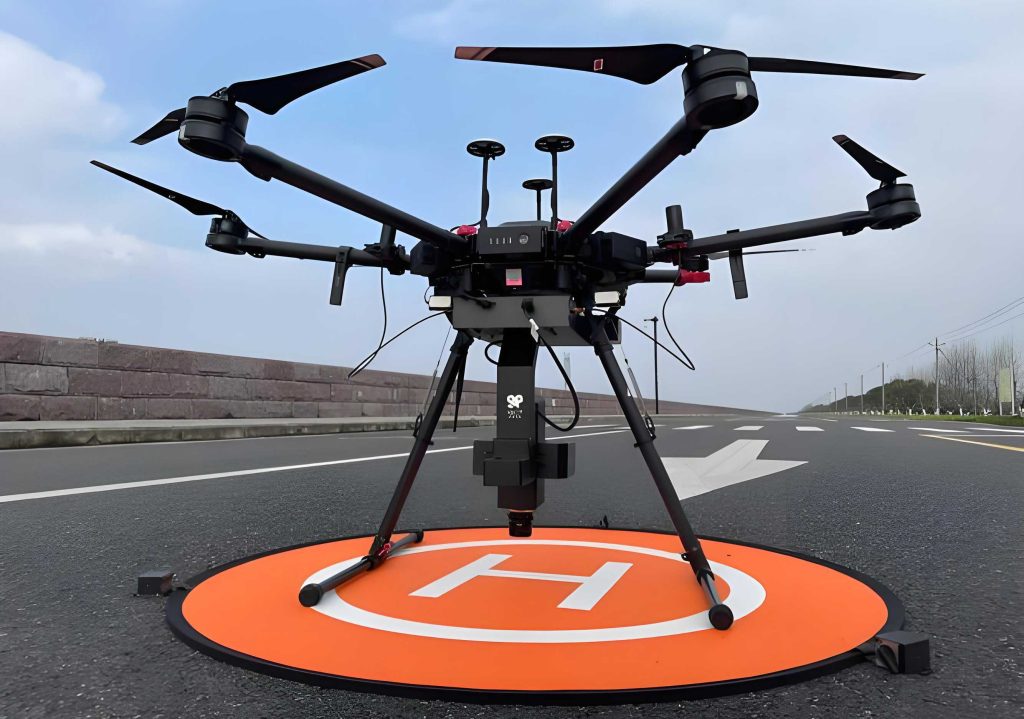
The widespread proliferation of UAV drones, particularly consumer-grade models, has transformed numerous military and civilian sectors. Their low cost, ease of operation, and versatility make them powerful tools. However, these same attributes render them potent threats when used maliciously. LSS UAV drones pose a unique challenge due to their low flight altitude (typically below 1000m), small radar cross-section (RCS), diverse signal protocols, rapid ascent capability, and high maneuverability. These characteristics allow them to evade traditional air defense systems, making them ideal for unauthorized surveillance, smuggling, or even carrying explosive payloads to attack critical infrastructure such as military bases, government buildings, airports, and nuclear power plants. The need for an effective, layered defense system to protect such key areas has become a global imperative.
Characteristics and Threat Analysis of LSS UAV Drones
Effectively countering a threat begins with understanding it. LSS UAV drones possess distinct operational and physical characteristics that define both their utility and their danger.
- Low Altitude & Slow Speed: They operate primarily in congested low-altitude airspace, often below 500 meters, where ground clutter heavily interferes with radar detection.
- Small Radar Cross-Section (RCS): Their compact size and often plastic/composite construction result in an RCS comparable to a large bird (0.01 m² or less), making them difficult to distinguish from background noise for conventional radar systems.
- Diverse and Agile Control: They utilize various communication links (Wi-Fi, Bluetooth, proprietary RF) and navigation systems (GPS, GLONASS, BeiDou). Their ability to hover, perform sharp turns, and fly at very low speeds complicates kinematic tracking and prediction.
- Rapid Deployment: A small UAV drone can be launched and reach operational altitude within seconds, leaving minimal reaction time for defenders.
- Low Cost and Accessibility: The commercial availability and affordability of capable UAV drone platforms lower the barrier to malicious use, enabling swarm tactics where the loss of individual units is acceptable.
The threat spectrum is broad. In military contexts, a single UAV drone can conduct reconnaissance over sensitive installations or, when weaponized, execute precision strikes. In the civilian domain, a UAV drone intruding into airport airspace can cause massive economic disruption and safety hazards, while one approaching critical energy infrastructure represents a significant security risk. The following table summarizes the core characteristics and associated defense challenges of LSS UAV drones.
| Characteristic | Description | Primary Defense Challenge |
|---|---|---|
| Low Observability | Small size, low RCS, non-metallic materials. | Difficult for traditional surveillance radar to detect at sufficient range. |
| Low & Slow Flight Profile | Operates below 1000m, often <100m; speeds <50 m/s. | Merges with ground clutter in radar returns; visual and acoustic detection may be limited by terrain. |
| Agile Maneuverability | Capable of hovering, vertical take-off/landing, rapid direction changes. | Complicates fire-control solutions for kinetic interceptors; requires high-update-rate tracking. |
| Diverse C2 & Nav Links | Uses commercial Wi-Fi, ISM band radio, GPS, etc. Signals can be encrypted or frequency-hopping. | Requires broad-spectrum RF sensing and adaptable jamming/spoofing techniques. |
| High Availability | Commercially available, inexpensive, easy to modify. | Enables low-cost, potentially large-scale “swarm” attacks that can saturate point defenses. |
Analysis of Multi-Dimensional Anti-UAV Technology Means
A robust defense against UAV drones requires a toolkit of complementary technologies, each addressing a different vulnerability in the drone’s operational chain: Detect, Identify, Track, and Defeat (DITD).
1. Reconnaissance and Detection Technologies
This is the foundational layer. No countermeasure can be applied without first detecting and classifying the UAV drone threat. No single sensor is perfect, necessitating a multi-sensor fusion approach.
- Radar Detection: Modern radar systems tailored for LSS targets employ higher frequencies (e.g., Ku, Ka, W-band), sophisticated clutter filtering (e.g., Space-Time Adaptive Processing – STAP), and micro-Doppler analysis to distinguish UAV drone rotor blades from other moving objects. The probability of detection ($P_d$) for a radar can be modeled as a function of signal-to-noise ratio (SNR):
$$P_d = f\left(\frac{P_t G_t G_r \lambda^2 \sigma}{(4\pi)^3 R^4 k T_0 B F_n L}\right)$$
where $P_t$ is transmit power, $G_t$ and $G_r$ are antenna gains, $\lambda$ is wavelength, $\sigma$ is the target’s RCS (very small for a UAV drone), $R$ is range, $k$ is Boltzmann’s constant, $T_0$ is noise temperature, $B$ is bandwidth, $F_n$ is noise figure, and $L$ is system loss. The small $\sigma$ and $R^4$ dependency highlight the challenge. - Electro-Optical/Infrared (EO/IR) Detection: EO/IR sensors provide high-resolution imagery for positive visual identification. IR cameras are particularly effective at night or in low-light conditions, detecting the heat signature from the UAV drone’s motors and electronics. Machine learning algorithms are increasingly used for automatic target recognition (ATR) in video feeds.
- Acoustic Detection: Passive acoustic sensor arrays can detect and localize UAV drones based on the unique acoustic fingerprint of their motors and propellers. This method is stealthy and effective at short ranges but is highly susceptible to environmental noise and has limited range. Time Delay of Arrival (TDOA) techniques are used for localization.
- Radio Frequency (RF) Detection: RF sensors scan the electromagnetic spectrum to detect the control, telemetry, and video transmission signals emitted by a UAV drone. This method can provide early warning, sometimes before visual contact, and can identify the specific make/model of the drone by its signal fingerprint. It is purely passive but ineffective against pre-programmed or autonomous UAV drones that emit no signals during flight.
| Detection Technology | Principle | Advantages | Limitations |
|---|---|---|---|
| Radar | Active emission and reception of radio waves. | Long range, all-weather, provides range/velocity. | Struggles with low RCS/clutter; can be expensive; active emission reveals position. |
| EO/IR | Passive reception of visual/thermal radiation. | Provides positive identification, high accuracy. | Range limited by weather (fog, rain), line-of-sight required. |
| Acoustic | Passive reception of sound waves. | Stealthy, low cost, good for urban canyons. | Very short range, highly environment-dependent, poor in noise. |
| RF Sensing | Passive reception of UAV C2/Nav signals. | Early warning, can identify drone type, passive. | Ineffective against autonomous/silent drones; complex signal environment. |
2. Countermeasure Technologies
Once a hostile UAV drone is detected and confirmed, countermeasures are employed to negate the threat. These are broadly categorized as “soft-kill” (non-destructive) and “hard-kill” (destructive).
- Communication Suppression (Jamming – Soft Kill): This involves broadcasting high-power noise or deceptive signals on the frequencies used by the UAV drone for command & control (C2) and navigation (e.g., GPS). The goal is to break the radio link, typically causing the drone to execute a fail-safe procedure like returning-to-home (RTH), hovering, or landing. The effectiveness depends on jamming-to-signal ratio (JSR):
$$JSR = \frac{P_j G_j / L_j}{P_s G_s / L_s}$$
where $P_j, G_j, L_j$ are the jammer’s power, gain, and path loss, and $P_s, G_s, L_s$ are the signal source’s equivalents. High JSR is needed to overcome the legitimate signal. - Navigation Spoofing (Soft Kill): A more sophisticated technique than jamming. The spoofer generates counterfeit but stronger Global Navigation Satellite System (GNSS) signals (e.g., GPS, BeiDou) that trick the UAV drone’s receiver into calculating a false position, velocity, or time. This can be used to steer the drone away from a protected area or into a capture net. Spoofing requires precise knowledge of signal structure and timing.
- Physical Destruction (Hard Kill): This involves physically damaging or capturing the UAV drone.
- Directed Energy Weapons (DEW): High-Energy Laser (HEL) systems focus a coherent beam of light on the drone, heating its critical components (e.g., battery, flight controller, structure) to failure. The required energy on target ($E_{req}$) is a function of material properties and engagement time. High-Power Microwave (HPM) weapons emit a burst of wide-area RF energy to fry the drone’s electronic circuits.
- Kinetic Impact: This includes conventional firearms, specialized anti-drone munitions, or nets launched from another drone or a ground system. Nets are popular for their low collateral damage in dense urban environments.
| Countermeasure Type | Technology | Mechanism of Action | Key Considerations |
|---|---|---|---|
| Soft-Kill | RF Jamming | Disrupts C2 and/or Nav links. | Can cause collateral interference; illegal in many civilian bands. |
| GNSS Spoofing | Feeds false position/navigation data. | Technically complex; risk of affecting nearby legitimate receivers. | |
| Hard-Kill | High-Energy Laser (HEL) | Thermal ablation of critical components. | Line-of-sight only; atmospheric absorption/scintillation; high power requirement. |
| High-Power Microwave (HPM) | Induces damaging currents in electronics. | Area effect; risk to friendly electronics; shorter effective range. | |
| Kinetic/Nets | Physical impact or entanglement. | Risk of falling debris; limited range and magazine depth. |
Architecture of the Key Area Anti-UAV Defense System
A layered, integrated system-of-systems approach is essential for reliable defense. The proposed architecture divides the protected airspace into three concentric zones, each with a specific mission and set of deployed technologies.
1. Zone Definition and Layered Strategy
- Alert Zone (Outermost Layer): Extends from the periphery of the key area out to the maximum practical detection range (e.g., 5-30 km). Its primary mission is early warning and track initiation. This zone is saturated with long-range surveillance sensors (e.g., 3D surveillance radars, wide-area EO/IR, RF sensors) fused to provide a comprehensive air picture. No active countermeasures are typically employed here to avoid unnecessary electromagnetic interference and to allow for threat assessment.
- Defense Zone (Intermediate Layer): Surrounds the immediate vicinity of the high-value asset (e.g., 1-5 km radius). This is the primary engagement zone. Upon handover of a confirmed threat track from the Alert Zone, the command system selects and deploys appropriate countermeasures. Soft-kill systems (jammers, spoofers) are often used first to attempt a non-destructive defeat. If unsuccessful or if the threat is deemed severe (e.g., a weaponized UAV drone), hard-kill systems (lasers, interceptors) are activated.
- Core Zone (Innermost Layer): The final defensive barrier directly over or within the critical infrastructure itself (e.g., <1 km radius). This zone employs last-ditch, point-defense systems characterized by very high precision and short reaction times. Examples include compact high-power laser dazzlers, automated net guns, or microwave systems. The goal is to neutralize any UAV drone that penetrates the outer layers immediately before it can cause harm.
| Defense Zone | Primary Mission | Key Technologies Deployed | Operational Concept |
|---|---|---|---|
| Alert Zone | Early Warning, Detection, Tracking | Surveillance Radar, EO/IR, RF Sensors, Acoustic Arrays (fused) | Provide maximum reaction time; classify and prioritize tracks; no active engagement. |
| Defense Zone | Threat Assessment & Engagement | Tracking Radar, RF Jammers, GNSS Spoofers, HEL, HPM, Kinetic Interceptors | Execute layered countermeasures: soft-kill first, escalating to hard-kill based on Rules of Engagement (RoE). |
| Core Zone | Final Intercept & Point Defense | High-Accuracy Trackers, High-Power/Low-Collateral Lasers, Automated Net Systems | Ultra-short reaction time; neutralize imminent threats with minimal collateral damage. |
2. System Integration and Collaborative Operation
The efficacy of the three-zone architecture depends entirely on seamless integration and data fusion. A centralized or distributed Command, Control, Communication, and Intelligence (C3I) system acts as the “brain.”
- Sensor Fusion: Data from all sensors (radar, EO/IR, RF, acoustic) are fused in real-time to create a single, reliable, and high-fidelity track for each UAV drone, overcoming the limitations of any single sensor. Probabilistic algorithms like Kalman Filters or Particle Filters are used for track estimation:
$$\hat{x}_{k|k} = \hat{x}_{k|k-1} + K_k (z_k – H \hat{x}_{k|k-1})$$
where $\hat{x}$ is the state estimate, $z$ is the measurement, $H$ is the observation matrix, and $K$ is the Kalman gain optimized from sensor covariances. - Dynamic Tasking and Resource Management: The C3I system dynamically allocates sensing and engagement resources based on the threat picture. It decides which sensor to cue for identification, which jammer to activate on which frequency, and which interceptor to fire, optimizing the use of limited resources, especially against drone swarms.
- Unified Human-Machine Interface (HMI): Operators interact with the entire system through a consolidated interface, viewing the common operational picture and authorizing engagements based on pre-defined RoE.
The collaborative workflow can be summarized as: Alert Zone sensors detect → C3I fuses data and declares threat → Track handed to Defense Zone → C3I selects and executes countermeasure → If breach occurs, Core Zone assets activate for final defense.
Challenges, Critical Technologies, and Future Trends
Current Challenges
- Swarm Defense: A coordinated swarm of cheap UAV drones can saturate detection and engagement channels, overwhelming point defenses. Defeating swarms requires cost-effective, wide-area countermeasures and advanced battle management algorithms.
- Autonomous and Resilient UAV Drones: Future threats may use drones with AI-driven navigation that do not rely on external C2 or GNSS, rendering jamming and spoofing ineffective. They may also employ counter-countermeasures like anti-jam antennas or stealth coatings.
- Collateral Damage and RoE: In civilian or mixed environments, the use of kinetic or high-power systems poses risks of falling debris or unintended electronic effects. Developing low-collateral, precise defeat mechanisms is crucial.
- Sensor Fusion in Complex Clutter: Reliably distinguishing a small UAV drone from birds or other clutter in dense urban or natural environments remains a significant signal processing challenge.
- Regulatory and Spectrum Constraints: Jamming and spoofing often operate in restricted radio bands, limiting their legal use in peacetime civilian settings.
Critical Enabling Technologies
- Artificial Intelligence and Machine Learning (AI/ML): Essential for rapid UAV drone classification from sensor data (e.g., micro-Doppler radar signatures, visual images), predicting swarm behavior, and optimizing real-time resource allocation in the C3I system.
- Advanced Sensor Fusion Algorithms: Moving beyond simple correlation to robust fusion techniques that can handle conflicting data, sensor degradation, and deceptive targets.
- Cost-Effective Directed Energy: Continued development in fiber lasers and power systems to make HEL systems more mobile, efficient, and affordable for widespread deployment.
- Adaptive RF Countermeasures: Cognitive jammers that can rapidly learn and adapt to new or frequency-hopping UAV drone signals.
- Quantum Sensing (Future): Quantum radar and magnetometry hold promise for significantly improving detection sensitivity against stealthy UAV drones.
Future Development Trends
- Increased Autonomy in the Kill Chain: Systems will progress towards “detect-to-defeat” autonomy with human oversight, drastically reducing engagement timelines against fast-moving UAV drone threats.
- Networked and Distributed Systems: Defense will shift from single, large systems to networks of smaller, cheaper, and dispersible sensors and effectors, creating a resilient “meshed” defense web.
- Integrated Air Defense (IAD): Dedicated Counter-Unmanned Aircraft Systems (C-UAS) will be integrated into broader IAD networks, sharing data and tasks with systems designed to counter manned aircraft, missiles, and rockets.
- Focus on Pre-emptive and Non-Kinetic Effects: Greater emphasis on cyber-electronic capabilities to defeat UAV drones pre-launch (e.g., hacking ground control stations) or early in flight via non-destructive means.
- Standardization and Interoperability: Push for common data formats, communication protocols, and open architectures to allow “best-of-breed” components from different vendors to work together seamlessly.
The cost-effectiveness ($CE$) of a defense solution against a drone swarm can be conceptualized as a ratio between the threat’s cost and the defender’s cost to defeat it:
$$CE_{\text{defense}} = \frac{\text{Cost of Neutralized Threat Swarm}}{\text{Cost of Defense Assets Used}}$$
For sustainable defense, this ratio must be favorable, driving development towards low-cost-per-engagement effectors like lasers or scalable electronic warfare systems.
Conclusion
The threat posed by malicious or unauthorized UAV drones to key areas is dynamic and evolving. A static, single-technology solution is insufficient. This review advocates for a holistic, multi-layered defense system architecture that strategically combines diverse detection and countermeasure technologies across defined Alert, Defense, and Core Zones. The cornerstone of an effective system is the intelligent integration and fusion of these components through a robust C3I framework. Future success in this domain hinges on advancing critical technologies like AI/ML and directed energy, while simultaneously addressing the profound challenge of cost-effectively defending against intelligent UAV drone swarms. Continuous research, development, and adaptive deployment of such integrated systems are imperative to stay ahead of the threat and ensure the security of vital national and civilian infrastructure.