
In my extensive research and experience in the field of unmanned aerial vehicles, I have dedicated significant effort to understanding the intricacies of flight control systems, particularly for quadrotor drones. The quadrotor drone, with its unique design and capabilities, has revolutionized various sectors, from agriculture and surveillance to logistics and military operations. As a researcher, I find it imperative to delve into the core of these systems—the flight control algorithms—that ensure stability, maneuverability, and reliability in diverse environments. This article aims to provide a detailed exploration of these algorithms, emphasizing their mathematical foundations, practical implementations, and future trajectories, all from my first-person perspective as an enthusiast and expert in this domain. Throughout this discussion, I will frequently refer to the quadrotor drone, as it is the central focus of my analysis, and I will incorporate tables and formulas to summarize key concepts effectively.
The quadrotor drone, characterized by its four rotors arranged in a symmetric configuration, offers advantages such as vertical take-off and landing, agility, and compact design. These features make the quadrotor drone ideal for applications requiring precision and adaptability. However, the complexity of controlling a quadrotor drone stems from its nonlinear, underactuated dynamics, where six degrees of freedom (position and orientation) must be controlled using only four inputs (rotor speeds). In my work, I have observed that mastering these dynamics is crucial for developing robust flight control algorithms. The fundamental challenge lies in designing controllers that can handle external disturbances, model uncertainties, and real-time computational constraints, all while ensuring smooth and accurate flight performance. This review synthesizes my insights into the evolution of these algorithms, highlighting both traditional and advanced approaches.
To begin, I must elaborate on the flight principles of a quadrotor drone. The basic mechanism involves varying the speeds of the four rotors to generate lift and torque, enabling movements like roll, pitch, yaw, and thrust. Typically, in an X-configuration quadrotor drone, two rotors rotate clockwise and the other two counterclockwise to balance angular momentum. By adjusting the rotor speeds differentially, the quadrotor drone can achieve desired orientations and translations. For instance, increasing the speed of one pair of rotors while decreasing another induces rolling or pitching motions. In my analysis, I have found it helpful to summarize these relationships in a table, as shown below, which clearly delineates how rotor speed changes correlate with specific flight maneuvers for a quadrotor drone.
| Flight Maneuver | Rotor 1 Speed | Rotor 2 Speed | Rotor 3 Speed | Rotor 4 Speed |
|---|---|---|---|---|
| Right Roll | Increase | Decrease | Decrease | Increase |
| Left Roll | Decrease | Increase | Increase | Decrease |
| Pitch Up | Increase | Increase | Decrease | Decrease |
| Pitch Down | Decrease | Decrease | Increase | Increase |
| Right Yaw | Decrease | Increase | Decrease | Increase |
| Left Yaw | Increase | Decrease | Increase | Decrease |
This table encapsulates the control logic that I often use when modeling a quadrotor drone. The dynamics can be described mathematically using Newton-Euler equations. Let me denote the quadrotor drone’s state variables: position $(x, y, z)$ and orientation angles $(\phi, \theta, \psi)$ for roll, pitch, and yaw, respectively. The equations of motion for a quadrotor drone are given by:
$$ \begin{align*} m\ddot{x} &= (\cos\phi \sin\theta \cos\psi + \sin\phi \sin\psi) U_1 \\ m\ddot{y} &= (\cos\phi \sin\theta \sin\psi – \sin\phi \cos\psi) U_1 \\ m\ddot{z} &= (\cos\phi \cos\theta) U_1 – mg \\ I_{xx}\ddot{\phi} &= \dot{\theta}\dot{\psi}(I_{yy} – I_{zz}) + l U_2 \\ I_{yy}\ddot{\theta} &= \dot{\phi}\dot{\psi}(I_{zz} – I_{xx}) + l U_3 \\ I_{zz}\ddot{\psi} &= \dot{\phi}\dot{\theta}(I_{xx} – I_{yy}) + U_4 \end{align*} $$
Here, $m$ is the mass of the quadrotor drone, $g$ is gravity, $l$ is the arm length, $I_{xx}, I_{yy}, I_{zz}$ are moments of inertia, and $U_1, U_2, U_3, U_4$ are control inputs related to rotor speeds. Specifically, $U_1$ represents total thrust, while $U_2, U_3, U_4$ control roll, pitch, and yaw torques. These equations highlight the nonlinear and coupled nature of the quadrotor drone system, which I have spent years studying to design effective controllers.
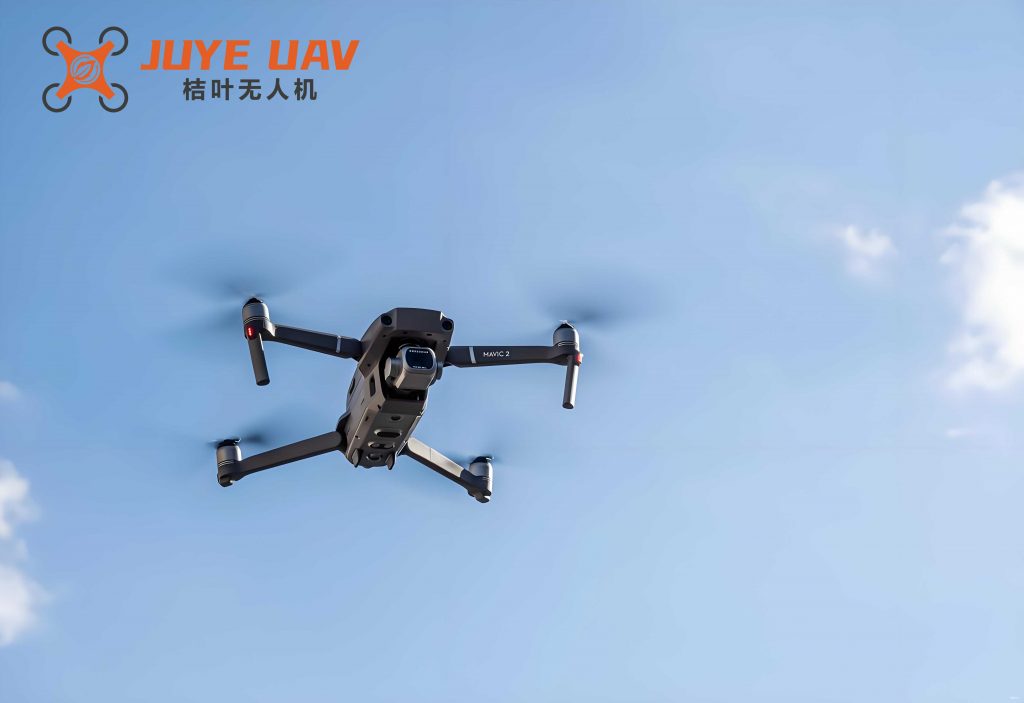
In my investigations, I have found that flight control algorithms for a quadrotor drone typically employ a dual-loop structure: an inner loop for attitude control (stabilizing orientation) and an outer loop for position control (tracking trajectories). This separation simplifies design but requires careful coordination. Below, I will delve into various algorithms, starting with the classic PID control, which has been a cornerstone in my initial work with quadrotor drones.
The Proportional-Integral-Derivative (PID) controller is ubiquitous in quadrotor drone applications due to its simplicity and ease of tuning. In my implementations, I use the standard PID form, where the control output $u(t)$ is computed based on the error $e(t)$ between desired and actual states. The equation is:
$$ u(t) = K_P e(t) + K_I \int_0^t e(\tau) d\tau + K_D \frac{de(t)}{dt} $$
Here, $K_P$, $K_I$, and $K_D$ are proportional, integral, and derivative gains, respectively. For a quadrotor drone, separate PID controllers are often applied to each attitude angle and position axis. However, in my experience, traditional PID has limitations when dealing with the nonlinear dynamics and external disturbances of a quadrotor drone. It lacks adaptability and can suffer from issues like integral windup or poor performance under model uncertainties. Therefore, I have explored advanced variants, which I categorize as intelligent PID controllers.
Intelligent PID controllers combine classical PID with modern control techniques to enhance robustness. In my research, I have focused on three main types: fuzzy PID, expert system PID, and neural network PID. For a quadrotor drone, these methods allow online tuning of PID parameters based on system behavior. The fuzzy PID controller, for instance, uses fuzzy logic rules to adjust gains dynamically. I define input variables like error and error derivative, and output variables as $\Delta K_P$, $\Delta K_I$, $\Delta K_D$. A rule base might include: “IF error is large AND error derivative is small, THEN increase $K_P$.” This approach, which I have applied to quadrotor drone attitude control, improves response speed and reduces overshoot compared to fixed-gain PID.
Similarly, the expert system PID relies on a knowledge base derived from my expertise and historical data. It identifies patterns in the quadrotor drone’s response and adjusts parameters accordingly. For example, if the quadrotor drone exhibits oscillatory behavior, the expert system might reduce $K_P$ and increase $K_D$. I have implemented this in simulations for a quadrotor drone, and it showed better disturbance rejection. The neural network PID, another area of my work, employs a neural network to approximate optimal PID gains. Using algorithms like backpropagation, the network learns from quadrotor drone flight data. The control law can be expressed as:
$$ u(t) = K_P(t) e(t) + K_I(t) \int e(t) dt + K_D(t) \dot{e}(t) $$
where $K_P(t), K_I(t), K_D(t)$ are time-varying gains output by the neural network. In my tests, this controller adapted well to changing conditions in a quadrotor drone, such as wind gusts or payload variations.
Beyond PID-based methods, I have investigated robust control algorithms like $H_\infty$ control for quadrotor drones. The $H_\infty$ framework minimizes the worst-case effect of disturbances, which is crucial for a quadrotor drone operating in uncertain environments. The standard $H_\infty$ control problem involves designing a controller $K(s)$ for a generalized plant $P(s)$. The state-space representation of $P(s)$ is:
$$ \begin{align*} \dot{x} &= A x + B_1 w + B_2 u \\ z &= C_1 x + D_{11} w + D_{12} u \\ y &= C_2 x + D_{21} w + D_{22} u \end{align*} $$
Here, $x$ is the state vector, $w$ includes disturbances and reference inputs, $u$ is the control input, $z$ is the controlled output, and $y$ is the measured output for the quadrotor drone. The goal is to find $K(s)$ such that the $H_\infty$ norm of the transfer function from $w$ to $z$, denoted $T_{wz}(s)$, is minimized. For a quadrotor drone, this translates to guaranteeing stability and performance despite model inaccuracies. I have derived $H_\infty$ controllers for quadrotor drone attitude loops, but they require accurate models and involve complex computations, which I note as drawbacks.
Another powerful technique I have utilized is sliding mode control (SMC) for quadrotor drones. SMC is known for its robustness to uncertainties and disturbances. The idea is to design a sliding surface $s(x) = 0$ where the system dynamics exhibit desired behavior. For a quadrotor drone, I define $s$ based on tracking errors, such as $s = \dot{e} + \lambda e$ for attitude control. The control law switches between $u^+$ and $u^-$ to drive the system to the sliding surface. Mathematically:
$$ u = \begin{cases} u^+(x) & \text{if } s(x) > 0 \\ u^-(x) & \text{if } s(x) < 0 \end{cases} $$
In practice, I combine SMC with boundary layer methods to reduce chattering, a common issue in quadrotor drone applications. For instance, I have implemented higher-order SMC for a quadrotor drone trajectory tracking, which smooths control actions while maintaining robustness.
Backstepping control is another nonlinear method I have applied to quadrotor drones. It recursively designs controllers for subsystems using Lyapunov functions to ensure stability. For a quadrotor drone height control, I start with the altitude dynamics. Let $z_d$ be the desired height, and define errors $e_1 = z_d – z$ and $e_2 = \dot{e}_1 + k_1 e_1$. Then, the virtual control and actual control can be derived. The resulting control law for thrust $U_1$ in a quadrotor drone is:
$$ U_1 = \frac{m}{\cos\phi \cos\theta} \left[ \ddot{z}_d + g – k_1(e_2 + k_1 e_1) – k_2 e_2 \right] $$
where $k_1$ and $k_2$ are positive gains. Backstepping provides systematic design but can become complex for full quadrotor drone dynamics. To address this, I have integrated it with adaptive techniques or disturbance observers in my projects.
To compare these algorithms from my perspective, I have compiled a table summarizing their key characteristics for quadrotor drone flight control:
| Control Algorithm | Key Advantages | Key Disadvantages | Suitability for Quadrotor Drone |
|---|---|---|---|
| PID Control | Simple structure, easy tuning | Poor adaptability, sensitive to disturbances | Basic applications, low cost |
| Fuzzy PID | Adaptive gains, handles nonlinearities | Rule design complexity, tuning effort | Dynamic environments, moderate complexity |
| Neural Network PID | Learning capability, optimal tuning | Computational burden, training data needed | High-performance tasks, resource-rich |
| $H_\infty$ Control | Robust to uncertainties, guaranteed performance | Model dependency, complex design | Safety-critical missions, accurate models |
| Sliding Mode Control | Strong robustness, fast response | Chattering issues, switching dynamics | Disturbed conditions, robust platforms |
| Backstepping Control | Systematic stability proof, handles nonlinearities | Computational intensity, design complexity | Precision tasks, theoretical rigor |
In my view, the choice of algorithm for a quadrotor drone depends on factors like computational resources, environmental conditions, and performance requirements. For instance, in my field tests with quadrotor drones, I often use hybrid approaches, such as combining PID with $H_\infty$ for enhanced robustness. The trends I observe point towards increased integration of artificial intelligence and machine learning into quadrotor drone flight control. Techniques like reinforcement learning allow a quadrotor drone to learn optimal policies through interaction, adapting to unseen scenarios. I am particularly excited about deep neural networks for end-to-end control of a quadrotor drone, where raw sensor data is mapped directly to actuator commands.
Moreover, multi-model adaptive control is gaining traction in my research community. Here, a quadrotor drone switches between pre-designed controllers based on real-time conditions, such as wind speed or payload changes. I have developed frameworks where a quadrotor drone selects from a bank of PID, SMC, or backstepping controllers to maintain stability. This flexibility is crucial for a quadrotor drone operating in heterogeneous environments.
In conclusion, my journey with quadrotor drones has reinforced the importance of advanced flight control algorithms. As a researcher, I believe that ongoing advancements in processor technology and algorithmic innovation will unlock new potentials for the quadrotor drone. From my first-person experience, I foresee a future where quadrotor drones achieve unprecedented autonomy and reliability, driven by intelligent control systems. The quadrotor drone, as a platform, will continue to evolve, and I am committed to contributing to this evolution through continued exploration and experimentation.
To summarize mathematically, I often frame the control problem for a quadrotor drone as an optimization task. Let $J$ be a cost function reflecting tracking error and control effort. For a quadrotor drone, we seek to minimize $J$ subject to dynamics constraints. A generic form is:
$$ J = \int_0^T \left( \| e(t) \|^2_Q + \| u(t) \|^2_R \right) dt $$
where $Q$ and $R$ are weighting matrices, and $e(t)$ represents state errors for the quadrotor drone. This formulation underpins many modern control designs I work with, including model predictive control for quadrotor drones. As I continue my research, I aim to refine these methods to make the quadrotor drone more accessible and capable in real-world applications.