
The proliferation of Unmanned Aerial Vehicles (UAVs), or drones, across military, commercial, and consumer sectors represents a paradigm shift in aerial operations. Their advantages—low cost, small size, high maneuverability, and operational versatility—are undeniable. However, these very attributes render them potent tools for malicious activities, including espionage, smuggling, infrastructure attacks, and the disruption of airspace security. Consequently, the development of robust and effective Counter-Unmanned Aerial Vehicle (C-UAV or anti-UAV) systems has become a critical global research priority for national security and public safety.
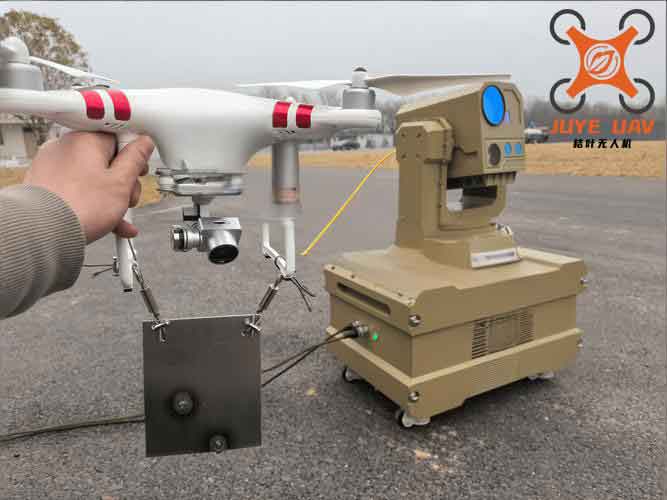
This article synthesizes the current state of anti-UAV research through a methodological analysis of academic literature and a systematic review of technological paradigms. It constructs a knowledge framework, delineates the core technology stacks, and critically analyzes the key technical challenges and enabling technologies required to neutralize the evolving UAV threat. Future trajectories in this dynamic field are also projected.
Empirical Analysis of Anti-UAV Research Landscape
A bibliometric analysis of publications indexed in major engineering and scientific databases (e.g., EI, Web of Science) between 2010 and 2020 reveals distinct trends in anti-UAV research focus and geographical distribution.
Temporal Distribution: Research interest, measured by publication volume, remained relatively low but stable until approximately 2015. A significant and sustained surge began in 2016, correlating with the widespread availability of commercial drones and a corresponding increase in reported security incidents. This trend confirms that anti-UAV technology is in a rapid growth phase and a dominant research frontier.
| Year | Approximate Publication Count | Trend Indicator |
|---|---|---|
| 2010-2015 | Low & Stable | Emerging Interest |
| 2016 | Sharp Increase | Inflection Point |
| 2017-2020 | High & Growing | Active Research Phase |
Geographical and Institutional Distribution: Analysis indicates that China, the United States, Germany, and South Korea are the leading contributors to anti-UAV research literature, reflecting substantial national investment and strategic focus. Leading research institutions often involve consortia like the Fraunhofer Society (Germany), major national universities, and specialized aerospace research centers.
| Country/Region | Research Intensity | Primary Contributor Types |
|---|---|---|
| China, USA, Germany, South Korea | Very High | National Labs, Defense Contractors, Top Universities |
| United Kingdom, France, Spain | High | Universities, Specialized Tech Companies |
| Other Countries | Moderate to Growing | Academic Institutions |
The Anti-UAV Operational Framework and Knowledge Structure
A comprehensive anti-UAV system is not a single device but a layered architecture designed to manage the threat continuum. This framework typically consists of four sequential layers:
- Prevention: Regulatory measures (geofencing, registration) and physical barriers.
- Detection & Identification: Sensing and recognizing a UAV’s presence, type, and intent.
- Decision: Assessing the threat and selecting an appropriate countermeasure.
- Mitigation (Neutralization): Executing the chosen countermeasure to negate the threat.
The core technological research is predominantly concentrated on Layers 2 through 4. The knowledge framework for anti-UAV technologies can be categorized by the physical principles they exploit and their function within the kill chain.
Anti-UAV Technology Stacks: Detection, Tracking, and Neutralization
1. Detection and Tracking Modalities
Effective anti-UAV action is predicated on reliable detection. No single sensor is optimal for all scenarios, leading to a multi-modal approach.
A. Radio Frequency (RF) Sensing: This passive method detects and analyzes the communication links between the UAV and its pilot (Ground Control Station – GCS).
$$ P_{rx} = P_{tx} + G_{tx} + G_{rx} – L_{path}(d,f) $$
Where $P_{rx}$ is received power, $P_{tx}$ is UAV/GCS transmit power, $G$ are antenna gains, and $L_{path}$ is path loss dependent on distance $d$ and frequency $f$. Techniques include:
- Signal Fingerprinting: Identifying unique RF signatures of specific UAV models.
- Protocol Analysis: Decoding Wi-Fi, Bluetooth, or proprietary control signals.
- Passive Location: Using Time Difference of Arrival (TDOA), Frequency Difference of Arrival (FDOA), or Angle of Arrival (AOA) with sensor networks to triangulate the UAV and/or GCS.
$$ \Delta t_{i,j} = \frac{ \| \mathbf{r} – \mathbf{s_i} \| – \| \mathbf{r} – \mathbf{s_j} \| }{c} $$
Where $\Delta t_{i,j}$ is the TDOA between sensors $i$ and $j$, $\mathbf{r}$ is the UAV position, $\mathbf{s}$ are sensor positions, and $c$ is the speed of light.
B. Radar Sensing: Active sensors that provide precise range, velocity, and angular information. Key challenges include low Radar Cross Section (RCS) of small drones and ground clutter. Advanced waveforms and signal processing are critical.
$$ R_{max} = \sqrt[4]{\frac{P_t G^2 \lambda^2 \sigma}{(4\pi)^3 P_{r,min}}} $$
The radar range equation highlights the challenge: a small $\sigma$ (RCS) drastically reduces $R_{max}$. Technologies include:
- Micro-Doppler Analysis: Identifying unique signatures from rotating propellers.
$$ f_{micro} = \frac{2v_{tip}}{\lambda} $$
where $v_{tip}$ is the propeller tip velocity. - MIMO and Phased Array Radars: For improved resolution and beam agility.
- Distributed/Networks Radars: Mitigating line-of-sight issues and providing spatial diversity.
C. Electro-Optical/Infrared (EO/IR) Sensing: Provides high-resolution imagery for visual confirmation and classification. Often fused with other sensors.
| Modality | Advantage | Disadvantage for Anti-UAV |
|---|---|---|
| Visible Light (Camera) | High resolution, detail | Requires light, 2D data, weather-sensitive |
| Thermal Infrared (IR) | Day/Night operation, sees heat | Lower resolution, poor for cool drones |
| Laser Radar (LiDAR) | Precise 3D ranging | Active system, shorter range, sensitive to weather |
D. Acoustic Sensing: Passive detection using the distinct audio signature (acoustic fingerprint) of a UAV’s motors and propellers.
$$ SPL(d) = SPL_{ref} – 20 \log_{10}(d/d_{ref}) $$
Sound Pressure Level (SPL) decays with distance. Microphone arrays are used for beamforming and direction finding. Effectiveness is limited by ambient noise and short detection range.
E. Sensor Fusion: The cornerstone of modern anti-UAV systems. By combining data from heterogeneous sensors (RF + Radar + EO/IR), systems achieve higher detection probability, improved robustness, and reduced false alarm rates.
$$ \mathbf{\hat{x}} = F(\mathbf{z_{RF}}, \mathbf{z_{Radar}}, \mathbf{z_{EOIR}}, \mathbf{z_{Audio}}) $$
Where $\mathbf{\hat{x}}$ is the fused state estimate (position, velocity, identity) and $F$ is the fusion algorithm (e.g., Kalman Filter, Particle Filter, Deep Learning network).
2. Neutralization (Mitigation) Techniques
Once detected and classified, a threat UAV must be neutralized. Techniques are broadly categorized as “soft-kill” (non-kinetic) or “hard-kill” (kinetic/destructive).
| Category | Mechanism | Sub-Techniques | Effect |
|---|---|---|---|
| Soft-Kill (Electronic Warfare) | Jamming | GNSS Jamming, Command Link Jamming | Disrupts navigation/control, causes hover/land/return-home |
| Spoofing | GNSS Spoofing | Provides false coordinates, leads UAV off-course | |
| Cyber Takeover | Protocol Exploitation | Hijacks control link (rare, model-specific) | |
| Hard-Kill | Kinetic Impact | Interceptor Drones, Nets, Projectiles | Physical destruction or capture |
| Directed Energy (DE) | High-Power Microwave (HPM) | Fries electronic components, area effect | |
| Directed Energy (DE) | High-Energy Laser (HEL) | Thermal ablation of structure | |
| Comparative Efficacy: Soft-kill is often preferred in civilian spaces due to lower collateral risk. Hard-kill and DE are military-focused. | |||
The effectiveness of jamming can be modeled by the Jamming-to-Signal Ratio (JSR):
$$ JSR = \frac{P_j G_j G_{uav}(\theta_j) / L_j}{P_s G_s G_{uav}(\theta_s) / L_s} $$
Where $P_j, P_s$ are jammer and signal power, $G$ are gains, $L$ are path losses, and $G_{uav}(\theta)$ is the UAV antenna gain in the direction of the source. A JSR >> 1 is required for reliable link denial.
Critical Technical Challenges and Enabling Technologies
The unique characteristics of UAVs—small size, low altitude, slow speed (LSS), and evolving autonomy—pose distinct challenges that drive specific technology development for anti-UAV systems.
1. Low-RCS and Clutter-Limited Detection: Distinguishing a drone from birds or ground clutter is paramount.
- Technology: Advanced pulse-Doppler waveforms, Space-Time Adaptive Processing (STAP) for airborne radars, and sophisticated Constant False Alarm Rate (CFAR) detectors.
$$ \eta_{CFAR} = \alpha \cdot \hat{P}_{clutter} $$
Where the detection threshold $\eta$ is adapted based on the estimated local clutter power $\hat{P}_{clutter}$.
2. Micro-Doppler Feature Extraction and Classification: Identifying the unique “signature” of a drone’s rotors.
- Technology: Time-Frequency analysis (like Short-Time Fourier Transform – STFT or Wavelet transforms) coupled with Machine Learning (ML) classifiers (Support Vector Machines, Convolutional Neural Networks).
$$ \text{STFT}(t, f) = \int_{-\infty}^{\infty} x(\tau) w(\tau – t) e^{-j 2 \pi f \tau} d\tau $$
3. Sensor Fusion Under Uncertainty: Optimally combining imperfect data from disparate sources.
- Technology: Bayesian filtering frameworks (Extended Kalman Filter, Unscented Kalman Filter), Dempster-Shafer theory for identity fusion, and increasingly, deep learning-based end-to-end fusion networks.
4. Countering Autonomous and Swarm Threats: Future UAVs will operate with less RF emission and in coordinated swarms.
- Technology: AI-driven predictive intent analysis, wide-area RF surveillance for swarm detection, and counter-swarm tactics using networked anti-UAV systems or swarm-vs-swarm engagements. The decision to engage a swarm involves complex resource allocation.
5. Efficient Directed Energy Engagement: Making laser and HPM systems tactically viable.
- Technology: Development of high-efficiency fiber lasers, adaptive optics for atmospheric compensation, and compact HPM sources with focused beams. The dwell time for laser destruction is key:
$$ t_{dwell} \propto \frac{\rho \cdot c_p \cdot \Delta T \cdot \delta}{P_{laser} \cdot A_{spot} \cdot \alpha} $$
Where $\rho$ is target density, $c_p$ specific heat, $\Delta T$ required temperature rise, $\delta$ material thickness, $P_{laser}$ laser power, $A_{spot}$ spot area, and $\alpha$ absorptivity.
Future Trajectories in Anti-UAV Research
The anti-UAV domain is an asymmetric technology race. Future trends will focus on closing current capability gaps and anticipating adversarial evolution:
- AI/ML Dominance: Pervasive use of AI for detection (few-shot learning for new UAV types), tracking (complex motion prediction), and autonomous decision-making for layered anti-UAV system response.
- Network-Centric Cooperative C-UAV: Systems where distributed sensors and effectors share a common operational picture and collaboratively allocate resources, enabling defense against complex swarm attacks.
- Multifunction, Modular Platforms: Development of integrated systems combining radar, EW, and DE capabilities on a single mobile platform (ground, naval, or airborne).
- Counter-Autonomy Measures: Research into spoofing or confusing the onboard AI and computer vision systems of autonomous drones, moving beyond traditional RF jamming.
- Regulatory and IFF Integration: Technical development of secure, standardized Remote ID systems and the integration of “Friend-or-Foe” interrogation capabilities into anti-UAV systems to minimize false engagements in shared airspace.
In conclusion, the field of anti-UAV technology is a complex, multidisciplinary endeavor requiring continuous innovation. No single solution exists. Success lies in a systems-engineering approach that seamlessly integrates layered sensing, intelligent data fusion, and scalable, proportionate mitigation options. As the UAV threat evolves towards greater autonomy and collaboration, so too must the anti-UAV paradigm evolve towards more intelligent, networked, and adaptive systems. The ongoing research and development outlined here form the foundation for securing the skies of the future.