
The rapid expansion of e-commerce and accelerating urbanization have triggered a sustained surge in demand for logistics services. Traditional ground-based networks are increasingly strained by traffic congestion, environmental pollution, and rising operational costs. In this context, China UAV drone logistics emerges as a pivotal direction for the future, offering a promising alternative to circumvent terrestrial bottlenecks. UAV drone delivery systems can dramatically reduce transit times, meet the growing need for instant fulfillment, and demonstrate superior performance in delivery speed, operational cost, safety, and environmental sustainability. Their potential is particularly significant in specialized scenarios within China, such as transporting emergency medical supplies to remote areas or servicing mountainous and island communities.
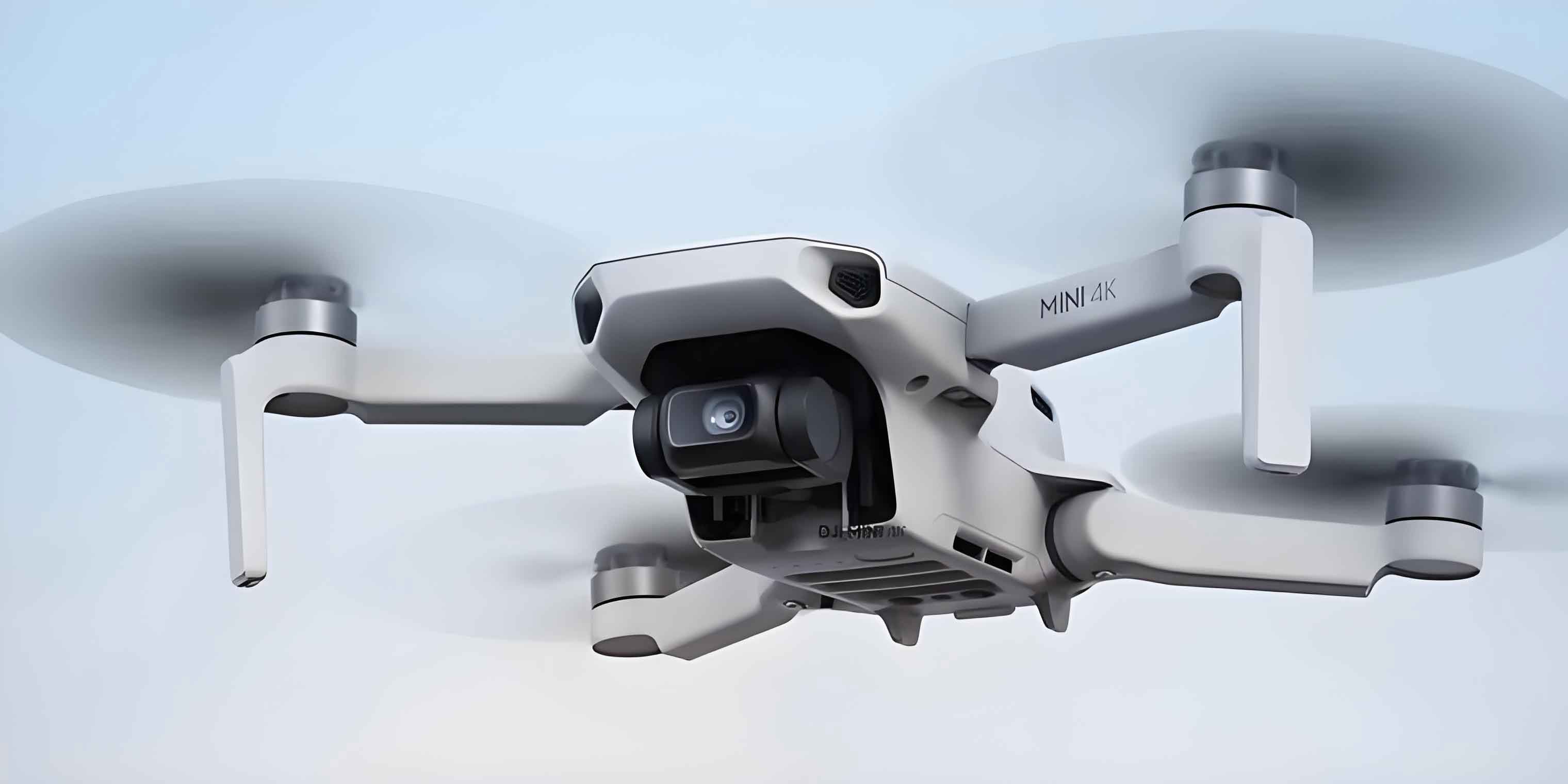
However, the practical deployment of China UAV drone logistics fleets faces substantial hurdles. Key among these are the limited flight range imposed by battery technology, restricted payload capacity, and the general lack of supporting charging or swapping infrastructure. These constraints significantly complicate the strategic planning of a robust and economically viable UAV drone logistics network. The core challenge translates into designing a network topology that can service spatially distributed demand points while strictly adhering to the maximum range of a single drone flight, ensuring global connectivity, and minimizing the total system cost. This paper addresses this complex optimization problem by proposing a novel planning methodology centered on strategically placed relay stations.
1. Problem Formulation and Mathematical Model
The core task is to optimize the topology of a UAV drone logistics network where direct flights between supply and demand nodes are often impossible due to range limitations. The network consists of three types of nodes, as illustrated conceptually below: supply nodes (origins), demand nodes (destinations), and candidate relay nodes. When the Euclidean distance between a supply and a demand node exceeds the drone’s maximum range \( s \), one or more relay nodes must be utilized to create a multi-hop path, ensuring each segment is within the range limit \( s \).
The model is defined by the following parameters and assumptions:
| Symbol | Unit | Description |
|---|---|---|
| \( \alpha_i \) | – | Supply node \( i \), \( i \in [1, m] \) |
| \( \beta_j \) | – | Demand node \( j \), \( j \in [1, n] \) |
| \( \gamma_k \) | – | Relay node \( k \), \( k \in [1, o] \) |
| \( m \) | units | Total number of supply nodes |
| \( n \) | units | Total number of demand nodes |
| \( o \) | units | Total number of relay nodes (variable) |
| \( (x_\theta, y_\theta) \) | – | Coordinates of node \( \theta \) |
| \( s \) | km | Maximum flight range per drone leg |
| \( L \) | units | Total number of activated arcs/links in the network |
| \( l_{p,q} \) | km | Euclidean distance between any two nodes \( p \) and \( q \) |
| \( \mathbf{M} \) | kg | Logistics demand matrix |
| \( M_{i,j} \) | kg | Goods demand from \( \alpha_i \) to \( \beta_j \) |
| \( C_\gamma \) | ¥ | Construction & operational cost per relay node |
| \( C_\delta \) | ¥ | Construction & operational cost per network link |
| \( C_\epsilon \) | ¥/(kg·km) | Transportation cost per unit weight per unit distance |
| \( C \) | ¥ | Total network cost (objective function) |
The logistics demand is defined by matrix \( \mathbf{M} \):
$$ \mathbf{M} = \begin{bmatrix}
M_{1,1} & M_{2,1} & \cdots & M_{m,1} \\
M_{1,2} & M_{2,2} & \cdots & M_{m,2} \\
\vdots & \vdots & \ddots & \vdots \\
M_{1,n} & M_{2,n} & \cdots & M_{m,n}
\end{bmatrix} $$
The objective is to minimize the total system cost \( C \), which aggregates relay node costs, link costs, and flow-dependent transportation costs:
$$ C = C_\gamma \cdot o + C_\delta \cdot L + C_\epsilon \cdot \sum_{i=1}^{m} \sum_{j=1}^{n} (M_{i,j} \cdot D_{i,j}) $$
where \( D_{i,j} \) is the shortest path distance from supply node \( \alpha_i \) to demand node \( \beta_j \) in the final network. This optimization is subject to the fundamental constraint that for every link \( (p, q) \) in any operational path, \( l_{p,q} \leq s \).
2. The Proposed Genetic Algorithm-Based Planning Methodology
The proposed methodology decomposes the network planning problem into three sequential stages: 1) Optimizing the number and locations of relay nodes, 2) Generating the initial connected network topology, and 3) Pruning redundant links and computing the final cost. The core innovation lies in the first stage—an adaptive Genetic Algorithm (GA) framework designed specifically for this UAV drone network problem. This algorithm intelligently explores the solution space to find a cost-effective set of relay nodes that enable a fully connected network.
2.1 The Relay Node Optimization Algorithm
The GA operates on a population of candidate solutions, where each solution is a set of relay node coordinates. It employs four specialized genetic operators to evolve the population:
- Global Reset Operator: With low probability, reinitializes all relay nodes to random positions. This promotes exploration and helps escape local optima, which is crucial for complex China UAV drone deployment scenarios.
- Single-Point Mutation Operator: Randomly selects one existing relay node and perturbs its coordinates. This allows for local refinement and hill-climbing within a promising region of the solution space.
- Node Deletion Operator: Randomly removes one relay node from the current set. This operator directly targets the reduction of fixed infrastructure costs (\(C_\gamma\)).
- Node Addition Operator: Randomly introduces a new relay node at a random location. This enhances the network’s potential connectivity, which may be necessary to service all demand points.
The algorithm’s efficiency is bolstered by three nested judgment loops that guide the search process:
| Loop Name | Purpose & Function | Computational Benefit |
|---|---|---|
| 1. Connectivity Judgment Loop | Checks if the network formed by current relay nodes connects all supply and demand nodes via paths with segment lengths \(\leq s\). If not, it triggers operator application until connectivity is achieved. This loop runs before cost evaluation. | Dramatically reduces computation by avoiding expensive cost calculations for invalid (disconnected) networks, a common issue in early iterations or after drastic mutations. |
| 2. Fitness Evaluation Loop | For a connected network, calculates the total cost \(C\) (fitness). If this cost is lower than the historical best, the solution is saved as the new optimum. Otherwise, the algorithm continues with the historical best. | Ensures monotonic non-increasing cost progression. The dynamic retention of the best-found solution prevents regression and stabilizes convergence. |
| 3. Iteration Termination Loop | Monitors stopping criteria, typically a maximum number of generations or convergence of the fitness value. Once met, it halts the algorithm and outputs the best solution. | Provides controlled, predictable runtime and ensures the algorithm delivers a usable planning result for drone network deployment. |
The synergy of these operators and loops allows the algorithm to adaptively balance exploration and exploitation. It can intelligently increase or decrease the number of relay nodes (\(o\)) while fine-tuning their locations (\(x_k, y_k\)), effectively searching for the global optimum in a vast combinatorial space.
2.2 Network Construction and Path Optimization
Once an optimal or near-optimal set of relay nodes \( \{ \gamma_k \} \) is determined, the physical network is constructed. First, an initial graph \( G(V, E) \) is created where \( V \) includes all \( \alpha_i, \beta_j, \) and \( \gamma_k \). An undirected link \( e_{p,q} \) is established between any two nodes \( p \) and \( q \) if their Euclidean distance satisfies the range constraint:
$$ l_{p,q} = \sqrt{(x_p – x_q)^2 + (y_p – y_q)^2} \leq s $$
This results in a potentially dense mesh network.
Subsequently, for every demand node \( \beta_j \), the shortest path (e.g., using Dijkstra’s algorithm) from each supply node \( \alpha_i \) is computed, weighted by the distance. All links that are not part of any shortest path for transporting the demand matrix \( \mathbf{M} \) are considered redundant and are removed from the final network design. This pruning step is critical as it minimizes the number of active links \( L \), thereby reducing the \( C_\delta \cdot L \) component of the total cost without affecting network functionality. The final, streamlined network represents the most cost-effective infrastructure for the given UAV drone logistics operation.
3. Simulation Model and Case Study Validation
To validate the methodology, an agent-based simulation model was developed. The model treats all nodes (supply, demand, relay) as instances of a single “Node” agent class, distinguished by an internal `type` parameter. This design simplifies network-wide operations like connectivity checks and shortest-path computations, which are essential for evaluating the genetic algorithm’s proposals efficiently.
The main simulation driver implements the GA’s state flow, managing the iteration process, applying the genetic operators based on predefined probabilities, and invoking the three judgment loops. This model provides a flexible testbed for evaluating the proposed planning method under various scenarios relevant to China‘s diverse geography.
3.1 Case Study Setup and Results
A specific instance with 5 supply nodes and 5 demand nodes was analyzed. The drone range was set to \( s = 20 \) km. Cost parameters were: \( C_\gamma = 100 \), \( C_\delta = 50 \), \( C_\epsilon = 1 \). The spatial coordinates and the demand matrix \( \mathbf{M} \) (in kg) are given below:
| Demand Node / Supply Node | \( \alpha_1 \) (483.1, 168.9) |
\( \alpha_2 \) (167.4, 346.0) |
\( \alpha_3 \) (558.1, 194.2) |
\( \alpha_4 \) (414.8, 230.7) |
\( \alpha_5 \) (153.4, 513.0) |
Total Demand (kg) |
|---|---|---|---|---|---|---|
| \( \beta_1 \) (370.5, 598.4) | 300 | 300 | 100 | 200 | 400 | 1300 |
| \( \beta_2 \) (522.3, 65.2) | 200 | 400 | 300 | 300 | 100 | 1300 |
| \( \beta_3 \) (721.3, 550.2) | 200 | 250 | 150 | 150 | 300 | 1050 |
| \( \beta_4 \) (450.2, 383.9) | 100 | 350 | 150 | 350 | 120 | 1070 |
| \( \beta_5 \) (100.2, 88.3) | 150 | 50 | 200 | 400 | 150 | 950 |
| Total Supply (kg) | 950 | 1350 | 900 | 1400 | 1070 | 5670 |
The GA was run for 10,000 generations. The total cost \( C \) converged effectively, as shown in the cost progression curve. The final optimized cost was approximately 9914.65 monetary units. This represents a significant reduction of about 37.5% compared to the cost of the initial, unoptimized network configuration. The algorithm identified 7 relay nodes, whose optimal coordinates are listed below:
| Relay Node # | Coordinate X | Coordinate Y |
|---|---|---|
| \( \gamma_1 \) | 276.51 | 362.03 |
| \( \gamma_2 \) | 517.95 | 296.18 |
| \( \gamma_3 \) | 151.91 | 247.22 |
| \( \gamma_4 \) | 611.43 | 472.41 |
| \( \gamma_5 \) | 295.03 | 130.10 |
| \( \gamma_6 \) | 234.26 | 507.92 |
| \( \gamma_7 \) | 415.32 | 470.27 |
The resulting network is both sparse and fully connected, with relay nodes strategically positioned to bridge gaps between supply and demand clusters while respecting the 20 km range limit. This case study conclusively demonstrates the method’s ability to generate economically efficient and operationally feasible plans for a China UAV drone logistics network.
4. Discussion and Broader Implications for UAV Logistics
The proposed methodology provides a robust and automated framework for tackling a fundamental planning problem in drone-based logistics. By explicitly modeling range constraints and total cost, it delivers practical blueprints for network infrastructure. The adaptive nature of the GA, through its specialized operators and judgment loops, is key to its success. It efficiently navigates the trade-off between infrastructure investment (number of relay nodes \(o\) and links \(L\)) and operational efficiency (transportation distances), avoiding the pitfalls of local optima that plague simpler heuristic methods.
The applications within China are vast and impactful. For urban logistics, this method can plan networks of vertiports or charging stations enabling long-distance cross-city UAV drone delivery, alleviating ground traffic. In remote and mountainous regions, where traditional infrastructure is poor or non-existent, it offers a blueprint for establishing affordable aerial supply chains for goods, medicine, and disaster relief. The model’s principles are also transferable to other domains, such as planning underwater charging station networks for unmanned underwater vehicles (UUVs), showcasing its versatility.
Future work will focus on extending the model to incorporate dynamic elements such as time-varying demand, heterogeneous drone fleets with different ranges and payloads, and more detailed operational constraints including no-fly zones and weather uncertainty. Integrating this planning tool with real-time fleet management systems will be a critical step toward the full realization of automated, large-scale China UAV drone logistics ecosystems. This research contributes a foundational optimization tool that supports the green and efficient development of the low-altitude economy, paving the way for smarter, more responsive, and sustainable logistics networks.