
The proliferation and operational success of unmanned aerial systems in contemporary conflicts have fundamentally reshaped modern warfare. The performance and reliability of these systems are intrinsically linked to the human element at the control station. Consequently, developing a scientific and robust methodology for evaluating the post-specific competency of military drone operators is not merely an academic exercise but a critical operational necessity for force readiness and mission success. This article presents a detailed, first-person exploration of a competency evaluation framework based on the Fuzzy Analytic Hierarchy Process (FAHP), designed to address the inherent complexity and subjectivity in assessing military drone operator skills.
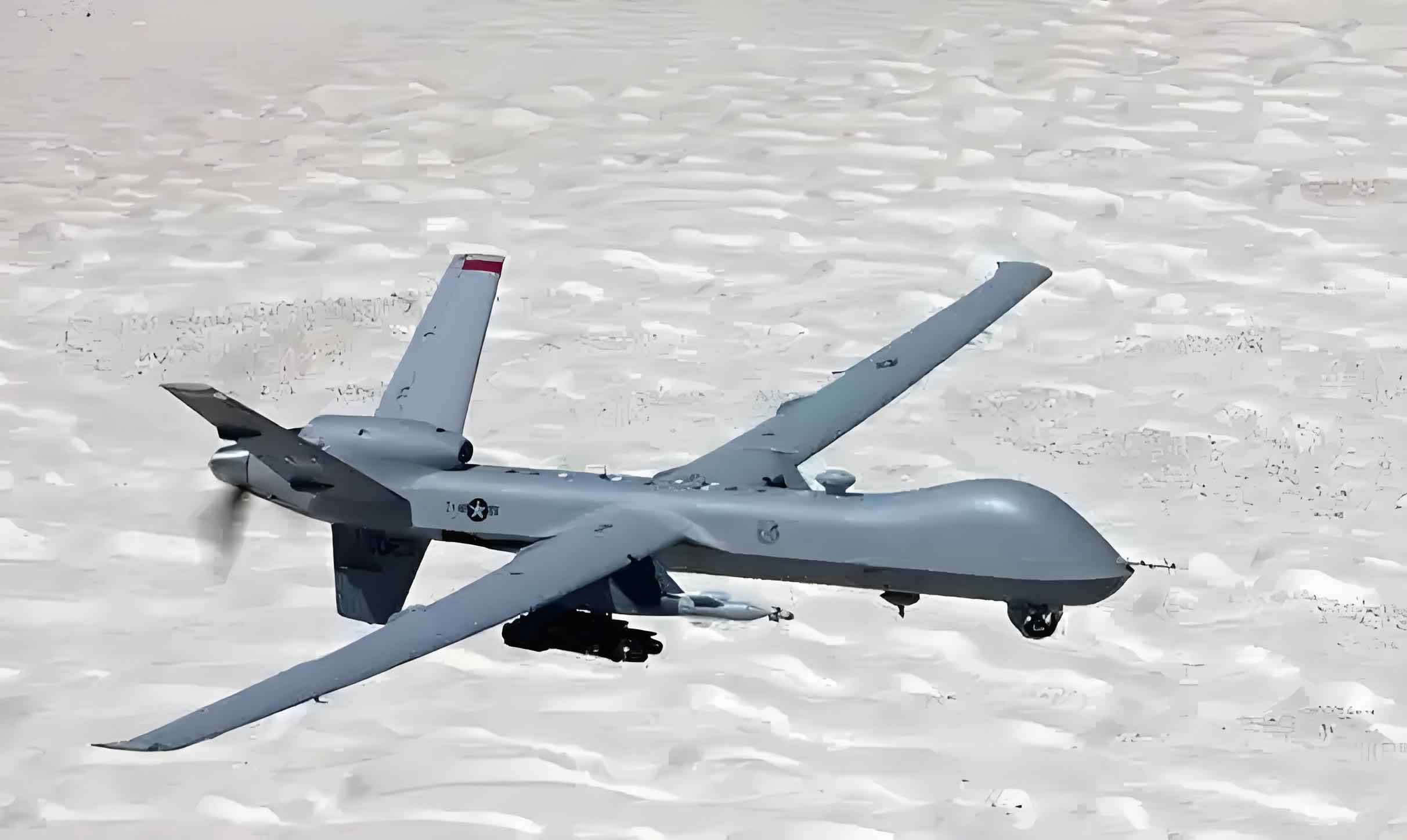
Traditional assessment models often suffer from a narrow focus, emphasizing isolated skill dimensions while neglecting the integrated and complex nature of the battlefield environment. Furthermore, they typically rely on crisp, quantitative metrics, failing to adequately handle the fuzziness and uncertainty inherent in human performance evaluation. To overcome these limitations, we integrate fuzzy set theory with the Analytic Hierarchy Process (AHP). The AHP, developed by Thomas Saaty, is a powerful multi-criteria decision-making tool that structures a complex problem into a hierarchy, comparing elements pairwise to derive weight scales. By fuzzifying the comparison process, we can more accurately capture expert judgment and manage the vagueness present in evaluating a military drone operator’s multifaceted capabilities.
1. Constructing the Hierarchical Evaluation Index System for Military Drone Operators
The first and most crucial step in applying FAHP is to construct a logical and comprehensive hierarchical model of the evaluation criteria. The system must encapsulate all critical factors influencing a military drone operator’s effectiveness. Based on a synthesis of operational task analysis (encompassing take-off/landing, reconnaissance, penetration, etc.) and core job requirements (theory vs. practice, skill vs. psychology, operation vs. maintenance), we categorize the primary influencing factors into four main criteria, which are further decomposed into 15 sub-criteria. This structure forms our evaluation index hierarchy.
| Target Layer (A) | Criteria Layer (B) | Indicators Layer (C) |
|---|---|---|
| Military Drone Operator Competency Evaluation | B1: Flight Skill | C1: Take-off, Landing & Turning |
| C2: Circling & Loitering | ||
| C3: Diving & Climbing | ||
| C4: Roll Maneuvers | ||
| C5: Tactical Flight Patterns | ||
| C6: Loop Maneuvers | ||
| B2: Flight Theory | C7: Aircraft Systems Knowledge | |
| C8: Safety & Operational Regulations | ||
| C9: Control & Navigation Theory | ||
| B3: Maintenance Skill | C10: Preventive Maintenance & Servicing | |
| C11: Corrective Maintenance | ||
| C12: Fault Diagnosis & Repair | ||
| B4: Psychological Quality | C13: Mental Fortitude & Focus | |
| C14: Emotional Stability under Stress | ||
| C15: Emergency Response & Decision Making |
B1: Flight Skill: This is the core operational competency. Proficiency in basic and advanced flight maneuvers directly impacts mission execution, survivability of the military drone, and tactical effectiveness. The six indicators represent a spectrum from fundamental control to complex tactical aerial movements.
B2: Flight Theory: A solid theoretical foundation underpins practical skill. It enables the operator to understand aerodynamics, optimize flight paths, troubleshoot system anomalies, and adhere to complex airspace and safety protocols, ensuring the effective and lawful deployment of the military drone.
B3: Maintenance Skill: Given the often remote and austere operating environments for military drones, the operator’s ability to perform field-level maintenance is vital for operational tempo. This includes routine checks, pre/post-flight inspections, and basic troubleshooting to rectify common faults, ensuring platform availability.
B4: Psychological Quality: The role of a military drone operator, despite physical remoteness from the battlefield, involves sustained high-stress monitoring, rapid decision-making, and potential engagement with lethal effects. Resilience, stress tolerance, and calm under pressure are non-negotiable attributes for mission success and mitigating operational errors.
2. Determining Factor Weights Using Fuzzy AHP
To quantify the relative importance of each criterion and indicator, we employ the FAHP methodology. This involves constructing fuzzy pairwise comparison matrices based on expert judgment.
2.1 Establishing Fuzzy Judgment Matrices
For each level of the hierarchy, experts compare elements pairwise concerning their importance relative to the element in the level above. Instead of crisp numbers, we use triangular fuzzy numbers (TFNs) to represent judgments. A TFN is denoted as (l, m, u), where ‘l’ is the lower bound, ‘m’ is the most likely value, and ‘u’ is the upper bound. The fundamental scale is fuzzified as shown below:
| Linguistic Term | Crisp Scale | Triangular Fuzzy Scale (l, m, u) | Reciprocal Fuzzy Scale |
|---|---|---|---|
| Equally Important | 1 | (1, 1, 1) | (1, 1, 1) |
| Weakly More Important | 3 | (2, 3, 4) | (1/4, 1/3, 1/2) |
| Strongly More Important | 5 | (4, 5, 6) | (1/6, 1/5, 1/4) |
| Very Strongly More Important | 7 | (6, 7, 8) | (1/8, 1/7, 1/6) |
| Absolutely More Important | 9 | (9, 9, 9) | (1/9, 1/9, 1/9) |
| Intermediate Values | 2, 4, 6, 8 | (1, 2, 3), (3, 4, 5), etc. | Corresponding reciprocals |
For ‘n’ criteria in a set, the fuzzy pairwise comparison matrix Ẑ is constructed as:
$$ \tilde{Z} = (\tilde{z}_{ij})_{n \times n} = \begin{bmatrix} (1,1,1) & \tilde{z}_{12} & \dots & \tilde{z}_{1n} \\ \tilde{z}_{21} & (1,1,1) & \dots & \tilde{z}_{2n} \\ \vdots & \vdots & \ddots & \vdots \\ \tilde{z}_{n1} & \tilde{z}_{n2} & \dots & (1,1,1) \end{bmatrix} $$
where $\tilde{z}_{ij} = (l_{ij}, m_{ij}, u_{ij})$ represents the fuzzy comparison of criterion i over criterion j, and $\tilde{z}_{ji} = \tilde{z}_{ij}^{-1} = (1/u_{ij}, 1/m_{ij}, 1/l_{ij})$.
2.2 Weight Calculation and Consistency Verification
The geometric mean method is applied to calculate the fuzzy weights. For each criterion i, the fuzzy geometric mean $\tilde{r}_i$ is calculated as:
$$ \tilde{r}_i = (\prod_{j=1}^{n} \tilde{z}_{ij})^{1/n} $$
where the multiplication and power operations follow the rules of TFN arithmetic.
The fuzzy weight $\tilde{w}_i$ is then obtained by:
$$ \tilde{w}_i = \tilde{r}_i \otimes (\tilde{r}_1 \oplus \tilde{r}_2 \oplus … \oplus \tilde{r}_n)^{-1} $$
To obtain crisp weights for practical use, the fuzzy weights are defuzzified using the Center of Area (COA) method:
$$ w_i = \frac{l_{w_i} + m_{w_i} + u_{w_i}}{3} $$
These crisp weights are then normalized so that they sum to 1.
Consistency of the fuzzy judgment matrix must be checked. We defuzzify the original matrix using its crisp values (the ‘m’ values) to obtain a crisp matrix Z. The Consistency Index (CI) and Consistency Ratio (CR) are calculated as:
$$ \lambda_{max} = \text{maximum eigenvalue of matrix Z} $$
$$ CI = \frac{\lambda_{max} – n}{n – 1} $$
$$ CR = \frac{CI}{RI(n)} $$
where RI(n) is the Random Index for a matrix of order ‘n’. A CR value less than 0.10 indicates acceptable consistency.
Applying this process based on synthesized expert judgments for the military drone operator competency model yields the following weight distribution:
| Criteria Layer (B) | Weight (w_B) | Indicators Layer (C) | Local Weight (w_C|B) | Global Weight (w_C) |
|---|---|---|---|---|
| B1: Flight Skill | 0.449 | C1: Take-off, Landing & Turning | 0.286 | 0.128 |
| C2: Circling & Loitering | 0.104 | 0.047 | ||
| C3: Diving & Climbing | 0.162 | 0.073 | ||
| C4: Roll Maneuvers | 0.151 | 0.068 | ||
| C5: Tactical Flight Patterns | 0.167 | 0.075 | ||
| C6: Loop Maneuvers | 0.130 | 0.058 | ||
| B2: Flight Theory | 0.080 | C7: Aircraft Systems Knowledge | 0.376 | 0.030 |
| C8: Safety & Operational Regulations | 0.263 | 0.021 | ||
| C9: Control & Navigation Theory | 0.361 | 0.029 | ||
| B3: Maintenance Skill | 0.370 | C10: Preventive Maintenance & Servicing | 0.362 | 0.134 |
| C11: Corrective Maintenance | 0.362 | 0.134 | ||
| C12: Fault Diagnosis & Repair | 0.275 | 0.102 | ||
| B4: Psychological Quality | 0.101 | C13: Mental Fortitude & Focus | 0.302 | 0.031 |
| C14: Emotional Stability under Stress | 0.302 | 0.031 | ||
| C15: Emergency Response & Decision Making | 0.397 | 0.040 |
Σ Global Weights = 1.000
3. Multi-Level Fuzzy Comprehensive Evaluation Algorithm
With the weight vector established, the next step is to evaluate a specific operator’s performance against each indicator using a fuzzy comprehensive evaluation.
3.1 Establishing the Evaluation Set
We define an evaluation set V containing qualitative linguistic terms and their corresponding score anchors:
$$ V = \{ v_1, v_2, v_3, v_4 \} = \{\text{Excellent}, \text{Good}, \text{Fair}, \text{Poor} \} $$
A score vector S is associated with this set:
$$ S = [s_1, s_2, s_3, s_4]^T = [90, 75, 60, 45]^T $$
3.2 Constructing the Membership Matrix
For a given operator, a group of evaluators (e.g., instructors, peers) assesses the operator’s performance on each bottom-level indicator C_i. The rating is based on the linguistic terms in V. The membership degree $r_{ik}$ for indicator i with respect to grade $v_k$ is calculated as the frequency of evaluators assigning that grade. For example, if 10 evaluators rate C1, with 4 saying “Excellent,” 5 saying “Good,” and 1 saying “Fair,” then $r_{11}=0.4, r_{12}=0.5, r_{13}=0.1, r_{14}=0.0$.
This process yields a fuzzy membership matrix R for each criteria group B_j. For B1 (which has 6 indicators), the matrix R1 is:
$$ R_1 = \begin{bmatrix} r_{11} & r_{12} & r_{13} & r_{14} \\ r_{21} & r_{22} & r_{23} & r_{24} \\ \vdots & \vdots & \vdots & \vdots \\ r_{61} & r_{62} & r_{63} & r_{64} \end{bmatrix} $$
3.3 Conducting the Fuzzy Comprehensive Evaluation
The evaluation proceeds from the bottom level upward. First, the comprehensive evaluation vector $B_j$ for each criterion group is computed by synthesizing the indicator weights and membership matrix for that group.
$$ \tilde{B}_j = W_{C|B_j} \circ R_j = (w_{1j}, w_{2j}, …, w_{pj}) \circ \begin{bmatrix} r_{11} & r_{12} & r_{13} & r_{14} \\ r_{21} & r_{22} & r_{23} & r_{24} \\ \vdots & \vdots & \vdots & \vdots \\ r_{p1} & r_{p2} & r_{p3} & r_{p4} \end{bmatrix} = (b_{j1}, b_{j2}, b_{j3}, b_{j4}) $$
where $\circ$ denotes the fuzzy composition operator (e.g., the weighted average model: $b_{jk} = \sum_{i=1}^{p} w_{ij} \cdot r_{ik}$), and p is the number of indicators in group B_j.
The results $\tilde{B}_1, \tilde{B}_2, \tilde{B}_3, \tilde{B}_4$ form the membership matrix R for the target layer (Overall Competency).
$$ R = \begin{bmatrix} \tilde{B}_1 \\ \tilde{B}_2 \\ \tilde{B}_3 \\ \tilde{B}_4 \end{bmatrix} = \begin{bmatrix} b_{11} & b_{12} & b_{13} & b_{14} \\ b_{21} & b_{22} & b_{23} & b_{24} \\ b_{31} & b_{32} & b_{33} & b_{34} \\ b_{41} & b_{42} & b_{43} & b_{44} \end{bmatrix} $$
The final comprehensive evaluation vector $\tilde{A}$ for the operator is then calculated using the criteria layer weights $W_B = (w_{B1}, w_{B2}, w_{B3}, w_{B4})$:
$$ \tilde{A} = W_B \circ R = (a_1, a_2, a_3, a_4) $$
The vector $\tilde{A}$ represents the degree to which the operator’s overall competency belongs to each grade in the evaluation set V.
To obtain a single composite score F, the vector $\tilde{A}$ is multiplied by the score vector S:
$$ F = \tilde{A} \cdot S^T = (a_1, a_2, a_3, a_4) \cdot (90, 75, 60, 45)^T = 90a_1 + 75a_2 + 60a_3 + 45a_4 $$
This score provides a quantitative measure of the military drone operator’s competency.
4. Case Study Analysis and Insights
To demonstrate the applicability of the proposed FAHP model, we evaluated a trainee operator (referred to as Operator L) from a military drone training program. Evaluators provided ratings for all 15 indicators, from which the membership matrices were constructed.
Following the algorithm described, the comprehensive evaluation vectors for each criterion were computed:
$$ \tilde{B}_1 = (0.155, 0.441, 0.342, 0.063) $$
$$ \tilde{B}_2 = (0.322, 0.535, 0.115, 0.029) $$
$$ \tilde{B}_3 = (0.223, 0.314, 0.337, 0.126) $$
$$ \tilde{B}_4 = (0.278, 0.600, 0.122, 0.000) $$
The overall competency evaluation vector for Operator L was:
$$ \tilde{A} = W_B \circ R = (0.449, 0.080, 0.370, 0.101) \circ \begin{bmatrix} 0.155 & 0.441 & 0.342 & 0.063 \\ 0.322 & 0.535 & 0.115 & 0.029 \\ 0.223 & 0.314 & 0.337 & 0.126 \\ 0.278 & 0.600 & 0.122 & 0.000 \end{bmatrix} = (0.206, 0.418, 0.299, 0.077) $$
The composite score is:
$$ F = 90(0.206) + 75(0.418) + 60(0.299) + 45(0.077) = 71.28 $$
Analysis of Results:
1. Weight Analysis: The global weights reveal that Flight Skill (0.449) and Maintenance Skill (0.370) are the most critical determinants of a military drone operator’s competency, together accounting for over 80% of the evaluation weight. This underscores the hands-on, practical nature of the role. Psychological Quality (0.101) and Flight Theory (0.080), while essential, are weighted as supporting enablers rather than primary drivers in this specific operational competency model.
2. Operator L’s Evaluation: The maximum membership value in $\tilde{A}$ is 0.418 for the “Good” grade, indicating Operator L’s overall performance is closest to this level. The composite score of 71.28 aligns closely with the lower bound of the “Good” range (75), suggesting solid performance with room for improvement. A detailed look at $\tilde{B}_3$ shows the highest membership for Maintenance Skill is 0.337 for “Fair,” pinpointing a relative weakness. This diagnostic capability allows trainers to provide targeted, personalized development for the military drone operator, focusing on maintenance procedures rather than general flight training.
5. Conclusion and Operational Implications
This article has detailed a systematic and transparent framework for evaluating the competency of military drone operators. By integrating Fuzzy Logic with the Analytic Hierarchy Process, the model successfully manages the subjective judgments of experts and the inherent fuzziness in human performance assessment. The hierarchical structure ensures all critical aspects of the role—flight operation, theoretical knowledge, technical maintenance, and psychological resilience—are considered in proper proportion.
The mathematical rigor of FAHP, demonstrated through pairwise comparison matrices, consistency checks, weight calculation, and multi-level fuzzy synthesis, provides a defensible and quantitative basis for evaluation. The case study illustrates the model’s practical utility, not only in generating an overall score but, more importantly, in producing a nuanced profile that highlights an operator’s specific strengths and deficiencies.
For military training institutions and units, the adoption of such a model can standardize assessment processes, enhance the objectivity of promotion or qualification decisions, and most critically, guide the development of tailored training curricula. By focusing resources on the high-weight competencies like advanced flight skills and field maintenance for military drones, training efficiency and operational readiness can be significantly improved. This framework represents a move towards a more scientific, data-informed approach to human capital development in the rapidly evolving domain of unmanned aerial systems.