
The quest for robust and precise flight control of quadrotor drones under challenging conditions remains a central focus in aerial robotics. These agile platforms, while versatile, are inherently underactuated and highly susceptible to model inaccuracies and external disturbances such as wind gusts. This article details our comprehensive research into developing an advanced control strategy to address these challenges. We present a novel, improved Linear Active Disturbance Rejection Control (ILADRC) framework, built around a unique Error-Free Disturbance Tracking Linear Extended State Observer (EFDT-LESO). By integrating this observer within a cascaded control architecture and employing high-precision signal differentiation, we significantly enhance the disturbance estimation and rejection capabilities for quadrotor drone attitude regulation.
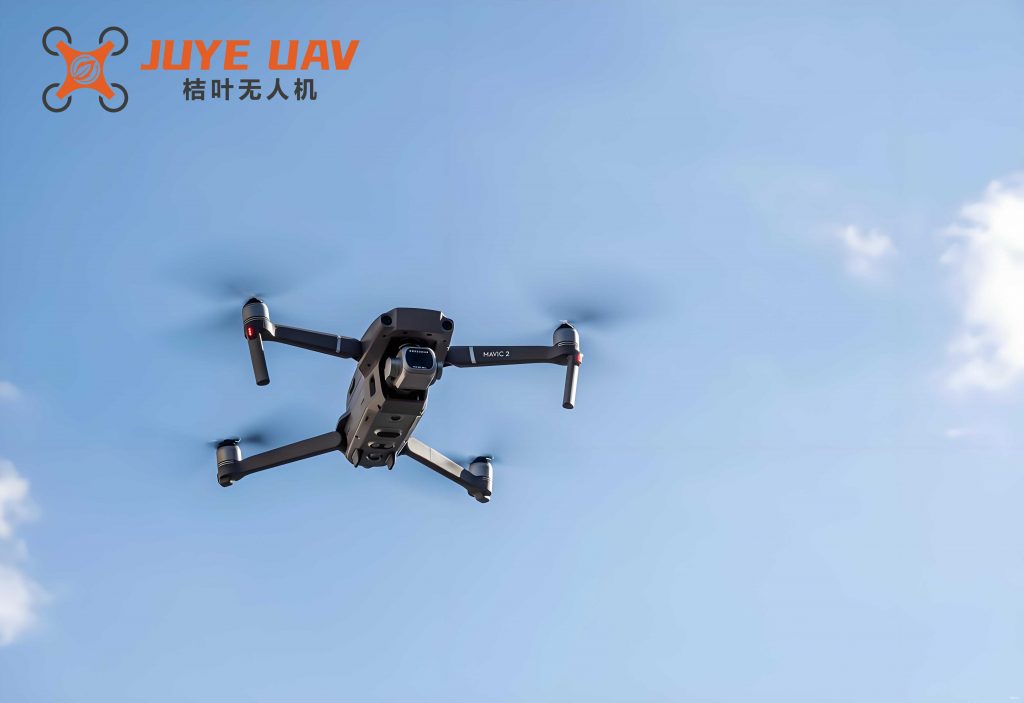
The control of a quadrotor drone is fundamentally a problem of managing its orientation and position through the coordinated thrust of four rotors. The dynamics are highly nonlinear and coupled. For control design, particularly for attitude, a simplified but representative model is often derived. We define two key coordinate systems: the Earth-Fixed Frame (E) and the Body-Fixed Frame (B). The orientation of the quadrotor drone is described by the Euler angles: roll ($\phi$), pitch ($\theta$), and yaw ($\psi$).
The rotational dynamics of the quadrotor drone can be expressed as:
$$
\begin{aligned}
\ddot{\phi} &= \frac{1}{I_x} \left[ l K_t (\omega_4^2 – \omega_2^2) – K_{D_\phi} \dot{\phi} + (I_y – I_z) \dot{\theta} \dot{\psi} \right] \\
\ddot{\theta} &= \frac{1}{I_y} \left[ l K_t (\omega_3^2 – \omega_1^2) – K_{D_\theta} \dot{\theta} + (I_z – I_x) \dot{\phi} \dot{\psi} \right] \\
\ddot{\psi} &= \frac{1}{I_z} \left[ K_{\text{Tor}} (\omega_2^2 + \omega_4^2 – \omega_1^2 – \omega_3^2) – K_{D_\psi} \dot{\psi} + (I_x – I_y) \dot{\phi} \dot{\theta} \right]
\end{aligned}
$$
Where $I_x, I_y, I_z$ are moments of inertia, $l$ is the arm length, $K_t$ is the thrust coefficient, $K_{\text{Tor}}$ is the torque coefficient, $K_{D_*}$ are drag coefficients, and $\omega_i$ are rotor speeds. For controller design, the coupled gyroscopic terms are often treated as part of the internal disturbance. The system inputs are typically defined as virtual controls:
$$
\begin{aligned}
U_1 &= K_t (\omega_1^2 + \omega_2^2 + \omega_3^2 + \omega_4^2) \\
U_2 &= K_t l (\omega_4^2 – \omega_2^2) \\
U_3 &= K_t l (\omega_3^2 – \omega_1^2) \\
U_4 &= K_{\text{Tor}} (\omega_2^2 + \omega_4^2 – \omega_1^2 – \omega_3^2)
\end{aligned}
$$
Thus, the simplified attitude dynamics for control design become:
$$
\ddot{\phi} = b_{\phi} U_2 + f_{\phi}, \quad \ddot{\theta} = b_{\theta} U_3 + f_{\theta}, \quad \ddot{\psi} = b_{\psi} U_4 + f_{\psi}
$$
Here, $b_*$ are known control gains, and $f_*$ represent the “total disturbance,” aggregating all unmodeled dynamics, internal couplings, and external forces acting on the quadrotor drone.
The Core of the Strategy: Improved LADRC with EFDT-LESO
Active Disturbance Rejection Control (ADRC) is powerful because it does not require a precise model. Its linear version, LADRC, simplifies parameter tuning. The standard second-order LADRC for a channel like roll angle consists of a Linear Extended State Observer (LESO) and a Linear State Error Feedback (LSEF) law. For a system $\ddot{y} = b u + f$, the LESO expands the state space to include the disturbance $f$ as an extended state $x_3$.
The standard LESO is given by:
$$
\begin{aligned}
e &= z_1 – y \\
\dot{z}_1 &= z_2 – \beta_1 e \\
\dot{z}_2 &= z_3 – \beta_2 e + b_0 u \\
\dot{z}_3 &= -\beta_3 e
\end{aligned}
$$
where $z_1$ estimates the output $y$, $z_2$ estimates its derivative $\dot{y}$, and $z_3$ estimates the total disturbance $f$. The control law is then:
$$
u = \frac{u_0 – z_3}{b_0}, \quad \text{with} \quad u_0 = k_p (r – z_1) + k_d ( \dot{r} – z_2)
$$
This effectively compensates for $f$ in real-time. However, a fundamental limitation exists: for a constant or slowly varying disturbance, the estimation error $z_3 – f$ converges to zero, but for a time-varying disturbance, a steady-state estimation error persists, leading to tracking error for the quadrotor drone.
Our key innovation is the Error-Free Disturbance Tracking LESO (EFDT-LESO). We introduce an error correction mechanism into the observer’s dynamics. The modified observer equations become:
$$
\begin{aligned}
e &= z_1 – y \\
\dot{z}_1 &= z_2 – \beta_1 e \\
\dot{z}_2 &= z_3 – \beta_2 e + b_0 u + d_1 \\
\dot{z}_3 &= -\beta_3 e + d_2
\end{aligned}
$$
The correction terms $d_1$ and $d_2$ are designed based on the observation error dynamics. By analyzing the error transfer function in the frequency domain, we derive these terms to ensure that even for a class of time-varying disturbances (e.g., harmonic or ramp-like disturbances common in wind affecting a quadrotor drone), the steady-state estimation error can be driven to zero. This is a significant enhancement over the conventional LESO.
Cascaded Architecture and Signal Processing
To further improve performance and robustness, we employ a cascaded control structure for the attitude of the quadrotor drone. The outer loop controls the Euler angles ($\phi, \theta, \psi$), while the inner loop controls the corresponding angular rates ($p, q, r$). This structure naturally handles the kinematic relationship between angles and rates and provides faster rejection of disturbances entering at the torque level.
- Outer Loop (Angle Control): Uses our proposed ILADRC (with EFDT-LESO). The reference command is the desired angle.
- Inner Loop (Rate Control): Uses a fast, simple PD controller. Its reference is the desired rate generated by the outer loop’s controller output.
Furthermore, obtaining a clean derivative of the reference signal $\dot{r}$ is crucial for the LSEF law. Instead of a simple backward difference, we employ a Levant differentiator, which is a robust exact differentiator based on sliding-mode theory. It provides a nearly noise-free derivative of the input signal, enhancing the overall control accuracy for the quadrotor drone.
Mathematical Formulation and Stability
The overall closed-loop system stability is paramount. We analyze the transfer function of the proposed ILADRC. Let the plant be $G_p(s) = \frac{1}{s^2}$. The EFDT-LESO and control law lead to specific compensators $F(s)$ and $H(s)$ such that the control signal is $U(s) = F(s)R(s) – H(s)Y(s)$. The closed-loop transfer function is:
$$
G_{\text{closed}}(s) = \frac{F(s)G_p(s)}{1 + H(s)G_p(s)}
$$
The characteristic equation of this system determines stability. For the quadrotor drone’s attitude channel with our specific observer and controller gains ($\beta_1, \beta_2, \beta_3, k_p, k_d, b_0$), the characteristic polynomial is derived. Using the Routh-Hurwitz criterion, we can establish the conditions for which all roots have negative real parts. The analysis confirms that with appropriate positive gains selected via bandwidth parameterization ($\beta_1=3\omega_o, \beta_2=3\omega_o^2, \beta_3=\omega_o^3; k_p=\omega_c^2, k_d=2\omega_c$), the system is stable. The improved disturbance estimation of EFDT-LESO does not compromise this stability but enhances steady-state performance.
Simulation Verification and Performance Analysis
We validated the proposed controller for the quadrotor drone using a high-fidelity semi-physical simulation platform, connecting a real flight controller (Pixhawk) to a real-time dynamics model running on a separate computer. The key parameters of our simulated quadrotor drone are listed below:
| Physical Quantity | Symbol | Value |
|---|---|---|
| Mass | $m$ | 0.65 kg |
| Arm Length | $l$ | 0.32 m |
| Thrust Coefficient | $K_t$ | $3.13 \times 10^{-5} \, \text{N/rad}^2$ |
| Torque Coefficient | $K_{\text{Tor}}$ | $7.5 \times 10^{-7} \, \text{N·m/rad}^2$ |
| Moment of Inertia (X,Y) | $I_x, I_y$ | $7.5 \times 10^{-3} \, \text{kg·m}^2$ |
| Moment of Inertia (Z) | $I_z$ | $1.3 \times 10^{-2} \, \text{kg·m}^2$ |
We compared our ILADRC against a conventional ADRC from recent literature under three test scenarios for the quadrotor drone:
- Nominal Tracking: Following sinusoidal and square-wave angle commands without added disturbance.
- Impulsive Disturbance: Subjecting the quadrotor drone to a burst of white noise torque disturbance.
- Persistent Wind Disturbance: Applying a continuous, irregular wind model generating sustained forces and torques.
The primary metric for comparison is the Integral of Absolute Error (IAE), $Q = \int |e(t)| dt$, for each attitude angle. The results are summarized in the table below:
| Test Scenario | Controller | $Q_\phi$ (deg·s) | $Q_\theta$ (deg·s) | $Q_\psi$ (deg·s) | Total $Q_{\text{sum}}$ |
|---|---|---|---|---|---|
| 1. Nominal | ILADRC (Ours) | 0.105 | 0.052 | 1.861 | 2.018 |
| Baseline ADRC | 0.310 | 0.201 | 11.422 | 11.933 | |
| 2. Impulsive | ILADRC (Ours) | 0.114 | 0.085 | 1.876 | 2.075 |
| Baseline ADRC | 0.339 | 0.238 | 11.593 | 12.170 | |
| 3. Persistent Wind | ILADRC (Ours) | 0.138 | 0.071 | 1.806 | 2.014 |
| Baseline ADRC | 0.346 | 0.240 | 11.633 | 12.218 |
The simulation data unequivocally demonstrates the superior performance of our proposed controller for the quadrotor drone. In all scenarios, the total tracking error accumulated by ILADRC was only about 16-17% of the error from the baseline ADRC. This dramatic improvement is most visible in yaw control, which is often the most challenging due to weak damping. The EFDT-LESO’s ability to accurately estimate and cancel time-varying disturbances in real-time is the key factor. The quadrotor drone equipped with our controller exhibits faster settling time, significantly reduced overshoot, and remarkable robustness against both sudden shocks and continuous environmental forces.
Conclusion and Perspective
In this work, we have systematically addressed the critical problem of robust attitude control for quadrotor drones operating under uncertainty and disturbance. The proposed ILADRC framework, centered on the novel Error-Free Disturbance Tracking Linear Extended State Observer (EFDT-LESO), represents a significant step forward. By ensuring zero steady-state estimation error for a broader class of disturbances, the controller achieves exceptional precision. The cascaded control structure leveraging a fast inner-loop PD controller and an outer-loop ILADRC, combined with robust signal differentiation, creates a resilient and high-performance flight control system.
The semi-physical simulation results confirm the theoretical expectations. Our controller reduces the attitude tracking error of the quadrotor drone by over 80% compared to a conventional ADRC approach under various disturbance conditions, while maintaining stability and rapid response. This makes it a highly suitable candidate for real-world applications of quadrotor drones, such as inspection in windy environments, precise delivery, or autonomous navigation where reliability is paramount. Future work will focus on flight tests with a physical quadrotor drone platform and extending the EFDT-LESO principle to the translational control channels for complete, robust trajectory tracking.